


Advertising inside videogames is nothing new, particularly in mobile and free-to-play titles where developers often rely on ads to generate revenue without charging players upfront. Even so, the idea of advertising directly interrupting gameplay remains controversial because it can quickly undermine immersion and make the experience feel more like a monetisation system than a game. A newly surfaced Microsoft patent describes a system that could temporarily freeze a game at selected moments, show the player an advertisement, and then resume gameplay afterward.
The patent is titled "Contextually Aware Management of Interactive Software Application Access", and its wording suggests that the system is designed around limited gameplay access rather than conventional full-price titles. References to gameplay "credits" appear throughout the document, with those credits potentially granting access for a fixed period such as 30 minutes or, in some cases, for the duration of an entire level. Once the credit begins approaching its limit, the system can look for an appropriate moment to interrupt the session.
The Game Would Wait for a 'Safe' Moment
The most interesting part of the patent is that the system does not simply stop the game whenever the access period expires. Instead, it attempts to determine whether the player is currently in a high-intensity situation or whether they have reached what the patent describes as a safe location or low-risk moment. Only then would the game be paused and an advertisement presented.
This appears intended to make the interruption less disruptive. Rather than forcing an ad onto the screen during a boss fight, competitive match, or important scripted sequence, the system could wait until the player reaches a checkpoint, safe zone, menu-like moment, or other period where pausing does not materially affect progress. While that would be less intrusive than a completely random interruption, it would still mean advertising becomes part of the gameplay rhythm itself.
Once the ad begins, the game is frozen so the player does not miss anything while watching it. Completing the advertisement would then grant another gameplay credit, allowing the session to continue for another defined amount of time or progress.
The Basic Idea Already Exists in Free-to-Play Games
The overall monetisation model is familiar to anyone who has spent time with mobile or free-to-play games. Many titles already limit attempts, energy, lives, or play sessions and then offer players a choice: wait, pay, or watch an advertisement to continue immediately. In that sense, Microsoft's patent is not inventing the concept of watching ads in exchange for more gameplay.
The difference is how deeply the advertising system could be integrated into the game itself. Instead of requiring players to return to a dedicated menu and manually select an option such as "Watch an ad for another life," the software would understand when the player's current access period is running out and automatically locate a suitable moment to offer the next ad.
That makes the system more context-aware and potentially more seamless from a technical perspective. Whether players would consider that seamless experience an improvement is another question entirely.
Gameplay Credits Appear to Be Central to the System
The patent repeatedly describes gameplay access in terms of credits, suggesting that a user could receive a certain amount of playtime or progress before another interaction is required. The duration of those credits does not appear to be fixed, meaning a game could potentially define access in several different ways depending on its structure.
A session-based game might give players 30 minutes of uninterrupted access before requiring another ad. A level-based title might instead allow one complete stage before the next advertisement appears. This flexibility would make the system adaptable across different game genres rather than tying it to one specific format.
That design also makes the technology particularly suitable for free-to-play experiences where gameplay access itself becomes something that can be exchanged for advertising engagement. Instead of ads merely appearing around the game, they effectively become part of the mechanism controlling how long the player can continue.
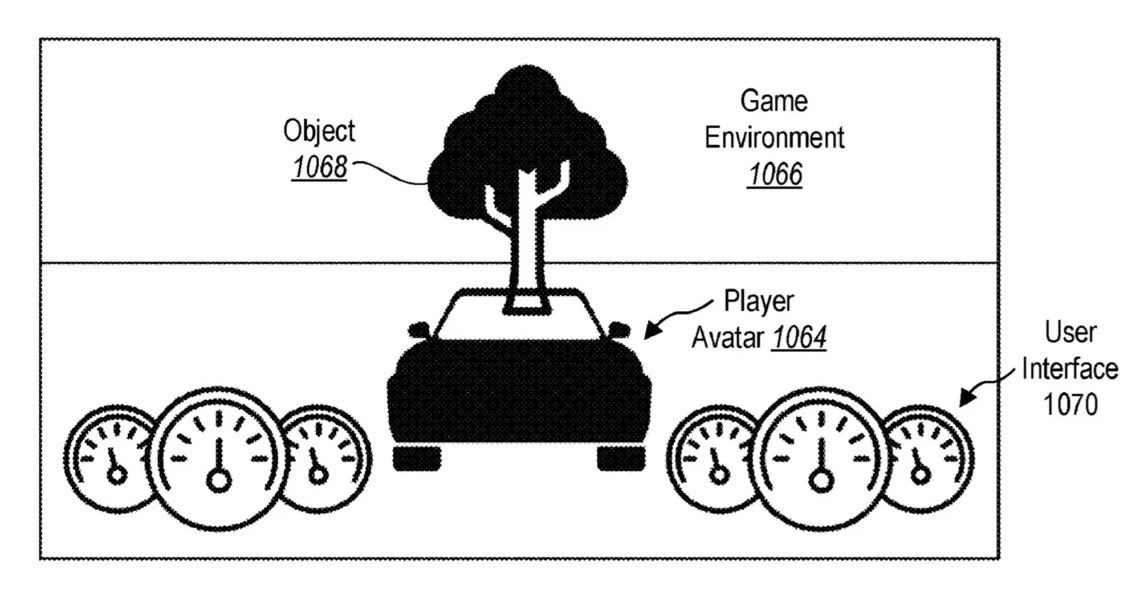
The Biggest Concern Is Whether It Could Expand Beyond Free-to-Play
The patent does not clearly state that the technology would be restricted exclusively to free games. Its references to gameplay credits make free-to-play titles the most obvious interpretation, because that model already relies heavily on limited access, rewarded advertising, and optional payments.
However, the lack of an explicit restriction naturally raises questions about where else such a system could theoretically be used. Players have historically been far less accepting of intrusive advertising inside games they have already paid for, particularly when ads interrupt actual gameplay rather than appearing as environmental branding or optional promotional content.
If this technology remained limited to free-to-play experiences, it would largely represent an evolution of monetisation systems players already encounter today. If something similar ever appeared inside premium games or subscription services, the reaction would likely be considerably different.
Could Something Like This Eventually Reach Xbox Game Pass?
The source raises Xbox Game Pass as one possible area where such a concept might eventually fit, particularly as Microsoft has already experimented with different access tiers and usage limits across its gaming services. A system based on gameplay credits could theoretically complement a cheaper or ad-supported subscription model by allowing users to continue playing in exchange for watching advertisements.
That remains speculative, however. The patent itself does not establish that Microsoft plans to introduce this system into Game Pass, nor does it confirm that the technology will appear in any commercial product at all. Patents often describe ideas that companies want to protect legally without necessarily committing to implementing them.
Still, the broader concept is easy to imagine. A lower-cost gaming tier could potentially exchange uninterrupted access for occasional ad-supported breaks, much like streaming services already do with cheaper plans. The difference is that videogames are interactive, making the timing and placement of advertising much more sensitive than simply inserting commercials between episodes.
Context Awareness Is the Real Technical Twist
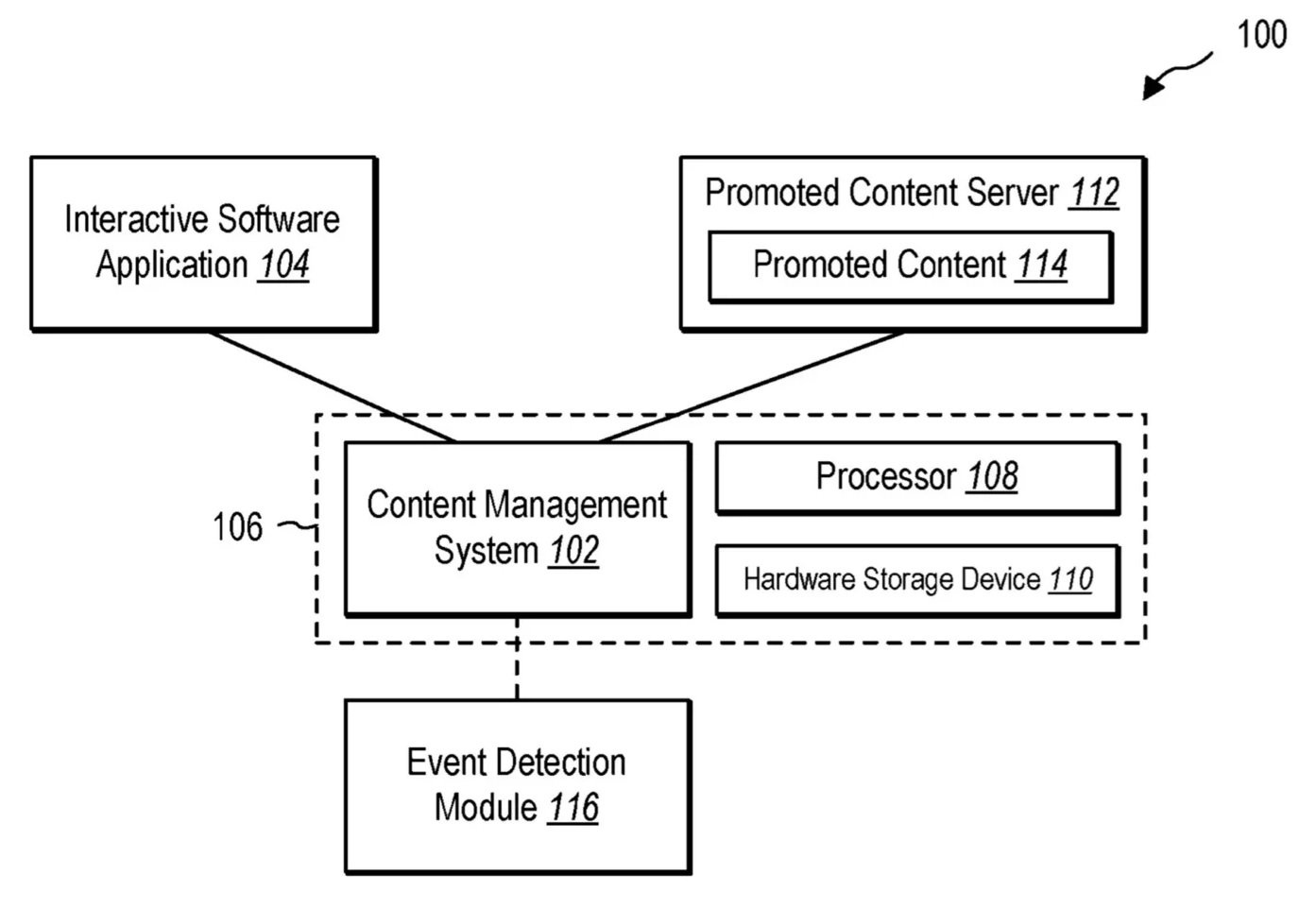
The most interesting technical element is arguably not the advertisement itself but the system's attempt to understand what is happening inside the game before interrupting the player. Determining whether someone is currently engaged in an intense moment requires some knowledge of game state, location, progression, or activity.
That could involve identifying checkpoints, safe zones, menus, low-risk exploration sections, or other predetermined states where interruption is considered acceptable. The game would then wait until one of those states appears before freezing the action and presenting the advertisement.
From a design perspective, this is clearly preferable to an ad appearing at an arbitrary time. The system is essentially trying to minimise disruption while still preserving the advertising opportunity. Yet even a perfectly timed interruption may still frustrate players if it happens frequently enough.
Rewarded Ads Work Because Players Usually Choose Them
One reason rewarded advertising has become relatively accepted in mobile gaming is that the player typically initiates it voluntarily. Someone runs out of energy and chooses to watch a 30-second video because they want another attempt immediately. The transaction is obvious: the player gives attention, and the game gives something in return.
Microsoft's patent appears to blur that distinction by bringing the prompt directly into the gameplay flow. Even if the player ultimately chooses whether to watch, the game itself is deciding when that choice appears. That could make the system feel more intrusive, particularly if the interruption happens repeatedly during longer sessions.
The quality of the experience would therefore depend heavily on implementation. Occasional rewarded breaks in a free game may be tolerable. Constant interruptions could quickly become exhausting regardless of how intelligently the system selects the timing.
Ads in Games Remain a Sensitive Subject
Game advertising has always occupied an awkward position. Players generally tolerate advertising more readily when they understand that it subsidises something they are receiving for free. The relationship becomes much more contentious when advertising appears in expensive games, paid subscriptions, or products that already contain other forms of monetisation.
Developers also need to protect immersion. Games are different from websites or streaming services because the player is actively participating in the experience. Stopping that interaction to display an unrelated commercial can feel much more disruptive than placing an ad between pieces of passive content.
That is presumably why the patent spends so much effort describing context-aware interruptions. Microsoft appears to recognise that if ads are going to interrupt gameplay at all, timing becomes crucial.
A Patent Does Not Mean Microsoft Is About to Ship It
It is important not to treat the existence of the patent as confirmation that Microsoft plans to introduce gameplay-freezing advertisements across Xbox. Large technology companies routinely patent concepts that never become real products, either because the idea changes, market conditions shift, or the company simply wants to protect intellectual property around a particular technique.
The patent therefore tells us more about what Microsoft has explored than what Xbox players should expect tomorrow. There is no announced release date, supported game list, pricing model, or confirmation that the system will ever appear publicly.
Even so, patents can provide an interesting look at the kinds of monetisation systems companies are considering behind the scenes. In this case, Microsoft has clearly explored a way to combine rewarded advertising with contextual awareness of what the player is doing.
Final Thoughts
Microsoft's patent describes a more sophisticated version of something free-to-play gamers already know very well: watch an advertisement and receive more gameplay in return. The key difference is that the system would monitor the current game state, wait for a suitable low-intensity moment, freeze the game, show the ad, and then grant another period of access.
For free-to-play games, that model is not especially difficult to imagine. Rewarded advertisements have been part of mobile gaming for years, and making them more context-aware could actually reduce some of the frustration associated with poorly timed interruptions.
The concern begins if the concept expands beyond that environment. Players are much less likely to welcome forced advertising inside premium games or paid subscription services, especially if those ads interrupt the session itself.
For now, though, this remains a patent rather than an announced Xbox feature. It shows that Microsoft has considered how ads could be woven more directly into interactive experiences, but whether that idea ever reaches players—and in what form—is another matter entirely.











Comments 0