

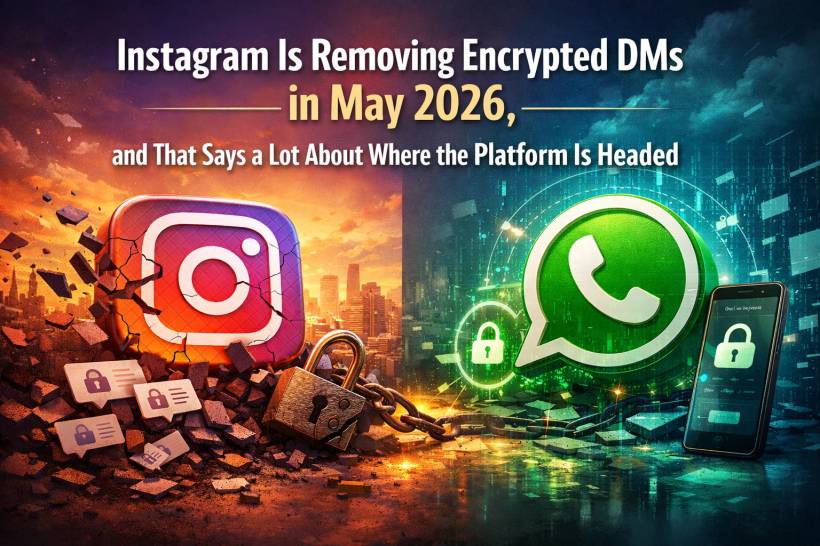
Instagram is making a quiet but meaningful change to its messaging experience. After 8 May 2026, the platform will no longer support end-to-end encrypted direct messages, bringing an end to a feature that was introduced as part of Meta's broader push toward private communication.
What makes this especially interesting is not just the decision itself, but how it surfaced. There was no big product announcement, no polished launch-style blog post, and no major campaign explaining the change. Instead, users learned about it through an update in Instagram's support documentation. That alone gives the impression that Meta sees this less as a headline moment and more as a practical cleanup of a feature that never really took off.
Still, even if adoption was low, the move matters. It touches on privacy, user trust, and the long-term direction of messaging inside one of the world's biggest social platforms.
Instagram's Encrypted DMs Are Coming to an End
Instagram has confirmed that end-to-end encrypted direct messages will be discontinued after 8 May 2026. For users who have relied on that option in selected chats, this means those conversations will no longer remain available in the same encrypted form once the feature is retired.
The platform says affected users will be guided on how to save messages and media before the shutdown takes effect. In some cases, people may need to update their app first before that download option becomes available, especially if they are still using an older version of Instagram.
So while the feature is going away, Instagram is at least giving users a window to keep anything important before the transition happens.
A Feature That Never Became Mainstream
To understand why this change feels surprising, it helps to look at how Instagram handled encrypted messaging from the start. End-to-end encryption for DMs only began rolling out in December 2023, and even then, it was not something turned on by default.
Users had to enable it manually, conversation by conversation, and it was only available for one-on-one chats. On top of that, the feature was not rolled out universally across all markets at once. In other words, it never became a standard part of the Instagram messaging experience for the average user.
That limited rollout likely played a major role in what happened next. If a privacy feature is tucked away, optional, region-limited, and only available under certain conditions, it is not hard to imagine why many users never bothered with it. In that sense, low usage may not simply reflect a lack of interest in privacy. It may also reflect how the feature was positioned in the app.
Why Meta Says It Is Removing the Option
According to a Meta spokesperson speaking to Engadget, the decision came down to adoption. The company said that very few people were choosing to use end-to-end encrypted Instagram DMs, so it decided to remove the option over the coming months.
From a product management perspective, this is not unusual. Big platforms often retire features that do not attract enough usage, especially if those features require maintenance, additional technical support, or create complexity inside the app. Companies like to streamline. If something is not widely used, it becomes harder to justify keeping it alive.
But in this case, the story feels bigger than a normal feature cleanup. This was not just another sticker pack or layout experiment. This was a privacy-focused messaging tool, tied to years of public messaging from Meta about the future of private communication.
That is why the removal feels more symbolic than it might first appear.
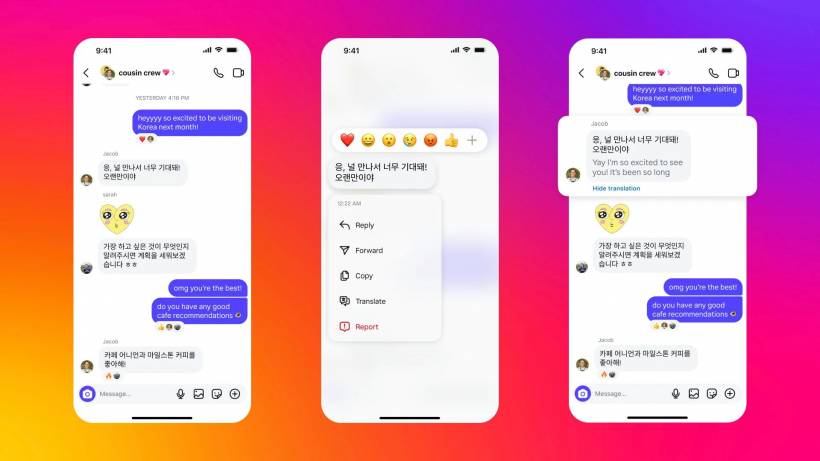
The Bigger Picture Behind Meta's Messaging Strategy
Back in 2019, Mark Zuckerberg laid out a vision for Meta's messaging ecosystem that leaned heavily into privacy. At the time, the company was pushing the idea that people increasingly wanted smaller, more private digital spaces rather than everything happening out in the open.
That vision helped shape the direction of Messenger, Instagram, and WhatsApp. Over time, Meta introduced stronger encryption across parts of its messaging products, although not always in the same way. WhatsApp became the clearest example of this strategy, with end-to-end encryption built in by default. Messenger moved gradually in that direction as well. Instagram, meanwhile, got a more limited and optional version.
Now, with Instagram stepping back from encrypted DMs, the contrast between Meta's platforms becomes more obvious. WhatsApp remains the company's strongest privacy-first messaging product, while Instagram continues to feel more like a social network with messaging attached, rather than a messaging-first platform built around privacy.
That distinction matters because it shows Meta may be sharpening the role of each app rather than trying to make them all do the same thing.
What Users Need to Do Before the Deadline
For anyone who used encrypted Instagram chats and wants to keep a record of them, the important step is to download the data before the feature disappears.
Instagram directs users to the "Download Your Information" tool within the app. The path is straightforward: go to your Profile, open the Menu, choose Your Activity, and then select Download your information. From there, you can request a copy of your data, including messages, in either HTML or JSON format.
Once the request is processed, Instagram sends a download link by email. That link leads to a ZIP file containing the exported chat history and related content.
This is worth doing sooner rather than later if those conversations contain anything meaningful, whether that is personal memories, shared photos, important notes, or media you do not want to lose.
Why This Change May Frustrate Privacy-Conscious Users
For some users, this will not make much difference. A lot of people probably never turned on encrypted DMs in the first place, and many may not even remember the feature existed. But for users who deliberately chose it, the change may feel like a step backward.
Privacy tools tend to attract a smaller but more intentional group of users. These are the people who care enough to opt in, manage settings, and think about how their data is handled. Removing a feature like this can send a message that privacy enhancements are only supported when they become mass-market successes, rather than long-term commitments.
There is also the issue of trust. When a company spends years talking about private communication and then removes one of its privacy-related tools due to weak uptake, some users may understandably question how serious that commitment really is on every platform.
Why Meta Is Pointing People to WhatsApp Instead
Meta's answer is simple: if users want encrypted messaging, WhatsApp is the place to get it.
That recommendation makes sense from the company's perspective. WhatsApp already has end-to-end encryption enabled by default for all conversations, so it is the most mature and consistent messaging product in Meta's ecosystem when it comes to privacy. Rather than trying to make Instagram compete in the same space, Meta appears to be concentrating that experience where it already works best.
For users, though, this is not always a clean substitute. Instagram and WhatsApp serve different social habits. People often use Instagram DMs casually, especially for creator interactions, quick social exchanges, and conversations tied to posts, stories, or reels. WhatsApp is more phone-number based and often feels more personal, more direct, and sometimes more closed.
So yes, WhatsApp may offer stronger privacy. But that does not mean it fully replaces the role Instagram DMs play in everyday online interaction.
What This Tells Us About Instagram's Priorities
This move suggests Instagram is focusing less on turning its DMs into a secure messaging environment and more on keeping them aligned with the app's core identity. Instagram is still, first and foremost, a social platform built around content sharing, discovery, and interaction. Messaging supports that ecosystem, but it may not be where Meta wants to invest heavily in niche privacy tools unless they become widely used.
That is a practical business decision, but it also reflects a larger truth about modern platforms. Features survive when they fit the product's main behavior patterns. If a tool feels peripheral, even if it is useful, it becomes vulnerable.
Encrypted messaging clearly remains important to Meta overall. It is just no longer something the company seems interested in maintaining inside Instagram specifically.
Final Thoughts
Instagram dropping end-to-end encrypted DMs after 8 May 2026 may not affect every user, but it is still a notable change. It marks the end of an experiment that never became central to the app, and it highlights the gap between Meta's broad privacy messaging and the reality of how its platforms are actually evolving.
For users who value privacy, the lesson here is fairly clear. If secure messaging is a priority, Instagram is no longer the platform to depend on for that. Meta is effectively steering that audience toward WhatsApp, where encryption remains built in from the start.
At the same time, this decision also shows how even major privacy features are not guaranteed to survive if they fail to become part of everyday user behavior. In the world of big social apps, usefulness alone is not always enough. Adoption, simplicity, and product identity often decide what stays and what quietly disappears.











Comments 0