

DDR2 memory is not something most people expect to hear about in 2026. For most consumers, DDR5 is now the standard associated with new PCs, laptops and modern platforms. DDR4 remains common in plenty of systems too. DDR2, meanwhile, belongs to a much older generation of hardware, used in computers from a very different era.
Yet the wider memory shortage is becoming so severe that even this long-retired standard is seeing prices move upward.
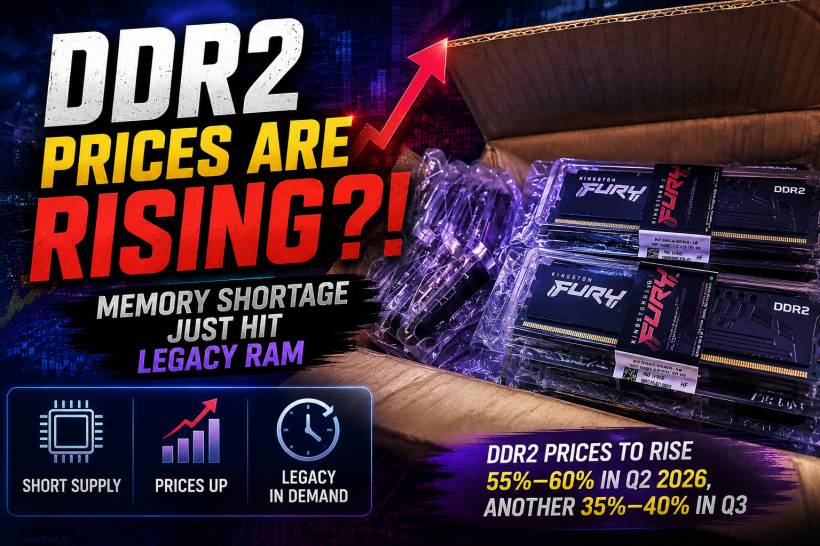
According to TrendForce, DDR2 memory prices in Taiwan could rise by around 55% to 60% during the second quarter of 2026, followed by another increase of roughly 35% to 40% in the following quarter. It is an unusual development, but it also highlights how far the current supply pressure has spread across the memory market.
Why an Older Memory Standard Is Suddenly Relevant Again
The situation is not necessarily because DDR2 itself has suddenly become popular in mainstream consumer devices. Nobody is expecting new gaming laptops, smartphones or consoles to return to DDR2 memory.
Instead, the problem starts with shortages and rising costs affecting newer memory generations. When DDR5 and DDR4 become harder to source or more expensive than expected, some hardware manufacturers begin looking further down the supply chain for alternatives.
That can include DDR3 and, in more specialised cases, DDR2.
These older standards are more likely to appear in industrial equipment, networking hardware, embedded systems, legacy devices, point-of-sale terminals and other products that do not need cutting-edge performance. For manufacturers trying to keep older platforms running, available memory is more important than having the newest specification.
The Supply Chain Effect Is Reaching Further Back
This is what makes the DDR2 price increase interesting. The shortage may not have started with DDR2, but demand is being pushed toward it as newer memory options become constrained.
It is a familiar supply-chain pattern. When one part of the market becomes expensive or difficult to secure, buyers start searching for alternatives. That added demand then places pressure on products that would normally sit quietly in the background.
In this case, the ripple effect is moving from DDR5 and DDR4 toward DDR3 and DDR2. The technology may be old, but the supply is limited, and manufacturers that still rely on it may not have many replacement options.
Only a Few Companies Still Make DDR2
The pool of companies still manufacturing DDR2 memory is already relatively small.
As reported by The Register, Taiwan-based Winbond and Elite Semiconductor Microelectronics Technology, better known as ESMT, remain among the companies producing DDR2 chips. However, their strategies are moving in different directions.
Winbond is reportedly reducing its DDR2 production as it shifts resources toward more profitable products, including DDR3, DDR4 and LPDDR4 memory. From a business perspective, that makes sense. Older memory standards usually offer thinner margins, while newer and more widely demanded products can deliver better returns.
ESMT, on the other hand, is expected to maximise its DDR2 output to help fill the gap left by reduced production elsewhere. That could allow the company to capture demand from customers who still need the older standard and are now facing fewer supply options.
Why the Memory Shortage Is So Difficult to Solve
Memory shortages are not fixed overnight.
Building new factories, expanding manufacturing capacity and qualifying new production lines can take years. Even when major memory manufacturers increase output, they still have to decide where that capacity goes.
Right now, there is strong demand for enterprise-grade memory, especially for data centres, AI infrastructure, high-performance servers and cloud platforms. These markets often generate higher margins than consumer RAM, giving manufacturers a clear financial reason to prioritise them.
That leaves consumer-focused memory products in a more complicated position. Even if overall output improves, it does not always mean affordable RAM will immediately return to store shelves.
Could This Continue Into the Next Decade?
Some industry forecasts suggest that memory supply pressure could continue well into 2030. That does not necessarily mean every RAM product will stay expensive for the entire period, but it does mean volatility may become a recurring issue.
Prices could rise and fall depending on demand from AI infrastructure, enterprise customers, consumer PC upgrades, smartphone production and new factory capacity. The market is also vulnerable to unexpected disruptions, whether from manufacturing limits, supply-chain bottlenecks or changing demand forecasts.
For consumers, the impact may be most visible when upgrading a PC, buying a laptop or building a gaming system. For businesses running older equipment, however, even legacy memory standards could become a growing concern.
Final Thoughts
DDR2 memory becoming more expensive in 2026 sounds strange because it is. It is also a clear sign of just how broad the current memory shortage has become.
The real issue is not that DDR2 has suddenly returned to the mainstream. It is that pressure on DDR5 and DDR4 is forcing certain parts of the market to look backward for available alternatives.
As manufacturers focus on higher-margin enterprise memory and AI-driven demand continues to grow, unusual developments like this may become more common. It may be mildly amusing to see decades-old RAM prices rise again, but it is also a reminder that the memory market is under far more strain than it first appears.











Comments 0