

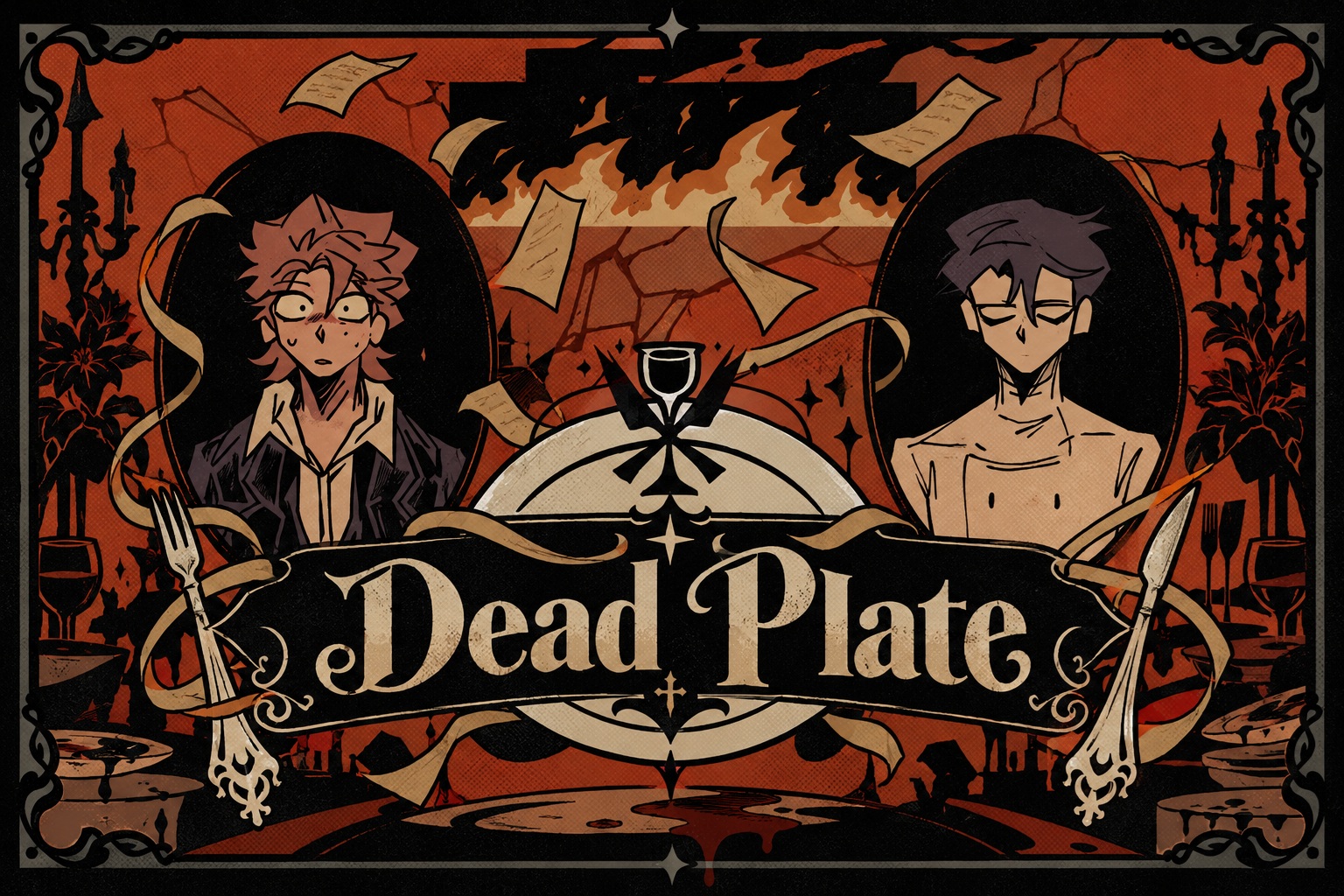
Dead Plate is a stylish 2D restaurant-management horror RPG from STUDIO INVESTIGRAVE that begins with the pressure of serving demanding customers and gradually transforms into something far more disturbing. Players control Rody Lamoree, an energetic waiter who accepts a one-week job at the upscale French bistro La Gueule de Saturne. His immediate goal is simple: earn enough money for a special dinner while surviving seven increasingly stressful days of work. What initially looks like a quirky restaurant-management game slowly reveals a darker psychological story involving obsession, loneliness, uncomfortable relationships, and the unsettling behaviour of the restaurant's charismatic chef.
The game divides its experience between busy restaurant shifts and quieter story-driven exploration. During service, Rody must seat customers, take orders, deliver meals, clear tables, collect payment, and keep guests satisfied before time runs out. Once the restaurant closes, the tone changes considerably as conversations, environmental details, suspicious rooms, and interactions with chef Vincent "Vince" Charbonneau begin revealing what may be happening behind the polished dining area. This contrast between ordinary work and growing unease gives Dead Plate much of its personality.
Now playable online through Lemon Web Games, Dead Plate brings its restaurant-management shifts, psychological horror, character-driven storytelling, point-and-click exploration, upgrades, branching choices, and multiple endings directly into the web browser. Players can experience Rody's week at La Gueule de Saturne from the hectic opening shifts through the increasingly uncomfortable events surrounding Vince and the restaurant. Efficient service helps Rody earn more money and purchase useful upgrades, while careful exploration outside working hours reveals details that can influence how the story develops. The result is a horror game where ordinary routine slowly becomes part of the tension.
Rody Lamoree Is an Unusual Horror Protagonist
Rody does not arrive at the restaurant expecting anything supernatural or dangerous. He simply needs work and hopes to earn enough money during the week to accomplish something personally important to him.
His energetic personality contrasts strongly with the increasingly unsettling atmosphere around the restaurant. He is expressive, social, and sometimes impulsive, which makes his interactions with Vince especially interesting.
Rather than presenting a silent protagonist, Dead Plate gives Rody a clear personality and emotional history. His motivations and relationships become increasingly important as the story develops.
La Gueule de Saturne Looks Elegant on the Surface
The restaurant presents itself as a sophisticated French bistro where presentation, service, and culinary quality are taken seriously. Customers expect quick attention and properly delivered meals, creating genuine pressure during every shift.
The dining room appears professional and carefully maintained, while Vince operates the kitchen with the confidence of an experienced chef. Everything initially seems like an ordinary high-end workplace.
That normality makes later discoveries more effective. The more polished the restaurant appears in public, the more uncomfortable its hidden details become.
Each Shift Plays Like a Restaurant Management Game
When service begins, Dead Plate temporarily feels like a completely different genre. Rody needs to manage several tables simultaneously while customers arrive, order meals, eat, and eventually leave.
The player must move efficiently between guests and the kitchen. Forgetting one table for too long can reduce earnings and make the shift harder to complete successfully.
This creates genuine management pressure rather than using restaurant work only as background decoration. Performing well during service directly affects Rody's finances and progression.
Seating Customers Starts the Workflow
Customers first need to be placed at available tables before anything else can happen. Efficient seating helps keep the dining room organized and prevents unnecessary delays.
Once several tables become occupied, the workload begins increasing rapidly. New arrivals may appear while existing customers are waiting for orders or meals.
The challenge comes from keeping the entire room moving rather than focusing on one table at a time. Strong players develop a routine that minimizes wasted movement.
Taking Orders Requires Good Timing
After customers settle in, Rody must collect their orders and ensure the information reaches the kitchen.
Leaving someone waiting too long can create problems, but rushing between tables without planning can waste valuable time. Players need to think about which task can be completed while travelling toward another.
This encourages efficient routes through the restaurant. One trip across the room can potentially handle several responsibilities if planned correctly.
Delivering Meals Keeps Customers Happy
Once food is prepared, Rody needs to deliver it to the correct table quickly. This becomes increasingly difficult once several meals are ready simultaneously.
The restaurant layout therefore matters. Remembering where each table is located and which customer is waiting helps reduce unnecessary movement.
Later shifts become more demanding as the number of responsibilities grows. The player gradually learns to operate almost automatically under pressure.
Clearing Tables Is Part of the Cycle
Finished customers do not simply disappear. Their tables need to be cleared before the space becomes available again.
This creates another task competing for Rody's attention. Clearing too slowly can reduce how many customers can be served during the shift.
The system creates a satisfying management loop: seat customers, take orders, deliver meals, collect payment, clear tables, and begin again.
Tips Reward Efficient Service
Good service results in better earnings, giving players a practical reason to improve beyond simply finishing the shift.
More money provides greater freedom when purchasing upgrades and preparing for later days. The restaurant-management performance therefore connects directly to long-term progression.
This makes every shift meaningful. A particularly efficient day can make the rest of the week noticeably easier.
Upgrades Make Later Shifts More Manageable
Money earned from work can be spent on improvements that make Rody more effective during service.
Useful upgrades can reduce the frustration of later shifts by improving efficiency and allowing the player to handle larger workloads. Choosing what to purchase becomes another small strategic decision.
Upgrades also create visible progression. The first day may feel chaotic, while later shifts become easier to control because both Rody and the player have improved.
The Seven-Day Structure Creates Constant Momentum
Dead Plate unfolds across one working week, giving the story a clear timeline.
Each day brings another restaurant shift and another opportunity for the relationship between Rody and Vince to develop. The limited time frame keeps events moving forward rather than allowing the story to remain static.
Knowing that the week will end also creates anticipation. Players naturally begin wondering what will happen before Rody's job is finished.
Vince Is the Centre of the Mystery
Vincent Charbonneau is the restaurant's chef and one of the most important characters in Dead Plate. He is polished, talented, confident, and increasingly difficult to understand.
His conversations with Rody gradually reveal more about his personality and the way he views relationships, food, and human connection. What initially seems like professional interest can begin feeling much more personal.
The tension works because Vince is not immediately presented as a simple villain. His behaviour becomes unsettling gradually, allowing uncertainty to build.
Rody and Vince Have Strong Character Chemistry
Much of Dead Plate's storytelling depends on conversations between its two central characters.
Rody's expressive personality contrasts with Vince's controlled behaviour, creating exchanges that can be funny, uncomfortable, or unexpectedly personal. Their relationship becomes more complicated as the week continues.
This character focus gives the horror greater emotional weight. The player is not simply escaping a monster; they are watching two people interact in increasingly unhealthy circumstances.
The Restaurant Changes After Closing
Once service ends, the dining room becomes a very different space. Without customers and constant tasks, the restaurant feels quieter and more isolated.
This is when exploration becomes more important. Rooms, objects, and environmental details that seemed irrelevant during work can suddenly become suspicious.
The shift in atmosphere is extremely effective because the location itself has not necessarily changed. What changes is the player's understanding of it.
Exploration Reveals Hidden Details
Dead Plate encourages players to investigate the restaurant rather than treating every area as simple scenery.
Interacting with objects and examining unusual locations can reveal additional information about Vince, Rody, and what may be happening behind the scenes.
Some discoveries contribute directly to progression, while others deepen the atmosphere. Careful players are rewarded with a better understanding of the story.
Point-and-Click Elements Add Adventure-Game Variety
Outside the hectic management sections, the game adopts a slower interaction style closer to traditional point-and-click adventures.
Players can investigate objects, search rooms, and consider how discovered information connects to the larger mystery.
This creates a useful contrast with the time pressure of restaurant service. One part of the game rewards speed, while another rewards curiosity and careful observation.
The Horror Develops Gradually
Dead Plate does not rely on constant jumpscares from the beginning. Instead, it allows the restaurant routine to establish a sense of normality before slowly introducing disturbing elements.
Small details become harder to ignore as the week continues. Conversations gain different meanings, previously ordinary areas become suspicious, and the atmosphere becomes increasingly uncomfortable.
This gradual escalation makes the horror more effective. Players have enough time to become familiar with the restaurant before that familiarity begins working against them.
Food Becomes Part of the Horror
Because the entire game takes place around an upscale restaurant, food naturally becomes one of its most important themes.
Meals initially represent ordinary work, but their meaning becomes increasingly unsettling as players learn more about Vince and the restaurant.
Dead Plate uses this contrast effectively. Fine dining normally suggests refinement and luxury, yet the story gradually makes that polished presentation feel disturbing.
Psychological Horror Matters More Than Monsters
The game's strongest horror comes from character behaviour, obsession, emotional dependency, and the discomfort of realizing that something is deeply wrong.
Rather than filling the restaurant with conventional monsters, Dead Plate focuses on the relationship between people and the ways unhealthy attachment can become dangerous.
This makes the experience feel more personal. The threat is connected directly to the characters the player has spent the week getting to know.
Choices Can Influence the Outcome
Player decisions matter as the story develops. Certain interactions and discoveries can lead toward different outcomes.
This encourages players to pay attention rather than simply rushing through dialogue. A small choice may become much more significant later.
The branching structure also gives the game strong replay value. Completing one route does not necessarily reveal everything the story contains.
Multiple Endings Encourage Replay
Dead Plate includes multiple endings, each reflecting different decisions and circumstances surrounding Rody's final experiences at the restaurant.
Some outcomes are considerably darker than others, giving players a reason to revisit earlier choices and search for alternative paths.
A second playthrough can also feel very different because the player already understands the warning signs. Conversations that seemed innocent the first time may suddenly feel much more uncomfortable.
The Art Style Gives Dead Plate a Strong Identity
Dead Plate uses stylized 2D artwork with expressive character portraits and environments that balance charm with unease.
The restaurant looks attractive enough to feel believable as a desirable workplace, while later horror imagery creates a sharp contrast against that presentation.
Rody and Vince are also visually distinctive, helping their personalities remain memorable throughout the experience.
Music and Sound Reinforce the Mood
The audio presentation supports both sides of the game. Restaurant shifts feel busy and energetic, while quieter story sections create more space for tension.
Sound effects during service provide useful feedback as customers arrive, orders are handled, and tasks are completed.
As the horror develops, silence and atmosphere become increasingly important. The game knows when not to overwhelm the player with sound.
Management Skills and Story Curiosity Work Together
A player interested only in the restaurant mechanics can still enjoy improving service efficiency, while someone focused on narrative can explore the darker mystery.
The strongest experience comes from engaging with both sides. Better shifts provide more resources, while thorough exploration reveals more of the story.
This unusual combination is what makes Dead Plate stand out. Few horror games ask players to worry about both suspicious chefs and whether table three has received its meal yet.
Playing Dead Plate Online Today
Through Lemon Web Games, Dead Plate can now be played directly in your web browser with no downloads or setup required. Features of the web-based version include:
New players should focus on learning an efficient restaurant routine during the first few days. Group tasks whenever possible, avoid unnecessary movement, and invest earnings in upgrades that reduce pressure during later shifts. Stronger service performance gives more flexibility as the story becomes increasingly demanding.
Outside work, explore carefully and pay attention to conversations. Dead Plate hides important information inside ordinary interactions, and details that seem minor can become meaningful later. Understanding the characters is just as important as understanding the restaurant.
Who Should Play Dead Plate
Dead Plate is particularly suitable for players who enjoy horror that develops gradually through character interactions rather than relying entirely on monsters and jumpscares. The relationship between Rody and Vince provides much of the tension, making the story feel personal.
It should also appeal to players who enjoy management games but want something stranger than an ordinary restaurant simulator. Serving customers becomes surprisingly engaging on its own, which makes the eventual shift into horror even more effective.
Play Dead Plate Online Now
Dead Plate begins with what appears to be a simple one-week restaurant job. Seat customers, take orders, deliver meals, clear tables, earn tips, purchase upgrades, and try to become more efficient with every shift. Then the restaurant closes, the customers disappear, and the real questions begin.
Through Lemon Web Games, players can experience Dead Plate directly in the browser and follow Rody Lamoree through seven increasingly unsettling days at La Gueule de Saturne. Work hard during service, investigate carefully after hours, and decide how much you really want to know about the chef behind the kitchen doors.
Final Thoughts
Dead Plate succeeds because its two halves strengthen each other. Restaurant management establishes routine, familiarity, and pressure, while the psychological horror gradually corrupts that familiar environment. A dining room that initially feels like a workplace becomes much more uncomfortable once the player understands what may be happening elsewhere in the building.
Rody and Vince are equally important to that transformation. Their personalities, conversations, and increasingly complicated relationship give the horror emotional weight beyond simple shock value. The player spends enough time with both characters for later events to feel personal rather than arbitrary.
Through Lemon Web Games, Dead Plate can now be enjoyed directly in the browser as an unusually effective mixture of management game, visual novel, point-and-click adventure, and psychological horror. It can make serving dinner surprisingly stressful and an empty restaurant genuinely unsettling. For players who enjoy horror built around atmosphere, character relationships, and slow revelation, one week at La Gueule de Saturne is more than enough to leave a lasting impression.











Comments 0