

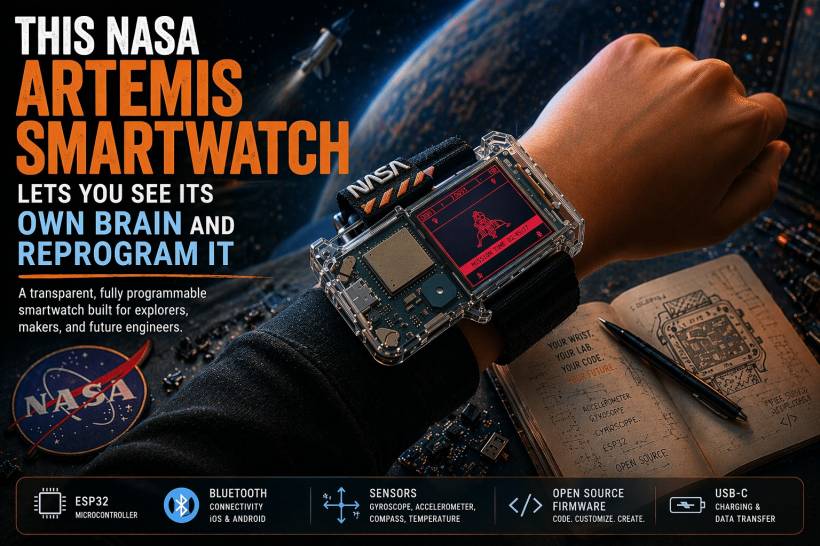
Most smartwatches are designed to feel polished, sealed, and a little mysterious. You wear them, tap the screen, maybe track your steps or glance at notifications, but you are rarely invited to understand what is actually happening under the surface. That is part of the appeal for many mainstream devices. They are meant to feel effortless.
The NASA Artemis Watch 2.0 takes a very different approach.
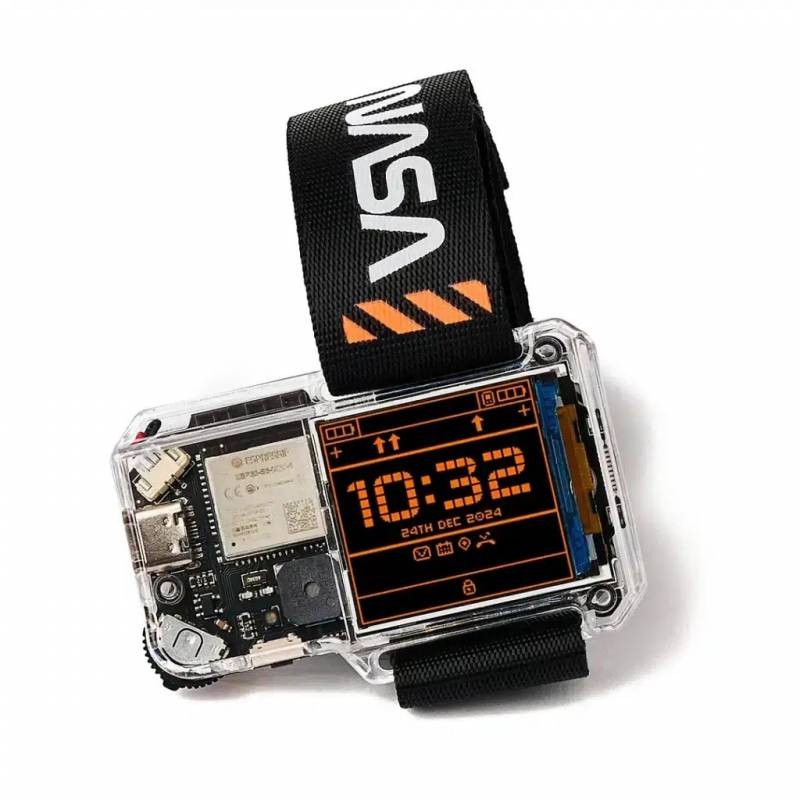
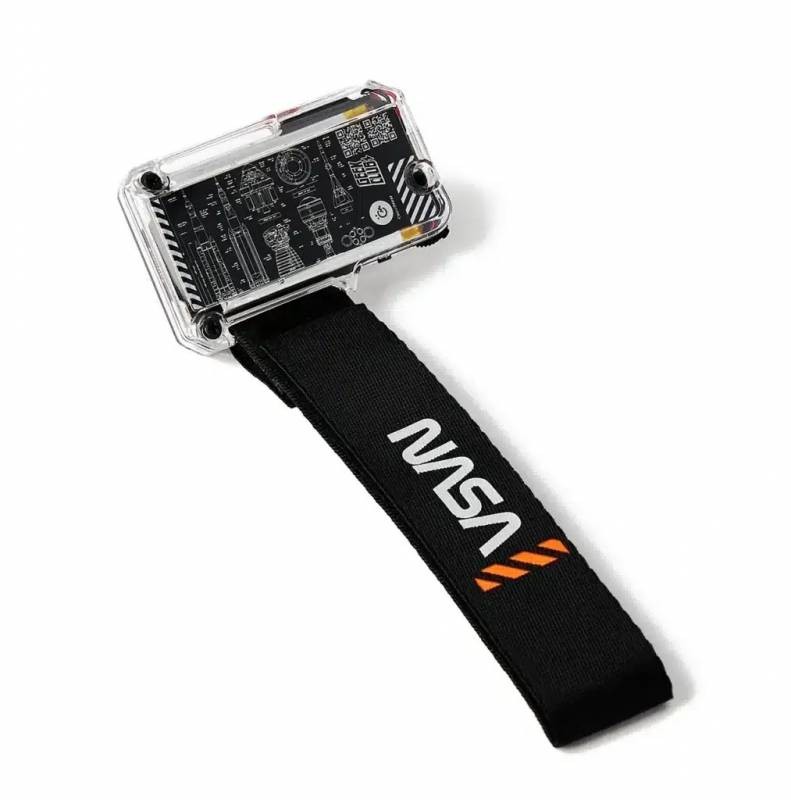
Released by CircuitMess, this smartwatch stands out not because it is trying to compete with premium wearable brands, but because it openly shows you what it is made of and encourages you to experiment with it. Instead of hiding the electronics, it puts the mainboard on display inside a large transparent casing. The result feels somewhere between a smartwatch, a maker project, and a science kit for people who like the idea of wearing something they can actually reprogram.
A Smartwatch With a Very Different Personality
At first glance, the Artemis Watch 2.0 does not look like a typical modern wearable. Its design leans heavily into a retro-futuristic style, with a chunky rectangular shape and visible internal components that immediately give it a more experimental feel. It is the kind of device that looks less like a sleek fashion accessory and more like something built for curious minds.
That is probably why comparisons to the Pip-Boy from Fallout come so naturally. It has that same rugged, techy charm that makes it feel more like a gadget from a sci-fi workbench than a piece of minimalist consumer electronics.
And honestly, that seems to be the whole point. This is not trying to be subtle. It wants you to notice the hardware.
Built Around the ESP32 for Tinkerers and Learners
At the heart of the watch is an ESP32 microcontroller, which is a smart choice for a project like this. The ESP32 has built a strong reputation among hobbyists, students, and makers because it is well documented, widely supported, and relatively accessible for people who want to build connected devices without getting buried under unnecessary complexity.
That matters here because the Artemis Watch 2.0 is clearly designed to be more than just a finished product. It is meant to be explored. Using a familiar and capable platform like the ESP32 makes the device more approachable for anyone who wants to dig into how it works, modify its behaviour, or create something new on top of it.
For people who already enjoy working with DIY electronics, that alone makes the watch more interesting than many polished commercial alternatives.

The Hardware Keeps Things Simple and Practical
In terms of raw hardware, the watch is modest, and that seems intentional. It includes Bluetooth support for pairing with Android and iOS devices, along with incoming notification support. It also comes with a gyroscope, accelerometer, temperature sensor, and compass.
That gives users enough to work with for creative projects, sensor-based experiments, and custom watch functions without pretending to offer the full biometric feature set of a premium fitness watch.
There are some clear omissions. You will not find features like heart rate tracking or blood oxygen monitoring here. So anyone expecting something on the level of an Apple Watch or a high-end fitness wearable will need to adjust their expectations pretty quickly.
But that does not feel like a weakness as much as a design decision. This watch is not trying to win a health-tracking arms race. It is trying to be hackable, understandable, and educational.
USB-C is used for both charging and data transfer, which is a welcome choice. It keeps things practical and avoids the annoyance of outdated charging standards.
The Real Appeal Is the Open-Source Firmware
What makes the Artemis Watch 2.0 genuinely interesting is not the sensor list or the transparent shell on its own. It is the fact that the firmware is open source and the device is fully programmable.
That changes the relationship between the user and the gadget. Instead of being locked into whatever features the manufacturer decided were enough, users can build their own watch faces, create apps, and work directly with the sensor data. In other words, the watch is not just a device to use. It is a platform to experiment with.
That kind of openness is becoming increasingly rare in consumer electronics. Most modern devices are designed to keep users within tightly controlled software environments. You can customise the surface, but not the underlying system. Here, CircuitMess is doing the opposite. It is inviting users to get their hands dirty.
For the right audience, that is much more exciting than another polished notification screen.
A More Honest Introduction to How Devices Work
There is also a bigger idea behind this product. Most people use connected devices every day without ever really understanding how those devices function. Smartwatches, phones, tablets, and other gadgets often feel like sealed boxes. They work, but their internal logic remains invisible.
The Artemis Watch 2.0 pushes against that trend.
Its transparent housing is not just there to look cool, though it certainly helps. It also makes a statement. It tells the user to look closer. It reminds them that this device is made up of real parts, real components, and systems that can be explored rather than simply accepted as magic.
That makes it particularly interesting as an educational tool. A younger user who is starting to get curious about electronics, coding, or embedded systems could get something much more valuable here than they would from a closed-off consumer smartwatch. Instead of just wearing a smart device, they can begin to understand how one is built and how software interacts with hardware.
That kind of experience can be far more meaningful than a classroom explanation alone.
Not Really a Lifestyle Watch, and That Is Fine
At USD129 with free worldwide shipping, the Artemis Watch 2.0 sits in an unusual space. It is not cheap enough to feel like a casual impulse buy, but it is also not priced like a premium wearable. It lands somewhere between novelty gadget, educational kit, and introductory STEM project.
That probably defines its audience quite clearly.
This is not the sort of watch people buy because they want a sleek daily-wear accessory or serious health tracking. It is also not trying to carry the status or legacy of a traditional watch. CircuitMess does not seem to be pretending otherwise, and that honesty works in its favour.
The appeal here is for a certain kind of person. The kind who sees a transparent programmable smartwatch and immediately starts thinking about what they could build with it. The kind who is more interested in sensors, firmware, and experimentation than in matching a watch to an outfit.
For those people, the value is obvious.
Final Thoughts
The NASA Artemis Watch 2.0 is not a smartwatch in the usual sense. It is less about polished convenience and more about curiosity. It offers just enough hardware to be functional, but its real strength is in how openly it invites users to learn, modify, and create.
That is what makes it stand out.
In a market full of sealed devices designed to hide their inner workings, this watch does the opposite. It puts its brain on display and asks you to explore it. For makers, students, hobbyists, and anyone who still enjoys the idea of technology as something to understand rather than simply consume, that makes it far more interesting than its specs might suggest at first glance.











Comments 0