

WhatsApp has always had this reputation of being the "simple" messaging app. You open it, you chat, you send a photo, you move on. No loud banners, no autoplay videos, no feeling like you're walking through a shopping mall just to reply "ok."
Which is exactly why the idea of ads showing up in WhatsApp has been such a sore spot for a lot of people.
Meta tried pushing ads into WhatsApp before and got a pretty loud reaction. And now it looks like the company still wants ads in the mix, but may eventually add a second option: pay a monthly fee to make certain areas ad-free.
This isn't officially launched yet, but the direction feels familiar.
What Meta Has Said So Far: Ads in Status
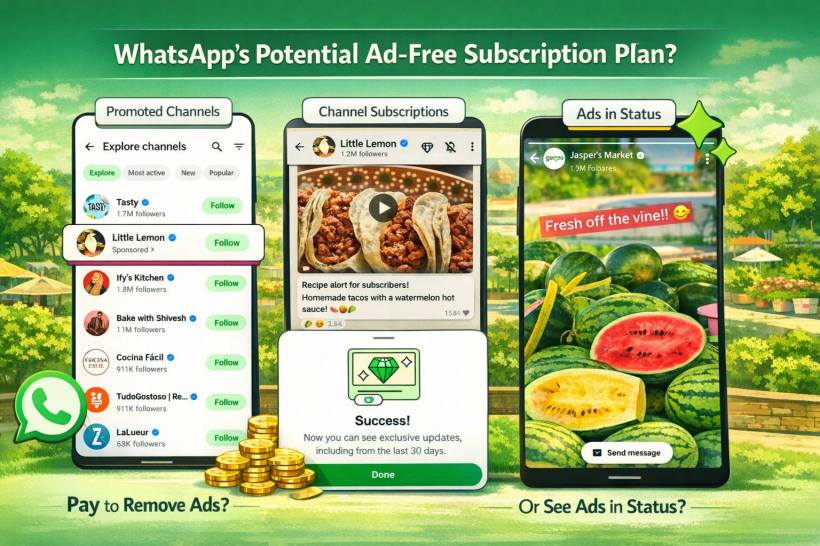
Meta has already stated it wants to place ads in WhatsApp Status. Status is WhatsApp's "stories-style" feature, where posts disappear after 24 hours. From Meta's point of view, it's a natural place to slide in advertising, because it looks and behaves like other story platforms that already run ads.
Meta's public explanation is basically this: ads in Status help people discover businesses and quickly start conversations about products or services being promoted.
They've also emphasized that advertisers won't get access to the most sensitive parts of WhatsApp, like your phone number, your private messages, calls, or group chats.
That promise matters, but it also doesn't magically make ads feel welcome, especially for users who've been on WhatsApp back when it was proudly ad-free and subscription-based (a long time ago, but still).
The Real Problem: "Okay, but can I turn ads off?"
Right now, the answer is: no.
If ads are in Status, you either live with them or you stop using Status. There isn't a clean "off switch" for ads in the way people usually hope.
And that's where the next part becomes interesting.
A Code Hint Suggests a Paid "No Ads" Subscription
According to a report by Android Authority, they inspected a newer WhatsApp Android version and found text strings that point to a possible subscription option that removes ads, at least in certain sections.
From the wording they surfaced, the "no ads" plan appears to target Status and Channels.
Channels are WhatsApp's broadcast-style feature where users can follow creators, brands, or organizations. Channels also happen to be one of the more "platform-like" parts of WhatsApp, meaning it fits Meta's ad playbook more than private chats do.
The discovered text also suggests the subscription price could change depending on whether your WhatsApp account is connected to Meta's Accounts Center (the system that links Facebook, Instagram, and WhatsApp identity features together). In other words, Meta may try to bundle, discount, or adjust pricing based on how "connected" your account is inside its broader ecosystem.
That doesn't confirm the feature is coming tomorrow, but it does indicate someone is actively building the plumbing for it.
How This Might Work in Real Life
Even though details are limited, the likely shape of this looks like:
So it's not really "pay for ad-free WhatsApp" in the full sense. It's more like "pay for ad-free discovery surfaces," while the chat experience remains the same.
That distinction matters, because Meta can still say "Your messages are private" while turning the top and edges of the app into a monetized space.
Meta Has Already Done This Elsewhere
This idea isn't new for Meta.
Ads are baked into Facebook and Instagram by default. Meta also pushed ads into Facebook Messenger, which proves it's willing to monetize messaging environments too, as long as it can do it without breaking the core experience.
On top of that, Meta has already launched paid subscription options on Facebook and Instagram in some regions, where users can pay monthly for an ad-free experience.
So if WhatsApp heads in the same direction, it's not some wild new experiment. It's basically Meta applying the same business template to the last major app in its lineup that still feels mostly "clean."
Why Region Matters (And Why Malaysia Might Not Get It Immediately)
One reason this could roll out unevenly is that Meta's ad-free subscription options on its other platforms were tied to regulatory pressure in certain markets, particularly parts of Europe.
That kind of rollout pattern usually looks like:
So even if WhatsApp builds the feature globally, that doesn't mean Malaysia gets it right away, or at the same price, or even with the same rules.
The Big Question: What Would People Actually Pay?
This is the part that always gets messy.
A lot of users say they hate ads, but the moment there's a price tag, the reaction becomes:
"I hate ads… but do I hate them enough to pay every month?"
Meta knows this, and it's why subscription pricing is such a delicate balancing act. Too high, and people just tolerate ads. Too low, and the subscription doesn't meaningfully offset ad revenue.
If WhatsApp's "no ads" option is real, expect pricing to be tested, adjusted, and possibly bundled with other Meta services depending on your region.
What We Know Right Now (And What We Don't)
Here's the honest state of things:
What seems likely:


What's still unknown:
The Takeaway
WhatsApp moving toward ads is already a sensitive change. A paid "no ads" option might sound like a compromise, but it also creates a new reality: the clean experience becomes something you potentially pay for, while everyone else gets the monetized version by default.
If Meta follows through, WhatsApp may start looking less like a pure messaging tool and more like a platform with tiers.
Not necessarily worse for everyone, but definitely different from what people signed up for.











Comments 0