

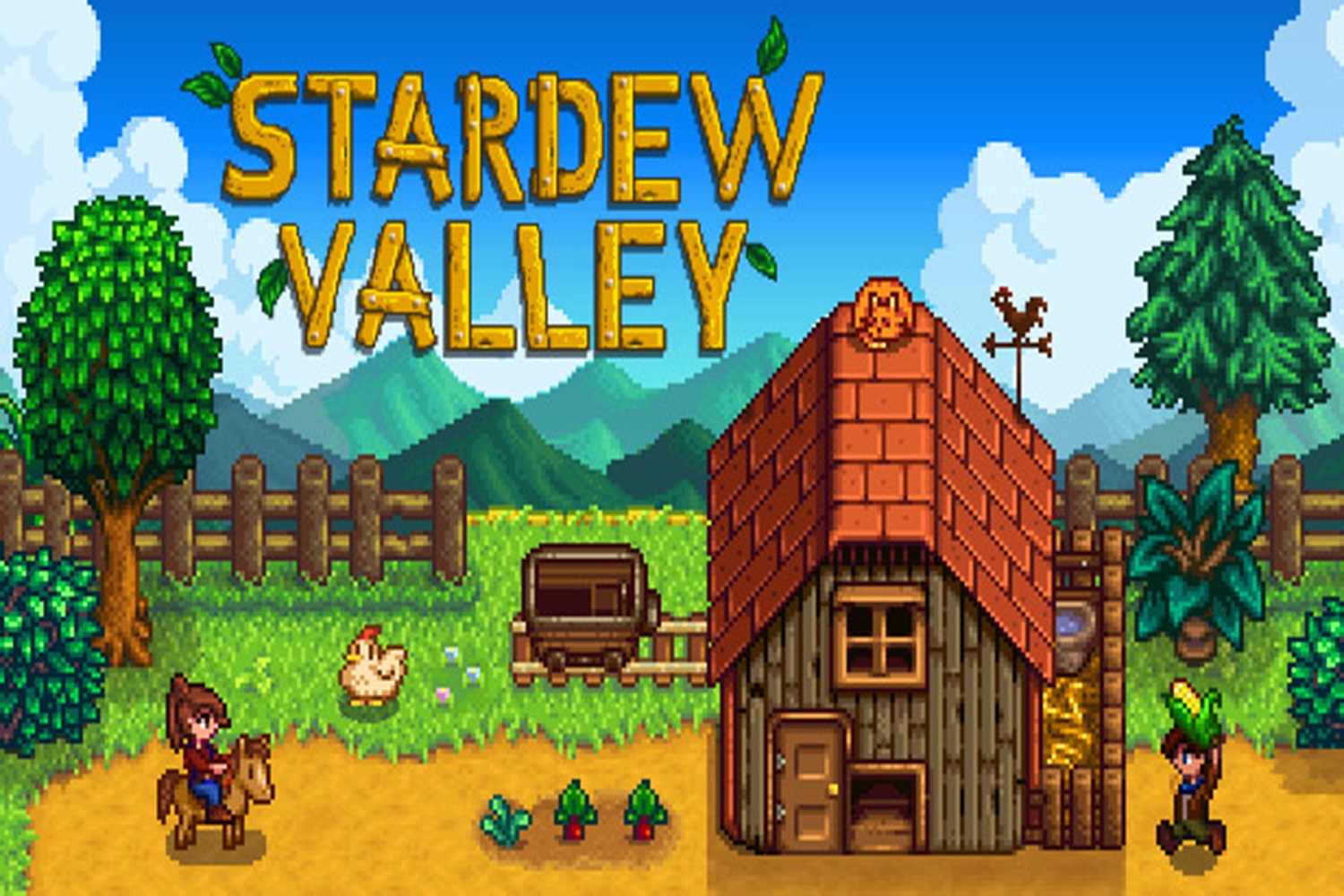
Stardew Valley begins with a feeling that many players immediately understand: being tired of the same routine and wanting something different. Your character works inside the gray offices of Joja Corporation until a letter from their late grandfather offers an escape—a neglected farm in Stardew Valley that can become yours whenever city life becomes unbearable. Arriving in the countryside means leaving the office behind, meeting the residents of nearby Pelican Town, and beginning again with little more than basic tools, an overgrown field, and the freedom to decide what kind of life you want to build.
What follows is far more than a simple farming game. Crops need to be planted and harvested according to the seasons, animals can be raised, buildings can be constructed, tools can be upgraded, fish can be caught, mines can be explored, monsters can be fought, relationships can develop, and the town itself contains years of stories waiting to be discovered. Players can concentrate on becoming wealthy farmers, spend most of their time fishing, disappear into the mines searching for valuable ore, restore the Community Center, pursue the Joja alternative, build friendships, get married, raise a family, decorate the farm, or simply spend quiet days doing whatever feels enjoyable. Stardew Valley rarely insists that there is only one correct way to progress.
Now playable online through Lemon Web Games, Stardew Valley brings its relaxing mixture of farming, exploration, crafting, fishing, mining, relationships, seasonal events, and open-ended progression directly into the web browser. Players can turn an abandoned property into a productive farm, become part of the Pelican Town community, explore dangerous underground areas, restore important locations, discover secrets, and gradually shape the valley according to their own priorities. The game's calendar provides structure without forcing everyone toward the same objective, making each playthrough feel personal. Whether you want to maximize profit or simply enjoy another peaceful morning watering crops while the soundtrack plays, Stardew Valley gives you the freedom to create your own routine.
Leaving Joja Behind
The opening sequence establishes one of Stardew Valley's central themes before the player has planted a single crop. Life inside Joja Corporation is monotonous, impersonal, and exhausting. Rows of employees sit inside identical cubicles while the protagonist gradually realizes that this cannot be the life they want forever. The farm inherited from their grandfather becomes an opportunity to choose something more meaningful.
That decision gives the farming mechanics emotional context. Clearing weeds and planting parsnips may appear simple, but those first actions represent complete independence from the life the protagonist abandoned. Progress is no longer measured by completing another office shift. The player decides what deserves their time.
Joja does not disappear completely, however. The company maintains a major presence in Stardew Valley through JojaMart, creating one of the game's larger progression choices. Players can support the community-oriented restoration of the Community Center or embrace Joja's more commercial alternative. Even after leaving the corporation, its influence remains part of the valley.
Your Grandfather's Farm Begins Almost Completely Overgrown
The inherited property is far from ready for agriculture when the player arrives. Trees, stones, weeds, branches, and other debris cover large areas of the land. Clearing even a small section requires energy and time. The first few days therefore feel almost like reclaiming the farm from nature.
This gradual transformation is one of Stardew Valley's most satisfying forms of progression. The starting property can look chaotic, but each season gives the player opportunities to reshape it. Fields appear where weeds once grew, paths connect buildings, fences organize animal areas, and machines begin processing harvested goods. After several in-game years, the same farm can become almost unrecognizable.
The important part is that no one forces the player to design it one particular way. Efficiency-focused farms can become carefully organized production systems, while decorative farms may prioritize gardens, orchards, ponds, pathways, and themed areas. The land belongs entirely to the player.
The First Crops Teach the Farming Cycle
Mayor Lewis provides the introduction to Pelican Town, while early farming tasks quickly establish the rhythm that will define many days ahead. Seeds need to be purchased or obtained, planted into tilled soil, watered regularly, and given enough time to mature. Once ready, crops can be harvested and sold for money. That income funds the next stage of growth.
Different crops take different amounts of time to mature. Some produce only once, while others continue providing additional harvests after reaching maturity. This encourages planning around both immediate profit and the number of days remaining in the current season. Planting something too late can result in losing the crop when the weather changes.
The system is easy to understand but gradually becomes more strategic. Players learn which crops provide stronger returns, which are needed for bundles or recipes, and which should be saved for processing. Farming grows from a simple daily task into a long-term planning system.
Spring Feels Like a Fresh Beginning
Spring is the first season and naturally introduces many of Stardew Valley's basic routines. The landscape becomes bright and green, crops such as parsnips, potatoes, cauliflower, and strawberries become important, and the player begins meeting the town's residents. Everything feels like a fresh start. The relatively gentle atmosphere fits the beginning of a new life.
Spring also teaches seasonal awareness. Crops that thrive now will not necessarily survive once summer arrives. Forage items change, fish availability shifts, and festivals introduce their own calendar events. The player quickly realizes that the world changes throughout the year.
Returning to spring after surviving an entire first year feels very different. The player now has better tools, stronger skills, more money, upgraded buildings, and much greater knowledge. The same season that once felt uncertain becomes an opportunity for ambitious expansion.
Summer Brings Bigger Farming Opportunities
Summer introduces a new selection of crops and a noticeably different visual atmosphere. Blueberries, melons, corn, peppers, and other plants expand the range of possible farm layouts. Many players begin earning considerably more money during this season because the farm is larger and better equipped. The first major investments often become possible.
The hotter season also encourages additional exploration. Different fish appear, new forage becomes available, and festival events provide reasons to visit the town. Players who spent spring concentrating heavily on farming may begin diversifying into fishing, mining, or social activities. Stardew Valley rewards this flexibility.
Summer can also expose weaknesses in an inefficient farm routine. Watering a huge field manually can consume a substantial amount of energy and time. This encourages players to pursue sprinklers, tool upgrades, and better layouts. Automation gradually becomes more valuable.
Fall Can Become Extremely Profitable
Fall is often one of the most productive seasons for established farms. Crops such as cranberries, pumpkins, grapes, and other valuable harvests can provide large amounts of income. By this stage, players generally understand farming much better and can plan fields more efficiently. The farm begins feeling like a genuine operation rather than an experiment.
The autumn visuals also give the valley a warm atmosphere. Trees change color, seasonal forage appears, and the soundtrack complements the transition toward the end of the year. The world feels noticeably different from summer even though the basic geography has not changed.
Fall also creates a sense of preparation. Winter is approaching, meaning ordinary crop farming will soon become limited. Players begin thinking about what should be completed before the season changes. Stardew Valley's calendar continually creates natural short-term goals.
Winter Changes the Entire Daily Routine
Winter removes most conventional outdoor crop farming, dramatically changing how many players spend their days. Fields that demanded hours of watering suddenly require little attention. This creates an excellent opportunity to focus on mining, fishing, relationships, farm construction, tool upgrades, and other projects that were neglected during the busier seasons.
The snow-covered valley also feels completely different visually. Familiar locations become quieter and more subdued. Animals remain important, but much of the farm's activity shifts away from agriculture. Winter feels less like a punishment and more like a change of pace.
Experienced players can still find productive ways to use the season. Winter forage, greenhouse farming, animal products, artisan goods, mining, and other systems prevent the economy from stopping completely. The season encourages diversification rather than inactivity.
Energy Determines How Much Can Be Done Each Day
Almost every physical activity consumes energy. Chopping trees, breaking rocks, watering crops, using farming tools, and many other actions reduce the player's energy bar. Once it becomes low, continuing recklessly can create problems. The day therefore becomes a resource-management challenge.
Early in the game, energy limitations feel significant because tools are inefficient and the character has relatively little capacity. Clearing a large section of farmland can exhaust the player quickly. Food becomes useful because eating restores energy and allows another task to be completed before bedtime.
Over time, upgrades and progression reduce these restrictions. Better tools accomplish more with less effort, improved food provides stronger bonuses, and increased maximum energy gives the player greater flexibility. The character gradually becomes capable of much more productive days.
Time Is Often More Valuable Than Money
Every day begins in the morning and progresses toward late night. Players cannot remain outside indefinitely because eventually the character needs sleep. This creates one of Stardew Valley's most important strategic resources: time. Even with full energy, there may not be enough hours to complete everything.
A typical day might involve watering crops, checking animals, processing goods, visiting Pierre's shop, giving someone a birthday present, fishing for a specific species, and reaching the mines before it becomes too late. Trying to do everything usually creates rushed decisions. Priorities matter.
This daily time limit gives Stardew Valley structure without creating excessive pressure. There will always be another day, season, and year. Missing one opportunity rarely destroys the playthrough. The game encourages planning without demanding perfection.
Rainy Days Can Feel Like Unexpected Holidays
Rain removes the need to manually water outdoor crops, giving players additional time and energy for other activities. Early in the game, this can feel like receiving an entire free morning. The player can immediately head toward the mines, fishing spots, shops, or social visits without spending hours caring for fields.
Weather also influences fish availability and certain events. This gives rain practical value beyond convenience. Players may actively hope for bad weather because it creates opportunities that sunny days do not.
Later, once sprinklers handle most watering automatically, rain becomes less transformative. Even then, it contributes to the atmosphere of the valley and changes daily plans. The world feels more alive because conditions are not identical every morning.
Tool Upgrades Gradually Transform Everyday Work
The player begins with basic farming tools that are functional but inefficient. The axe struggles with larger stumps, the pickaxe requires repeated hits against tougher rocks, the watering can covers only a small area, and other limitations slow progress. Clint the blacksmith can upgrade these tools using money and metal bars. Each improvement noticeably changes daily work.
Upgraded watering cans can cover larger areas, while stronger axes and pickaxes gain access to resources that were previously impossible to remove. Tool progression therefore affects both efficiency and exploration. A seemingly ordinary upgrade may open an entirely new area of the farm.
The challenge is choosing when to give a tool to Clint because the upgrade process temporarily removes it from use. Weather and season timing become important. Smart planning can minimize inconvenience.
Sprinklers Completely Change Large-Scale Farming
Few upgrades transform the daily routine as dramatically as sprinklers. Once installed, they automatically water nearby crops every morning. This frees huge amounts of time and energy that would otherwise be spent manually maintaining fields. Large-scale agriculture suddenly becomes practical.
The progression from basic sprinklers to more efficient versions creates a strong incentive to improve mining and crafting skills. Better materials eventually allow larger areas to be automated. Farm layout becomes increasingly important because each sprinkler covers a defined pattern.
Automation does not remove farming from the game. Players still need to plant, harvest, fertilize, and plan crops. It simply changes where effort is required. The farm becomes more sophisticated as the player becomes more experienced.
Fertilizer Adds Another Layer to Crop Planning
Fertilizers can influence crop quality, growth speed, water retention, or other agricultural characteristics depending on the type used. This gives players additional control over farming outcomes. High-quality crops often sell for more money and may be valuable for gifts or specific objectives. Preparation before planting therefore matters.
The system becomes especially useful when growing expensive crops or pursuing particular quality requirements. Spending resources on fertilizer can be worthwhile when the final harvest is valuable enough. Players need to consider cost against potential benefit.
This adds strategic depth without making basic farming complicated. Beginners can grow crops successfully without mastering fertilizer immediately. More advanced players can use it to optimize their fields later.
Animals Add a Completely Different Farming Routine
Crop farming is only one side of the agricultural experience. Coops and barns allow players to raise animals such as chickens, ducks, rabbits, cows, goats, sheep, and pigs. These animals produce valuable goods that can be sold directly or processed into more profitable artisan products. The farm begins feeling significantly more alive once animals arrive.
Animals require regular care. Feeding them, providing shelter, and interacting with them improves their condition and relationship with the player. Happy animals can produce better-quality goods. Neglect therefore has practical consequences.
The routine feels different from crop farming because animals remain important across multiple seasons. Winter may stop ordinary fields, but livestock continues contributing to the farm. Diversification provides economic stability.
Chickens Are an Accessible Introduction to Livestock
The coop and its chickens are often among the first animal investments players make. Eggs provide a steady daily product that can be sold or processed into mayonnaise. This creates an easy introduction to the relationship between raw goods and artisan processing. One simple machine can significantly increase value.
Chickens also make the farm feel more active. Watching them move around outdoor areas creates visual life beyond rows of crops. Building fences, pathways, and grassy areas can turn livestock management into part of farm design.
As the coop is upgraded, additional animal types and conveniences become available. The system grows naturally alongside the rest of the farm. What begins with a few chickens can become a substantial operation.
Cows and Goats Make Barns Valuable
Barn animals provide milk that can be collected and transformed into cheese. Cows produce regularly, while goats operate on a different schedule. Both create valuable artisan opportunities. Upgraded barns can eventually support additional species with other products.
The need to manage larger animals encourages players to think about pasture space and hay storage. Buildings such as silos become more important once winter arrives and natural grass disappears. Preparation across seasons matters.
Barns can become one of the farm's major sources of reliable income. Unlike seasonal crops, animals continue producing throughout much of the year. This makes livestock a strong complement to agriculture.
Pigs Can Become Extremely Profitable
Pigs provide a very different form of value by finding truffles when allowed outside under suitable conditions. These truffles can be sold directly or processed into truffle oil for even greater profit. A large population of happy pigs can generate substantial income. Their effectiveness makes them popular on highly profitable farms.
However, pigs depend heavily on outdoor conditions. Winter and rainy days reduce opportunities for truffle collection. This prevents them from functioning exactly like ordinary barn animals.
Their behavior also encourages open pasture design. Players need enough accessible outdoor space for truffles to appear. Farm layout and economics become connected once again.
Artisan Goods Can Transform the Farm Economy
Raw crops and animal products are useful, but machines allow many resources to be processed into significantly more valuable items. Kegs can turn fruits into wine and other ingredients into beverages, while preserves jars create jelly and pickles. Cheese presses, mayonnaise machines, oil makers, and other equipment expand the production chain. Farming becomes increasingly industrial without losing its handmade appearance.
Artisan production introduces delayed rewards. A crop can be sold immediately for quick income or processed over time for greater value. Players therefore need to decide whether current money or future profit is more important.
Large artisan operations can become extremely profitable, particularly when combined with valuable fruits. Late-game farms may contain rows of machines processing harvests continuously. The humble starting farm gradually becomes an economic powerhouse.
The Greenhouse Removes Seasonal Restrictions
Restoring access to the greenhouse represents a major milestone because crops grown inside are protected from ordinary seasonal limitations. Players can maintain valuable plants throughout the year without worrying about winter destroying them. This dramatically increases long-term farming flexibility.
The greenhouse also becomes an ideal location for crops that continue producing after maturity. Once established, these plants can provide repeated harvests across every season. Fruit trees can also contribute to the space depending on layout choices.
Unlocking the greenhouse feels transformative because winter no longer means stopping crop production completely. The player has effectively mastered one of the valley's major natural restrictions. Progress changes what is possible.
Fruit Trees Reward Long-Term Planning
Fruit trees require significant investment and need enough space to grow properly. Unlike ordinary crops, they take a long time to mature but then produce fruit during their appropriate seasons. This makes them a long-term farm decision rather than a quick income source. Planning ahead is important.
Trees can also become valuable sources of artisan ingredients. Fruit can be processed into wine or preserves, increasing profitability. A carefully designed orchard can therefore become both visually attractive and economically useful.
Because trees remain permanent after planting, their placement matters. Players often reconsider early layouts once they understand how much space mature farms require. Stardew Valley continually encourages redesign.
Fishing Provides an Entire Game Within the Game
Fishing can become a major source of income, ingredients, collections, and personal challenge. Different species appear depending on location, weather, season, and time of day. Catching everything therefore requires players to understand the valley's schedule much more deeply. A fish that seems impossible to find may simply be unavailable under current conditions.
The fishing mini-game asks the player to keep a moving fish inside a controllable capture bar until the progress meter fills. Easy species provide a gentle introduction, while difficult fish move unpredictably and can escape quickly. Equipment and skill levels gradually improve the player's chances.
Many players spend entire in-game days fishing because the activity is rewarding enough to function independently from farming. Rivers, lakes, the ocean, and other locations each provide different opportunities. Stardew Valley continually offers alternative ways to spend time.
Legendary Fish Challenge Experienced Anglers
Certain fish are significantly more difficult than ordinary catches and appear only under specific conditions. These legendary targets provide long-term goals for players who enjoy mastering the fishing system. Knowing when and where to find them is only the beginning. Actually keeping them inside the fishing bar can be extremely demanding.
Strong fishing rods, useful tackle, food bonuses, and increased skill levels can improve the odds, but player control still matters. These catches remain skill-based achievements. Successful anglers need patience.
The legendary fish demonstrate how optional systems in Stardew Valley can contain substantial depth. A player could complete major story objectives without catching them. For someone focused on fishing, however, they become some of the most important challenges in the game.
Crab Pots Provide a More Passive Fishing Option
Players who enjoy aquatic resources but prefer less active fishing can use crab pots. These can be placed in appropriate water and checked later for catches. Bait management is generally required unless specific progression changes the routine. The system creates another form of gradual resource collection.
Crab pot items contribute to recipes, collections, bundles, and other objectives. Even lower-value catches can have practical uses. Nothing needs to be judged purely by sale price.
This passive approach fits well on busy farm days. Players can check pots while travelling elsewhere without spending hours at one fishing location. Stardew Valley continually provides ways to combine activities efficiently.
Mining Opens an Entire Underground Progression System
The mines provide a major alternative to farming. Descending through underground floors reveals stone, ore, gems, monsters, treasure, and increasingly dangerous environments. Breaking rocks can uncover ladders leading deeper, while reaching certain milestones unlocks additional rewards. Progress through the mines feels almost like a separate adventure game.
Copper, iron, gold, and other materials become essential for tool upgrades, crafting, and farm automation. Players who avoid mining completely will eventually struggle to obtain enough resources for advanced equipment. Agriculture and exploration therefore support each other.
The mines also introduce combat more directly. The farmer may spend the morning watering crops and the afternoon fighting monsters underground. Stardew Valley shifts genres effortlessly.
Ore Progression Supports Almost Every Other System
Copper, iron, gold, iridium, and other valuable materials are used throughout Stardew Valley's progression. Tool upgrades require bars, sprinklers depend on mining resources, machines need metal components, and numerous crafting recipes rely on ore. The mines effectively provide the infrastructure behind farm modernization.
This creates a satisfying loop. Farming generates money, mining supplies materials, upgrades improve farming efficiency, and that efficiency provides more time for further exploration. Systems reinforce one another rather than existing separately.
Players gradually learn when to dedicate full days to mining. Luck, food, inventory space, and equipment all influence the effectiveness of an expedition. Preparation increases success.
Combat Keeps the Mines Dangerous
Monsters prevent underground exploration from becoming a simple resource-collection exercise. Slimes, flying enemies, cave creatures, and other threats can interrupt mining and gradually reduce health. Players need weapons and defensive equipment alongside their tools. Ignoring combat can quickly become dangerous.
The system remains relatively accessible, with straightforward attacks and movement. However, deeper areas contain increasingly threatening enemies. Weapon upgrades become important.
Combat also supports additional progression through the Adventurer's Guild and monster-related objectives. Players who enjoy fighting can pursue these goals independently. Stardew Valley continually rewards specialization.
Skull Cavern Provides a Major Late-Game Challenge
The Skull Cavern in the desert removes much of the gentle progression associated with the ordinary mines. It extends downward without the same simple endpoint and contains more dangerous enemies, valuable resources, and increasingly strong reasons to descend quickly. Reaching deep levels during one day can become a serious challenge.
Preparation becomes essential. Food, bombs, staircases, strong weapons, and luck can dramatically influence how successful a run becomes. Players need to balance fighting, mining, and rapid descent while watching the in-game clock. Every minute matters.
Iridium and other valuable resources make the danger worthwhile. Successful Skull Cavern expeditions can accelerate late-game development significantly. It becomes one of Stardew Valley's most replayable high-risk activities.
Bombs Make Deep Mining Much Faster
Using the pickaxe on every individual stone is practical early in the game but inefficient during serious Skull Cavern runs. Bombs can clear large areas quickly, revealing ore, ladders, and shafts while saving valuable time. Explosives transform mining from deliberate rock breaking into rapid excavation.
This requires enough resources or money to maintain a supply. Preparation happens before the trip even begins. Experienced players often treat Skull Cavern like a planned expedition rather than an ordinary visit.
Bombs also demonstrate how Stardew Valley's pace changes over time. Tasks that once consumed several in-game hours can later be completed in moments. Progress is felt through efficiency.
Luck Quietly Influences Many Daily Activities
Each day contains a hidden or communicated luck factor that can influence several activities. Television fortune reports provide players with an indication of whether fortune is favorable. High-luck days can be particularly attractive for mining and other activities involving random outcomes. Daily planning can therefore begin before leaving the farmhouse.
Luck does not guarantee success, but it can improve opportunities. Players pursuing deep Skull Cavern runs often pay close attention to the forecast. Bad-luck days may instead be used for farming, relationships, crafting, or decoration.
This small system makes every morning slightly different. The player is encouraged to adapt rather than following exactly the same schedule forever. Stardew Valley rewards flexibility.
The Television Provides Useful Daily Information
The farmhouse television is surprisingly valuable. Weather forecasts help players prepare for rain or seasonal conditions, fortune readings provide information about luck, and other programs can teach cooking recipes or provide useful tips. Checking the television can become part of the morning routine.
Weather information is especially useful when planning tool upgrades or outdoor farming work. Knowing that rain is coming may make it an ideal time to hand over the watering can. Preparation can save considerable inconvenience.
The television also contributes to the cozy domestic atmosphere. It is not simply an abstract menu. Useful information is delivered through something that naturally belongs inside the character's home.
Pelican Town Is More Than a Shopping Hub
Pelican Town contains shops and services, but its residents are what make the location memorable. Characters follow their own schedules, work in different locations, gather at the saloon, attend festivals, visit one another, and react to the player's growing relationships. The town feels inhabited rather than merely functional.
Learning where everyone can be found becomes part of social progression. A character may work during the day, visit the saloon in the evening, or follow different routines when it rains. Players gradually memorize these patterns naturally.
The town also changes emotionally as relationships develop. Someone who initially offers only brief conversation may eventually share deeply personal stories. Stardew Valley rewards patience with people just as much as patience with crops.
Friendship Develops Through Consistent Interaction
Talking to residents, giving appropriate gifts, completing requests, and remembering birthdays can gradually increase friendship. Each character has particular preferences, making gift selection part of learning who they are. Giving someone something they love can produce a much stronger reaction than handing out random items.
Birthdays are especially valuable opportunities to strengthen relationships. A thoughtful gift on the correct day can make a significant difference. The calendar therefore becomes important for social life as well as farming.
Friendship is not simply represented by a number. Higher relationships unlock conversations, letters, recipes, and heart events that reveal more about each character. Social progression produces narrative rewards.
Heart Events Give Residents More Depth
Many characters have personal scenes that occur once friendship reaches certain thresholds and the right conditions are met. These heart events reveal family relationships, ambitions, insecurities, past experiences, and other details that ordinary conversation only hints at. Residents gradually become much more complicated than their first impressions suggest.
These scenes are one of the strongest reasons to socialize widely rather than focusing only on a romance candidate. Even non-romantic relationships can provide memorable stories. Pelican Town feels richer when the player knows everyone.
Heart events also create a sense that friendship requires time. The player cannot experience every personal story during the first week. Relationships develop across seasons and years, matching the slower pace of the farming life.
Romance Adds Another Long-Term Goal
Several residents can become romantic partners if the player chooses to pursue them. Building enough friendship allows dating to begin, eventually creating the possibility of marriage. Each candidate has their own personality, routines, interests, and story. Choosing a partner often becomes one of the most personal decisions in a playthrough.
Marriage changes life on the farm. A spouse moves into the farmhouse, contributes their own room or area, and may occasionally help with certain tasks. Dialogue also changes to reflect the relationship. The farm becomes a shared home.
Players are not required to marry anyone. Stardew Valley allows social progression without forcing romance as the ultimate objective. The freedom to choose remains central.
Marriage and Family Expand the Sense of Home
After marriage and appropriate farmhouse upgrades, players can eventually raise children. This does not transform Stardew Valley into a detailed parenting simulation, but it reinforces the idea that the character has built a permanent life in the valley. The farmhouse has evolved from a small inherited cabin into a family home.
Spouses maintain their personalities after marriage rather than becoming purely functional farm helpers. Their dialogue and routines continue reflecting who they were before moving in. This helps relationships feel more natural.
The system supports one of the larger themes of Stardew Valley: creating the kind of life the protagonist could never have inside Joja's office. Family becomes one possible expression of that new life.
The Stardrop Saloon Is the Social Heart of Town
The Stardrop Saloon becomes busy during many evenings as residents gather after work. This makes it an excellent location for talking to several people without travelling across the entire valley. Gus and Emily work there, while many other characters visit regularly. The building functions almost like Pelican Town's social center.
The saloon also sells food and offers entertainment. Its atmosphere becomes particularly comforting after a long day of farming or mining. Players may develop routines around visiting before returning home.
Locations like this make Pelican Town believable because they serve both mechanical and social purposes. The saloon is useful, but it also feels like somewhere residents genuinely choose to spend time. Community exists beyond the player's farm.
Festivals Break Up the Calendar
Seasonal festivals provide special events throughout the year, temporarily changing the ordinary routine. Residents gather together, shops may close, competitions become available, and unique items or interactions can appear. These days make the calendar feel like a genuine community schedule rather than simply a farming timer.
Events such as the Egg Festival, Stardew Valley Fair, Festival of Ice, Flower Dance, Spirit's Eve, and others each create different activities. Some include competitions, while others are primarily social or decorative. Participating becomes part of the yearly rhythm.
Festivals also allow players to see nearly every resident in one place. Dialogue changes according to the occasion, revealing additional personality. The town feels more connected during these events.
The Stardew Valley Fair Rewards Preparation
The fair allows players to showcase items representing the quality of their farm and other achievements. Choosing a strong display encourages players to save particularly valuable or high-quality products rather than selling everything immediately. Long-term planning can therefore improve festival performance.
Mini-games and other activities provide additional entertainment during the event. The festival feels like a celebration of everything the player has accomplished during the year. By autumn, even a first-year farm can have an impressive collection of goods.
The fair is a good example of Stardew Valley turning ordinary resources into social achievements. A crop is no longer merely something worth money. It can represent the quality of the entire farm.
The Community Center Becomes a Major Long-Term Objective
The abandoned Community Center initially appears run-down and almost forgotten. Discovering the Junimos reveals that it can be restored by completing bundles containing specific crops, fish, forage, artisan goods, minerals, and other items. This creates one of Stardew Valley's most important progression systems. Nearly every major activity contributes something.
Bundles encourage players to diversify. Someone interested only in farming may eventually need to fish, explore the mines, raise animals, or collect seasonal forage to complete certain rooms. The objective gently introduces the wider game without forcing a strict route.
Each completed section restores part of the building and provides useful rewards. Eventually, the entire Community Center can return to life. Progress becomes visible both mechanically and visually.
Bundles Encourage Seasonal Planning
Many required bundle items are available only during certain seasons. Missing one can mean waiting until the following year unless another source becomes available. This gives the calendar greater strategic importance. Players gradually learn to save unusual items instead of selling everything.
The system also rewards organization. Keeping chests for crops, fish, minerals, and forage can make later bundle completion much easier. A seemingly ordinary item collected months earlier may suddenly become exactly what is needed.
First-year Community Center attempts can become surprisingly strategic. Experienced players plan entire seasons around obtaining difficult items. New players can progress more casually without penalty. Stardew Valley supports both approaches.
The Junimos Give the Community Center Its Charm
The small Junimos inhabiting the Community Center provide a magical contrast to the otherwise grounded farming life. They communicate through strange writing and gradually repair the building as bundles are completed. Their presence introduces a gentle supernatural side to Stardew Valley without overwhelming the everyday setting.
Seeing rooms restored one after another provides satisfying visual progress. The building gradually changes from an abandoned structure into something meaningful again. The player is not merely filling a checklist.
The Junimos also connect the valley to a broader sense of nature and mystery. Stardew Valley contains magic, spirits, witches, wizards, and unusual creatures alongside ordinary farmers and shopkeepers. The world is cozy without being completely mundane.
The Joja Route Offers a Completely Different Philosophy
Players are not required to restore the Community Center through bundles. Joining Joja provides an alternative route based largely around paying for development projects. This allows progression through money rather than gathering specific collections. Mechanically, it can be more straightforward.
Narratively, however, the choice carries a very different tone. The protagonist left Joja Corporation at the beginning of the game, making collaboration with the company an interesting reversal. Some players enjoy the convenience, while others strongly prefer supporting the community-oriented route.
The existence of both options strengthens Stardew Valley's commitment to player choice. Even one of the game's biggest objectives does not have only one solution. The valley can develop according to different priorities.
Pierre and Joja Represent Competing Economic Ideas
Pierre's General Store is the local alternative to JojaMart, creating an obvious conflict between a small community business and a large corporation. Players regularly interact with both sides through shopping and story events. The tension remains present even when the player is concentrating on farming.
Pierre is not portrayed as a perfect character, and Joja's convenience can occasionally be attractive. This prevents the conflict from becoming completely simplistic. The player is still free to decide which approach they prefer.
The economic rivalry also gives Pelican Town a believable problem beyond the player's personal goals. The community exists within a changing commercial environment. Your choices influence that environment.
Crafting Expands What the Farm Can Do
As skills improve and recipes become available, the player can craft a wide range of useful objects. Chests provide storage, sprinklers automate watering, paths organize movement, fences define animal areas, machines process resources, bombs improve mining, and decorative items personalize the property. Crafting connects gathered materials to practical improvements.
This creates another reason to save resources rather than selling everything immediately. Wood, stone, fiber, ore, coal, and other materials remain useful throughout the game. Even common items can suddenly become important when constructing a large project.
Crafting also makes progress visible. A farm filled with machines and infrastructure reflects how far the player has come from the first few days. Knowledge becomes physical.
Skills Improve Through Doing the Activities You Enjoy
Stardew Valley contains separate skill progression for Farming, Mining, Foraging, Fishing, and Combat. Experience is earned by actually performing the relevant activity. Players therefore become better at whatever they spend time doing. The system supports natural specialization.
Reaching higher skill levels unlocks crafting recipes and improves efficiency. At certain milestones, players can choose professions that provide long-term bonuses. This allows the character to become further specialized toward particular play styles.
The system rarely requires grinding one activity purely for arbitrary experience points. Progress usually occurs naturally because the player is already farming, fishing, mining, or fighting for other reasons. The skills reinforce existing activities.
Professions Allow Different Economic Strategies
At important skill milestones, players choose between professions that provide different bonuses. One farming path may favor crops, while another can support animals or artisan production more strongly. Similar choices exist for other skills. These decisions can influence long-term strategy.
Players interested in maximum profit often plan profession combinations carefully. More casual players can simply choose whatever sounds useful. Neither approach prevents continued progression.
Professions provide another way for two farms to develop differently. The same crops and animals may produce different economic results depending on the character's specialization. Personal choice remains important even beneath familiar mechanics.
Foraging Rewards Exploration Across the Valley
Seasonal forage appears throughout the map, providing free resources for players willing to explore. Flowers, berries, roots, mushrooms, and other items can be sold, eaten, gifted, crafted, or used for bundles. Foraging makes walking through the valley productive even when the player has no specific destination.
The available items change with the seasons, giving familiar routes different value throughout the year. Certain weather and locations also influence what can be found. Exploration remains worthwhile.
Foraging becomes particularly helpful during the early game when money and energy are limited. Free food can restore energy, while collected items provide extra income. The valley itself helps the struggling farmer get established.
Chopping Trees Supports Farm Expansion
Wood is one of the most consistently useful resources in Stardew Valley. Buildings, chests, fences, machines, and numerous crafting recipes require substantial amounts of it. Clearing trees therefore serves both the immediate goal of opening farmland and the longer-term need for construction materials.
Trees regrow and can also be planted deliberately. This turns forestry into something the player can manage rather than permanently exhausting. Dedicated tree areas can support continuous wood production.
Upgraded axes eventually allow larger stumps and logs to be removed, opening additional spaces and resources. Once again, tool progression affects exploration. The farm gradually becomes more accessible.
The Secret Woods Rewards Better Equipment
Certain areas cannot be reached until the player has upgraded the axe enough to clear large obstacles. The Secret Woods is one example, providing unique resources and a secluded atmosphere once accessible. Unlocking it feels like discovering something that had been hiding near the farm all along.
Hardwood obtained there becomes valuable for important upgrades and crafting. Regular visits can therefore become part of the routine. Exploration creates practical rewards.
The area also reinforces how Stardew Valley gradually expands. The map may appear fully available early on, but tools, quests, and story progression continue revealing new possibilities. Familiar territory contains hidden layers.
The Desert Opens a New Region
Progress eventually provides access to the Calico Desert, expanding the world beyond the green countryside surrounding Pelican Town. The environment is visually different and contains new shops, resources, characters, and the entrance to Skull Cavern. Reaching it represents a major progression milestone.
The desert's economy and activities encourage players to return regularly. It is not simply a one-time story destination. Certain valuable opportunities are available only there.
Travel also makes the valley feel connected to a wider world. Pelican Town may be small, but it is not completely isolated. The player's adventures gradually extend farther outward.
Ginger Island Adds Another Major Area to Explore
Later progression can eventually open access to Ginger Island, introducing tropical environments, new characters, puzzles, farming opportunities, hidden collectibles, and additional challenges. The island effectively becomes another major chapter after much of Pelican Town's original progression has already been completed. It gives experienced farms somewhere new to expand.
The tropical setting also changes ordinary farming assumptions. Different conditions create opportunities unavailable on the main farm. Players can develop another agricultural area while exploring the island's secrets.
Ginger Island demonstrates how much Stardew Valley grows beyond its humble starting plot. What begins as a small inherited farm eventually connects to deserts, islands, mines, magical locations, and hidden communities. The world keeps opening.
Golden Walnuts Encourage Thorough Island Exploration
Golden Walnuts function as an important progression resource on Ginger Island. They are hidden through exploration, puzzles, farming, fishing, combat, and other activities. Collecting them unlocks additional facilities and areas. The entire island becomes a giant treasure hunt.
Some walnuts are relatively easy to discover, while others require close attention to environmental clues. This encourages players to examine the island rather than simply rush through it. Exploration becomes rewarding again even for veterans.
The system also introduces another long-term objective without making ordinary farming irrelevant. Different skills contribute to walnut collection. Stardew Valley continues using its interconnected systems effectively.
The Volcano Dungeon Adds Another Combat Challenge
Ginger Island includes a dangerous volcanic dungeon filled with enemies, hazards, resources, and valuable rewards. Unlike the ordinary mines, its structure and mechanics provide a different kind of underground challenge. Players need strong equipment and good preparation.
The dungeon introduces additional late-game crafting and weapon opportunities. Reaching its deeper sections can significantly improve the player's combat capabilities. Mining and fighting remain relevant long after the original mine has been conquered.
This gives experienced players another destination for high-risk exploration. Stardew Valley continually creates reasons to use skills that might otherwise become obsolete. Progress expands rather than replaces earlier systems.
The Wizard Introduces the Valley's Magical Side
The Wizard lives away from ordinary town life and becomes the player's introduction to some of Stardew Valley's supernatural elements. Through him, the strange Junimo language and other magical aspects of the valley begin making more sense. The game gradually reveals that nature here is not entirely ordinary.
Magic remains relatively understated compared with the farming systems. Pelican Town still feels grounded in everyday life even when witches, spirits, strange statues, and supernatural events appear. This balance gives Stardew Valley a unique tone.
The Wizard also becomes another resident with his own story and relationships. Even characters who appear mysterious can become part of the player's social world. The valley continually blends the ordinary and unusual.
The Sewers Hide Another Important Character
Exploration and collection eventually lead to access beneath Pelican Town, where players can meet Krobus. This unusual character adds another perspective to the world and becomes one of the game's most memorable non-human residents. His presence reveals that monsters and humans do not exist in completely separate worlds.
Krobus also provides useful items and additional social possibilities. Players willing to develop the relationship discover more personality beneath the mysterious appearance. Stardew Valley repeatedly encourages looking beyond first impressions.
The sewer itself is another example of familiar locations containing hidden layers. A small town can still hold secrets beneath the surface. Exploration remains rewarding long after the first season.
The Museum Rewards Collecting
Artifacts, minerals, and other discoveries can be donated to Gunther at the museum. Building the collection provides rewards and encourages players to pay attention to resources that might otherwise be sold immediately. Mining, fishing treasure, digging, and exploration all contribute. The museum becomes another system connecting activities together.
Completing the collection can take significant time because some items are rare. This gives collectors a long-term objective extending across multiple years. Every unusual discovery may finally fill another missing space.
The museum also gradually changes visually as donations accumulate. Empty displays become filled with evidence of the player's adventures. Progress becomes part of the town.
Quests Give Daily Activities Extra Purpose
Residents can request items through the town board or other quest systems, giving players additional reasons to collect specific resources. A crop, fish, mineral, or monster-related objective can turn an ordinary day into a focused mission. Rewards often include money, friendship, or other benefits.
Quests also encourage experimentation with activities the player may have been ignoring. Someone who rarely fishes might need to catch a particular species for a resident. The game gently pushes players toward its wider systems.
Longer special orders can create more substantial objectives, sometimes rewarding unique recipes or improvements. The town continues providing goals even after the farm becomes established. There is always something else to work toward.
Cooking Turns Ingredients Into Useful Bonuses
After upgrading the farmhouse, players can cook meals using collected ingredients and learned recipes. Food restores energy and health while many recipes provide temporary skill or statistic bonuses. A meal can therefore become an important preparation tool before mining, fishing, farming, or combat. Cooking connects the kitchen to nearly every major activity.
Recipes are obtained through friendships, television programs, and other progression. This gives social interaction practical value alongside narrative rewards. Knowing more people literally expands what the character can cook.
Ingredients also encourage players to save a diverse collection rather than selling everything. One fish or vegetable may later become part of a valuable recipe. Storage and planning become increasingly useful.
Food Buffs Can Dramatically Improve Difficult Activities
Certain meals improve fishing, luck, speed, mining, defense, or other abilities temporarily. These effects can make demanding challenges much more manageable. A difficult fish may become easier with a fishing bonus, while Skull Cavern runs benefit greatly from speed or luck. Preparation before leaving the farm becomes part of strategy.
The limited duration encourages players to use buffs when they matter most. Eating expensive food casually may waste potential. Experienced players often prepare specific meals for specific activities.
This gives cooking more depth than simple healing. The kitchen becomes another source of optimization. Lifestyle systems continually support adventure systems.
The Farmhouse Gradually Becomes a Personal Space
The starting farmhouse is modest, but upgrades eventually expand it with additional rooms and functionality. Players can decorate using furniture, flooring, wallpaper, and countless objects. The home gradually becomes another creative project. It can reflect the player's personality as strongly as the farm outside.
Decorating has little connection to maximum profit, which is exactly why it matters. Stardew Valley gives players activities that exist simply because they are enjoyable. Not every action needs to improve efficiency.
Marriage, children, pets, and trophies further personalize the space. By the later years, the farmhouse can feel genuinely lived in. The transformation parallels the protagonist's larger move away from Joja.
Farm Buildings Allow Specialized Layouts
Robin can construct structures such as barns, coops, sheds, silos, fish ponds, and other useful buildings. Choosing where to place them affects both efficiency and aesthetics. A farm designed around animals will look completely different from one dominated by crops or artisan production.
Sheds are particularly useful for organizing processing machines without filling outdoor areas. Fish ponds provide another resource system, while silos support livestock by storing hay. Buildings gradually turn the farm into a network of specialized spaces.
Because structures can often be moved or reorganized later, players are free to redesign. Early mistakes do not permanently ruin the farm. Experimentation remains safe.
Fish Ponds Add Another Form of Production
Fish ponds allow certain fish species to be raised directly on the farm. Populations grow over time and can produce roe or other items depending on the species. Completing requests from the pond expands capacity. This creates a small management system separate from ordinary fishing.
Different fish can produce different resources, encouraging players to experiment. Some ponds are chosen for profit, while others provide difficult-to-obtain crafting materials. The optimal choice depends on the player's goals.
Ponds also add visual variety to farm design. A property filled only with crops and buildings can gain another natural element. Production and decoration overlap once again.
Bee Houses Turn Flowers Into Valuable Honey
Bee houses produce honey, and nearby flowers can influence the type and value of the final product. This creates a relationship between decorative planting and economic planning. A field of flowers can serve both visual and practical purposes.
Because flowers bloom seasonally, honey production encourages thoughtful placement and timing. Players can design compact areas where valuable flowers influence several bee houses simultaneously. Farm optimization becomes almost puzzle-like.
Honey can also be processed further, expanding artisan possibilities. Another simple item becomes part of a larger production network. Stardew Valley continually layers systems without forcing players to use all of them.
Kegs Can Become the Foundation of Massive Profits
Late-game farming often revolves heavily around kegs because valuable fruits can be processed into wine worth significantly more than the raw harvest. Crops that already produce strong income become even more profitable after processing. Large keg operations can transform the farm economy.
The trade-off is waiting. Processing takes time, meaning the player needs enough space and patience to maintain production cycles. This encourages dedicated sheds or other organized layouts.
The system demonstrates how Stardew Valley rewards long-term thinking. Selling immediately provides money now, while processing creates more money later. The player decides which matters more.
Casks Add Another Stage of Artisan Production
After suitable farmhouse upgrades, certain artisan goods can be aged in casks. Wine and cheese can increase in quality over time, raising their value. This adds another delayed production stage for players interested in maximizing profit. Some goods may spend weeks or seasons aging before being sold.
The process fits the slower rhythm of Stardew Valley perfectly. Not every reward needs to arrive immediately. Players can prepare a cellar, fill it, and then concentrate on other activities while time does the work.
Aging also creates satisfying high-value sales days. Goods that have been quietly improving for a long period can eventually produce enormous income. Patience is rewarded.
Pets Make the Farm Feel More Like Home
Early in the game, the player can receive a pet that becomes another permanent part of farm life. The animal does not drive major economic progression, but it contributes strongly to the sense of home. Seeing the pet sleeping nearby or wandering around the property adds personality.
Interacting regularly strengthens the relationship. Like many Stardew systems, the mechanic is simple but emotionally effective. Not everything needs an elaborate reward.
The pet reinforces the player's departure from the anonymous Joja office. The farm is not simply a workplace replacing another workplace. It becomes a home filled with living things and personal connections.
Farm Caves Provide Another Useful Choice
The cave on the farm eventually becomes part of a useful choice that can provide different kinds of resources over time. Selecting between available options can support different progression priorities. One may provide useful gathering opportunities while another helps with fruit-related goals. Neither is universally correct.
This is another example of Stardew Valley allowing farms to diverge through small decisions. Players do not all receive identical resources. The inherited land becomes increasingly personalized.
Because the choice happens relatively early, its consequences can influence bundle completion and other objectives. Small decisions can create long-term convenience. The game rewards thinking about future needs.
Seasonal Seeds Make Foraging Part of Farming
Foraged items can often be turned into seasonal seeds, allowing naturally occurring plants to be cultivated directly on the farm. This creates a bridge between exploration and agriculture. Resources found in the wild can become part of organized production.
Seasonal seeds are particularly useful for developing the Foraging skill and generating additional crops without purchasing conventional seeds. Players who spend time collecting wild items gain more options. The valley's ecosystem becomes part of the farm economy.
This also helps demonstrate how interconnected Stardew Valley's skills are. Farming and foraging do not exist in isolation. One can directly support the other.
Geodes Turn Mining Into a Small Treasure Hunt
Mining often produces geodes that can be opened by Clint to reveal minerals, resources, or other valuable items. The contents are not immediately visible, making every collection slightly exciting. A seemingly ordinary geode might contain something needed for the museum. Random discovery becomes part of the mining loop.
Different geode types offer different possibilities. Players exploring deeper or more unusual areas gain access to additional mineral pools. Progress changes what can be found.
The mechanic also gives Clint's shop another purpose beyond tool upgrades. Pelican Town services continually support larger progression systems. The town feels functionally interconnected.
Geode Minerals Give Collectors Long-Term Goals
Completing the museum's mineral collection can require opening many geodes and exploring several areas. Some discoveries are common, while others may take much longer. This makes mining valuable even after enough ore has been collected for upgrades. There is always another possible artifact.
Collectors often develop routines around saving large numbers of geodes before visiting Clint. Opening them in batches creates a satisfying sequence of discoveries. Inventory management becomes part of the process.
This long-term randomness gives Stardew Valley replay value without relying entirely on combat. A peaceful day cracking geodes can be just as productive as a dangerous Skull Cavern expedition. Different moods are supported.
Seasonal Festivals Make Years Feel Distinct
The calendar repeats annually, but festivals provide landmarks that make each year memorable. The first Flower Dance feels very different from attending again after building relationships with the town. A fair display improves as the farm produces better goods. Winter celebrations gain more emotional weight once the player knows everyone well.
This makes repeated years feel like progression rather than repetition. The same event becomes a way to measure how much has changed. The player is stronger, wealthier, more connected, and more familiar with the valley.
Festivals therefore contribute to the game's long-term sense of home. They are traditions rather than one-time levels. The player gradually becomes part of them.
Birthdays Make the Calendar Personal
Every resident has a birthday, and remembering it provides a valuable opportunity to improve friendship. The calendar therefore becomes a social planning tool. Players may save specific loved items weeks in advance because someone important has a birthday approaching.
This adds personality to resource management. A valuable gem might be worth money, but it could be more meaningful as a gift. Economic value and relationship value are not always the same thing.
Over time, players naturally begin memorizing birthdays of favorite characters. The valley becomes familiar enough that the calendar feels like part of a real community. Stardew Valley turns information into attachment.
The Game Rarely Punishes Players for Taking Their Time
One of Stardew Valley's greatest strengths is that most major objectives do not have irreversible deadlines. A player who misses a seasonal item can usually try again next year. Relationships can be developed gradually. Farm expansion can happen whenever money and resources allow.
This removes much of the stress common in management games. Optimization is available for players who enjoy it, but it is not mandatory. A relaxed playthrough remains completely valid.
That freedom encourages experimentation. Players can spend an entire day decorating or fishing without feeling that they have permanently ruined progress. Stardew Valley respects different definitions of productivity.
Grandpa's Evaluation Provides a Milestone Rather Than an Ending
The grandfather's legacy eventually returns as the farm reaches an important evaluation point. This provides a moment to reflect on the player's achievements across farming, relationships, progression, and other aspects of life in the valley. It acts like a milestone rather than a hard ending. The game continues afterward.
This approach fits Stardew Valley perfectly. There is no reason farming life should suddenly stop because one evaluation occurred. Players can continue expanding, improving relationships, completing collections, and exploring new areas for as long as they want.
The evaluation also rewards a broad approach to the game rather than only maximum wealth. Success can be represented through several kinds of achievement. The life built in the valley matters as a whole.
Perfection Gives Dedicated Players a Huge Long-Term Objective
For players who want a definitive completion goal, Stardew Valley provides extensive late-game objectives that require engagement with many systems. Farming, fishing, crafting, cooking, friendships, exploration, and collections all contribute toward a broader sense of completion. Achieving everything can take substantial time.
This gives highly dedicated players a reason to continue long after the farm becomes wealthy. Money alone stops being the primary objective. Completion requires understanding the entire game.
The existence of perfection-style goals does not undermine casual play. Players can ignore them completely and continue enjoying farm life. Stardew Valley consistently separates optional mastery from basic enjoyment.
Decoration Can Become an Entire Endgame by Itself
Once money and resources are abundant, many players turn toward aesthetics. Paths can be reorganized, buildings repositioned, fences redesigned, trees planted deliberately, and decorative objects added throughout the property. The farm becomes a creative canvas.
This can consume enormous amounts of time because there is no objectively perfect design. Efficiency and beauty can conflict, forcing players to decide what matters more. Some farms look like optimized factories, while others resemble landscaped estates.
Interior decorating offers similar freedom. Houses, sheds, and other spaces can become themed environments. Stardew Valley gives players reasons to keep creating even after practical progression is nearly complete.
Music Is Central to the Relaxing Atmosphere
Stardew Valley's soundtrack is one of its most recognizable qualities. Each season has its own musical identity, while mines, festivals, weather, and special locations introduce additional themes. The music often shifts between cheerful melodies and quieter atmospheric pieces. It supports the changing mood of the valley.
Because players spend so much time performing repetitive routines, good music is especially important. Watering crops or walking through town remains pleasant partly because the soundtrack keeps those moments comfortable. The game understands that routine should feel peaceful rather than tedious.
Seasonal music also reinforces the passage of time. Hearing spring themes again after a long winter can genuinely feel like returning to something familiar. Audio helps the calendar feel emotional.
Pixel Art Gives Every Season Strong Visual Character
The pixel-art presentation allows Stardew Valley to communicate enormous personality without realistic graphics. Crops are easy to identify, characters have recognizable silhouettes, weather transforms the environment clearly, and seasonal color changes are immediately noticeable. The valley feels vibrant.
Animation is deliberately simple but expressive. Animals wander around the farm, villagers follow daily routines, leaves move, rain falls, snow covers the landscape, and crops visibly grow through multiple stages. The world never feels completely static.
The art style also ages gracefully because it is intentionally stylized. Stardew Valley does not depend on technical realism for atmosphere. Its identity comes from composition, color, and detail.
Small Details Make Pelican Town Feel Alive
Residents are not permanently waiting in one location for the player to interact with them. They travel between homes, workplaces, shops, outdoor areas, and social locations according to schedules. Their routines can change based on season, weather, or day of the week. This creates the illusion that life continues without the player.
Shops also have operating hours and closure days, forcing players to plan visits. Arriving at Pierre's or Clint's just after closing can completely change the day's schedule. The town follows its own routine.
These small inconveniences actually strengthen immersion. Pelican Town feels like a community rather than a collection of menus. The player gradually learns how to live within its rhythm.
Weather Makes the World Feel Dynamic
Rain, sunshine, storms, snow, and seasonal conditions influence both atmosphere and gameplay. Rain can water crops automatically, storms may provide opportunities for valuable resources, and different fish appear according to weather. Conditions matter.
The visual transformation is equally important. A rainy day can make the valley feel quiet and reflective, while a bright summer morning feels energetic. Winter snowfall changes the entire landscape. Repetition rarely feels completely identical.
Weather also encourages flexible planning. A day that was going to be spent farming may suddenly become perfect for fishing or mining. Stardew Valley rewards players who adapt.
Secret Notes Encourage Curiosity
Later progression allows players to discover notes containing clues, personal preferences, hidden locations, and other information. These transform ordinary exploration into small mysteries. A note may reveal someone's favorite items or point toward something buried elsewhere in the valley.
The mechanic encourages players to examine areas they might otherwise ignore. A strange clue can send the player back to a familiar location with a completely different objective. The world continually gains new layers.
Secret notes also provide narrative flavor without requiring lengthy conversations. Information can be fragmented and discovered naturally. Curiosity is rewarded.
The Valley Contains Many Hidden Secrets
Stardew Valley is full of details that can be completely missed during an ordinary playthrough. Unusual statues, hidden interactions, strange events, rare items, mysterious characters, and environmental secrets reward experimentation. Players often continue discovering things after hundreds of hours.
This helps the game maintain a sense of mystery despite its cozy atmosphere. The valley is friendly but not completely understood. Something unexpected can occur even during an otherwise ordinary day.
Secrets also create strong community discussion because players share discoveries and theories. The world feels larger than what one player may see naturally. Exploration extends beyond obvious objectives.
Multiplayer Turns Farm Life Into a Shared Project
Stardew Valley supports cooperative play in versions that include multiplayer functionality, allowing several farmers to share the same world. Tasks can be divided naturally, with one person managing crops while another mines, fishes, or cares for animals. The farm develops much faster when responsibilities are shared.
Cooperation also changes the social experience. A day that might feel busy alone becomes an opportunity for coordination. Players can plan major upgrades, share resources, and attend festivals together.
Even though Stardew Valley works wonderfully as a solitary experience, multiplayer demonstrates how flexible the core systems are. The same farm can become a collaborative project. Daily routines gain a completely different rhythm when several people are involved.
Stardew Valley Can Be Played Efficiently or Completely Casually
Some players approach every season with detailed spreadsheets, crop-profit calculations, optimized sprinkler layouts, and carefully timed Skull Cavern runs. Others wake up, check the weather, pet the animals, fish for a while, and decorate the farmhouse. Stardew Valley supports both equally well.
This flexibility is one of its greatest achievements. Optimization provides genuine depth for players who want it, yet the game does not require maximum efficiency to remain enjoyable. A farm can be imperfect and still thrive.
The same applies to relationships and exploration. Nothing requires the player to experience every system immediately. The game can become whatever kind of routine the player finds relaxing.
Your First Year Is Usually About Discovery
The first year tends to involve constant learning. Players are discovering which crops grow in each season, where residents live, how mining works, which fish appear in different conditions, and what the Community Center requires. Mistakes are inevitable. That uncertainty is part of the charm.
Money also feels much more valuable during this period. Buying a backpack upgrade or constructing the first coop can require significant saving. Every improvement feels meaningful because resources remain limited.
Later years become much more efficient, but they rarely recreate the sense of discovery found during the first spring and summer. The first year is memorable precisely because almost everything is new.
Later Years Become About Refinement
Once the major systems are understood, the player's priorities naturally change. Basic survival is no longer difficult, money becomes easier to generate, and many routine tasks are automated. Attention shifts toward optimization, collections, relationships, late-game exploration, decoration, or personal projects.
A player may redesign the entire farm after realizing the original layout is inefficient. Another might create a massive wine operation, complete every recipe, or pursue every fish. The game does not run out of objectives simply because basic farming becomes easy.
This progression mirrors real mastery. Early years are about learning what can be done. Later years are about deciding what you want to do exceptionally well.
There Is No Single Correct Farm
The available farm layouts and enormous freedom of placement allow dramatically different designs. One player may dedicate most available land to crops, while another builds extensive animal pastures. Orchards, bee areas, ponds, decorative forests, processing sheds, and mixed designs are all possible.
This means online screenshots of Stardew Valley farms can look like completely different games despite using the same mechanics. Player priorities become visible in the landscape. The farm is effectively a record of decisions.
That personalization creates emotional attachment. Replacing a building or cutting down an old tree can feel significant because the environment has history. The farm stops being an abstract grid.
Why Stardew Valley Remains So Addictive
The game is constantly providing small goals without overwhelming the player with one giant objective. A crop will be ready tomorrow, a birthday is approaching, a tool upgrade is nearly affordable, another mine elevator is only a few floors away, and one missing Community Center item may finally be available this season. There is always something close enough to feel achievable.
These goals overlap naturally. Fishing can provide money for seeds, mining can provide materials for sprinklers, sprinklers free time for relationships, relationships provide recipes, and better food improves mining. Progress in one system supports another.
This interconnected design makes stopping difficult because completing one task often creates the next objective immediately. The famous "one more day" feeling emerges naturally. A quiet farming game becomes incredibly difficult to put down.
Playing Stardew Valley Online Today
Through Lemon Web Games, Stardew Valley can now be played directly in your web browser with no downloads or setup required. Features of the web-based version include:
Through browser play, Stardew Valley works equally well for short sessions and much longer farming days. New players should resist the temptation to optimize everything immediately and allow the first year to become a period of discovery. Plant manageable crop fields, explore the town, experiment with fishing, visit the mines, and gradually learn how the seasons interact. There is very little harm in progressing more slowly.
Experienced players can approach the farm far more strategically, designing sprinkler layouts, building large artisan operations, preparing deep Skull Cavern runs, completing collections, developing Ginger Island, or redesigning the entire property. The same simple daily structure supports hundreds of different goals. Stardew Valley remains enjoyable precisely because the player decides what progress means.
Who Should Play Stardew Valley
Stardew Valley is particularly suitable for players who enjoy creating their own objectives rather than constantly following a fixed mission list. One person may spend years building the most profitable farm possible, while another may barely care about money and instead focus on friendships, fishing, decoration, or exploration. Both approaches are completely valid. The game gives enough structure to prevent aimlessness while preserving freedom.
It is equally appealing to players who want a game they can return to repeatedly. The changing seasons, different farm layouts, relationship choices, Community Center or Joja progression, professions, and countless design possibilities make another playthrough easy to justify. Even familiar systems can feel different when priorities change. Stardew Valley is the kind of game where a new farm can quickly become another long-term home.
Play Stardew Valley Online Now
Stardew Valley begins with an overgrown farm and a character desperate to escape corporate routine, then gradually opens into an enormous life simulation where almost every day can be spent differently. Plant crops, raise animals, fish across the valley, explore mines, fight monsters, process artisan goods, cook meals, build relationships, attend festivals, restore the Community Center, travel to distant locations, and redesign the farm until it reflects exactly the kind of life you wanted to create. There is always another project waiting, but rarely any reason to rush toward it.
Through Lemon Web Games, players can experience Stardew Valley directly in a modern browser and discover why its combination of farming, relationships, exploration, crafting, and open-ended progression has remained so beloved. The early game provides the satisfaction of building something from almost nothing, while later years offer deeper optimization, rare collections, dangerous exploration, and creative freedom. Whether the goal is a massive agricultural business or simply a peaceful little farm beside Pelican Town, the valley leaves that decision to you.
Final Thoughts
Stardew Valley works because it understands that progression does not need to revolve around saving the world. Sometimes improving a watering can, growing the first successful cauliflower, buying a chicken, catching a difficult fish, reaching another mine floor, or finally becoming friends with a quiet neighbor can be just as satisfying. These small achievements accumulate until the player realizes that the abandoned property inherited at the beginning has become a completely different place. The character's life has changed alongside it.
Its systems are remarkably interconnected without making any one activity mandatory. Farming provides money, mining provides upgrade materials, fishing offers income and collections, relationships unlock stories and recipes, artisan production increases profits, and exploration continually reveals new areas. Players can participate in all of these systems or focus heavily on only a few. Stardew Valley rarely punishes someone for enjoying the game differently.
Through Lemon Web Games, Stardew Valley can now be enjoyed directly in the browser as a relaxing farming RPG, a relationship-driven life simulation, an exploration adventure, a fishing game, a mining challenge, or simply a peaceful place to spend another in-game day. The changing seasons and endless personal goals create a world that is easy to return to long after the first harvest. For players who have ever wanted to leave the office behind, inherit a neglected patch of land, and build a completely different life one day at a time, Stardew Valley remains one of the finest virtual escapes ever created.











Comments 0