

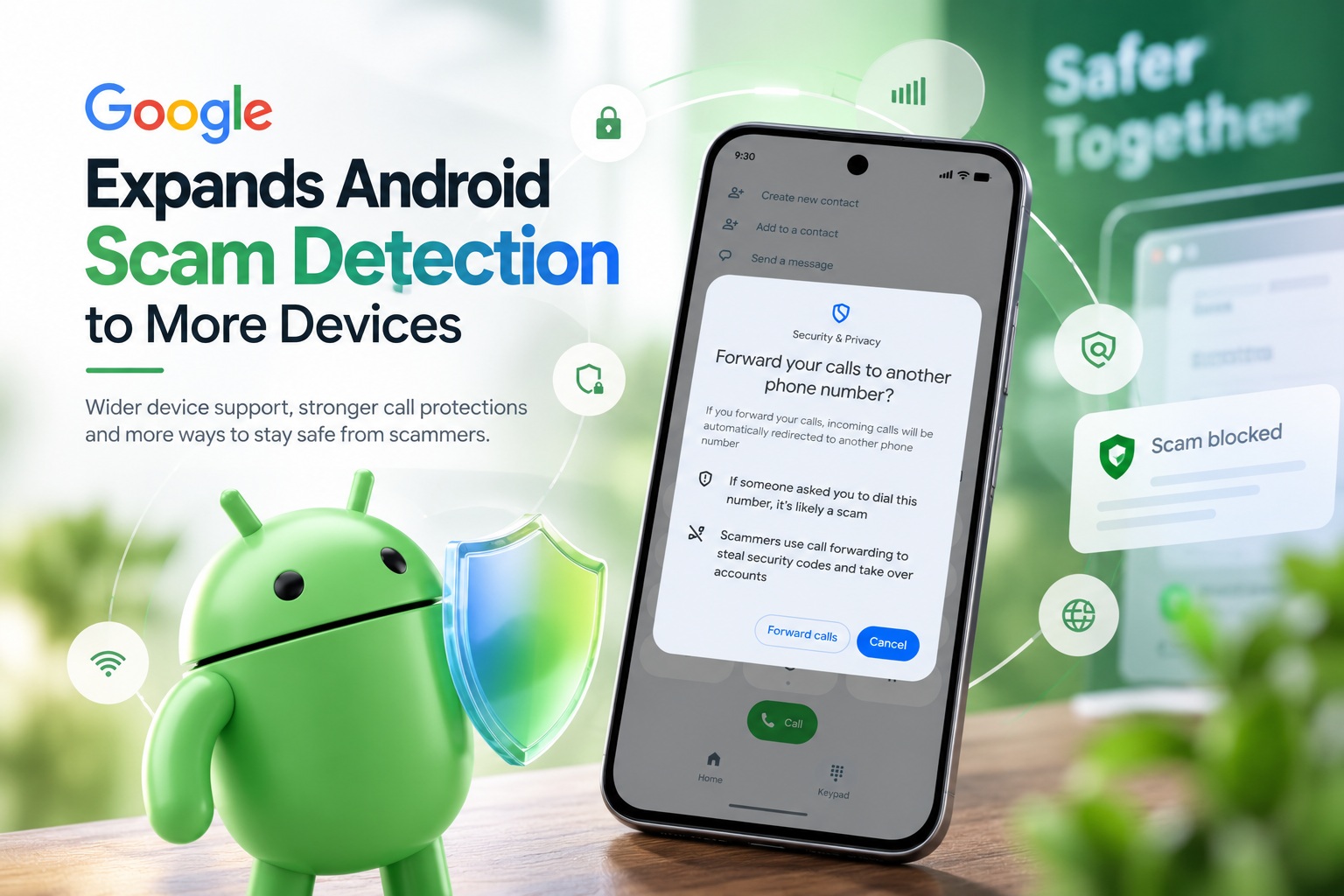
Google is expanding several of Android's scam protection features beyond its own Pixel smartphones, bringing AI-powered fraud detection to a much wider range of devices later this year. At the same time, the company is introducing new safeguards designed to stop scammers from exploiting screen sharing, call forwarding and caller ID spoofing.
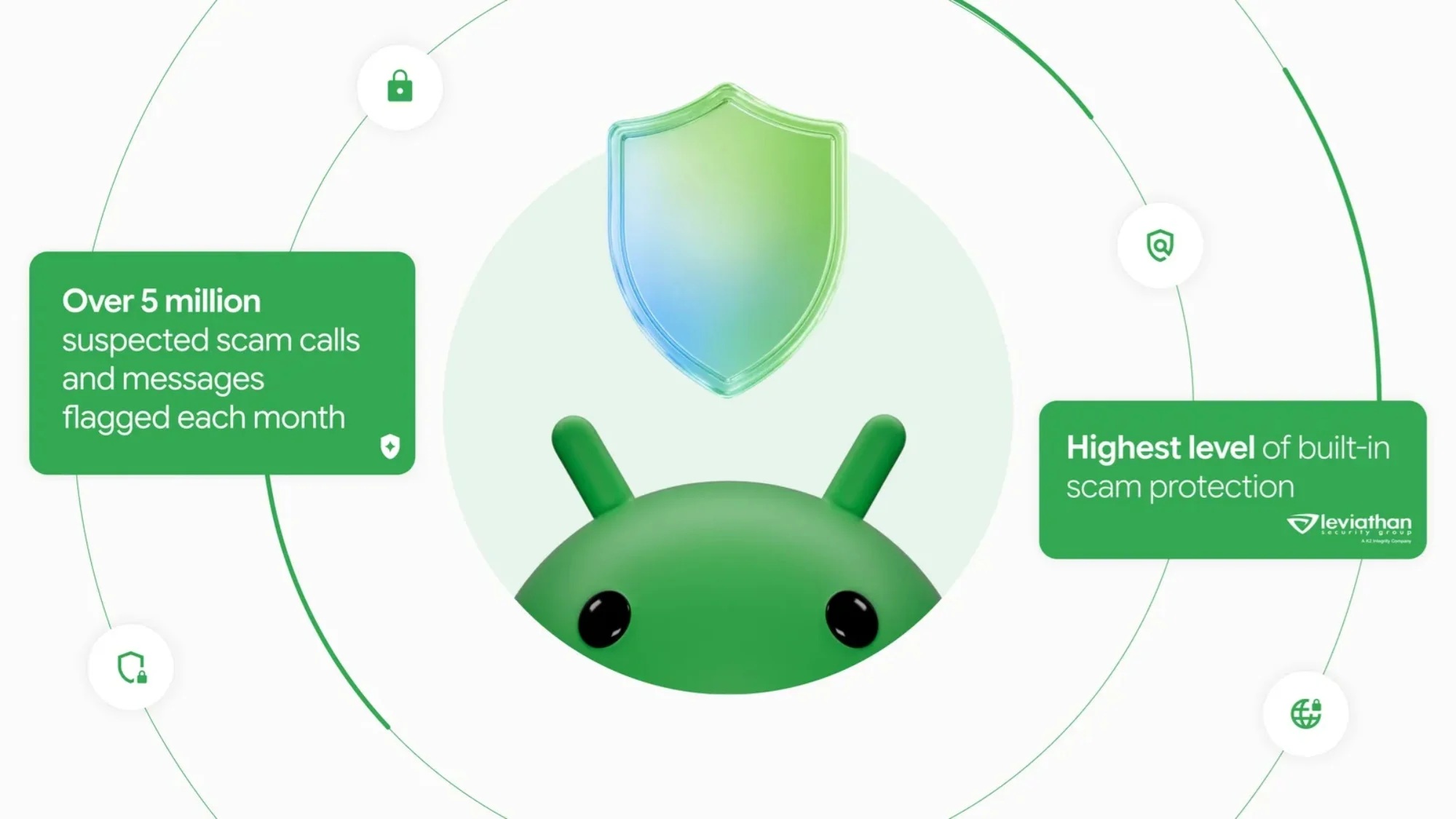
According to Google, its existing Scam Detection features in Phone by Google and Google Messages already flag more than five million suspected scam calls and text messages every month. The latest expansion is intended to bring similar protections to hundreds of millions of additional Android users, while making it harder for fraudsters to steal passwords, banking information and one-time passwords during live scam attempts.
Scam Detection Is Expanding Beyond Pixel Devices
One of the biggest changes is the expansion of Scam Detection in chat notifications to smartphones from other Android manufacturers.
The feature was previously introduced on Pixel devices and works by analysing suspicious messages that appear inside notifications. If Android detects signs that a message may be part of a scam, it can warn the user before they even open the messaging application.
Google says it is working with several Android manufacturers to bring the feature to more devices, including:
• HONOR
• Infinix
• Motorola
• OPPO
• OnePlus
• realme
• TECNO
• vivo
• Xiaomi
Availability will depend on the manufacturer and device, but Google expects the feature to reach hundreds of millions of additional users later this year.
The Expansion Currently Focuses On Chat Notifications
There is one important limitation.
Google's announcement specifically refers to Scam Detection in chat notifications. The company has not confirmed whether its separate Scam Detection system for phone calls will also expand to non-Pixel devices.
On supported Pixel phones, call-based Scam Detection can analyse conversations in real time and warn users when a caller appears to be using common scam techniques.
That distinction matters because phone scams remain extremely common, especially those involving banks, government agencies or fake technical support.
For now, wider Android support appears to be focused on suspicious messages rather than real-time call analysis.
AI Is Already Flagging Millions Of Suspected Scams
Google says the Scam Detection systems already operating through Phone by Google and Google Messages identify more than five million suspected scam calls and text messages every month.
That figure highlights the enormous scale of fraudulent communication reaching smartphone users.
Scammers increasingly rely on social engineering rather than technically sophisticated attacks. Instead of hacking into a bank directly, they may simply convince the victim to transfer money, reveal an OTP or install remote-access software.
AI-assisted detection can help by identifying suspicious language or behaviour before the victim follows the instructions.
Screen Sharing Is Becoming A Popular Scam Technique
Google is also strengthening Android against scams involving screen sharing.
Fraudsters may persuade victims to share their smartphone display during a call, often under the pretence of helping with a banking problem, account verification or technical issue.
Once screen sharing begins, the scammer may be able to see passwords, login details, payment information or authentication codes appearing on the screen.
Google is now extending Android's screen-sharing protection to Chrome and Android WebView.
Sensitive Information Will Be Hidden Automatically
When screen sharing is active, Android will automatically conceal certain sensitive information from the person viewing the screen.
This includes areas such as:
• Login fields
• Payment screens
• Password information
• Other sensitive authentication content
The idea is to prevent users from accidentally exposing critical financial or account information during a live scam call.
The protection is rolling out this month to devices running Android 15 or newer.
For users who regularly use screen sharing for work or remote support, the feature should operate largely in the background without requiring additional configuration.
Call-Forwarding Scams Are Also Being Targeted
Another new protection focuses on call-forwarding scams.
In these attacks, fraudsters attempt to convince victims to enable call forwarding so incoming calls are redirected to a number controlled by the attacker.
This can be particularly dangerous because some financial institutions still deliver authentication or verification calls to the registered phone number.
If a scammer successfully redirects those calls, they may be able to intercept information intended for the legitimate account holder.
Google is introducing protections aimed specifically at preventing this.
Apps Will Be Blocked From Secretly Enabling Call Forwarding
Android will prevent applications from enabling call forwarding silently in the background.
This should make it much harder for malicious apps to change forwarding settings without the user noticing.
Android will also display warnings when users are tricked into manually entering certain call-forwarding codes through the phone dialler.
This is important because social engineering scams often involve the scammer reading out a sequence of numbers and symbols while telling the victim it is necessary for account verification or technical support.
In reality, the code may activate call forwarding.
Call-Forwarding Protection Arrives From December
Google says the new call-forwarding protection will begin rolling out in early December.
The feature will initially be available on Pixel phones and selected other Android devices.
Exactly which additional manufacturers and models will receive it has not yet been fully detailed.
Still, this could become one of the more useful Android security additions because it targets a scam technique that many ordinary users may not even realise exists.
Google Is Working With Banks Against Spoofed Calls
Google is also expanding efforts to combat caller ID spoofing.
Spoofing allows scammers to manipulate the number displayed on a victim's phone so that the call appears to originate from a legitimate organisation, such as a bank.
For victims, this can be extremely convincing.
If the phone itself displays the bank's name or familiar number, people may naturally assume the caller is genuine.
Google's Verified Financial Calls feature is designed to make that deception harder.
Android Can Check Whether The Bank Actually Called
Verified Financial Calls checks an incoming call against the participating financial institution's official application.
If someone calls claiming to represent the bank, Android can verify whether the bank genuinely initiated that call.
If verification fails, the system can automatically terminate the suspicious call and notify the user.
This creates a stronger form of verification than relying purely on caller ID, which can potentially be manipulated.
In effect, Android asks the bank itself whether the phone call is legitimate.
More Than Three Million Spoofed Calls Have Already Been Blocked
Google says the system has already blocked more than three million spoofed calls targeting customers of Banco do Brasil and Itaú Unibanco since launching in June.
The feature is also being used by other financial institutions, including Revolut.
Those numbers suggest that bank impersonation remains a major fraud problem and that automatic verification can potentially stop a large number of attacks before victims even answer the phone.
Google plans to expand the programme to additional banking partners over time.
No Malaysian Bank Partnerships Announced Yet
For Malaysian users, however, there is one important missing piece.
Google has not announced any partnerships with Malaysian banks for Verified Financial Calls.
That means local users should not assume their bank calls are automatically being verified simply because they use an Android phone.
Whether Malaysian financial institutions eventually participate remains unknown.
Given the prevalence of bank impersonation scams locally, support from Malaysian banks could make this particular feature much more relevant in the future.
Google Messages Gets Enhanced Protection
Google is also adding an optional Enhanced Protection mode to Google Messages.
The feature combines cloud-based Gemini models with the on-device Gemini Nano model to analyse suspicious conversations and unfamiliar links.
Cloud-based AI can provide more powerful analysis of complicated scam patterns, while Gemini Nano can process certain information locally on the device.
This creates another layer of protection against increasingly sophisticated fraudulent messages.
Unknown Links Can Be Analysed Before You Trust Them
One area where AI can be particularly useful is analysing unfamiliar URLs.
Modern phishing links can look extremely convincing, often using domain names designed to resemble banks, delivery companies or government services.
Gemini Nano can help assess unfamiliar links directly on compatible devices, giving users another warning before visiting potentially dangerous websites.
The cloud-based Gemini models can meanwhile analyse the wider conversation and look for patterns commonly associated with scams.
This could be more effective than simply checking whether one individual word or URL appears on a blocklist.
Scammers Are Becoming Better At Sounding Legitimate
Traditional scam filters often relied on obvious warning signs such as suspicious keywords or known malicious numbers.
Modern scams are much more sophisticated.
Fraudsters may deliberately avoid phrases that automated filters recognise. They can also use generative AI to produce convincing messages with proper grammar, realistic formatting and personalised information.
This means scam detection increasingly needs to consider the entire conversation rather than one suspicious sentence.
AI models are well suited to this kind of contextual analysis, although no detection system will be perfect.
Malaysia Could Benefit More From The Broader Android Rollout
Google Messages itself is not particularly dominant among Malaysian users compared with platforms such as WhatsApp.
That means the expansion of Scam Detection into chat notifications across different Android devices may ultimately be more useful locally than improvements confined to Google Messages.
If scam warnings can appear at the notification layer, Android may be able to alert users about suspicious conversations regardless of which supported messaging application generated the notification.
That wider protection could make the feature much more relevant to everyday users.
Social Engineering Is Becoming The Bigger Threat
Many of the new protections share one common theme: they target social engineering.
The attacker may never technically hack the phone.
Instead, they convince the victim to perform the dangerous action themselves.
Examples include:
• Sharing the screen
• Entering a call-forwarding code
• Revealing an OTP
• Clicking a phishing link
• Installing an app
• Transferring money
• Providing passwords
This is why Android increasingly needs to understand what the user is doing rather than simply scanning for malware.
Security Is Moving Closer To The User's Actions
Traditional smartphone security focused heavily on blocking malicious apps and known malware.
Google's newer approach goes further by monitoring situations where a legitimate feature is being used in a suspicious way.
Screen sharing is not malicious by itself.
Call forwarding is not malicious either.
Even receiving a phone call from an unfamiliar number is completely normal.
The danger comes from the context in which those features are being used.
Android is increasingly trying to recognise that context and warn the user before the situation becomes harmful.
No Scam Detection System Can Replace User Awareness
These protections are useful, but they should not create a false sense of security.
AI systems can miss scams, and sophisticated fraudsters will continue adapting their tactics.
Users should still remain cautious when someone unexpectedly asks for:
• Banking credentials
• Passwords
• OTPs
• Screen sharing
• Remote-access permissions
• Money transfers
• Dialler codes
• App installations
Legitimate banks and government agencies generally do not require customers to reveal sensitive authentication information over unsolicited calls.
Final Thoughts
Google's latest Android security expansion could bring meaningful scam protection to a much broader range of smartphones. Scam Detection in chat notifications is moving beyond Pixel devices to manufacturers such as HONOR, Motorola, OPPO, OnePlus, realme, vivo and Xiaomi, potentially reaching hundreds of millions of additional users.
The new screen-sharing safeguards and call-forwarding protections are equally important because they target social engineering techniques that conventional malware scanners may not detect. Verified Financial Calls also shows promise by allowing banks to confirm whether an incoming call actually originated from them, although Malaysian financial institutions have not yet been announced as participants.
Perhaps the biggest shift is that Android security is becoming less about simply asking whether an app is malicious and more about understanding whether a user is being manipulated. As scams become more sophisticated and increasingly convincing, that kind of contextual protection may become one of the most important security features on modern smartphones.











Comments 0