

Technical and vocational education has traditionally been associated with hands-on expertise: repairing equipment, preparing food, styling hair, operating machinery or delivering specialist services. Those abilities remain important, but the workplace is changing. Today, graduates are increasingly expected to explain, present and promote what they can do through digital platforms.
Photography, videography and content creation are no longer useful only to people working in media. They have become practical career skills across many industries, especially as businesses rely more heavily on short videos, livestreams, social media, e-commerce and visual branding.
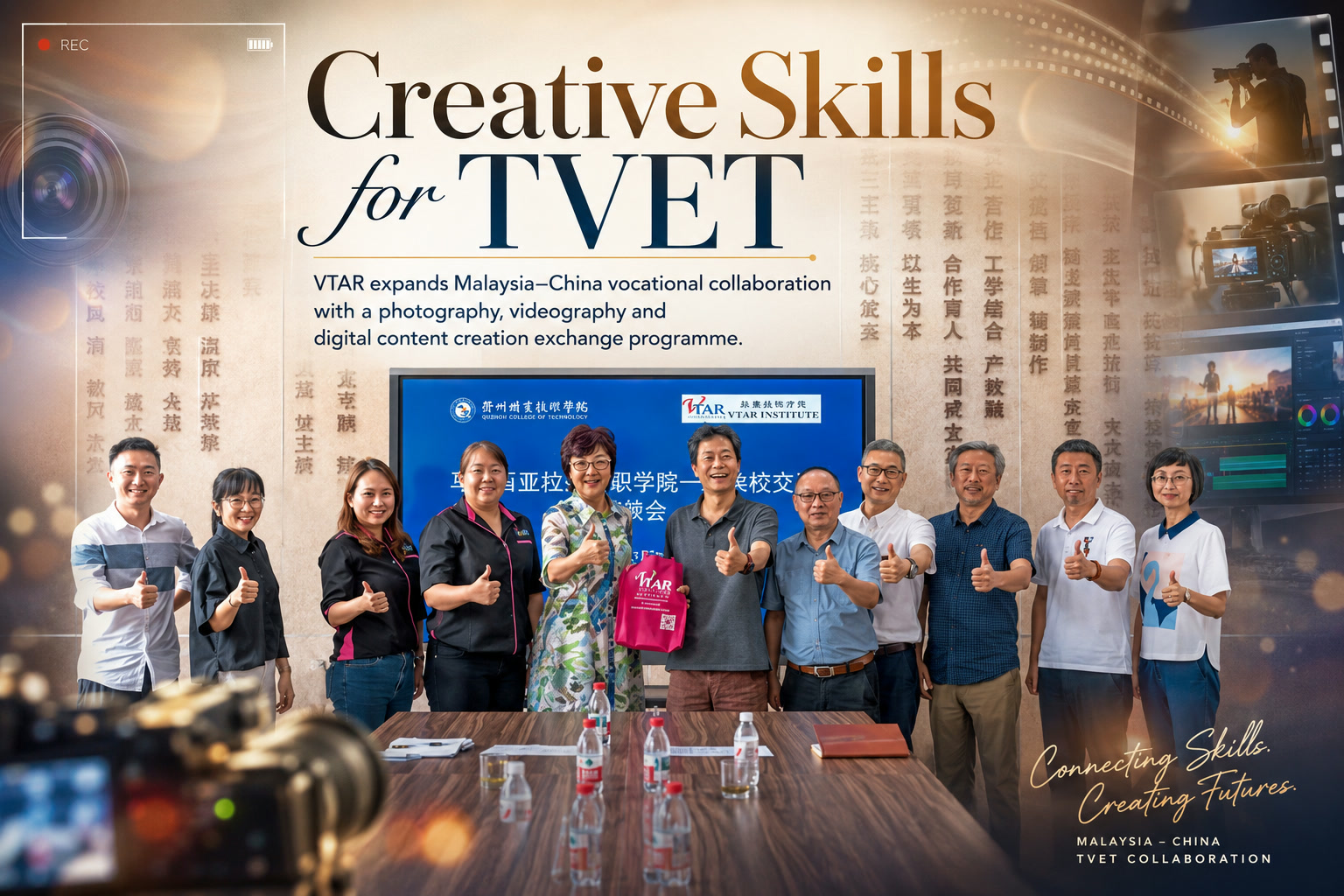
Recognising this shift, VTAR Institute recently sent 16 students and one instructor to Quzhou College of Technology in China for a month-long programme focused on photography, videography and digital content creation.
The participants came from several different vocational disciplines, including aesthetic services, hairdressing, bakery and electronic equipment. Their involvement demonstrates how digital storytelling can support careers that may not traditionally be seen as part of the creative industry.
A New Direction for Malaysia–China TVET Collaboration
The programme represents the first international exchange in photography, videography and digital content creation jointly organised by VTAR Institute and Quzhou College of Technology.
Previous collaboration between the two institutions had focused more heavily on advanced technical areas such as industrial robotics and new-energy vehicle technology. Expanding into the digital creative field marks an important development in the partnership.
It also reflects the wider direction of modern TVET.
Vocational education is no longer limited to teaching students how to complete a particular technical task. It must also prepare them to operate in workplaces shaped by technology, digital communication and international competition.
A graduate may be highly skilled in a chosen trade, but employers and customers increasingly want to see evidence of that skill. The ability to photograph finished work, produce a short demonstration video or explain a technical process clearly online can help make that expertise visible.
Why Visual Communication Matters Across Every Industry
VTAR Institute chief executive officer Tan Cheng Liang highlighted the growing importance of visual content within the digital economy.
Short-form video, livestreaming, e-commerce promotion, branding and digital communication have become everyday features of business. Social media platforms have changed how people discover services, evaluate products and decide who they trust.
A customer searching for a hairdresser may look at transformation videos before making an appointment. Someone choosing a bakery may judge the presentation of cakes and pastries through social media photographs. A company considering a new technical product may first watch an online demonstration rather than read a long brochure.
This means visual communication is no longer separate from professional work. In many cases, it is the first way the public encounters that work.
Beauty and Aesthetic Students Need More Than Practical Technique
Students training in aesthetic services may develop strong abilities in skincare, beauty treatments and client care. However, those skills can be difficult to promote without good visual presentation.
Before-and-after photographs, treatment demonstrations and educational videos can help future beauty therapists explain their services and build credibility. Poor lighting, unclear images or badly edited content can make professional work look less impressive than it actually is.
Digital training can teach students how to present results accurately and attractively without misleading viewers.
This is especially important in beauty-related industries, where visual evidence plays a major role in customer confidence. Students also need to understand ethical boundaries, including obtaining client consent, protecting privacy and avoiding unrealistic digital alteration.
The goal is not simply to create attractive content, but to communicate professional work responsibly.
Hairdressers Are Also Building Personal Brands
Hairdressing is another field where digital visibility can directly influence career opportunities.
A stylist may have excellent cutting, colouring or creative styling skills, but those abilities remain largely invisible beyond the customers who visit the salon. Photographs and videos allow that work to reach a much wider audience.
Future hairdressers can use digital content to document their techniques, explain hair-care methods and showcase their personal style. Over time, this content can help them build a recognisable professional identity.
A strong digital portfolio may support employment applications, attract new customers or help a stylist establish an independent business.
For young professionals entering a crowded market, the ability to communicate their strengths visually can become a major competitive advantage.
Food Photography Is Becoming Part of the Baking Business
For bakery and pastry students, appearance has always mattered. Customers often make decisions based on how a product looks before they have the opportunity to taste it.
Food photography and short-form video therefore have direct commercial value.
A well-composed photograph can highlight texture, colour and detail. A carefully edited video can show how a cake is decorated or how a pastry is prepared. Livestreaming can also allow bakers to demonstrate techniques and interact with potential customers.
These capabilities are particularly useful for small home-based businesses, where social media may function as the main marketing channel.
A baker with limited advertising funds can still reach a large audience by consistently creating appealing and informative content. Digital skills can therefore support both employability and entrepreneurship.
Technical Students Must Learn to Explain Innovation
The value of digital content is not limited to visually oriented professions.
Electronic equipment students are trained in areas such as product design, maintenance, troubleshooting and technical applications. However, technical knowledge alone may not be enough in a workplace where ideas must be communicated to customers, managers, investors and other departments.
A student who develops an innovative device should be able to demonstrate how it works. A technician may need to record a maintenance process. A graduate applying for a job could use a digital portfolio to present completed projects.
Photography and video can make complex technical work easier to understand.
For example, a short explanatory video may communicate the value of a prototype more effectively than several pages of technical description. Clear visual documentation can also support training, customer service and knowledge transfer.
As smart technologies become more common, the ability to explain technical information to non-technical audiences will become increasingly valuable.
Digital Content Creation Is Now a Workplace Skill
The programme goes beyond teaching students how to use a camera.
Effective digital content requires planning, communication and judgement. Students must decide what story they are trying to tell, who the audience is and which format is most suitable.
They may need to consider:
These skills are relevant in almost every modern workplace.
An employee may be asked to prepare a product demonstration, record a training video, create content for a company page or present project progress to management. Even when content creation is not part of the formal job title, it can still become part of daily work.
Combining Technical Expertise with Storytelling
One of the most valuable aspects of the programme is its emphasis on helping students tell the story of their profession.
Technical skills often involve processes that are not immediately visible. A finished haircut, repaired device or decorated cake may look impressive, but the real expertise lies in the decisions and techniques used to achieve the result.
Visual storytelling gives students a way to reveal that process.
A hairdresser can explain why a particular technique was chosen. A baker can show the stages involved in producing a delicate pastry. An electronics student can document the development of a prototype from initial idea to final testing.
This turns a simple image or video into evidence of professional competence.
It also encourages students to reflect on their own work. To explain a process clearly, they must understand it deeply enough to present it in a structured way.
International Exposure Adds Another Layer of Learning
The one-month programme also provides students with the opportunity to study in a different cultural and educational environment.
International exchange can help students become more independent, adaptable and confident. They are required to communicate with new people, adjust to different teaching methods and experience another country's approach to vocational education.
Tan said she expects the students to return not only with stronger photography and videography skills, but also with broader international perspectives and improved cross-cultural communication abilities.
These qualities are increasingly important in a global economy.
Malaysian graduates may work with international suppliers, multinational employers or overseas customers. Even those who remain locally based may need to communicate through global digital platforms.
Exposure to another country's education system can help students become more comfortable working across cultural boundaries.
Building on Earlier Technical Exchange Programmes
VTAR has previously sent four groups of students to China for specialised training in industrial robotics and new-energy vehicle technology.
According to Tan, returning students showed clear improvements in technical ability, personal development and international exposure. They also responded positively to the teaching arrangements and professional guidance provided by Quzhou College of Technology.
The success of those earlier programmes appears to have encouraged both institutions to widen the scope of their partnership.
By introducing photography, videography and content creation, the exchange is now accessible to students from a broader range of programmes.
This is significant because international training opportunities should not be limited only to engineering or high-technology disciplines. Creative, service and vocational fields can benefit just as strongly from global exposure.
TVET Graduates Need a Wider Combination of Skills
The modern workplace increasingly rewards people who can combine several types of capability.
A technically skilled worker who can also communicate well, create content and understand digital platforms may have more opportunities than someone with technical knowledge alone.
For TVET students, this does not mean replacing practical training with media lessons. The technical foundation must remain strong.
Instead, digital creativity should complement professional expertise.
A baker still needs to produce high-quality food. A hairdresser must still master styling techniques. An electronics graduate must still understand systems and equipment. Photography and videography help those individuals present, promote and explain their abilities more effectively.
This combination can strengthen employment prospects while also supporting self-employment and small-business growth.
Preparing Students for Entrepreneurship
Many vocational graduates may eventually operate their own businesses.
A beauty therapist may open a home-based treatment service. A hairstylist may rent a chair or build an independent client base. A baker may begin selling through social media before opening a physical shop.
In each case, marketing becomes part of the job.
Small businesses cannot always afford professional photographers, video editors or advertising agencies. Owners often need to create their own content, manage social media and communicate directly with customers.
Early exposure to these skills can help students enter entrepreneurship with greater confidence.
They are not only learning how to perform a service; they are learning how to present that service to the market.
Internationalisation Should Produce Practical Outcomes
VTAR's internationalisation strategy focuses on technical competence, digital communication and global competitiveness.
These goals are meaningful, but the true value of an exchange programme will be seen in what students do after returning to Malaysia.
Participants should be encouraged to apply their new capabilities within their respective fields. They could develop professional portfolios, support promotional campaigns, create educational content or help classmates improve their digital presentation skills.
The knowledge should spread beyond the 16 students who attended the programme.
They could also contribute to future workshops, mentor junior students or collaborate on cross-disciplinary projects. A bakery student and an electronic equipment student, for example, might work together to create content showcasing smart kitchen technology.
This would help turn an overseas training experience into a wider institutional benefit.
Strengthening the Future of Malaysia–China TVET Cooperation
VTAR hopes to continue expanding its relationship with Quzhou College of Technology through additional exchange programmes in different fields.
Closer cooperation could introduce students to new technologies, teaching methods and workplace practices. It could also give instructors opportunities to exchange knowledge and develop joint educational content.
For Malaysia and China, such programmes support a form of cooperation that goes beyond trade and investment. They create direct links between students, educators and training institutions.
Over time, these relationships may contribute to joint projects, industry partnerships and new vocational pathways.
The long-term objective should be to produce graduates who are technically capable, digitally fluent and ready to operate in an international environment.
Final Thoughts
The photography, videography and digital content creation programme reflects an important change in how vocational education should be understood.
Creative digital skills are no longer optional extras reserved for media students. They are becoming practical tools for hairdressers, beauty therapists, bakers, technicians and many other professionals.
The strongest workers of the future will not only know how to do the job. They will also know how to explain it, document it and present its value to the world.
By combining technical expertise with visual storytelling, digital literacy and international exposure, VTAR Institute is helping students prepare for a workplace where professional ability and digital communication are closely connected.
That broader approach could give TVET graduates a stronger position in employment, entrepreneurship and the rapidly expanding digital economy.











Comments 0