

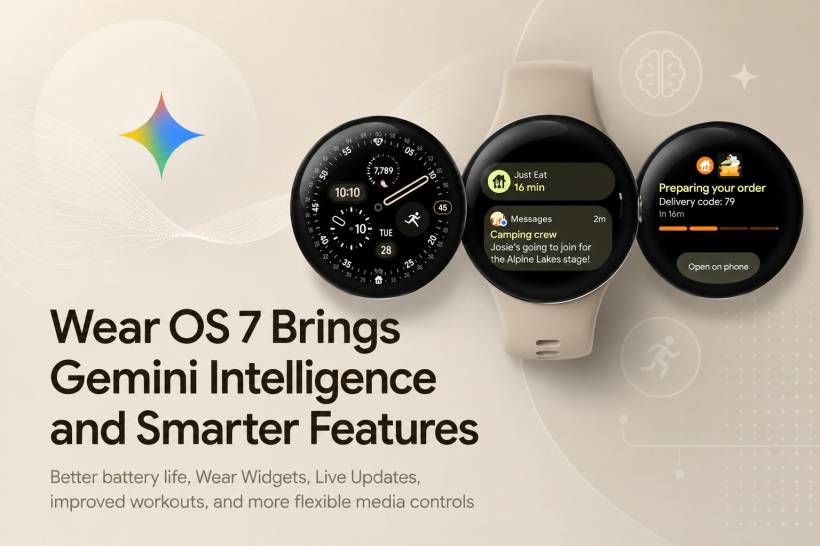
Google's I/O events are usually packed with announcements, and I/O 2026 was no different. As expected, much of the attention went toward Gemini, AI agents, Android updates, and Google's wider push to make artificial intelligence feel more deeply connected across its products. But among those bigger AI headlines, Google also confirmed another important update for wearable users: Wear OS 7 is on the way.
At first glance, Wear OS 7 may not sound like the loudest announcement from the event. Smartwatch updates are often seen as smaller, quieter releases compared to phone or AI platform launches. But this update matters because it shows where Google wants the smartwatch experience to go next. Instead of simply adding a few visual changes, Wear OS 7 focuses on better battery life, more glanceable information, improved media controls, a more consistent workout experience, and deeper Gemini Intelligence support. Google says Wear OS 7 is expected to arrive later in 2026, while developers can already explore it through the Wear OS 7 Canary Emulator.
A Smarter Watch Experience Built Around Everyday Use
Wear OS has grown a lot over the past few years, especially with Google, Samsung, and other manufacturers putting more attention into Android-based smartwatches. Still, one challenge remains the same: a smartwatch needs to be useful without becoming annoying. It has to show the right information quickly, respond naturally, and avoid forcing users to dig through tiny menus.
Wear OS 7 seems to be designed around that idea. The update is not only about making the watch look newer. It is about making the watch more useful in small, frequent moments throughout the day. That could mean checking a live ride update, controlling music playback, reviewing workout progress, or seeing a useful widget without fully opening an app.
This is important because smartwatch interaction is different from phone interaction. On a phone, people may spend minutes inside an app. On a watch, they usually want information in seconds. Wear OS 7 appears to be moving closer to that quick, glanceable, context-aware experience.
Better Battery Life Is Still One of the Biggest Improvements
Battery life remains one of the most important parts of any smartwatch experience. A watch can have excellent features, but if users constantly worry about charging it, the experience quickly becomes frustrating. Google says watches upgrading from Wear OS 6 to Wear OS 7 can expect up to a 10 percent improvement in battery life for average users, thanks to new power optimisations.
That may not sound dramatic on paper, but in smartwatch terms, even a small improvement can matter. A bit of extra battery life can help users get through the day more comfortably, track longer workouts, or use more features without worrying as much about the charger.
The key point here is that Google is not only adding features. It is also trying to make the platform more efficient. That balance is important because smartwatches are limited by size, battery capacity, and constant background activity.
Wear Widgets Could Make the Watch Face More Useful
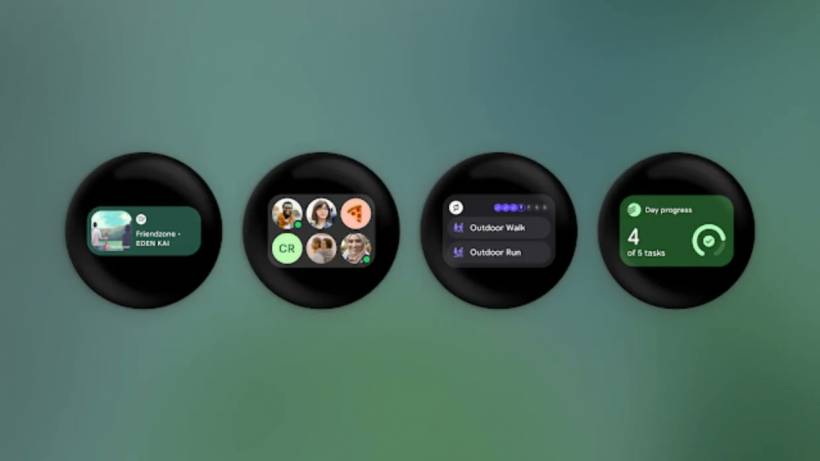
One of the more interesting additions in Wear OS 7 is Wear Widgets. Google describes this as a new step beyond the existing Tiles system. Tiles have been a familiar part of Wear OS for years, giving users quick access to information like weather, fitness data, calendar events, or app shortcuts. Wear Widgets appear to make that idea more flexible.
Instead of always taking over the full screen like Tiles, Wear Widgets can appear in smaller 2x1 or 2x2 layouts and sit over apps or watch experiences. This makes them feel closer to Android phone widgets, where information can be shown in compact blocks rather than full-screen panels.
This could make Wear OS feel more personal. A user might want fitness stats, calendar information, weather, reminders, or smart home controls available in a more compact way. If developers support it well, Wear Widgets could become one of the most useful parts of the update.
Live Updates Bring Real-Time Information to the Wrist
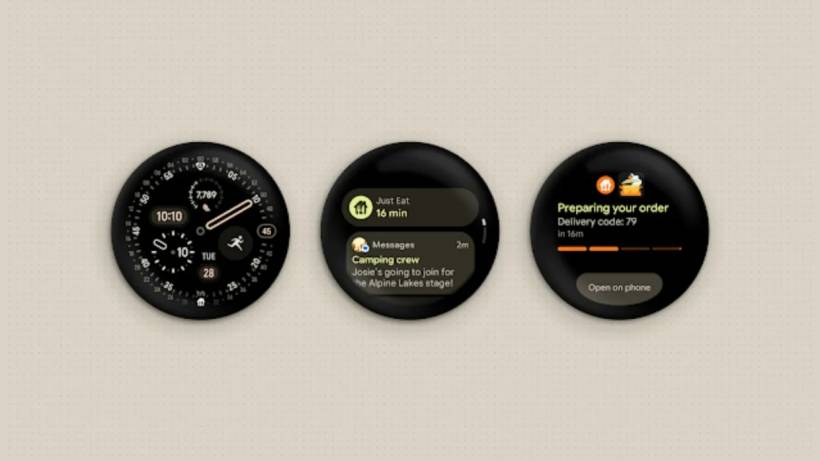
Wear OS 7 will also bring Live Updates to smartwatches. This is similar to the real-time update experience Google has been building into Android. The idea is simple: certain active tasks should be visible without needing to constantly open an app.
For example, Live Updates can be useful for ride-sharing progress, navigation, deliveries, sports scores, or workout tracking. Instead of repeatedly checking a phone, users can glance at the watch and see the latest status directly from the wrist.
This is exactly the kind of feature that makes sense on a smartwatch. Watches are best when they reduce friction. If the device can quietly surface timely information at the right moment, it becomes more useful without demanding more attention.
A More Consistent Workout Experience
Fitness tracking is one of the biggest reasons people buy smartwatches, so it makes sense that Google is also improving the workout side of Wear OS 7. The update introduces a more standardised workout experience, giving fitness apps a more consistent interface for tracking sessions.
This matters because smartwatch fitness experiences can sometimes feel fragmented. Different apps may present workouts, media controls, metrics, and heart rate information in different ways. A more consistent workout tracker can make the experience easier to understand, especially for users who switch between apps or use their watch mainly for exercise.
Wear OS 7's workout experience also includes support for features such as heart rate monitoring and media controls, allowing users to manage exercise and entertainment more smoothly during a session.
Media Controls Get More Flexible
Media control is another area where smartwatches can be very practical. Whether someone is walking, exercising, commuting, or listening to music at home, controlling playback from the wrist is often faster than pulling out a phone.
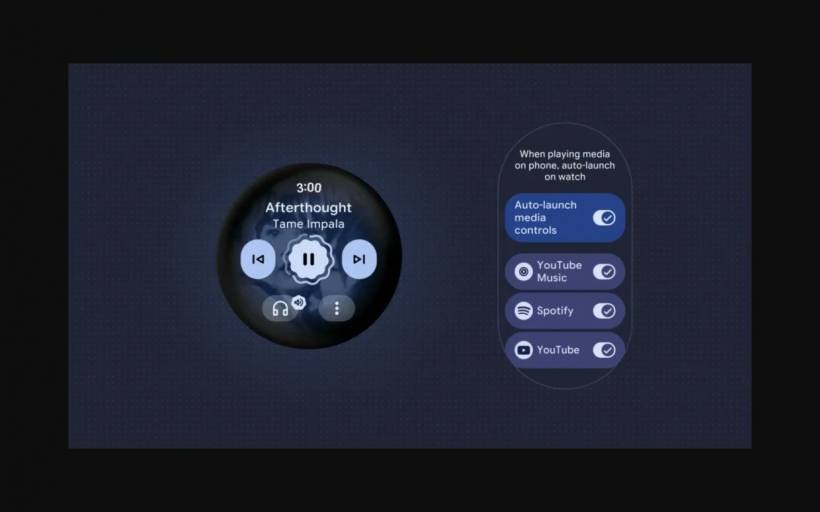
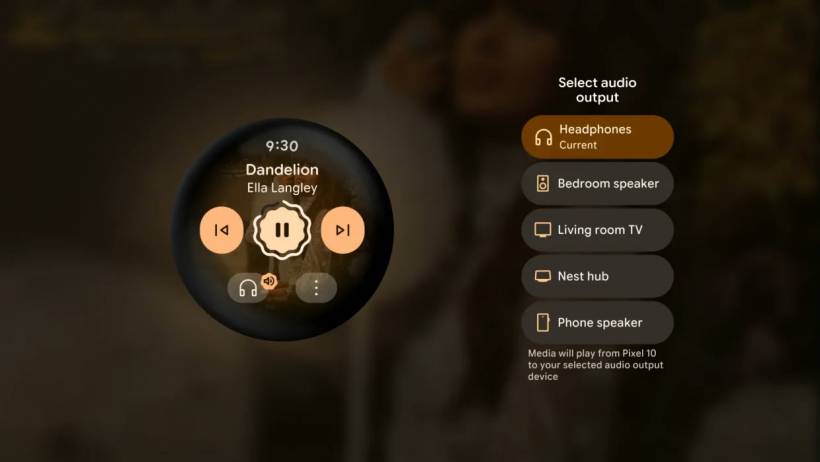
Wear OS 7 improves the universal media player experience by giving users more control over how media apps automatically launch through System Media Controls settings. This means users should have more say over how their watch behaves when media is playing.
The update also adds Remote Output Switcher support. This allows users to switch audio playback devices from the watch when listening to media on a paired phone. In simple terms, it should become easier to move playback between headphones, speakers, or other supported audio outputs without reaching for the phone.
Gemini Intelligence Is the Bigger Long-Term Story
While battery life, widgets, workouts, and media controls are all important, Gemini Intelligence may be the feature that shapes where Wear OS goes next. Google says Wear OS 7 introduces new APIs that allow developers to connect their apps with Gemini Intelligence. One of the key additions is the AppFunctions API, which can let app features work with AI-powered assistance and agent-style experiences.
This could eventually make smartwatches feel less like tiny phones and more like personal assistants. Instead of only opening apps manually, users may be able to ask for tasks, trigger app actions, or get more contextual help directly from the wrist.
Of course, the real value will depend on how well developers support these tools and how useful Gemini feels in day-to-day smartwatch use. AI on a watch needs to be fast, practical, and not overly complicated. If Google gets that balance right, Gemini could become a meaningful part of the wearable experience rather than just another branding layer.
Why Wear OS 7 Matters
Wear OS 7 feels like an update focused on refinement and direction. It does not appear to be only about changing the interface for the sake of it. Instead, the update seems to focus on the areas that matter most for smartwatches: battery life, quick information, fitness tracking, media control, and smarter assistance.
The larger message is that Google wants Wear OS to become more helpful in short, everyday interactions. A smartwatch should not require too much effort. It should quietly support the user throughout the day, whether that means showing a live update, tracking a workout, controlling audio, or surfacing information through a widget.
That makes Wear OS 7 more important than it may first appear. It is not just another yearly platform update. It is part of Google's wider effort to connect Android, Gemini, and wearable devices into a more intelligent ecosystem.
Final Thoughts
Wear OS 7 may have been only one part of Google I/O 2026, but it gives a clear picture of where Google is taking its smartwatch platform. The update is practical on the surface, with better battery life, new widgets, Live Updates, improved workouts, and more flexible media controls. At the same time, it also prepares the platform for a future where Gemini Intelligence plays a larger role on the wrist.
For everyday users, the most noticeable improvements may come from small conveniences: quicker information, better battery life, smoother workouts, and easier media control. For developers, the bigger opportunity lies in building apps that can work more intelligently with Gemini. If these features come together well, Wear OS 7 could make Android smartwatches feel less like accessories and more like genuinely useful everyday companions.











Comments 0