

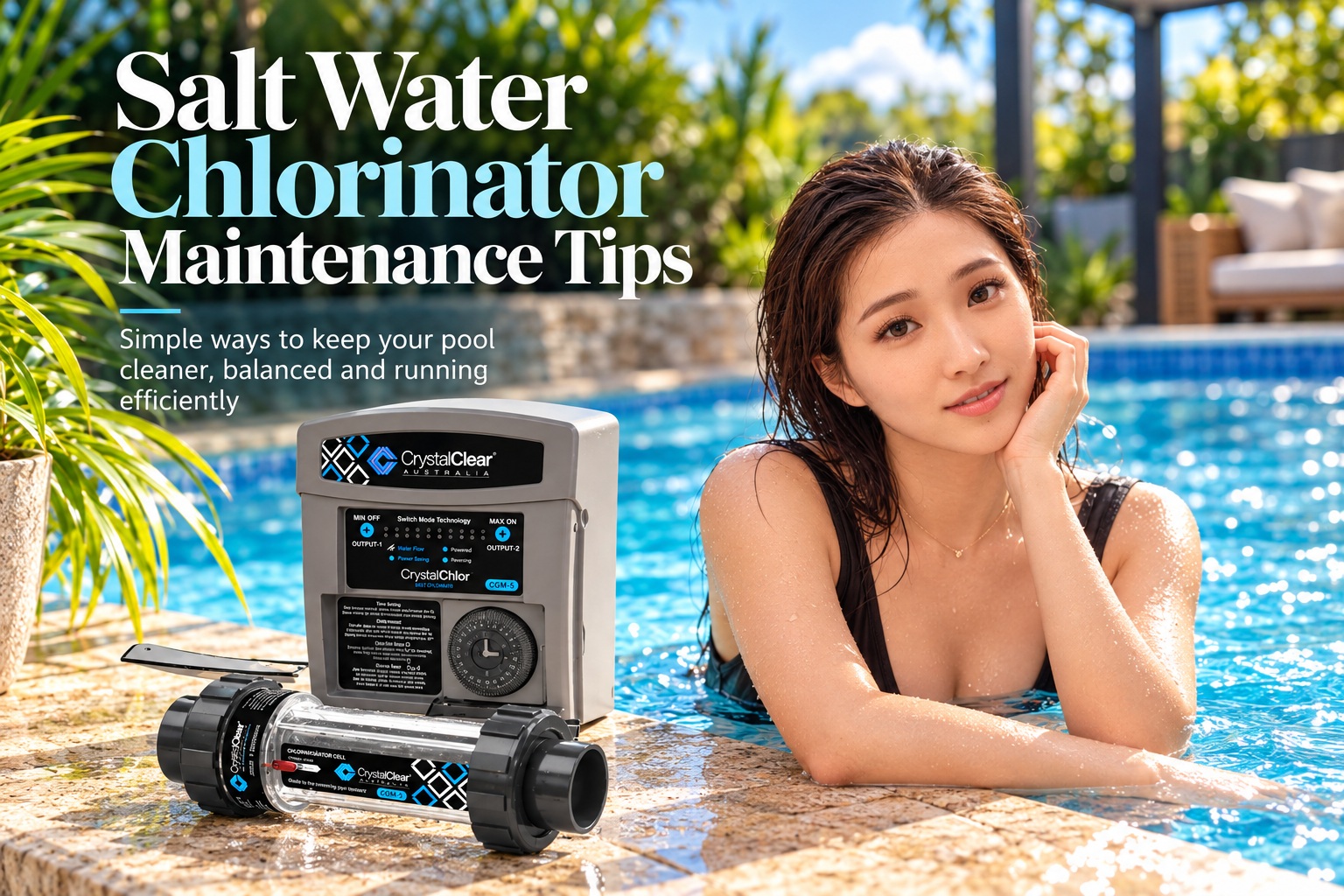
A salt water chlorinator makes pool maintenance much easier by converting dissolved salt into chlorine through an electrolytic cell. Instead of regularly adding large amounts of chlorine manually, the system produces a steady supply while the pool water circulates. However, that convenience does not mean the chlorinator can simply be installed and forgotten.
Salt concentration, water chemistry, circulation and the condition of the chlorinator cell all affect how well the system performs. Calcium deposits or poor water flow can gradually reduce chlorine production, while incorrect settings may cause the system to work harder than necessary. A simple maintenance routine can help keep the chlorinator operating efficiently, extend the life of its components and make problems easier to identify before they turn into expensive repairs.
Why Salt Water Chlorinator Maintenance Matters
A chlorinator does not work independently from the rest of the pool system. It relies on the pump to move water through the plumbing, the filter to remove contaminants and properly balanced water chemistry to create suitable conditions for chlorine production.
When these components are working together correctly, the salt cell can generate chlorine at the rate required to keep the pool clean. Problems elsewhere in the system can quickly affect chlorinator performance.
For example, a blocked filter may reduce water flow through the cell, while high calcium levels can encourage scale to build up across its plates. Regular maintenance helps prevent these small issues from gradually reducing the effectiveness of the entire sanitation system.
Keep The Salt Level Within The Recommended Range
Salt concentration is one of the most important things to monitor in a salt water pool. Every chlorinator is designed to operate within a particular salt range, so the manufacturer's recommended level should always be followed.
If the salt concentration becomes too low, the chlorinator may struggle to generate enough chlorine. Some systems will display a low-salt warning, while others may simply produce less chlorine than expected.
Too much salt is not helpful either. Excessively high levels can affect the way the equipment operates and may make the water less comfortable for swimmers.
Salt levels can also change after heavy rainfall, backwashing, draining part of the pool or topping it up with fresh water. Testing after these events is a simple way to confirm that the concentration remains within the correct range.
Do Not Rely Entirely On The Chlorinator Display
Many modern chlorinators provide an estimated salt reading through their control panel, but it is still a good idea to periodically confirm the concentration using a proper water test.
Electronic readings can sometimes be influenced by water temperature, cell condition or other factors. If the chlorinator suddenly reports an unexpected salt level, testing the water independently can help determine whether the salt concentration has actually changed or whether another issue is affecting the system.
This becomes particularly useful when troubleshooting reduced chlorine output.
Keep Pool Water Chemistry Balanced
Salt alone does not determine whether a chlorinator performs properly. The overall chemistry of the pool water is equally important.
Regularly test parameters such as:
• pH
• Total alkalinity
• Chlorine level
• Calcium hardness
• Stabiliser levels where applicable
Balanced water helps the chlorine work effectively while also reducing the likelihood of scale forming on the cell.
If the pH stays too high, calcium deposits can develop more quickly. Poorly balanced water can also make chlorine less effective, which may lead owners to increase the chlorinator output unnecessarily when the real problem is water chemistry.
Check The Salt Cell Regularly
The electrolytic cell is the component that actually converts dissolved salt into chlorine, making it one of the most important parts of the system to inspect.
Over time, calcium and other minerals can accumulate on the metal plates inside the cell. This coating creates a barrier that reduces the efficiency of the electrolysis process.
Depending on the chlorinator design and local water conditions, the cell may need periodic cleaning. Some modern systems reverse polarity automatically to reduce scaling, but even these units should still be inspected occasionally.
Look for visible white or chalky deposits, debris or any signs that the internal plates have become damaged.
Clean The Cell Only When Necessary
A salt cell should be cleaned when scale is present, but excessive cleaning can also shorten its life.
Always follow the chlorinator manufacturer's cleaning instructions. Using chemicals that are too strong or leaving the cell immersed for too long can damage the coating on the plates.
In many situations, light deposits can be removed carefully without aggressive treatment. Chemical cleaning should generally be reserved for scaling that cannot be removed using gentler methods.
The goal is to restore proper contact between the water and the plates without unnecessarily wearing down the cell.
Watch For Declining Chlorine Production
A salt cell does not last forever. Its internal coating gradually wears with normal operation, eventually reducing the amount of chlorine the cell can generate.
One sign of ageing is having to continuously increase the chlorinator output even though water conditions and pool usage have not changed significantly.
If salt levels, water chemistry and circulation are correct but chlorine production remains consistently low, the cell may simply be approaching the end of its service life.
Regular monitoring helps distinguish normal cell ageing from problems caused by scale or poor water balance.
Make Sure Water Flow Is Strong Enough
Salt water chlorinators need adequate water flow through the cell before they can operate correctly.
The pool pump should therefore be running normally whenever chlorine generation is required. Any restriction in circulation can result in low-flow warnings or cause the chlorinator to stop producing chlorine altogether.
Common causes of reduced flow include:
• Blocked skimmer baskets
• Dirty pump baskets
• Clogged filters
• Closed or partially closed valves
• Pump performance problems
• Air entering the circulation system
When a chlorinator reports low flow, increasing the chlorine output will not solve the underlying problem. The circulation system should be checked first.
Keep The Pool Filter Clean
The filter plays an important role in maintaining the flow required by the chlorinator.
As dirt and debris accumulate, resistance through the filter increases. Eventually, the amount of water moving through the system may drop enough to affect chlorine production.
Follow the appropriate cleaning or backwashing schedule for the type of filter installed. Pressure readings can also provide a useful indication of when cleaning is required.
Keeping the filter in good condition improves more than chlorinator performance. It also helps the pump operate more efficiently and improves overall water clarity.
Adjust Chlorinator Output According To Pool Conditions
Running the chlorinator at maximum output all the time is not necessarily the best approach.
The correct setting depends on how much chlorine the pool actually needs. Factors such as pool volume, water temperature, sunlight exposure and swimming frequency can all change chlorine demand.
During hotter periods or when the pool is being used frequently, additional chlorine production may be necessary. During cooler months or periods of little use, a lower output may be sufficient.
Testing the water regularly and adjusting the percentage accordingly is much more effective than simply leaving the system on one setting throughout the year.
Pool Size Matters
The chlorinator itself also needs to be appropriately sized for the volume of water being treated.
A unit that is too small may need to operate at very high output for long periods just to maintain acceptable chlorine levels. This can increase wear on the salt cell and make the system struggle during hot weather or periods of heavy swimming.
A properly sized chlorinator has enough spare capacity to handle temporary increases in chlorine demand without being pushed continuously to its maximum setting.
When replacing an older unit, this is worth considering rather than automatically purchasing a chlorinator with exactly the same capacity.
Water Temperature Changes Chlorine Demand
Warmer water generally requires more careful monitoring.
Hot weather often means the pool is being used more frequently, while higher temperatures can increase the rate at which chlorine is consumed. Warm conditions may also encourage calcium scaling in some pools.
During summer, the chlorinator may therefore need to operate for longer periods or at a higher percentage than it would during winter.
Seasonal adjustments are normal and do not necessarily indicate that something is wrong with the system.
Heavy Pool Use Increases Chlorine Requirements
Every swimmer introduces contaminants into the water, including perspiration, body oils and other organic material.
A pool that receives frequent use will therefore consume chlorine faster than one that sits unused most of the week.
Parties and large gatherings can create a sudden increase in demand. Checking chlorine levels after periods of heavy use can help determine whether the chlorinator needs a temporary adjustment.
Again, the key is to respond to actual water conditions rather than automatically increasing output permanently.
Check The Control Unit For Warnings
The chlorinator control unit provides valuable information about how the system is operating.
Do not ignore warning messages or indicator lights. Alerts may relate to low salt, inadequate flow, high salt concentration, cell problems or other operating conditions.
If the same error keeps returning after simple maintenance, further investigation is worthwhile.
A recurring warning usually indicates that something needs attention rather than being a harmless software message.
Inspect Cables And Connections
The control box and salt cell depend on electrical connections to operate correctly.
During routine maintenance, visually inspect accessible cables, plugs and connectors for signs of wear, corrosion or physical damage.
Loose or deteriorated connections can cause intermittent operation and may eventually result in complete failure.
Electrical components around pools should always be treated carefully. If wiring appears damaged or there is any uncertainty about electrical safety, the system should be inspected by a qualified professional rather than attempting an improvised repair.
Do Not Ignore Unusual Behaviour
A chlorinator that suddenly begins behaving differently deserves attention.
Signs worth investigating include:
• Repeated low-flow warnings
• Unexpected low-salt readings
• Chlorine levels falling despite high output
• Intermittent power
• Persistent error codes
• Unusual sounds from the pump
• Visible scale returning unusually quickly
These symptoms do not always mean the chlorinator itself has failed. They can point towards problems with water chemistry, filtration or circulation.
Troubleshooting the entire system is usually more effective than focusing on one component in isolation.
Replace The Salt Cell When It Is Worn Out
Salt cells are consumable components and eventually need replacement.
Regular cleaning and correct water chemistry can help extend their service life, but no cell will operate indefinitely. Once the coating on the plates has worn sufficiently, cleaning will no longer restore normal chlorine production.
Replacing the cell at the appropriate time prevents the system from operating inefficiently and helps maintain reliable sanitation.
When installing a replacement, make sure the new cell is compatible with the existing chlorinator model and control unit.
Professional Installation Can Prevent Compatibility Problems
Some pool owners are comfortable replacing simple components themselves, while others may prefer professional assistance.
When upgrading the chlorinator or changing to a different salt cell, correct sizing, plumbing and electrical compatibility all matter.
Experienced pool builders in Geelong or other local pool professionals can help assess whether replacement equipment is suitable for an existing installation and ensure it is configured correctly.
Professional assistance can be particularly worthwhile when an older system is being replaced rather than simply fitting an identical cell.
Factors That Can Affect Chlorinator Performance
Several conditions influence how hard a salt chlorinator needs to work.
Pool Size And Water Volume
Larger pools naturally require more chlorine. A chlorinator should be sized appropriately for the volume of water it needs to sanitise.
Water Temperature
Higher temperatures can increase chlorine demand and may encourage scale formation, making summer maintenance particularly important.
Salt Concentration
Salt levels outside the manufacturer's recommended range can reduce chlorine production or interfere with normal system operation.
Water Chemistry
Incorrect pH, alkalinity or calcium levels can reduce chlorine effectiveness and increase scaling.
Pool Usage
More swimmers generally mean more contaminants entering the water and therefore greater chlorine demand.
Pump And Filter Performance
Restricted water flow prevents the chlorinator from operating efficiently even when the cell itself is in good condition.
A Consistent Routine Is Better Than Reactive Maintenance
The easiest way to keep a salt chlorinator performing properly is to make maintenance part of the normal pool routine rather than waiting until something stops working.
Check water chemistry regularly, inspect the cell periodically and pay attention to changes in chlorine output or system warnings.
Most problems begin gradually.
A little calcium appearing on the cell, slowly increasing filter pressure or a salt level drifting out of range may not cause an immediate failure, but all can reduce performance over time.
Catching those changes early generally makes them much easier and cheaper to correct.
Final Thoughts
Maintaining a salt water chlorinator does not need to be complicated. The most important steps are keeping the salt concentration within the correct range, maintaining balanced water chemistry, ensuring strong circulation and regularly checking the salt cell for scale or wear.
The chlorinator should also be adjusted according to the pool's real chlorine demand rather than simply being left at maximum output throughout the year. Pay attention to warning messages, keep the pump and filter in good condition and investigate unusual behaviour before it develops into a larger problem.
The salt cell deserves particular attention because it is the heart of the chlorination process and will eventually wear out even with good maintenance. By checking it regularly and replacing it when necessary, owners can maintain reliable chlorine production while reducing unnecessary strain on the rest of the pool equipment.
A consistent maintenance routine ultimately keeps the system working more efficiently, helps extend equipment life and makes it much easier to keep the pool clean and ready for swimming.











Comments 0