

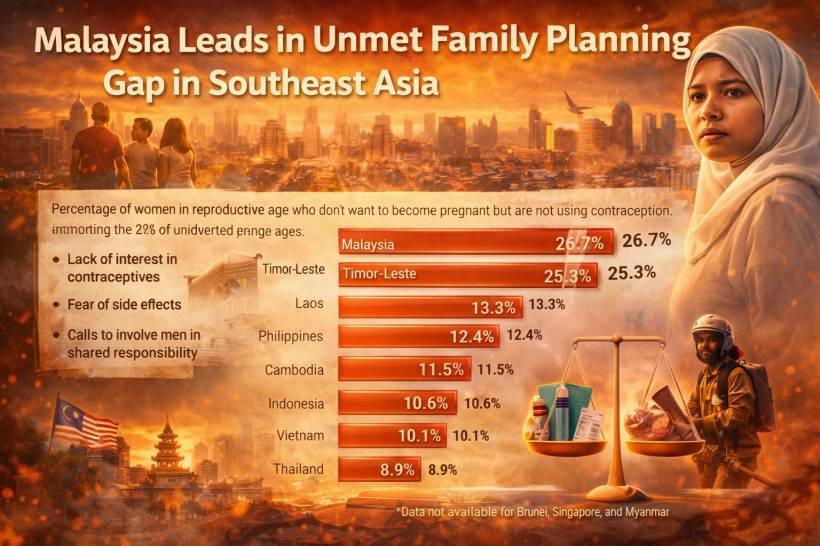
Family planning is often talked about as a private matter, something that happens quietly between couples and families. But when large numbers of women who do not want to become pregnant are still not using contraception, it becomes more than a personal issue. It becomes a public health concern, a social challenge, and a signal that something deeper is not working as it should.
That is the situation Malaysia is now facing.
Recent findings show that Malaysia has one of the highest unmet needs for family planning in Southeast Asia. In simple terms, this refers to women who do not want to get pregnant but are not using any form of contraception. The result is a greater risk of unintended pregnancies, along with the emotional, financial, and health consequences that can follow.
What the Numbers Are Really Telling Us
At first glance, the phrase "unmet family planning" may sound technical or distant. But the reality behind it is very human.
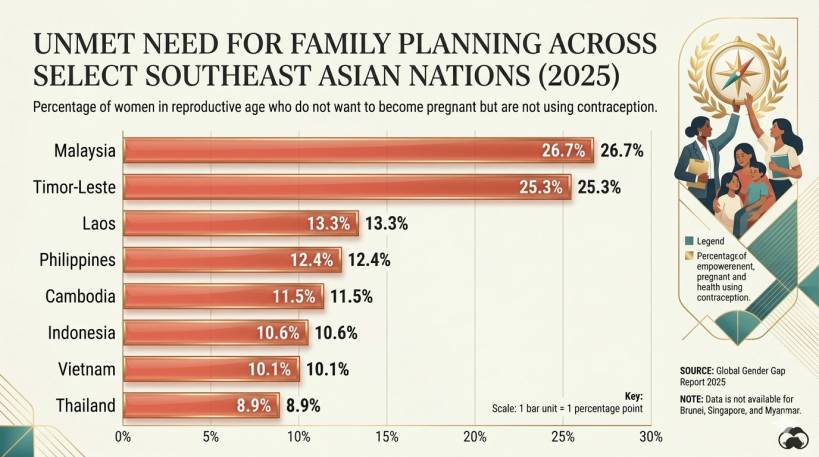
It describes women who are fertile, who may want to delay having children or stop having more children altogether, yet are not protected against pregnancy. In Malaysia, this affects more than a quarter of women of reproductive age who do not wish to become pregnant.
That is a significant number, and it places Malaysia among the countries with the largest family planning gap in the region based on the available data.
The bigger concern is that this is not just about access. Contraceptives are generally available in both public and private healthcare settings in Malaysia. So the issue is not simply whether services exist. The real challenge lies in why many women still choose not to use them despite not wanting to conceive.
Why Some Women Are Still Avoiding Contraception
Early findings from a government-linked study shed some light on this.
Two of the biggest reasons women gave for not using contraceptives were a lack of interest and fear of side effects. That tells us something important: this is not just a medical services issue. It is also an issue of confidence, education, trust, and perception.
For some women, contraception may feel unnecessary. For others, it may come with worries shaped by misinformation, past experiences, cultural attitudes, or stories shared by friends and family. Even when services are available, those fears can be enough to stop someone from taking action.
This is where the conversation needs to mature. Making contraception available is one thing. Making women feel informed, supported, and comfortable enough to use it is something else entirely.
The Overlooked Group: Older Women
One particularly interesting part of the findings is that unmet family planning needs appear to be highest among older women, especially those aged 35 and above.
That may surprise some people, because family planning discussions often focus heavily on younger adults. But in reality, older women may also be at risk of unintended pregnancy, especially if they wrongly assume that declining fertility means contraception is no longer necessary.
This seems to be especially common among women in their 40s, where assumptions about lower fertility may lead some to stop using protection too early.
That makes this not just a family planning issue, but also an information gap. If women are making decisions based on inaccurate assumptions about fertility, then better education becomes essential.
Family Planning Is Still Largely Seen as a Woman's Responsibility
Another major issue is how responsibility is distributed within relationships.
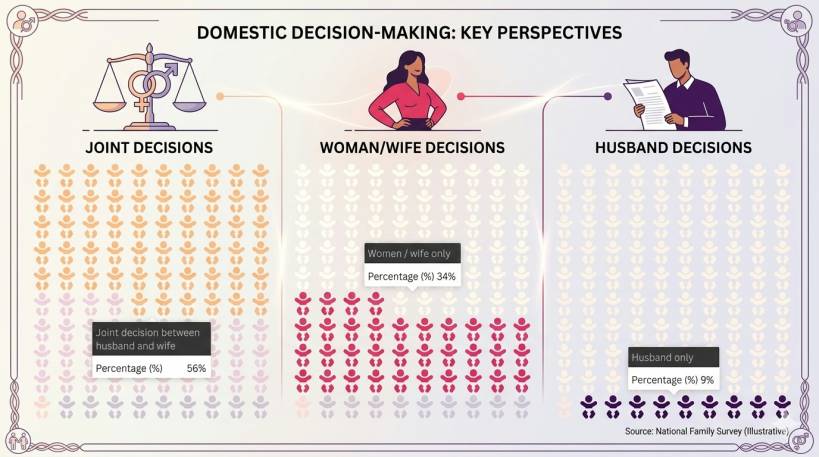
Although many women in Malaysia make family planning decisions together with their husbands, the burden still appears to lean heavily toward women. A substantial number also make these decisions on their own, while only a small percentage are made by husbands alone.
That imbalance says a lot.
For all the talk about shared responsibility, family planning is still often treated as something women are expected to manage, think about, and act on. Men may be involved in discussion, but not always to the same degree in practical responsibility.
That is why the government's emphasis on encouraging men to step up matters. Family planning should not be framed as a women-only issue. It affects both partners, and ideally, both should be equally involved in understanding the options, weighing the implications, and making informed choices together.
Access Alone Is Not Enough
Malaysia's healthcare system does provide access to family planning services, and that is important. But access on paper does not automatically translate into real use.
There are still socioeconomic pressures, psychological barriers, misinformation, relationship dynamics, and cultural assumptions that shape decision-making. A clinic can stock contraceptives, but that does not solve fear. A service can be available, but that does not automatically overcome stigma or uncertainty.
This is why family planning policy cannot stop at availability. It also needs to address communication, education, and support systems in a more meaningful way.
That includes better public information, stronger workplace and family support structures, and more open discussions about reproductive health that do not treat the subject as awkward or taboo.
Why the Government Is Focusing on Empowerment Instead of PunishmentInterestingly, the government is not leaning toward legal measures to force shared responsibility between men and women in cases of unplanned pregnancy. Instead, it is taking the position that empowerment, awareness, and mutual support are the better route.
That approach makes sense in many ways.
Family planning is deeply personal, and heavy-handed legal pressure could easily create new problems rather than solve existing ones. Education and cultural change may take longer, but they are more likely to produce lasting improvements if done properly.
Still, that also means the effort must be serious. If the country chooses empowerment over enforcement, then public education cannot be half-hearted. It has to be strong enough to actually change attitudes, correct myths, and bring men more actively into the conversation.
It is easy to look at family planning data as just another report or percentage. But behind every statistic is a real-life situation involving health, finances, relationships, and future plans.
Unintended pregnancies can have long-term consequences not just for women, but for entire families. They can affect employment, education, emotional wellbeing, childcare readiness, and household stability. That is why family planning should never be reduced to a narrow medical issue. It sits at the intersection of healthcare, gender roles, education, and social policy.
When a country has a large gap in this area, it usually means there are deeper conversations that still have not been fully addressed.
Malaysia's family planning gap highlights a problem that is not simply about access to contraceptives, but about trust, awareness, shared responsibility, and informed decision-making. The services may exist, but the hesitation, fear, and misconceptions around using them remain powerful barriers.
What stands out most is that this is not just a women's issue. It is a family issue, a public health issue, and in many ways, a social maturity issue. If meaningful progress is to happen, the conversation must move beyond availability and start focusing more seriously on education, support, and genuine partnership between men and women.
Because in the end, family planning works best when it is not carried by one person alone, but understood and supported as a shared responsibility.











Comments 0