

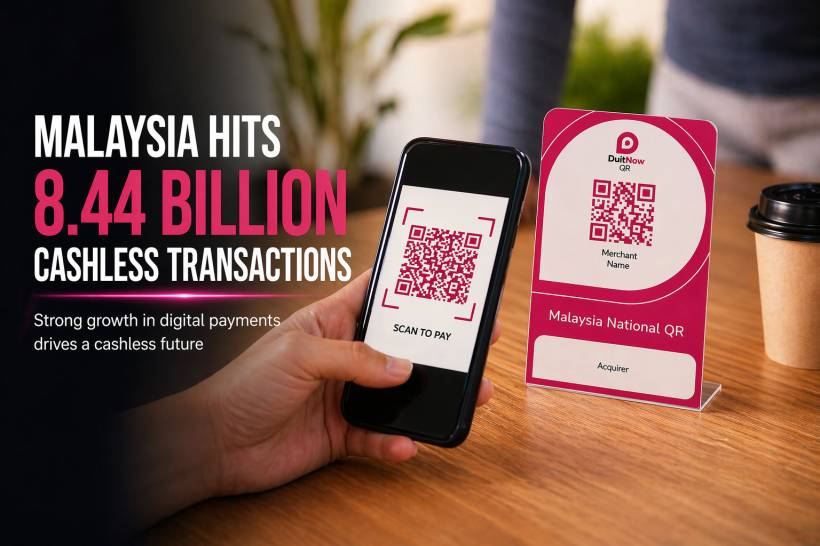
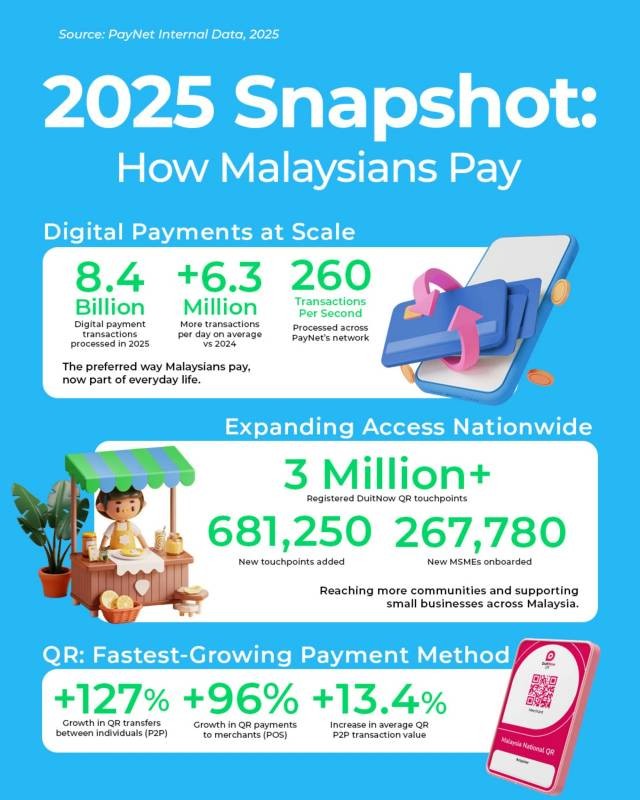
Malaysia's shift towards a cashless society is clearly gaining pace. According to Payments Network Malaysia, the country recorded an impressive 8.44 billion digital payment transactions in 2025—another strong sign that cashless payments are no longer just a convenience, but a daily habit for many Malaysians.
These transactions span across everyday activities, from buying groceries and paying for transport to sending money between friends and handling small business payments.
A Push Backed By National Strategy
This growth didn't happen by chance. It aligns closely with efforts led by Bank Negara Malaysia under its Financial Sector Blueprint 2022–2026.
The blueprint focuses on three key pillars:
• Security – ensuring transactions remain safe and trustworthy
• Reliability – building a stable and resilient payment infrastructure
Together, these efforts are helping to shape a more connected and efficient financial ecosystem across the country.
Banks And Fintech Players Driving Growth
Interestingly, the surge in transactions isn't coming from just one segment of the industry.
Traditional banks continue to play a strong role, with transaction volumes growing by over 30% year-on-year. However, non-bank players—particularly fintech platforms and e-wallet providers—are growing even faster, recording a significant 71.7% increase.
According to PayNet CEO Praveen Rajan, this reflects a broader behavioural shift. Malaysians are increasingly choosing digital payments as their default way to manage money, rather than treating them as an alternative.
DuitNow QR Adoption Expands Nationwide
One of the biggest drivers behind this growth is the continued expansion of DuitNow QR.
In 2025 alone:
• More than 267,000 of these came from MSMEs
• Total acceptance points have now surpassed 3 million nationwide
This widespread availability makes it easier than ever to pay digitally—whether you're at a roadside stall, a retail shop, or a local café.
Growth Beyond Major Cities
Another notable trend is how cashless adoption is spreading beyond urban centres.
States like Terengganu, Kelantan, and Kedah are seeing rapid growth, with non-urban transaction volumes tripling compared to the previous year. This suggests that digital payments are no longer limited to city lifestyles—they're becoming part of everyday life across the country.
PayNet also noted that transaction volumes tend to spike during festive seasons and year-end holidays, contributing to an additional average of 6.3 million transactions per day compared to 2024.
The Trade-Off: Convenience Vs Risk
While the numbers are impressive, the growing reliance on centralised payment systems does raise some concerns.
Platforms like DuitNow and MyDebit are deeply integrated across banks, e-wallets, and merchants. This means when disruptions happen, the impact can be widespread—affecting multiple services at once.
There have already been instances where users faced difficulties completing transactions due to system outages.
Final Thoughts
Malaysia's journey towards a cashless society is clearly on track, with strong growth driven by both infrastructure and user adoption.
At the same time, the increasing dependence on digital payment systems highlights the importance of resilience and backup options. While going cashless is convenient, it's still practical to keep some physical cash on hand—just in case technology decides to take a break.
Overall, the direction is clear: digital payments are no longer the future in Malaysia—they're already the present.











Comments 0