

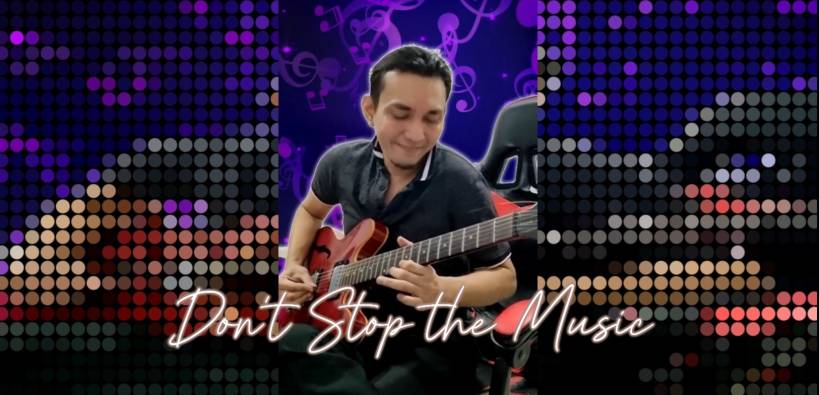
Some songs are built entirely around rhythm and energy, and Rihanna's Don't Stop The Music is one of those tracks that immediately gets your head moving the moment it begins. The song's strong groove, dance-driven beat, and catchy melodic lines make it instantly recognizable. Recreating that kind of rhythm-focused track on guitar presents a unique challenge, but it is also incredibly rewarding when the groove starts to come together.
For this guitar cover, the focus was not just on playing the melody but on translating the pulse and movement of the original song into expressive guitar phrasing. It meant paying attention to timing, articulation, and dynamics so that the guitar could carry both the melody and the rhythmic character that make the track so memorable.
The Groove Behind the Song
Released in 2007 as part of Rihanna's album Good Girl Gone Bad, Don't Stop The Music quickly became a global hit. The track is built around a dance-pop rhythm and famously samples Michael Jackson's "Wanna Be Startin' Somethin'," giving it an instantly recognizable rhythmic hook.
What makes the song stand out is its driving beat and layered production. The rhythm carries the track forward while the vocal melody floats effortlessly above it. When adapting this to guitar, the challenge becomes finding a balance between preserving that rhythmic energy and delivering the melodic lines clearly.
The guitar interpretation therefore focuses heavily on groove. Instead of simply replicating notes, the phrasing emphasizes rhythmic precision, letting the guitar lock into the pulse of the song.
Translating Dance Energy to Guitar
Dance music often relies on layered instrumentation, synth textures, and percussion patterns. Stripping all of that down to a single guitar forces you to rethink how the arrangement works.
In this cover, the melody is played with a clean tone so the phrasing remains clear and articulate. Subtle variations in picking dynamics help maintain the energy of the song, while careful timing keeps the rhythm tight.
The goal was to keep the performance lively and groove-oriented, allowing the guitar to mimic the movement that normally comes from the song's electronic production.
Playing Style and Approach
Capturing the feel of Don't Stop The Music on guitar requires a slightly different mindset compared to traditional rock or blues covers. The focus is less on heavy distortion or aggressive bends and more on rhythmic accuracy and articulation.
Key elements in this cover include:
• Tight timing to match the dance-driven pulse of the original track
• Expressive phrasing that carries the melody naturally
• Subtle dynamic control to keep the performance lively
When the timing and groove lock together, the guitar begins to feel almost like another rhythmic instrument in the mix rather than just a lead voice.
Watch the Cover
If you enjoy guitar interpretations of popular songs, feel free to explore more covers on the blog where I regularly share new recordings and arrangements.
Guitar Pro Tab Available
For those who want to explore the arrangement further, a Guitar Pro tab is available. This can be helpful for learning the phrasing, timing, and note placement used in the cover. You can view the Guitar Pro tab here:
Tabs are a great way to study how the melody and rhythm interact, especially for songs that rely heavily on groove like this one.
Final Thoughts
Don't Stop The Music is a perfect example of how rhythm can drive an entire song. Even though it was originally produced as a dance-pop track filled with electronic elements, the core groove translates surprisingly well onto guitar when approached with the right phrasing and timing.
Working on this cover was a fun reminder that the guitar can adapt to almost any genre. By focusing on groove, articulation, and dynamics, it is possible to capture the spirit of a dance track while still letting the guitar speak with its own voice.
Sometimes the best guitar covers are not about playing more notes, but about letting the rhythm breathe and allowing the groove to carry the music forward.











Comments 0