

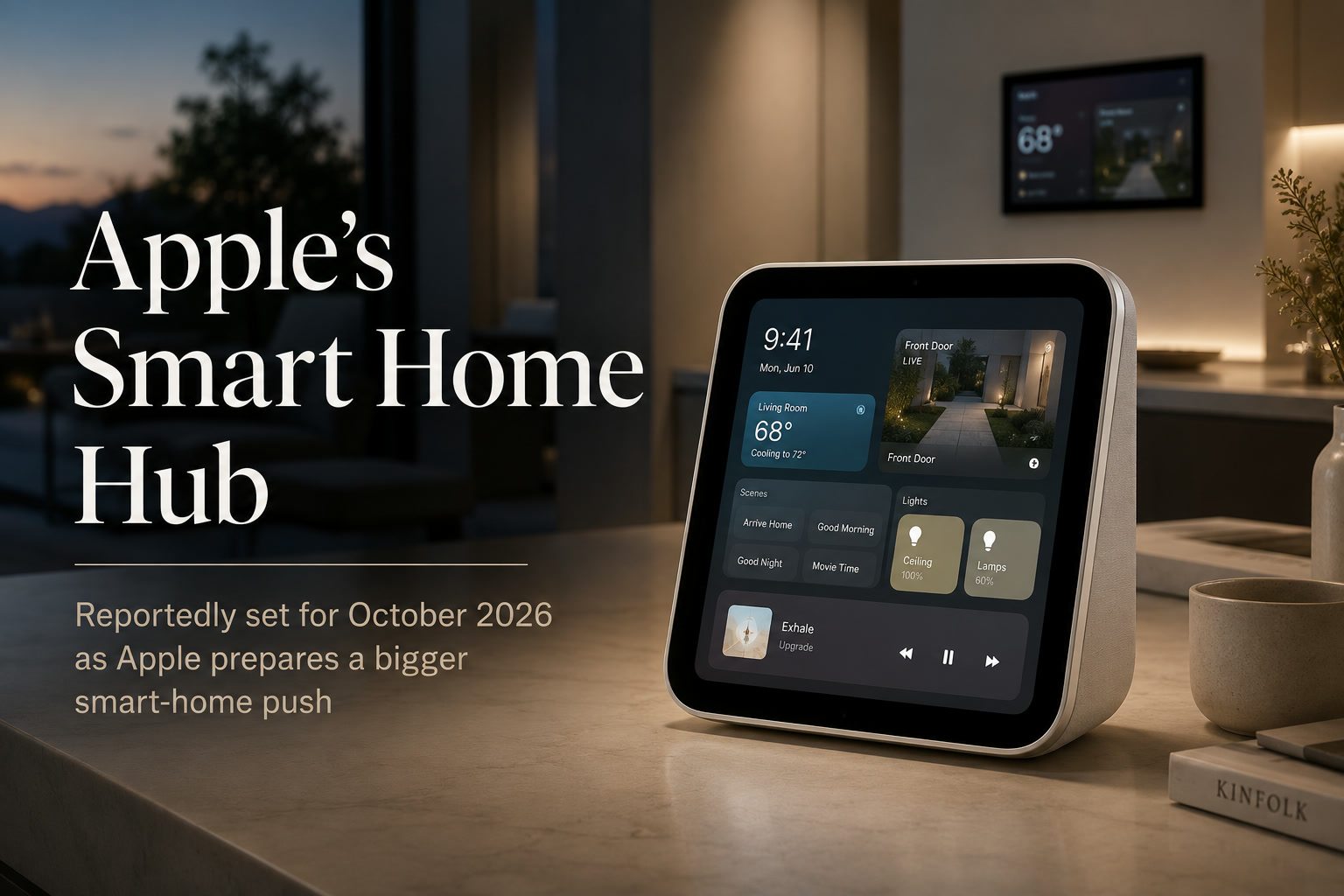
Apple may finally be preparing to make a serious move into the smart-display market. After years of rumours, internal development changes and reported delays, the company's long-awaited smart home hub could launch as early as October 2026. However, the timing reportedly remains dependent on Apple completing the software and AI experience, meaning the release could still slip into early 2027.
The unannounced device is expected to combine a touchscreen, smart speaker, home-control panel, communication system and AI assistant in one product. Rather than being merely a HomePod with a screen attached, it could become the central interface for Apple's wider smart-home ecosystem.
Apple has not officially announced the device, its name or its launch schedule. For now, details should still be treated as informed reporting rather than confirmed product specifications.
Apple Already Has Home Hubs—But Not a Dedicated Smart Display
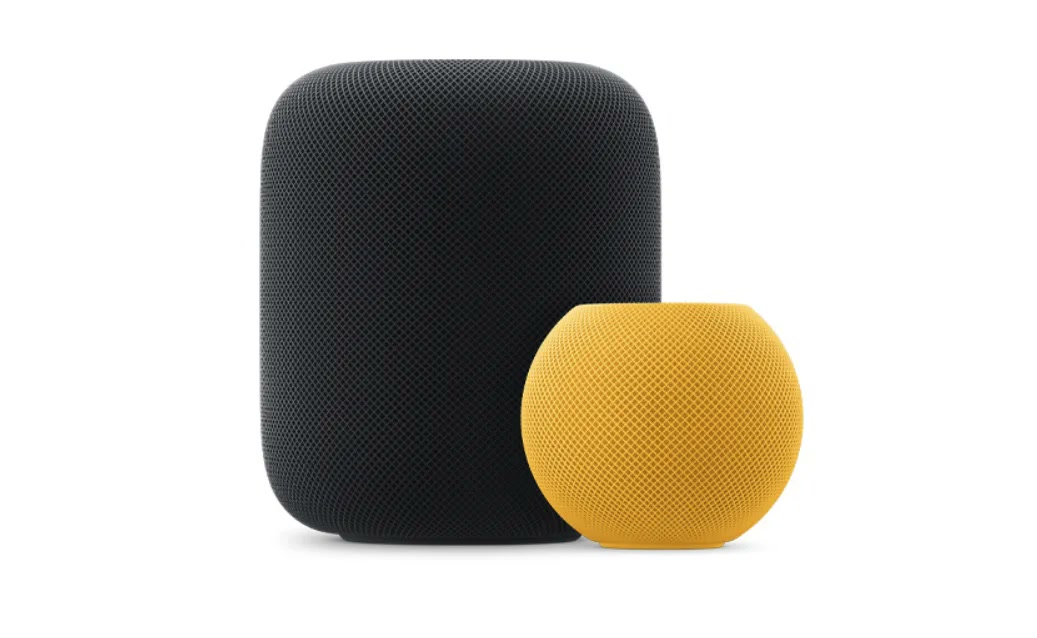
Apple currently allows a HomePod, HomePod mini or Apple TV to function as a home hub. These devices enable remote control, smart-home automation and support for Matter accessories connected through the Home app.
However, none provides the same experience as an Amazon Echo Show or Google Nest Hub.
An Apple TV requires a separate television, while HomePod models rely mainly on voice interaction. Users can control accessories through an iPhone, iPad, Mac or Apple Watch, but Apple does not currently sell a dedicated household display that can remain permanently visible on a kitchen counter or wall.
The rumoured smart hub would fill that gap.
A permanently available screen could show camera feeds, lights, room temperatures, door-lock status, timers, family appointments and other information without requiring someone to reach for a personal device.
A Seven-Inch Square Touchscreen Is Expected
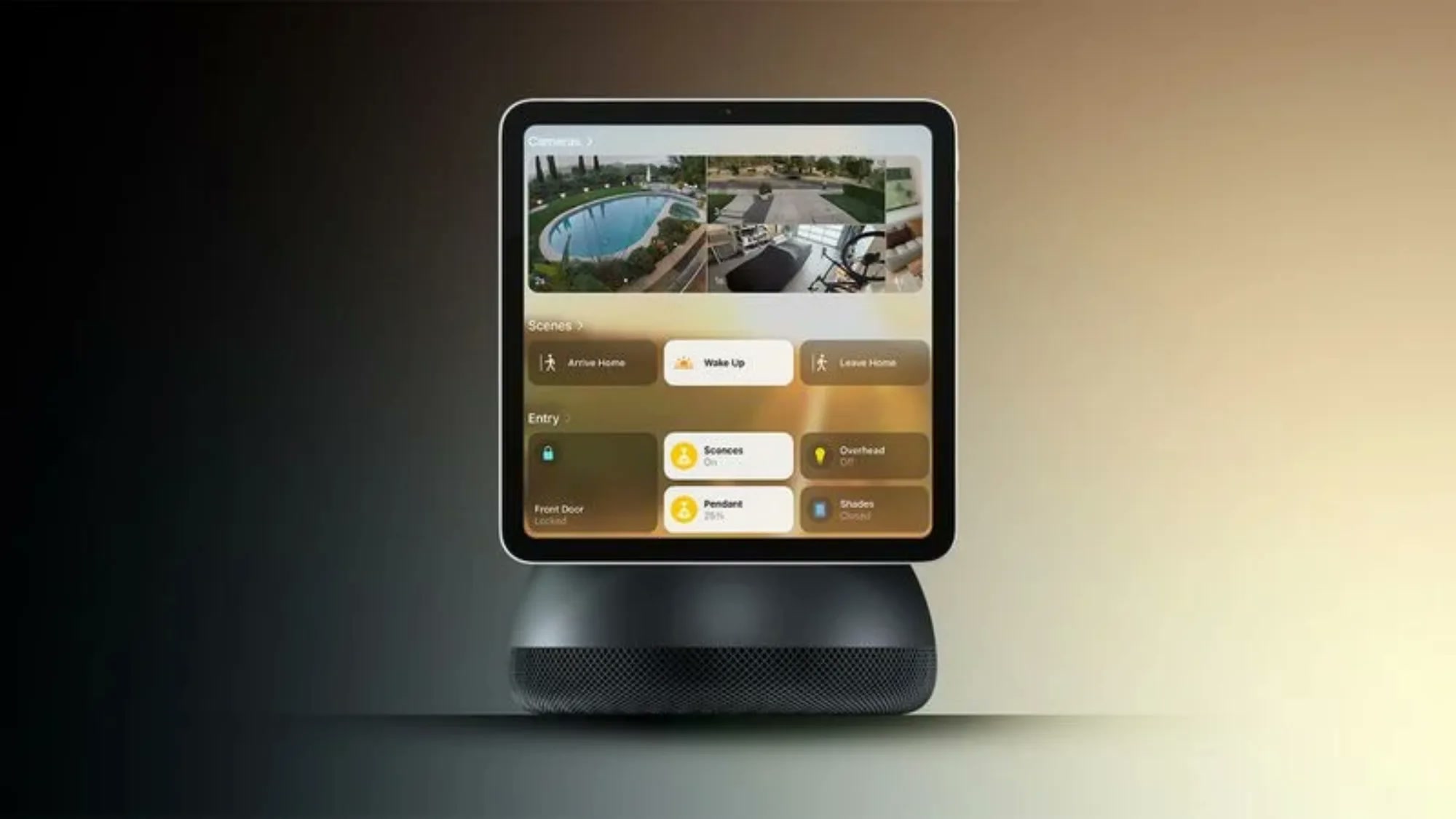
The product is reportedly being developed around a roughly seven-inch square display. Its design has often been described as resembling a compact iPad or touchscreen attached to a HomePod-style speaker base.
The square format would distinguish it from a conventional tablet.
A wide tablet display is excellent for watching films or browsing websites, but a square interface may be more suitable for smart-home controls, widgets, clocks and camera feeds. It could display information clearly in either a countertop or wall-mounted position.
The device is expected to have a touchscreen, but Apple will likely design it primarily for brief interactions rather than extended tablet use.
Users may tap a light control, check a camera, start music or answer a call, then walk away. Siri would remain central to hands-free operation.
Two Versions Could Suit Different Rooms
Reports suggest Apple is preparing two physical configurations.
One would sit on a desk, counter or bedside table using a speaker-like base. The other would be designed for wall mounting, making it suitable for kitchens, hallways, entrances and shared living spaces.
This two-version strategy makes sense because smart-home displays serve different purposes depending on their location.
A tabletop model could operate like a HomePod with visual controls, providing music playback, alarms and video calls. A wall-mounted version could function more like a control panel for lights, security cameras, air conditioning and household routines.
Apple reportedly wants customers to install several units around the home instead of relying on one central screen. If that is accurate, pricing will be extremely important.
A device intended for every major room must be affordable enough for households to purchase more than one.
A New Operating System Could Power the Experience
The smart hub is expected to run a new operating system built from parts of tvOS while borrowing interface concepts from iOS and watchOS. Reports have described grids of applications, widgets, customisable clock faces and screens designed around glanceable information.
This approach would allow Apple to reuse technologies it already maintains while creating an interface specifically for shared household use.
An ordinary iPad interface would not necessarily work well in this environment. Tablets assume that one person is holding the device and navigating through applications. A smart display may be viewed from several metres away and used by different household members throughout the day.
Text must be readable, buttons must be large and the most relevant information should appear automatically.
The interface may therefore behave more like an intelligent dashboard than a traditional home screen.
The Display May Adapt to Whoever Approaches It
One of the more ambitious rumours is that the interface could recognise who is standing nearby and adjust itself accordingly.
Using a camera, facial recognition and proximity sensors, the hub may present personalised information such as appointments, reminders, preferred music and relevant widgets. It may also enlarge text and controls when someone is farther away.
For example, one family member approaching the device might see their work calendar and commute information. Another might see school reminders, household tasks or preferred media controls.
This would make the device feel more personal without requiring every user to sign in manually.
However, facial recognition inside a shared household device will require careful privacy design. Apple would need to explain where recognition data is processed, what information is stored and whether camera-based personalisation can be disabled.
Apple Intelligence and the New Siri Are Central to the Plan
The hub is expected to rely heavily on Apple's revamped Siri and Apple Intelligence.
Instead of responding only to fixed voice commands, the assistant would ideally understand more natural requests, maintain context and perform actions across several services.
A user might ask it to dim the living-room lights, display the front-door camera, send a message to a family member and begin playing music without navigating several separate menus.
The reported launch delay is significant because the product's usefulness may depend heavily on that new assistant. A smart display with a weak voice interface would struggle to differentiate itself from existing competitors.
Apple reportedly postponed earlier plans while waiting for its updated Siri and related operating-system work to become ready.
An A18 Chip Could Provide Local AI Processing
Earlier reports have suggested that the device may use an Apple A18 processor with approximately 8GB of memory.
That would give the hub considerably more processing capability than a basic smart speaker.
The A18 could support Apple Intelligence features, camera processing, facial recognition and local execution of selected commands. Local processing would also reduce the need to send every interaction to a remote server.
Apple's current AI strategy already combines on-device models with larger server-based systems through Private Cloud Compute. Its published model research emphasises local processing, tool use and privacy protections across Apple devices and services.
A household hub could use a similar arrangement: simple tasks would run locally, while more complex requests could use protected cloud resources when necessary.
FaceTime Could Turn It into a Household Communications Device
The smart hub is expected to include a camera and support FaceTime video calls.
A display positioned in a kitchen or living room could make family calls more convenient than holding a phone or balancing an iPad on a table. The device may also support audio calls, messaging and household announcements.
Intercom functionality could become particularly useful when several hubs are installed.
Someone downstairs might send a voice announcement to a bedroom or tell everyone that dinner is ready. Apple already offers an Intercom feature through HomePod, but adding a screen could allow messages to include visual information, call controls or room-specific status.
This could also connect naturally with iPhones, Apple Watches and AirPods used by family members.
Security Monitoring Could Be a Major Selling Point
The device is reportedly designed to display security-camera feeds and provide real-time home monitoring.
A wall-mounted hub near an entrance could show who is at the door, display door-lock status and provide quick access to alarms or cameras. A tabletop unit could automatically bring up a feed when a compatible doorbell detects activity.
Apple's existing Home platform already supports categories such as security, entry, climate and lighting. HomePod and Apple TV can also act as hubs for remote access and automation.
A dedicated display would make those capabilities far more visible.
Instead of opening the Home app on another device, the household could have a control screen available at all times.
Apple May Also Be Developing Its Own Security Camera
Apple is reportedly working on complementary smart-home hardware, including an Apple-branded security camera. Other possible products include an updated HomePod mini, a refreshed Apple TV and a more advanced robotic smart display.
An Apple camera could give the company tighter control over video quality, privacy, notifications and integration with its hub.
Apple currently relies mainly on compatible third-party cameras and accessories. While that provides choice, the experience can vary between manufacturers.
Producing its own camera would allow Apple to offer an end-to-end system consisting of hardware, operating software, encrypted storage and household recognition features.
It could also increase customer dependence on Apple's ecosystem, which would be beneficial to the company but may make switching platforms more difficult.
The Hub Could Strengthen Matter Adoption
Matter is an industry standard intended to make smart-home accessories work more consistently across Apple, Google, Amazon and other platforms.
Apple already supports Matter through its Home app and compatible HomePod or Apple TV hubs. Thread-enabled Matter devices require a suitable Thread border router, such as a supported HomePod mini or Apple TV 4K.
A new Apple smart hub could include the same connectivity and become the most visible Matter controller in an Apple household.
This would help users connect lights, sensors, plugs and other devices without depending entirely on Apple-branded hardware.
However, the quality of the experience will still depend on accessory manufacturers, network reliability and whether every Matter feature is supported consistently across platforms.
Matter has improved compatibility, but the smart-home market remains far from completely seamless.
Apple Must Make Shared Use Simple
One challenge Apple will need to solve is that the hub will not belong to only one person.
An iPhone is normally linked to one Apple Account and protected by personal authentication. A household display may be used by parents, children, guests and visiting relatives.
Apple will need sensible permission controls.
A child may be allowed to play music or turn on bedroom lights but should not necessarily be able to unlock an external door. A guest might receive temporary control over selected accessories without seeing private calendars or camera history.
Apple's Home platform already supports shared control and guest access for certain accessories, including locks and alarm systems.
The hub would need to make these permissions understandable and easy to manage.
Privacy Will Be Just as Important as Convenience
A device containing microphones, cameras and proximity sensors will naturally raise privacy concerns.
Smart-home technology can collect information about when people are present, which rooms they use, who approaches the screen and what commands they give. Research into smart-home risks has repeatedly identified privacy intrusion, authentication weaknesses and unauthorised access as major concerns.
Apple will likely position privacy as one of the hub's main advantages over competing products.
Possible protections could include visible camera indicators, hardware microphone controls, local face recognition, end-to-end encrypted camera footage and clearly separated household profiles.
The strongest privacy feature, however, would be giving users meaningful control.
People should be able to disable recognition, restrict camera access and understand whether a request is processed locally or sent elsewhere.
It Cannot Simply Be an Expensive iPad on a Stand
Apple already sells iPads that can run the Home app, display widgets, make FaceTime calls and play media.
The smart hub therefore needs a clear reason to exist.
Its advantages may include permanent power, better microphones, integrated speakers, automatic household recognition, wall-mounting support and a simplified interface designed to remain visible throughout the day.
It may also be priced below an iPad, although Apple has not announced any official figure.
The device will struggle when customers feel that placing an older iPad on a stand provides nearly the same experience.
Apple must make the hub feel like infrastructure for the home rather than another personal screen.
Amazon and Google Already Have Years of Experience
Apple would be entering a market where Amazon and Google have sold smart displays for years.
Those competitors already support video calling, smart-home controls, music playback, cameras, timers and household information. They also offer products at several price points.
Apple's advantage lies in integration.
Millions of users already own iPhones, Apple Watches, HomePods, AirPods and Apple TVs. A smart display connected deeply to those devices could offer more consistent handoff, messaging, media and identity features.
Its disadvantage is timing.
Customers who wanted a household display may already have invested in Alexa or Google Home products. Apple will need to provide a sufficiently better experience to persuade them to switch or add another ecosystem.
Multiple Units Could Make the Ecosystem Expensive
Apple reportedly imagines users placing several hubs around a house.
That vision works only when the cost is reasonable.
A single premium device might be acceptable for a kitchen or living room. Installing units in several bedrooms, hallways and shared spaces could quickly become expensive, especially when cameras, accessories and subscriptions are added.
Apple may need a product structure similar to HomePod.
A more capable tabletop model could provide better speakers and video calling, while a simpler wall-mounted model could focus on controls and notifications.
Another possibility is that both versions use the same screen but offer different mounting and speaker accessories.
Nothing has been officially confirmed, so the final configuration may differ from the current reports.
The October Date Is Still Far from Guaranteed
The reported October 2026 launch should not be treated as fixed.
Apple's software readiness—particularly the new Siri experience—appears to remain the main uncertainty. Reports continue to allow for a delay into early 2027.
Apple may prefer to postpone the product rather than release it with incomplete AI capabilities.
That would be frustrating after years of rumours, but a smart-home hub depends heavily on reliability. Users need lights, locks, alarms and household communications to work consistently.
A delayed product can recover. A device that launches with unreliable voice commands or broken automations may struggle to regain trust.
A Bigger Smart-Home Strategy Is Beginning to Take Shape
The hub appears to be only one part of Apple's broader plans.
A refreshed Apple TV and HomePod mini could improve the existing foundation, while cameras and more advanced displays could create an expanded hardware ecosystem. Reports have also described a future tabletop device with a screen mounted on a motorised robotic arm, although that product is expected later.
This suggests Apple no longer views the smart home as a secondary feature controlled mainly through the iPhone.
The company may be preparing an entire category of household devices built around Apple Intelligence, Siri and the Home platform.
Whether that becomes a successful business will depend on pricing, accessory compatibility and how well Apple can modernise Siri.
Final Thoughts
Apple's rumoured smart home hub could become the company's most important household product since the original HomePod.
A seven-inch touchscreen, intelligent user recognition, FaceTime, camera monitoring and deep Home integration could make it far more useful than a speaker with a display added as an afterthought.
The two proposed designs would also give Apple flexibility. A tabletop version could emphasise audio and communication, while a wall-mounted version could become a permanent home-control panel.
However, the product's success will depend on the software.
Apple needs a Siri assistant that understands natural requests, responds quickly and performs household actions reliably. It also needs strong privacy controls and a price that makes installing several units realistic.
The reported October 2026 launch window is encouraging, but Apple has not confirmed the device and another delay remains possible.
After years of allowing the iPhone, HomePod and Apple TV to carry its smart-home ambitions, Apple may finally be preparing a product built specifically for the centre of the home. Whether it arrives in October or early next year, the hub could reveal how seriously Apple intends to compete for the connected household.











Comments 0