

A viral post claiming that supporting Windows users is not worth developers' time has sparked a familiar argument over which operating system developers actually prefer. Microsoft Distinguished Engineer David Fowler responded by calling the post clickbait while pointing out that more developers use Windows than any other operating system. Statistically, he has a strong case, but the broader picture is more complicated because many developers who use Windows also rely heavily on Linux tools, while startup and Big Tech communities often show a stronger preference for macOS or Linux.
The debate highlights an important distinction between market share and developer loyalty. Windows may have the largest overall developer base, but that does not necessarily mean it is the preferred environment for every type of software development. Microsoft's continued investment in Windows Subsystem for Linux, Linux containers and developer-focused tools suggests the company clearly understands that many developers want Windows hardware without giving up Unix-style workflows.
A Viral Post Reignites The Windows Developer Debate
The discussion began when Michael Chomsky posted on X that "life is too short to support windows users". The post quickly gained attention, passing 15,000 views and attracting the predictable mixture of agreement, criticism and jokes about Windows development. It was the kind of provocative statement that tends to perform well on social media precisely because operating-system debates reliably generate engagement.
Fowler, who has spent more than 18 years at Microsoft, responded by saying the post was clickbait and adding that more developers use Windows than any other operating system. His point was not that Windows is universally loved, but that dismissing Windows users entirely ignores the size of the developer community still working on Microsoft's platform. That distinction matters when discussing whether supporting Windows is commercially or technically worthwhile.
Windows Still Has The Largest Developer User Base
According to Stack Overflow's 2025 Developer Survey, Windows was the most commonly used operating system among professional developers at 49.5%. macOS followed at 32.9%, while Ubuntu accounted for 27.7%. Windows Subsystem for Linux, or WSL, was listed separately at 16.8%, while Linux outside WSL accounted for another 16.7%.
Those numbers support Fowler's argument, but they also need context because respondents could choose more than one operating system. A developer might use Windows as the primary desktop environment while doing most actual development inside WSL or a Linux container. In practice, "using Windows" and "developing with Windows-native tooling" are not always the same thing.
Startup And Big Tech Developers Often Prefer macOS Or Linux
The picture changes considerably when looking at developers working in venture-backed startups or major technology companies. Gergely Orosz of The Pragmatic Engineer ran polls on X and LinkedIn that showed Windows with a much smaller share among his audience. On X, macOS received 61.6%, Linux 24.2% and Windows 12.8%, with LinkedIn producing a broadly similar pattern.
Orosz has acknowledged that his audience skews towards Big Tech and venture-funded startups, so the results should not be treated as representative of the entire software industry. Still, they reveal an important difference between overall usage and preference among certain developer groups. Fowler can be correct that Windows has the largest developer population while Orosz can also be correct that many high-profile startup and Big Tech developers actively choose something else.
Why macOS And Linux Remain So Popular With Developers
For web, backend, cloud and AI development, Unix-style tooling remains one of the biggest attractions. Most production infrastructure runs on Linux, so developers often prefer working in an environment that closely resembles the systems where their software will eventually be deployed. Linux offers that environment directly, while macOS provides many of the same Unix conventions within a polished commercial desktop ecosystem.
Apple Silicon has also strengthened the appeal of Macs for developers, especially within organisations that are not heavily constrained by hardware budgets. Startups and large technology companies frequently provide MacBooks because they combine strong battery life, performance and Unix tooling without requiring developers to maintain a separate Linux desktop environment. For many engineering teams, that convenience outweighs the additional hardware cost.
Windows Still Makes Sense For Many Development Workloads
Windows remains an extremely practical choice for several major developer communities. .NET and C# developers, Visual Studio users, game developers, enterprise software teams and anyone building Windows applications often benefit directly from using Microsoft's operating system. Windows hardware is also available across a much wider range of prices and form factors than Apple's Mac lineup.
There are also strong technical arguments in Windows' favour that are sometimes lost in the social-media debate. The Windows NT architecture remains sophisticated, mature and capable, and some researchers have argued that parts of its design compare very favourably with Linux. The issue is therefore not that Windows is inherently incapable as a development platform, but that many modern development workflows evolved around Unix conventions.
WSL Is Microsoft's Answer To The Unix Tooling Problem
One of the most revealing replies to Fowler's post joked that "the biggest Windows feature is WSL". The line is funny because there is some truth behind it. Windows Subsystem for Linux has become one of Microsoft's most important tools for keeping developers on Windows while giving them access to the Linux environments they increasingly expect.
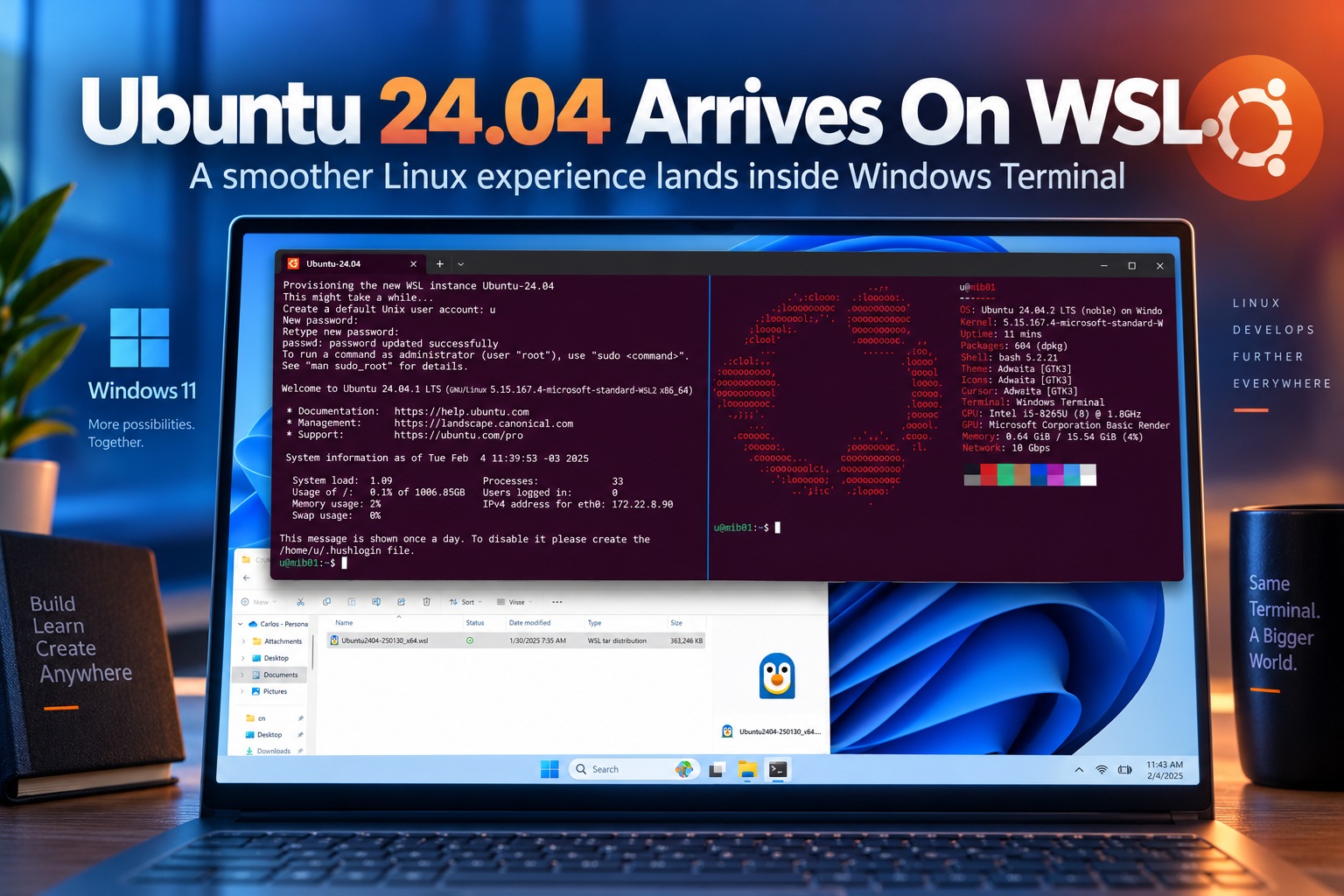
WSL allows developers to run Linux tools directly alongside Windows applications without maintaining a separate virtual machine or dual-boot installation. Microsoft has continued expanding it with features such as WSL Containers, while Linux distributions such as Ubuntu have become increasingly popular on Windows 11. Even companies outside Microsoft are adding support for WSL within their developer and AI tooling.
The result is a development experience that increasingly treats Windows and Linux as complementary rather than competing environments. Many developers can use Windows for the desktop, Visual Studio, productivity software and hardware compatibility while doing most command-line and server-oriented development inside Linux.
Microsoft Is Still Trying To Make Windows More Developer-Friendly
Microsoft has also been working on tools intended to make Windows itself more appealing to developers and power users. Projects such as Project Zenith aim to simplify the experience for users who want a cleaner, more development-focused Windows environment. The company has also discussed reducing unnecessary software and configuration overhead so developers can start with a less cluttered machine.
At the same time, Microsoft has positioned Windows 11 as an operating system for building AI applications. That includes deeper support for local AI development, containers, development environments and increasingly powerful hardware with dedicated AI accelerators. The broader strategy is clear: Microsoft wants developers to see Windows as a platform that can support both traditional software development and newer AI-focused workflows.
The Bigger Problem May Be Native Windows Development
Where Microsoft arguably faces a more difficult challenge is native Windows application development. Over the years, developers have been asked to move through several different frameworks and technologies, including Win32, WinForms, WPF, Silverlight, UWP and now WinUI. That history has made some developers cautious about committing deeply to Microsoft's latest application framework.
Fowler himself has previously argued that native applications are becoming important again, but convincing developers to invest in native Windows development requires more than simply providing a capable framework. Microsoft needs to convince developers that the platform and tooling they adopt today will remain supported and relevant for years. That trust matters because application frameworks can require substantial long-term investment.
Meanwhile, macOS continues to attract a steady stream of polished native applications despite having a smaller overall desktop market share. That difference illustrates why raw user numbers and developer enthusiasm are not always the same thing.
Windows Usage Does Not Automatically Mean Windows Loyalty
Millions of developers use Windows because it is provided by their employer, because a particular tool requires it or because it makes sense for the software they are building. That still represents real usage and reinforces Fowler's argument that developers cannot simply ignore the platform. However, there is a difference between using Windows because it is practical and choosing it enthusiastically when every alternative is available.
That second category is arguably the more difficult one for Microsoft to win. Developers who can freely choose between Windows, macOS and Linux may evaluate the ecosystem very differently from enterprise teams standardised around Windows. Microsoft's investment in WSL, WinUI, AI development and cleaner developer environments appears designed partly to make Windows a platform developers actively want rather than simply one they happen to have.
Final Thoughts
The original claim that supporting Windows users is a waste of developers' time was clearly provocative, and David Fowler was right to point out that Windows still has the largest overall developer population. Stack Overflow's numbers show that almost half of professional developers use Windows in some capacity, making it impossible to dismiss the platform as irrelevant.
The more interesting question is not whether Windows has developers, but how many developers would choose it if every option were equally convenient. macOS and Linux remain particularly attractive for web, cloud, backend and AI development because of their Unix foundations, while Windows continues to dominate several enterprise, .NET and game-development workloads. Microsoft's continuing investment in WSL, native development tools and AI capabilities shows that it understands the challenge: keeping developers on Windows is one thing, but earning their preference is much harder.











Comments 0