

Online safety has become one of the most important parenting challenges of the digital age. Children are spending more time watching videos, learning through apps and communicating online, while parents are expected to understand an ever-changing mix of platforms, settings and risks.
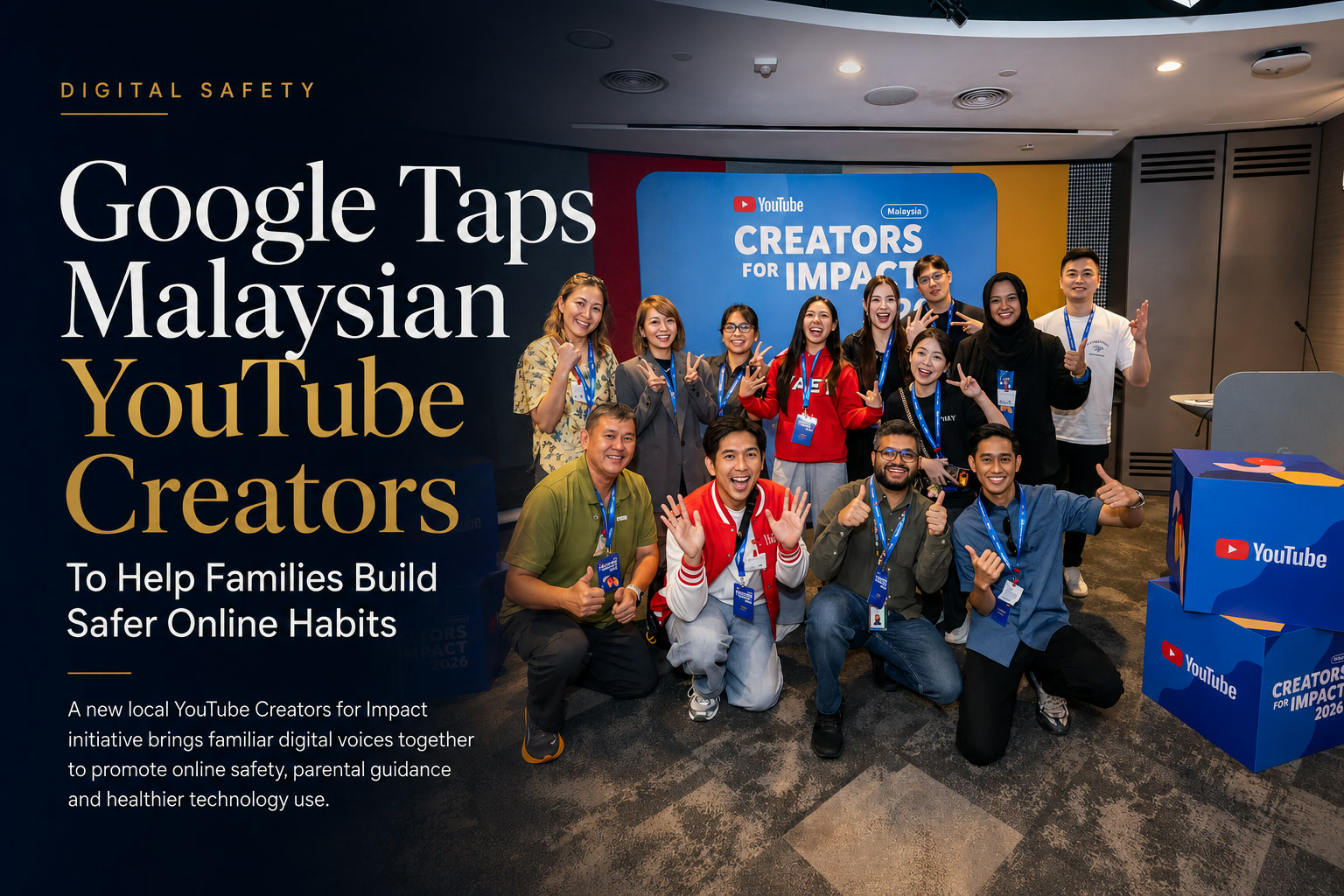
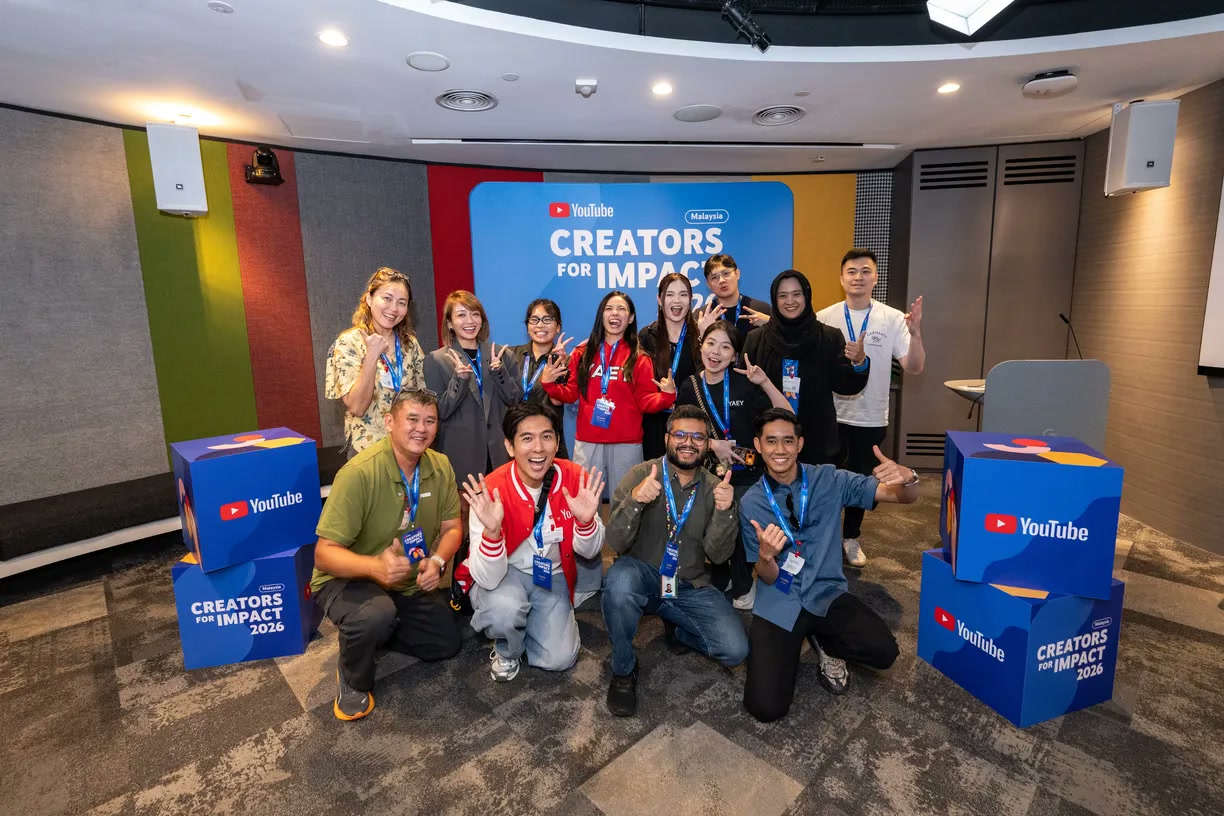
Google Malaysia is attempting to make that conversation easier through the launch of YouTube Creators for Impact, a locally focused programme that brings together familiar Malaysian content creators to help families develop safer and healthier technology habits.
Rather than relying entirely on technical guides or formal awareness campaigns, the initiative will use relatable videos and real-life experiences to explain online safety in a way that parents and younger audiences can understand.
Six Malaysian Creators Join the Programme
The Malaysian edition of YouTube Creators for Impact includes six recognised creators:
These participants have been selected as Lighthouse Creators, reflecting their role in helping guide public discussion around responsible technology use.
Over a two-month period, they will work with industry specialists to build a deeper understanding of online safety, parental controls, youth well-being and digital responsibility.
The creators are then expected to turn those lessons into content that feels practical and familiar to Malaysian families.
This approach recognises that parents may be more likely to engage with safety advice when it comes from creators they already watch and trust.
Making Online Safety Easier to Understand
Digital-safety advice can sometimes feel overly technical.
Parents may hear about privacy settings, restricted modes, screen-time controls and recommendation systems without fully understanding how those features affect what their children see.
The programme aims to simplify those topics through everyday examples.
Instead of presenting online safety as a long list of warnings, creators can demonstrate how families might discuss digital boundaries, review settings together or decide what healthy technology use looks like at home.
The objective is not to frighten parents away from technology. It is to help them use digital platforms more confidently and deliberately.
Smart Guardrails for Younger Viewers
One of the programme's main themes is Smart Guardrails.
This area focuses on the safety features already available within YouTube and related family tools.
Parents may be able to use age-appropriate content settings, supervised experiences, restricted features and other controls to shape how younger users interact with the platform.
However, safety controls work best when parents understand what they do and review them regularly.
A setting configured several years ago may no longer match the child's age, maturity or online behaviour.
The programme can therefore help parents move beyond simply activating controls once and forgetting about them. It encourages families to treat online safety as an ongoing process that changes as children grow.
Digital Wellness Goes Beyond Limiting Screen Time
Another central topic is Digital Wellness.
Conversations about children and technology often focus almost entirely on screen time. While time spent online is important, the quality and purpose of that activity also matter.
Two children may both spend an hour using a device but have very different experiences.
One may be following an educational tutorial, creating artwork or communicating with relatives. Another may be repeatedly scrolling through content that causes stress, distraction or disrupted sleep.
Healthier digital habits may therefore include:
A more useful family conversation is not simply, "How long were you online?" It is also, "What were you doing, how did it make you feel and was it useful?"
Technology Can Support Learning and Creativity
The third theme, Purposeful Tech, focuses on using digital platforms as meaningful tools rather than treating them only as entertainment.
YouTube contains educational content covering languages, science, art, music, coding, cooking and countless practical skills.
When children are guided toward credible and age-appropriate material, online video can support curiosity and independent learning.
Creators involved in the programme can help families discover ways to use technology for projects, hobbies and shared activities.
A parent and child might follow a craft tutorial together, explore a science topic or learn a new recipe.
This shared participation can make technology less isolating and give parents a clearer understanding of what their children are watching.
From Content Creator to Parent
JE Pong's involvement highlights how a creator's relationship with YouTube can change over time.
She originally joined the platform as an artist, viewing it mainly as a place to share creative work and build an audience.
As a mother, however, she now considers the platform through a different lens. Her focus includes what children are exposed to, how families manage digital content and how parents can guide younger users responsibly.
Her perspective reflects a broader reality for many adults.
Technology that once felt like a personal entertainment or creative tool may take on greater significance when children begin using it.
Parents are then required to think about recommendation systems, privacy, inappropriate content, online behaviour and the values they want to establish at home.
JE Pong's message is that families should learn how to use technology responsibly rather than approaching it entirely through fear.
Why Familiar Voices Can Make a Difference
Government agencies, schools and technology companies regularly publish online-safety advice. However, formal material does not always reach families in a memorable way.
Creators can translate those messages into stories, demonstrations and conversations that feel closer to everyday life.
A parenting creator might show how they introduce device rules at home. A youth-focused creator could explain why certain online pressures affect younger users. A family channel may demonstrate how parents and children can review settings together.
This relatability matters because online safety is not only a technical issue.
It involves trust, communication, family expectations and children's willingness to seek help when something goes wrong.
Creators who already have strong relationships with their audiences may help make those conversations feel less intimidating.
Parents Do Not Need to Know Everything
Many parents feel that children understand technology better than they do.
That can create hesitation. A parent may avoid discussing an unfamiliar app because they are worried about asking the wrong questions or appearing uninformed.
However, parents do not need expert-level technical knowledge to provide guidance.
They can begin with simple questions:
These questions help create an environment where children see online safety as a shared responsibility rather than a punishment.
The goal is not constant surveillance. It is maintaining enough involvement that children feel comfortable asking for help.
Using Safety Tools Together Builds Confidence
The programme arrives at a time when Malaysian parents are becoming increasingly concerned about online risks.
According to a 2025 Asia-Pacific AI safety survey cited by Google, 72% of Malaysian parents said they felt more confident discussing online safety when they used educational or digital-safety tools together with their children.
That finding supports the idea that shared participation is more effective than simply handing children a device with restrictions already applied.
When parents and children explore settings together, they can discuss why certain protections are necessary.
Children are also more likely to understand that the rules are intended to keep them safe rather than limit them without explanation.
Shared learning may be particularly important as AI-generated content, impersonation and misleading information become increasingly common online.
AI Adds a New Layer to Online Safety
Children are no longer encountering only traditional videos and photographs.
They may also see AI-generated voices, manipulated images, synthetic videos and content that appears realistic even when it is entirely fabricated.
This makes digital literacy an essential part of online safety.
Families should discuss how to check information, compare sources and avoid assuming that everything seen or heard online is genuine.
Children may also need guidance on responsible AI use, including protecting personal information and understanding that AI tools can produce incorrect or inappropriate responses.
A modern safety programme should therefore teach not only how to avoid harmful content, but also how to question and evaluate what appears on screen.
Platform Controls Cannot Replace Family Communication
YouTube's safety features can help reduce exposure to unsuitable material, but no automated system is perfect.
Recommendation algorithms may occasionally surface unexpected content. Age classifications may not reflect every family's values. Children may also access content through shared devices, external links or accounts belonging to other people.
Technology should therefore be treated as one layer of protection.
The stronger foundation is regular communication between parents and children.
Children should know that they can report uncomfortable experiences without immediately losing access to their devices.
When children fear punishment, they may hide problems instead of seeking help.
A calm and supportive response makes it more likely that parents will hear about suspicious messages, bullying, inappropriate content or accidental exposure early.
Online Safety Should Reflect the Child's Age
A single set of rules will not suit every child.
Younger children may require closer supervision and stronger restrictions. Teenagers may need more independence, but they still benefit from discussions about privacy, online reputation and manipulation.
Parents should review digital boundaries as children mature.
A child who once watched only cartoons may later begin following influencers, participating in gaming communities or communicating through social platforms.
Each stage introduces different risks and responsibilities.
Family rules should therefore evolve rather than remain permanently fixed.
Creators Must Handle the Topic Responsibly
Using influencers to communicate safety messages can be effective, but credibility will depend on how the content is produced.
The advice should remain accurate, transparent and appropriate for different age groups.
Creators should avoid turning serious concerns into exaggerated fear or presenting platform tools as complete solutions.
Sponsored or programme-related content should also be disclosed clearly so audiences understand the relationship between the creator and Google.
Trust will be strengthened when creators combine expert guidance with honest personal experiences rather than simply repeating promotional messages.
A Starting Point for Malaysian Families
The YouTube Creators for Impact programme is unlikely to solve every online-safety challenge.
However, it could provide parents with a more accessible entry point into conversations that many families find difficult.
A short, relatable video may encourage a parent to review supervision settings, establish a bedtime device routine or ask their child about the content they regularly watch.
Small actions can make a meaningful difference when they become part of normal family life.
The most effective digital-safety habits are usually not created through one serious lecture. They develop through repeated conversations, shared activities and clear expectations.
Final Thoughts
Google Malaysia's decision to work with local YouTube creators reflects an important shift in how online-safety education can be delivered.
Families do not always need more technical instructions. They often need practical examples from people who understand local culture, parenting concerns and the way younger audiences actually use digital platforms.
By focusing on smart safeguards, digital wellness and purposeful technology use, the programme can help move the discussion beyond fear and restriction.
The aim should not be to remove technology from children's lives. Digital tools are already deeply connected to education, creativity and communication.
The more realistic goal is to help families build the knowledge, confidence and habits required to use those tools safely.
When parents remain involved, children feel comfortable asking for help and platforms provide understandable protections, technology can become something families learn to manage together rather than something they simply worry about.











Comments 0