

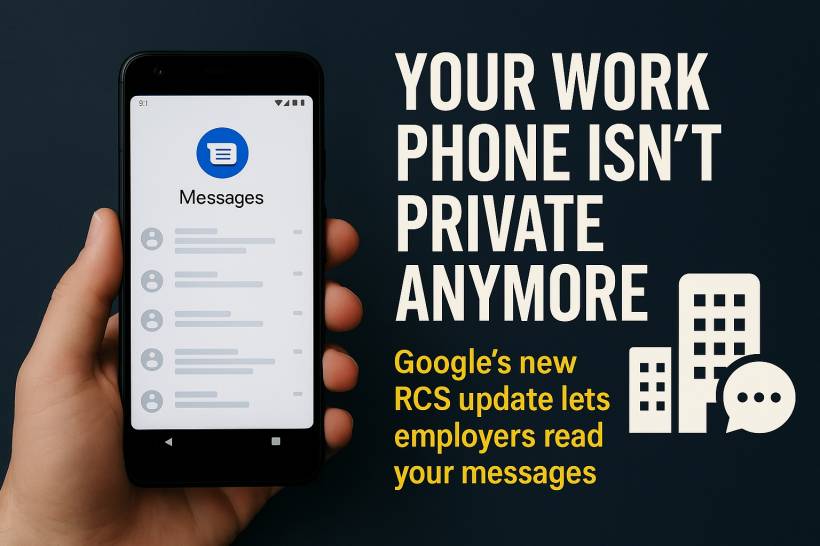
The tech world is buzzing again — and this time, it's Google in the spotlight. Not long after Microsoft stirred controversy with its Microsoft Teams activity-tracking update, Google has introduced a change that has many employees questioning just how "private" their work devices really are.
A new Android update quietly introduces something called RCS Archival, and it gives employers the ability to access and store text messages sent from work-managed Android devices. Yes, even messages you thought were protected by end-to-end encryption.
Before panic sets in, here's what's actually happening — and what it means for anyone using a company-issued phone.
What Exactly Changed?
Google's update enables organizations to intercept and archive both RCS and SMS messages on work-managed Android devices. For context:
But with this new archiving feature, employers can now read RCS messages on devices they manage, even if encryption is enabled.
This isn't a security flaw — it's how device control works. End-to-end encryption only protects messages during transmission. Once a message reaches the device, anyone who controls that device (in this case, your employer) controls the data.
Who Is Affected?
Google emphasises that this change applies only to work-managed devices — not your personal Android phone.
This update is especially relevant for industries that are legally required to archive communications, such as:
These sectors already archive SMS messages for compliance. Google's update simply brings RCS into the mix.
But here's the twist:
Any organization can enable this — not just regulated industries.
That's where the discomfort starts.
Why Employees Are Concerned
Most people understand that work emails can be monitored. Corporate email is notoriously insecure and rarely private. But texting has always felt… different. More personal. More protected.
With Google's update:
It feels like a cultural shift.
A reminder that a work phone is not your phone, even if it's in your pocket 24/7.
The End-to-End Encryption Misconception
This situation exposes a common misunderstanding:
End-to-end encryption protects messages in transit, not on your device.
Once a message arrives:
This is true for WhatsApp, RCS, Signal, and almost any messaging platform used on a company-provisioned phone.
In short:
Encryption doesn't override employer control.
The Real Takeaway: Think Twice Before Using a Work Phone for Personal Chats
A company-issued phone has always been company property, but many employees forget that — especially when smartphones blur the line between personal and professional life.
Now, with Google making RCS archiving possible:
The safest rule moving forward?
If the phone belongs to your employer, assume they can see everything.
This update doesn't affect your personal Android phone — but it serves as a strong reminder to separate personal communication from corporate hardware.











Comments 0