

For years, digital transformation in healthcare was mainly about replacing paper with screens. Hospitals moved medical records into electronic systems, introduced digital forms, streamlined registration, and built more structured workflows around electronic medical records. That was a major step forward, but it was only the beginning.
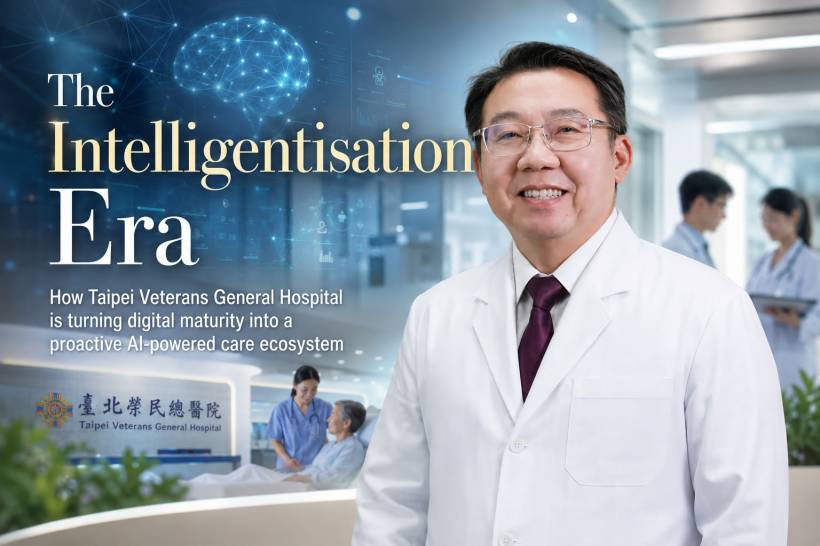
Taipei Veterans General Hospital in Taiwan is now describing its next phase as "intelligentisation" — a move beyond simply collecting digital information toward using live clinical data to support earlier, smarter and more proactive care.
The 3,000-bed hospital has achieved HIMSS EMRAM Stage 7 validation, one of the highest recognised levels of electronic medical record maturity. Rather than treating this as the finish line, the hospital sees it as a foundation for building an AI-enabled clinical ecosystem that can support staff in the moments that matter most.
From Digital Records to Real-Time Clinical Insight
Traditional digital transformation is often focused on getting information into a system.
Doctors and nurses can access patient records electronically, laboratory results can be reviewed more quickly, and administrative processes become more structured. However, clinicians may still need to open several screens, compare different data points and manually identify changes that could indicate a problem.
The idea behind intelligentisation is to reduce that burden.
Instead of expecting clinicians to constantly search through data, the hospital aims to use validated algorithms that work quietly in the background. These systems can monitor patient information in real time, identify potential risks and surface relevant alerts directly within existing clinical workflows.
The goal is not to replace clinical judgement. It is to provide an extra layer of awareness.
In this model, AI acts more like an invisible teammate. It watches for warning signs, reduces repetitive tasks and helps healthcare workers spend more time focusing on the patient in front of them.
Breaking Down the Silos That Hold Hospitals Back
A hospital cannot become truly intelligent simply by installing more software.
Healthcare environments are often filled with disconnected systems. One department may use a different platform from another. Data may sit in separate databases. AI tools may exist as isolated pilots that are useful in theory but difficult to use in everyday practice.
Taipei Veterans General Hospital's approach focuses on breaking down those barriers.
One key part is interoperability. AI outputs need to fit naturally into the electronic medical record system rather than becoming another dashboard that staff need to log into separately. By integrating outputs into existing workflows using standards such as HL7 FHIR, clinicians can receive information where they already work.
This matters because even a highly accurate AI tool can fail if it adds friction. If a doctor needs to leave their normal workflow, open another system and manually interpret a new report, the technology may become more of a distraction than a benefit.
The most useful digital tools are often the ones that feel almost invisible.
Building the Infrastructure to Support AI at Scale
AI in healthcare requires more than good algorithms. It also requires serious infrastructure.
Hospitals generate huge volumes of information every day, including clinical notes, lab results, imaging data, vital signs, medication records and operational data. To make AI useful, this information must be reliable, available and processed quickly enough to support real clinical decisions.
Taipei Veterans General Hospital has developed a unified data architecture that brings together information from multiple systems and databases into a central data lake. This gives AI models access to more complete and current information instead of relying on fragmented datasets.
The hospital has also invested in high-performance computing infrastructure, including shared GPU resources that can be dynamically allocated across departments.
That shared approach is important.
Instead of reserving powerful computing resources for one department alone, the hospital makes them available to clinical areas such as nursing, nutrition, pathology and emergency medicine. This allows innovation to happen across the organisation, not only within a central IT or research team.
AI Must Fit the Workflow, Not Disrupt It
One of the biggest reasons healthcare AI projects struggle is that they can create extra work.
A tool may be technically impressive, but if it requires more data entry, interrupts consultations or creates another task for already busy staff, people may stop using it.
The hospital's approach places workflow design at the centre of implementation.
One example is its "Magic Mirror" system, which can capture certain outpatient vital signs through a short non-contact scan. Instead of relying on manual cuff-based measurements for every interaction, the system is designed to reduce friction in the nursing workflow while still providing useful clinical information.
The principle is simple: technology should remove unnecessary steps, not create new ones.
In a hospital environment, every extra click, form and screen matters. AI only becomes useful when it saves time, reduces cognitive load and supports care delivery without getting in the way.
Why Explainable AI Matters in Healthcare
Healthcare professionals cannot be expected to blindly trust a black-box system.
If an algorithm flags a patient as being at risk, the clinical team needs to understand why. If the output cannot be explained, it becomes harder to validate, harder to govern and harder for staff to confidently use in real-world decisions.
That is why explainable AI is becoming increasingly important in hospital transformation.
At Taipei Veterans General Hospital, the AI Development Center pairs data scientists with clinicians so that models are built around genuine medical needs. This helps ensure that the technology reflects real clinical workflows, uses appropriate data and produces results that make sense to the people responsible for patient care.
It also helps build trust.
When clinicians are involved from the beginning, AI becomes less like a tool imposed from outside and more like something developed alongside the people who will use it every day.
From Pilot Projects to Hospital-Wide Deployment
Many hospitals have successful AI pilots. The harder part is moving beyond a small test project and deploying tools across the organisation in a safe, reliable and scalable way.
Taipei Veterans General Hospital has focused on creating a structured development pipeline for this purpose.
Its AI models are treated with the same level of seriousness as other clinical tools. The hospital applies software-as-a-medical-device principles, ensuring that models are validated, governed and assessed before being introduced into live care environments.
This is crucial because healthcare AI cannot simply be released and adjusted later without careful oversight. Patient safety, clinical reliability, data privacy and regulatory compliance all need to be considered from the start.
A strong governance process helps ensure that AI tools are not only innovative, but dependable.
AI That Helps Clinicians Act Earlier
Some of the hospital's most impactful applications focus on early warning.
In intensive care, its AI Hemodynamic Pre-warning System analyses continuous patient data to identify potential blood-pressure instability hours before it becomes critical. The hospital has also developed early-warning capabilities related to conditions such as ARDS and sepsis.
The value of these systems is not that they make decisions for clinicians. Their value is that they help teams spot possible deterioration sooner.
In critical care, earlier awareness can create more time to investigate, intervene and prevent complications from escalating. This shifts the care model away from reacting only after a crisis develops and toward a more preventive approach.
That is one of the most meaningful promises of healthcare AI: not replacing care, but helping healthcare professionals act before a patient's condition worsens.
Giving Healthcare Workers More Time for Patients
Documentation remains one of the biggest pressures on healthcare workers around the world.
Nurses, doctors and allied health professionals often spend significant amounts of time recording information, summarising events and completing administrative tasks. These responsibilities are important, but they can reduce the time available for direct patient interaction.
The hospital is using large language models to help reduce this burden.
Its AI-generated nursing progress-note system can summarise a shift's clinical information into a structured note within seconds. This does not remove the need for clinical review, but it can make documentation faster and less repetitive.
The wider goal is not simply efficiency.
When administrative work takes less time, clinicians can spend more time listening to patients, explaining treatment plans and providing the human reassurance that technology can never replace.
Technology Should Create More Human Care, Not Less
There is often a fear that AI will make healthcare feel colder or more automated.
But the strongest argument for responsible healthcare AI is the opposite.
When used properly, technology can handle repetitive administration, monitor complex data and highlight risks that may otherwise be missed. That gives healthcare professionals more capacity to focus on empathy, judgement, communication and bedside care.
The destination is not a hospital run by machines.
It is a hospital where technology quietly supports staff, helps identify problems earlier and removes the unnecessary friction that takes people away from patients.
Final Thoughts
Taipei Veterans General Hospital's intelligentisation journey shows what may come after digital transformation.
Digitising records was essential, but it is no longer enough on its own. The next stage is about turning live information into useful clinical support, building strong governance around AI and ensuring that technology fits naturally into the way healthcare professionals already work.
The real success of hospital AI will not be measured only by the number of models deployed or the sophistication of its infrastructure. It will be measured by whether clinicians have more time to care, whether risks are detected earlier and whether patients experience safer, more compassionate healthcare as a result.











Comments 0