

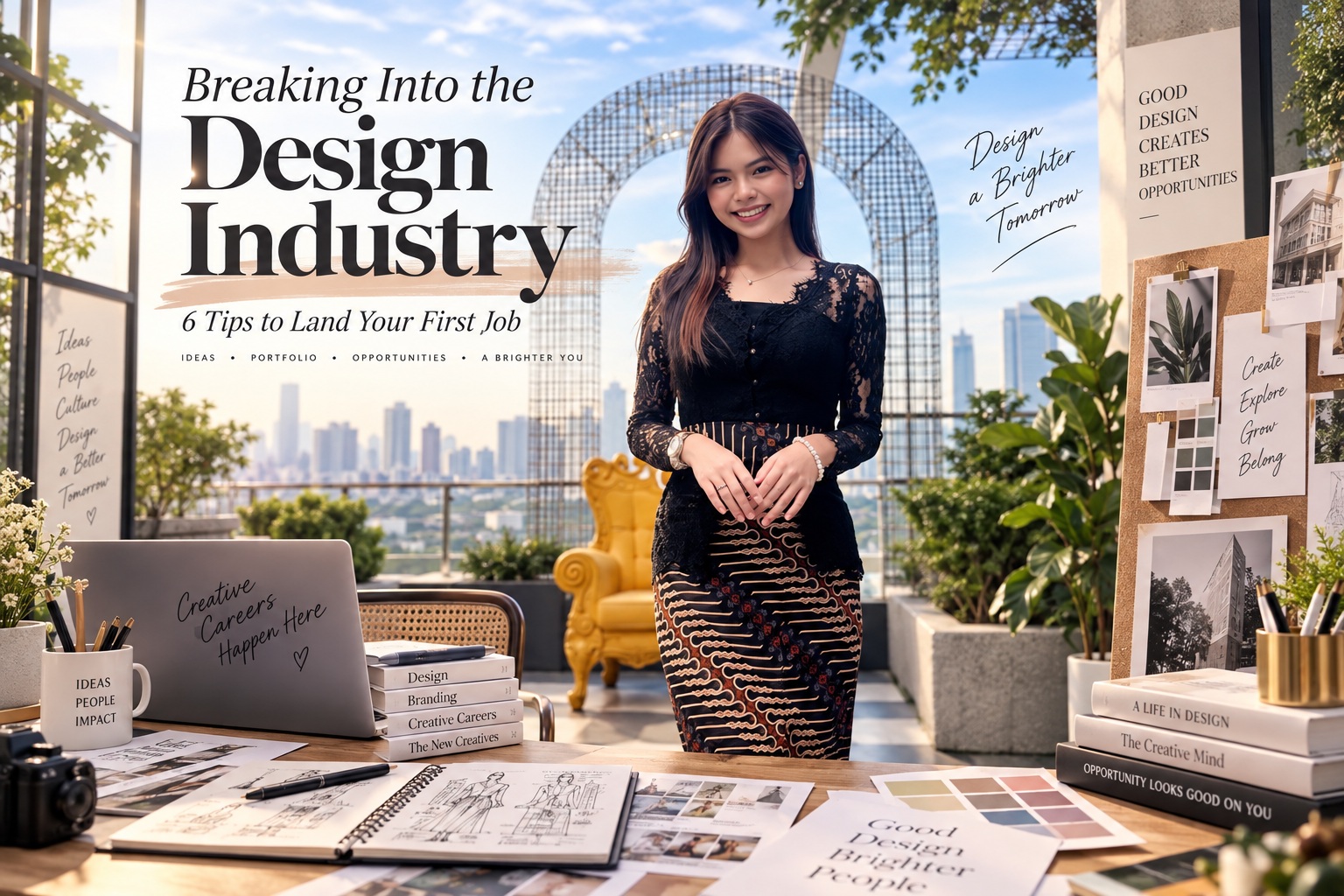
Getting your first professional design job can feel frustrating when almost every vacancy seems to ask for experience you have not yet had the opportunity to gain. You may already understand typography, composition and software such as Adobe Illustrator or Figma, and you may have completed several creative projects, yet employers still want evidence that you can work in a professional environment. The challenge is that companies are not simply looking for someone who can produce attractive visuals; they need designers who can understand a brief, work within constraints, respond to feedback and deliver something that solves a real problem.
Breaking into the industry therefore requires more than improving your technical ability. You need to demonstrate that you understand how professional design works and that you can apply your creativity within deadlines, brand requirements and practical limitations. Even without years of employment experience, there are several ways to build that credibility.
1. Decide Which Type Of Design Work You Actually Want
Design is a broad industry, and not every designer does the same kind of work. Graphic designers may focus on branding, advertising and visual communication, while UX designers concentrate on how people interact with digital products. Motion designers work with animation and video, while other specialists focus on areas such as packaging, editorial layouts, publishing, social media or brand identity.
Before applying for jobs, spend some time studying the roles that genuinely interest you. Read entry-level job descriptions and compare the responsibilities, tools and qualifications that appear repeatedly. If several positions mention typography, Adobe InDesign and print production, for example, those skills are probably important for that particular career path.
It is also worth searching beyond obvious job titles. Roles such as junior production artist, marketing designer, visual communications assistant or content designer may contain substantial design responsibilities even when the word "graphic designer" is not in the title. Understanding these differences helps you target positions that match your strengths instead of applying randomly to anything labelled as design.
2. Practise Designing Within Real-World Constraints
Personal projects are useful, but professional design rarely begins with unlimited creative freedom. Clients and employers usually provide requirements involving dimensions, colours, brand guidelines, deadlines, target audiences and technical specifications. Learning to work effectively within those restrictions is an important part of becoming employable.
One way to prepare is to create realistic briefs for yourself. You could design a restaurant menu with fixed dimensions and limited space, develop social media graphics using an established colour palette or create promotional material for a fictional event aimed at a specific audience. Give yourself a deadline and clear technical requirements so the project resembles actual client work rather than an open-ended exercise.
When the project is finished, evaluate it against the original brief rather than judging it only on appearance. Ask whether the information is easy to understand, whether the design serves its intended purpose and whether the final files would actually be usable by a client. That mindset is much closer to professional design than simply asking whether something looks impressive.
Software Knowledge Is Only Part Of The Job
Technical ability still matters. Adobe Photoshop, Illustrator and InDesign remain common tools in graphic design, while Figma is widely used for interface and digital product work. Knowing the software used in your chosen area makes it easier to contribute quickly once you join a team.
However, employers also care about how you work. Designers are expected to organise files properly, prepare final deliverables, manage revisions and hand work over in formats that other people can actually use. A designer who is slightly less flashy but reliable, organised and easy to collaborate with can often be more valuable than someone who only produces strong visuals.
3. Gain Experience Before Someone Officially Hires You
Professional experience does not necessarily have to begin with a full-time job. Smaller real-world projects can teach many of the same lessons because they involve actual people, expectations, deadlines and feedback. Helping a university society, community organisation, local event or small business with design work can therefore be useful preparation.
These projects often introduce situations that are difficult to recreate in purely personal work. Someone may ask for changes after you thought the design was finished, important information may arrive late or the original idea may need to be simplified because of printing or budget limitations. Learning how to react calmly and constructively to those changes is part of becoming a professional designer.
Keep records of what you did on each project, including the brief, your responsibilities and the problems you had to solve. Those details become useful later when preparing a portfolio, resume or interview answer. Employers are usually more interested in how you handled a real challenge than hearing a vague statement about being passionate or creative.
4. Build A Resume That Makes Your Skills Easy To Understand
A strong resume should help an employer quickly understand why you might be suitable for the role, even if your professional history is still limited. Early-career designers should focus on relevant technical skills, education, projects and practical experience rather than trying to hide the fact that they are new to the industry. The goal is clarity.
Tailor the resume to the position wherever possible. A marketing agency may value digital advertising, social media graphics and campaign work, while a publishing company may be more interested in editorial design, typography and print production. Highlighting the most relevant experience makes it easier for recruiters to connect your background with what they actually need.
When describing projects, be specific about what you contributed. Saying that you created promotional materials for a university event, worked within an existing visual identity and prepared final assets for print communicates much more than simply describing yourself as creative. Concrete responsibilities give employers evidence of how you work.
The document itself should also be easy to scan. Keep your experience, education, software skills and contact information clearly organised, and check everything carefully before applying. Designers sometimes feel pressure to turn their resume into an elaborate visual project, but readability and professionalism usually matter more than decorative complexity.
5. Look Beyond Traditional Design Agencies
Creative agencies are an obvious place to search for design work, but they represent only one part of the employment market. Retailers need designers for campaigns and promotional materials, publishers require people who understand editorial layouts, and technology companies hire designers for interfaces, marketing and visual communication. Educational institutions, healthcare organisations and corporate marketing teams also regularly need design skills.
Expanding your search can significantly increase the number of opportunities available. A smaller internal marketing team may also give an entry-level designer broader responsibilities than a highly specialised agency role, allowing you to gain experience across several types of projects. That early exposure can be valuable when deciding which area of design you eventually want to specialise in.
Demand for creative professionals has also remained active. Research published in June 2026 found that U.S. job postings for creative professionals increased by 8% between September 2025 and April 2026. That does not mean entry-level positions suddenly become easy to secure, but it does show that organisations continue to invest in creative roles.
Do not rely entirely on major job boards either. Check the Careers sections of companies you are interested in because some organisations advertise vacancies directly before or instead of listing them elsewhere. Smaller businesses and institutions may also use titles that do not immediately appear in traditional designer searches.
6. Show Employers How You Think, Not Just What You Made
The interview is where you can demonstrate that you understand design as a professional problem-solving process rather than simply a way to make things look attractive. Employers may ask how you respond to conflicting feedback, what you would do when a deadline changes or how you would approach a project with incomplete information. These questions are often testing judgement and communication rather than artistic ability.
Use examples from previous projects, including academic or personal work if necessary. Explain what the brief required, which decisions you made and why, what problems appeared and how you adjusted when circumstances changed. A clear explanation of your reasoning can make even a modest project more convincing.
Collaboration is equally important. Designers regularly work alongside marketers, developers, writers, managers and clients who may not have a design background. Being able to explain a visual decision without relying on design jargon is therefore an important professional skill.
Before attending an interview, research the company's products, services, audience and existing visual work. Understanding what the organisation actually does allows you to discuss the role more intelligently and ask better questions. It also shows that your application is intentional rather than one of dozens sent without much consideration.
Your Portfolio Should Explain The Process
Although a strong portfolio is essential, it should do more than display polished final images. Employers benefit from seeing enough context to understand what problem you were trying to solve and why the final design looks the way it does. A brief explanation can turn an attractive image into evidence of professional thinking.
Where appropriate, show elements such as the original requirement, early exploration, key decisions and final outcome. You do not need to document every sketch or revision, but providing some process helps demonstrate that the final result was not accidental. It also gives interviewers something meaningful to discuss with you.
Quality matters more than quantity. A few well-presented projects that clearly show different skills are usually more convincing than a large collection of unfinished experiments. Your portfolio should make it easy for someone to imagine you working on similar assignments within their organisation.
Do Not Wait Until You Feel Completely Ready
One common mistake among new designers is waiting until their portfolio, skills or experience feel perfect before applying. Entry-level roles exist because companies understand that candidates are still developing. Employers generally do not expect junior designers to know everything, but they do want evidence that the person can learn, communicate and respond professionally.
Apply when you meet a reasonable portion of the requirements rather than treating every job description as an absolute checklist. Some requirements describe the ideal candidate rather than the minimum acceptable one. You may be more suitable than you think, particularly if your portfolio demonstrates relevant ability.
Rejection is also part of the process. It can happen because another candidate had more relevant experience, because the role changed internally or simply because dozens of people applied. Treating each application and interview as feedback can help you gradually improve how you present yourself.
Final Thoughts
Your first design job does not need to be your dream position. The most important thing is gaining experience working with real briefs, deadlines, feedback and colleagues who can help you understand how professional design operates. Once you have that foundation, moving towards more specialised or ambitious roles becomes considerably easier.
Focus on developing relevant skills, practising within realistic constraints and finding opportunities to solve genuine design problems even before you are formally employed. Present your work clearly, understand what employers actually need and be prepared to explain your decisions rather than relying only on attractive visuals. A design career is rarely built from one perfect opportunity; it grows through consistent work, practical experience and gradually becoming someone a team can trust.











Comments 0