

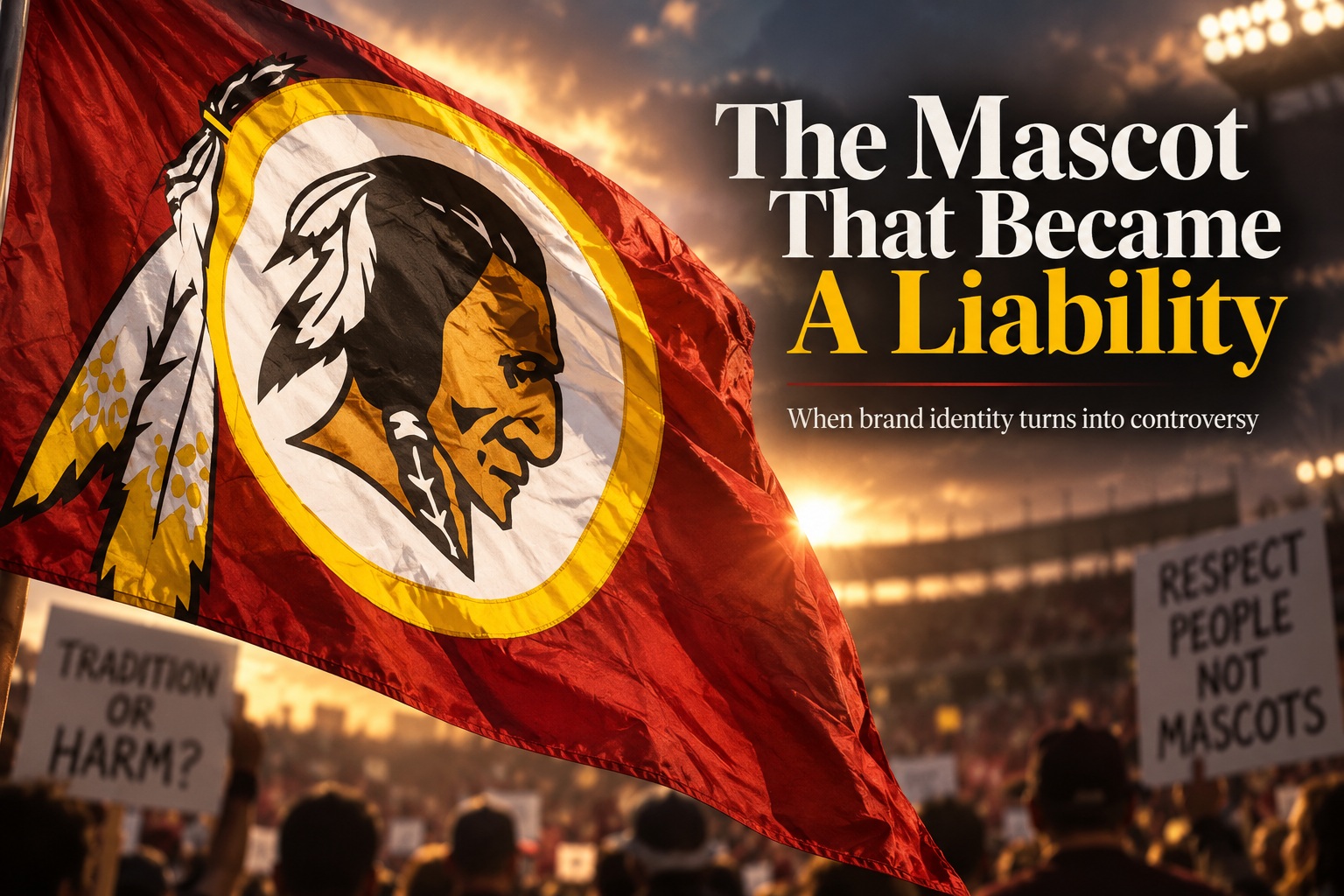
For many brands, a mascot can become one of the most valuable assets they own. A memorable character can create instant recognition, build emotional attachment and give a company a personality that customers remember long after an advertisement ends. At its best, a mascot becomes inseparable from the brand itself. But when the meaning of that mascot becomes controversial, overprotected or manipulated too aggressively, the very symbol meant to strengthen the brand can turn into an expensive liability.
The Mascot That Became A Liability
For many brands, a mascot can become one of the most valuable assets they own. A memorable character can create instant recognition, build emotional attachment and give a company a personality that customers remember long after an advertisement ends. At its best, a mascot becomes inseparable from the brand itself. But when the meaning of that mascot becomes controversial, overprotected or manipulated too aggressively, the very symbol meant to strengthen the brand can turn into an expensive liability.
The real danger is not simply that people may stop liking the character. A mascot becomes a problem when its meaning becomes contested, when audiences interpret it very differently from the company, or when the brand's attempts to defend it create more resentment than goodwill. Once that happens, the mascot stops functioning as a shortcut to affection and starts becoming a shortcut to controversy.
When Cultural Pride Becomes Cultural Offence
One of the most difficult problems arises when a mascot carries cultural or racial meaning that different groups interpret in completely different ways. The long-running debate over Native American mascots in American sports is one of the clearest examples. Supporters have often described these mascots as symbols of pride, tradition and identity, something fans can rally around and associate with team heritage.
For many Native Americans and their supporters, however, the same imagery has been viewed as degrading, stereotypical and offensive. The former "Redskins" name became particularly controversial because opponents argued that it was not simply an outdated nickname but a racial slur with a long history of dehumanising Indigenous people. This disagreement was not about whether a logo looked attractive or whether a character was well designed; it became a dispute about dignity, identity and respect.
Once a mascot reaches that point, it becomes almost impossible for the brand to remain neutral. Keeping the character can alienate one group, while changing it may upset another that sees the mascot as part of its identity. The longer the conflict continues, the more the brand becomes associated with the controversy rather than whatever positive meaning the mascot originally carried.
A Mascot Can Become A Legal Liability Too
A mascot can also create problems when a company becomes overly aggressive in protecting it. Trademark enforcement is a legitimate part of managing a brand because companies need to prevent competitors from creating confusingly similar names, symbols or characters. However, there is a point where legal protection can start looking less like responsible brand management and more like intimidation.
Buc-ee's provides a particularly interesting example. The Texas-based convenience store chain is strongly associated with its buck-toothed beaver mascot and has historically defended that branding against other businesses using cartoon animal logos. Its previous disputes have involved companies using animals such as moose, alligators and bears, with the underlying argument that similar imagery could potentially create confusion.
The legal logic may be understandable from a trademark perspective, but public perception does not always follow legal reasoning. Once a brand is seen as using its size and resources against much smaller businesses, the mascot being protected can quickly become associated with corporate aggression rather than customer affection.
The Beaver's Mini Mart Lawsuit Changed The Conversation
That tension became much more visible when Buc-ee's filed a federal trademark lawsuit against Beaver's Mini Mart in Beavercreek, Ohio. Buc-ee's argued that the local shop's smiling beaver logo was too similar to its own branding. However, the two mascots were noticeably different: Buc-ee's uses a buck-toothed beaver wearing a red cap, while Beaver's Mini Mart uses a full-body beaver character without clothing.
The lawsuit quickly turned into a public-relations problem. Instead of seeing the case primarily as a trademark dispute, many members of the public viewed it as a large national corporation targeting a small family-run local business. The gap in size between the companies became part of the story, especially when Buc-ee's own expansion projects included enormous locations with around 74,000 square feet of space and 100 fuel pumps.
The backlash soon moved beyond social media commentary. A GoFundMe campaign raised tens of thousands of dollars to support the mini mart's legal costs, a local bakery sold cookies featuring the store's logo, and the city council passed a resolution recognising the beaver as part of Beavercreek's local history. At that point, the mascot dispute was no longer simply about intellectual property; it had become a fight between corporate ownership and community identity.
The Courtroom And Public Opinion Are Different Battles
This is where brand protection becomes especially complicated. A company may have a legally defensible position and still lose badly in the court of public opinion. Trademark law focuses on questions such as similarity, confusion and ownership, while customers tend to judge the situation through fairness, scale and intent.
For Buc-ee's, the legal objective was to defend a valuable brand asset. For many people in Beavercreek, the same action appeared to be an outsider attacking a neighbourhood business whose identity was tied to the local community. That mismatch in perspective is what turned the mascot from a brand strength into a reputational risk.
The lesson is that legal victories do not automatically translate into brand victories. A mascot can be protected so aggressively that the act of protecting it damages the very goodwill that made the mascot valuable in the first place.
When Brands Kill Their Own Mascots
Another unusual way mascots can become liabilities is when companies deliberately "kill" them as part of marketing campaigns. Planters famously staged the death of Mr. Peanut in 2020, while Duolingo used a similar approach with Duo the Owl in 2025. These campaigns were designed to generate conversation, memes and emotional engagement around characters that already had a strong presence in popular culture.
The strategy can work when the audience has a deep enough relationship with the mascot. If the character is already widely recognised and has an established personality, pretending to kill it can generate enormous attention precisely because people already care. But the same idea can easily fail when that emotional connection does not exist.
Without genuine attachment, the stunt risks feeling artificial and desperate. Instead of creating cultural conversation, it becomes obvious that the brand is trying to manufacture one. In that situation, the mascot itself can feel less meaningful because the company has treated it as little more than a tool for short-term attention.
Not Every Mascot Has Enough Cultural Weight
The success of these stunts depends heavily on how much meaning the mascot already carries outside advertising. Duo the Owl, for example, had become part of internet culture through jokes about language-learning reminders, memes and the character's exaggerated personality. That existing cultural presence made audiences more willing to participate in the fictional "death".
A lesser-known mascot would struggle to create the same reaction. If customers barely recognise the character, trying to stage a dramatic farewell may simply expose how little connection actually exists. In some cases, it can even weaken the brand by highlighting that the mascot was never as important to audiences as the company believed.
This is another example of the gap between brand perception and audience perception. Companies may believe a mascot is beloved because it appears constantly in their marketing, but repeated exposure does not always translate into genuine attachment.
The Real Problem Is A Clash Of Meaning
Ultimately, most mascot controversies come down to one issue: the company and its audience no longer agree about what the character represents. A business may see a mascot as intellectual property, a symbol of heritage or an asset that must be defended. Customers may see the same mascot as offensive, culturally important, nostalgic, local or simply something that belongs to them emotionally.
That is exactly what makes these situations so difficult. Symbols do not remain under complete corporate control once they become widely recognised. Over time, audiences create their own meanings around them, and those meanings can become just as powerful as anything the company originally intended.
In the Buc-ee's example, the company sees a beaver logo as a valuable trademark requiring protection. Beavercreek residents see their own beaver as connected to community history and local identity. Neither interpretation exists in isolation, and the conflict begins when one side assumes its interpretation is the only one that matters.
Mascots Work Best When They Belong To The Audience Too
The strongest mascots often feel as though they belong partly to customers rather than entirely to the corporation behind them. People create jokes, memories, merchandise and cultural references around characters they genuinely like. That shared ownership is what transforms a marketing device into something more meaningful.
Brands need to recognise that this emotional ownership cannot be controlled in the same way as legal ownership. Trying to enforce absolute control over how a mascot is interpreted or referenced can destroy the very relationship that made it valuable. The challenge is to protect legitimate commercial interests without making the character feel like a weapon.
That balance is especially important in the age of social media, where one poorly judged lawsuit, redesign or marketing stunt can become a national conversation within hours. The mascot may remain legally protected while the brand around it becomes less respected.
Final Thoughts
A mascot becomes a liability when the meaning attached to it starts working against the brand. That can happen because cultural values change, because audiences interpret the character differently from the company, or because attempts to protect it are seen as heavy-handed and unfair. It can even happen when marketers overestimate how much emotional attachment people actually have to the character.
The central lesson is that mascots are not just visual assets. They are symbols, and symbols gain meaning from the people who interact with them. A company may legally own the character, but it does not fully control what that character represents once it enters public culture. The smartest brands understand that protecting a mascot is not only about defending the logo; it is also about protecting the goodwill, trust and emotional connection that made the mascot valuable in the first place.











Comments 0