

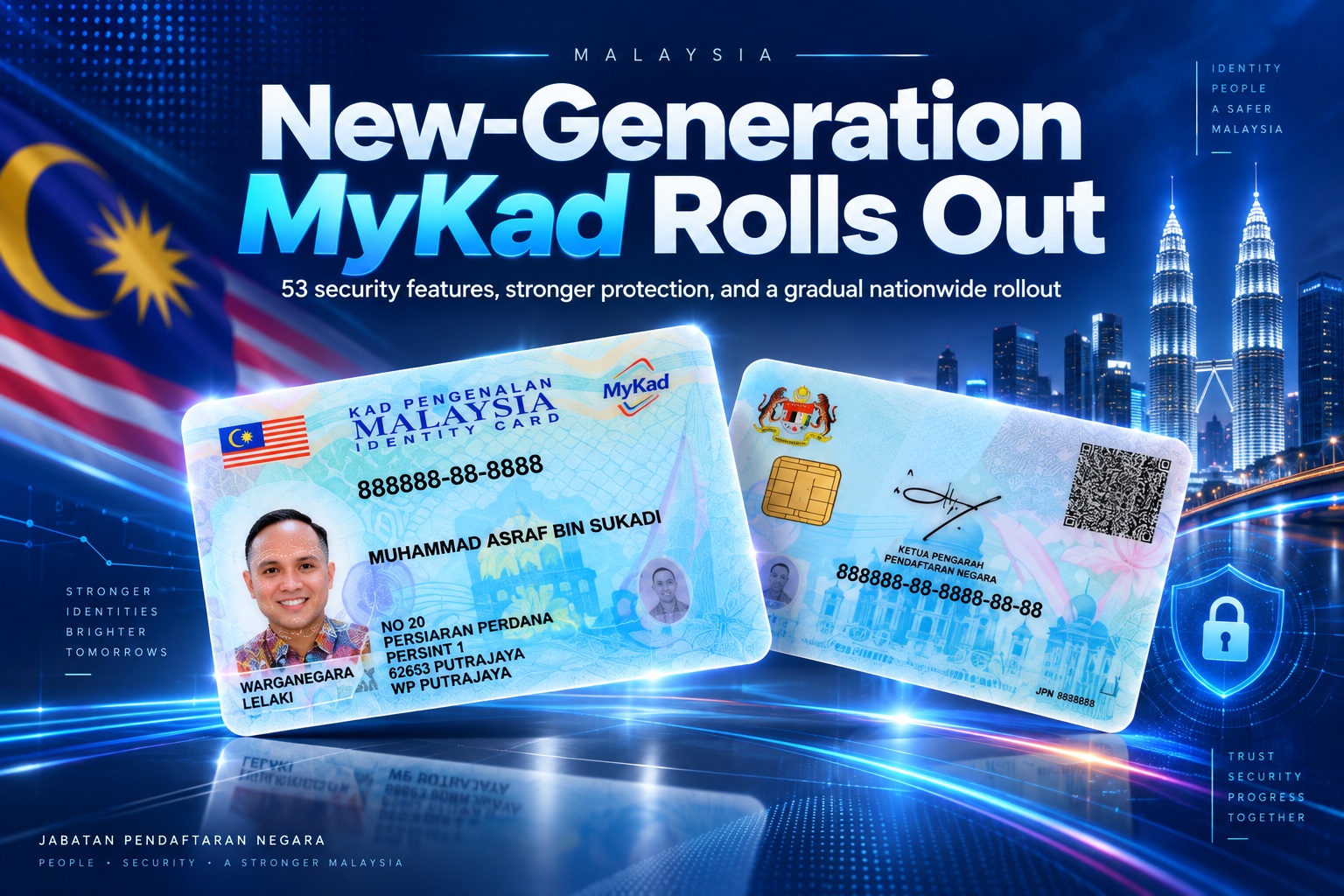
Malaysia officially began issuing its new-generation MyKad yesterday, 17 September 2026, marking one of the most significant updates to the national identity card in years. The redesigned card introduces a new physical layout, upgraded smart-card technology and a much larger collection of anti-counterfeiting measures intended to strengthen identity protection. According to the National Registration Department (JPN), the seventh-generation MyKad now carries 53 security features, up from 23 previously, while retaining its fundamental role as Malaysia's official national identification document.
The rollout is not a compulsory nationwide replacement exercise, however. JPN is introducing the new card progressively, meaning existing MyKad holders do not need to immediately visit a branch simply because the new design is available. Current cards remain valid for normal identification and daily transactions, while anyone applying for a new or replacement MyKad from 17 September onward will receive the newer version provided the application meets the required conditions.
A Much More Security-Focused MyKad
The biggest change is clearly security. Malaysia's identity card already incorporates multiple protections against tampering and counterfeiting, but the new version substantially expands those safeguards. JPN says the redesigned MyKad uses 53 security elements, combining physical features that can be inspected visually with technologies intended to make copying, modification and fraudulent reproduction considerably more difficult.
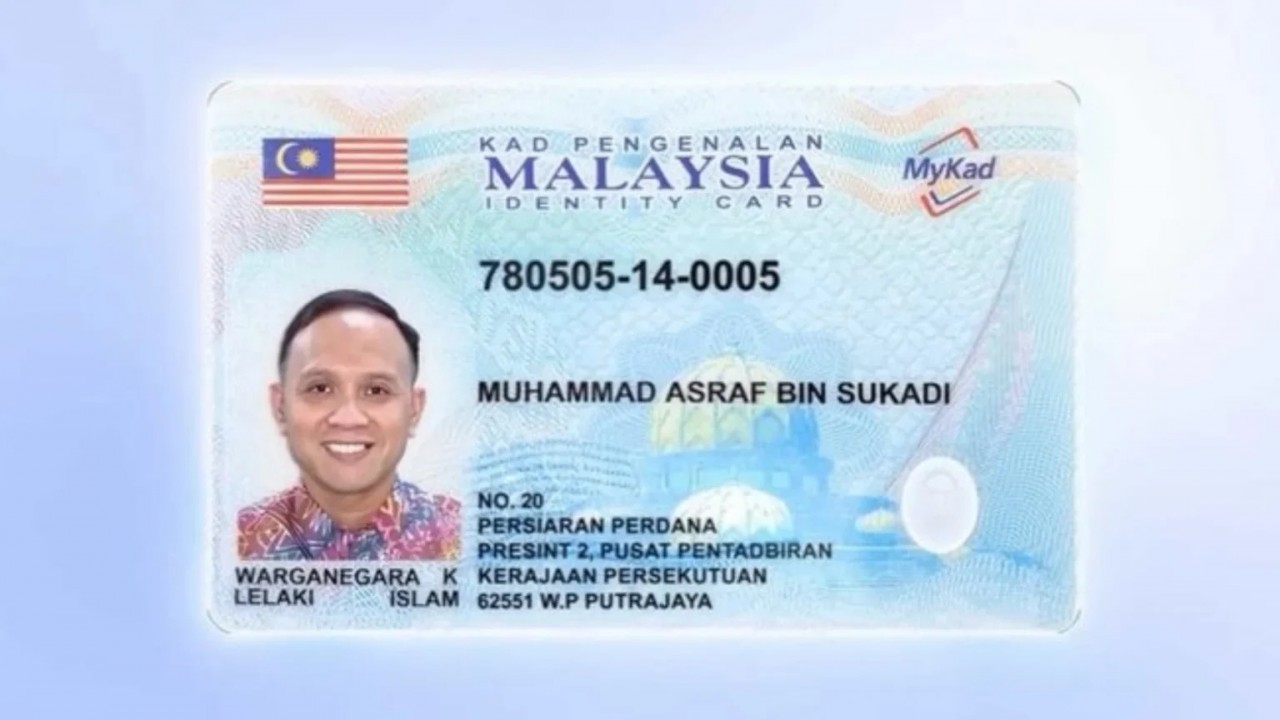
The card also moves to a more durable polycarbonate construction, replacing the more conventional plastic structure associated with earlier generations. JPN says the material is designed to better withstand bending, cracking and the physical punishment an identity card inevitably receives after years of being carried inside wallets and purses. Personal information and photographs can also be integrated more securely into the card structure through techniques such as laser engraving, making physical tampering significantly more difficult without visibly damaging the card.
For a document Malaysians are expected to carry for many years, durability is more than a cosmetic improvement. Damage around the chip, photograph or printed information can eventually make older identity cards difficult to use, particularly when they are repeatedly inserted into readers or carried in harsh conditions. Combining stronger materials with more sophisticated security features should therefore improve both the lifespan of the card and its resistance to manipulation.
The Card Has a Noticeably Different Layout
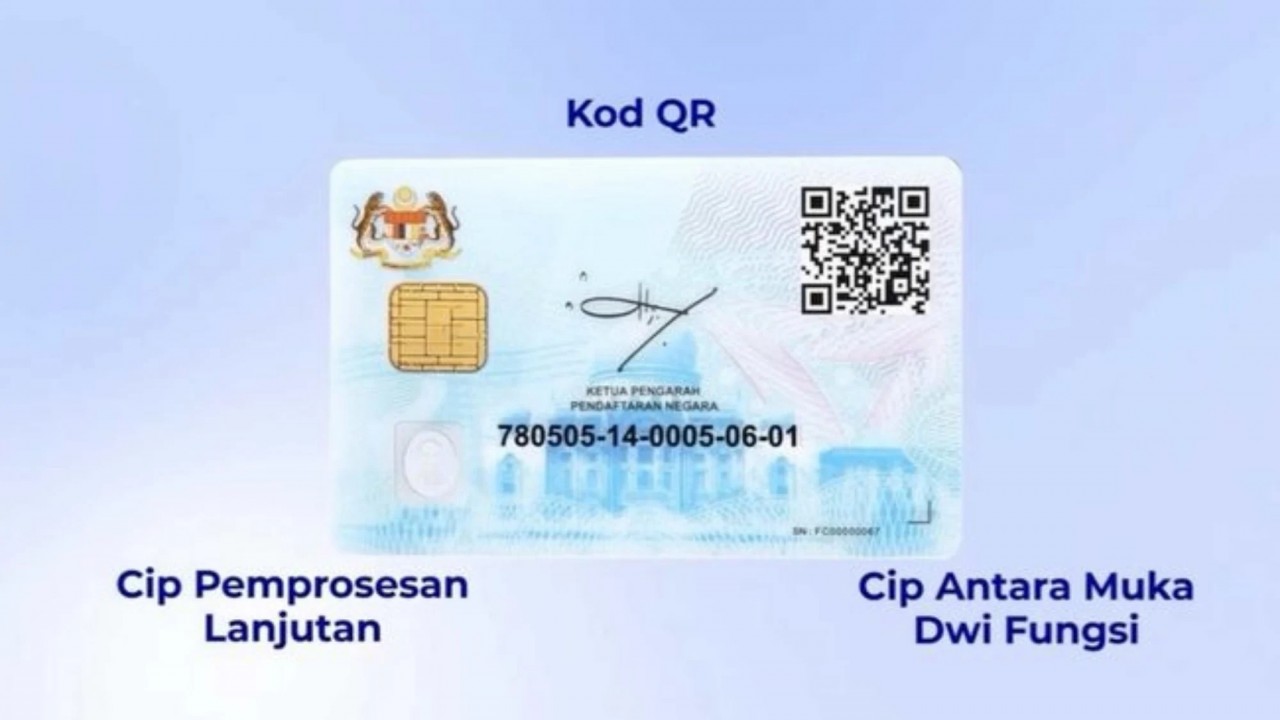
The redesign changes where several familiar elements appear. The holder's photograph is positioned on the left side of the front, while important electronic and verification components have been reorganised between the front and rear of the card. The new structure gives JPN more room to introduce additional authentication features without abandoning the recognisable identity of MyKad.
Among those protections are intricate Guilloche patterns, made from extremely fine geometric lines that are difficult to reproduce accurately using conventional printers or scanners. Similar techniques have long been used in passports, banknotes and other high-security documents because even small reproduction errors become visible when the patterns are examined closely. JPN's new design also uses specialised colour and printing elements intended to make genuine cards easier to distinguish from copies.
Ultraviolet features provide another authentication layer, with security markings becoming visible under UV illumination. These elements are particularly useful during official verification because they can remain unobtrusive during ordinary use while giving trained officers another way to determine whether the physical card is genuine.
Dynamic Hologram and Transparent Window Add Physical Authentication
One of the more noticeable security upgrades is a Dynamic Security Hologram, which changes appearance depending on lighting and viewing angle. Holographic elements are difficult to reproduce convincingly because they depend on physical optical structures rather than ordinary printed graphics. The new card also incorporates a transparent window, providing another feature that counterfeiters would have to reproduce physically rather than simply copy visually.
These protections are important because sophisticated identity-card fraud is not always obvious from a casual glance. A counterfeit can reproduce colours, text and photographs reasonably well, particularly when viewed quickly. Security features such as transparent structures, holographic effects, laser engraving and UV elements create multiple independent checks that make producing a convincing fake significantly more difficult.
Rather than depending on one signature feature, the new MyKad layers these protections together. A forged card would therefore need to reproduce the material, printing, holographic behaviour, hidden markings, electronic components and personalisation methods simultaneously, substantially increasing the difficulty and cost of counterfeiting.
A New QR Code Is Intended for Enforcement Use
The rear of the new MyKad includes an Enforcement QR Code, but it is not designed like an ordinary consumer QR code that people can simply scan using a smartphone camera. JPN's Identification Card Division has explained that the code is specifically intended for enforcement and official verification purposes. It cannot be read using a standard phone camera and is not intended for payments or everyday public scanning.
That distinction is useful because the appearance of a QR code on a national identity card naturally raises questions about what information might be accessible through it. The feature is essentially another controlled verification mechanism for authorised agencies rather than a shortcut for members of the public to retrieve someone's identity information.
By keeping the code within the enforcement environment, JPN can use it as part of identity validation without turning MyKad into something that exposes additional information whenever anyone points a phone at it.
The Smart Chip Can Work With Contact and Contactless Readers
The electronic side of MyKad has also been modernised. The new card includes a dual-interface chip, allowing it to communicate using conventional contact-based card readers as well as compatible contactless systems. This gives government systems more flexibility when developing future verification services while maintaining compatibility with environments that continue using physical chip readers.
Contactless functionality is particularly useful as government services increasingly move toward faster digital identity verification. Instead of requiring every interaction to involve inserting a card into a terminal, compatible systems can potentially read authorised information through short-range technology when appropriate. The important point is that the technology provides another interface for the identity card; it does not mean the card automatically broadcasts personal information to nearby devices.
Despite all of these physical and electronic changes, the familiar 12-digit Malaysian identification number remains the core identity reference. Existing identity records therefore continue to follow the same established system rather than requiring Malaysians to receive completely new identification numbers simply because the physical card has changed.
Same-Day Cards Are Available at Selected JPN Locations
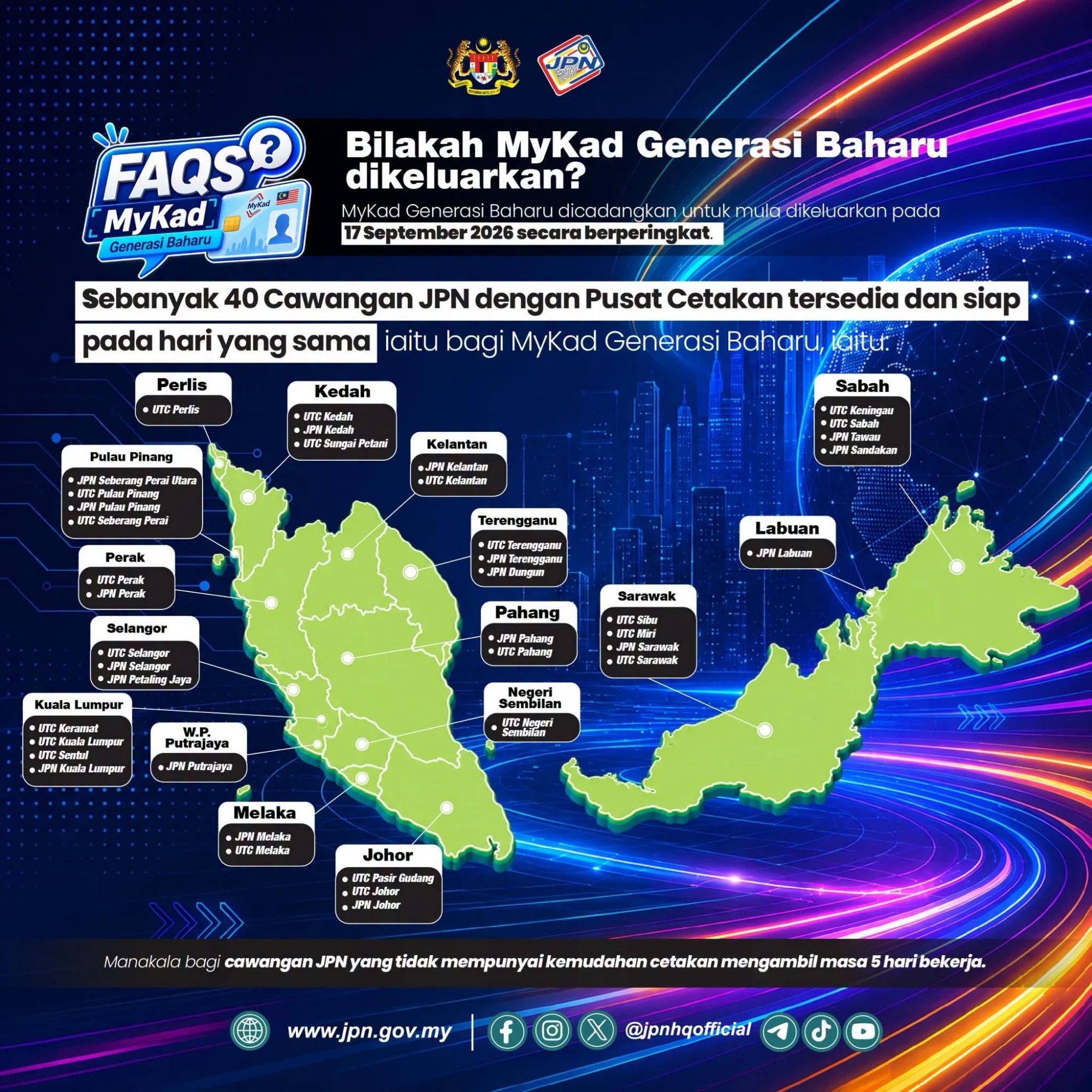
The new-generation MyKad is being introduced progressively across Peninsular Malaysia, Sabah, Sarawak and Labuan. Applications opened yesterday at 40 JPN branches equipped with printing centres, where eligible applications can be processed and the card produced on the same day. This gives applicants at those locations a relatively quick route to receiving the new design without having to make a second trip several days later.
People visiting JPN offices without the required printing equipment can still apply normally. According to JPN, cards submitted through those branches should generally be ready within five working days, as production must be completed elsewhere before the completed MyKad is returned to the branch.
This staggered approach explains why the new card may not immediately appear everywhere at exactly the same time. JPN is effectively expanding availability around its printing infrastructure rather than requiring every branch in the country to switch over simultaneously.
Touch 'n Go Has Been Removed From the New MyKad
One change existing cardholders will definitely notice is the removal of the Touch 'n Go function. The new-generation MyKad issued from yesterday no longer doubles as a Touch 'n Go card, with JPN saying users who still require the service should instead use the Touch 'n Go eWallet or a dedicated Touch 'n Go card.
For years, having Touch 'n Go embedded in MyKad gave Malaysians an additional option for tolls, transport and other supported transactions. In practice, dedicated Touch 'n Go cards and the eWallet have become far more prominent, so JPN appears to be refocusing the new-generation MyKad primarily around identity and security rather than continuing to combine unrelated payment functionality with the national identification document.
Existing MyKad cards containing Touch 'n Go functionality do not suddenly stop working simply because a newer card has been introduced. Cardholders can continue using their current cards subject to the existing Touch 'n Go validity conditions, while those eventually moving to the new MyKad will need another method for future Touch 'n Go transactions.
What Happens to the Balance on an Old MyKad?
Anyone replacing an older MyKad that still contains stored Touch 'n Go value should therefore check the remaining balance before surrendering or retiring the card. Touch 'n Go provides mechanisms for dealing with remaining balances, including its refund process, while supported existing cards can also be linked to the company's digital services for balance and validity checks.
This is worth remembering because the national identity replacement and Touch 'n Go balance are separate matters. Replacing the MyKad does not automatically transfer the stored payment value onto the new card because the replacement no longer contains the Touch 'n Go facility.
For users who have relied on their identity card as a backup Touch 'n Go card for years, moving to the new generation will therefore require a small adjustment. A separate card or eWallet becomes necessary once the old MyKad is no longer being used.
There Is No Need to Rush to JPN
Perhaps the most important message for existing cardholders is that you do not need to replace your current MyKad simply because the new generation launched yesterday. Home Minister Datuk Seri Saifuddin Nasution Ismail specifically advised Malaysians not to rush to JPN offices, noting that the replacement process will happen progressively and existing MyKad cards remain valid for everyday transactions.
That is particularly important considering there are millions of existing MyKad holders nationwide. Attempting to replace every card immediately would create unnecessary congestion at JPN branches even though there is no requirement for everyone to change at once. People whose existing cards remain in good condition can continue using them normally until they have a legitimate reason for replacement.
The introduction of the new card also does not affect eligibility for government assistance linked to a person's identity record. JPN has confirmed that the new-generation MyKad remains valid for government aid and subsidy programmes, while replacing an existing card does not alter balances or eligibility under programmes such as Sumbangan Asas Rahmah, subject to the rules of the respective programmes.
A Gradual Transition Rather Than a Nationwide Card Swap
The rollout is therefore better understood as the beginning of a generational transition rather than a mass replacement campaign. From yesterday onward, new and eligible replacement applications begin receiving the improved card, and the newer design will gradually become more common as existing MyKad cards are replaced through normal circumstances.
This strategy avoids forcing millions of Malaysians into JPN offices at the same time while still allowing the government to modernise the national identity infrastructure. Over time, lost cards, damaged cards, age-related replacements and other normal applications will steadily move the population toward the newer generation.
It also gives JPN time to expand printing capabilities and operational support without creating unnecessary pressure across every branch simultaneously. For the public, the practical message is simple: the new MyKad is here, but there is no countdown forcing everyone to immediately obtain one.
Why the Security Upgrade Matters
A national identity card sits at the centre of many interactions involving government services, banking, employment, healthcare, telecommunications and identity verification. That makes counterfeit or manipulated identity documents potentially valuable to fraudsters, which is why the physical card must continue evolving as reproduction technology improves.
High-quality printers, image-editing software and increasingly sophisticated fabrication techniques make older anti-counterfeiting methods progressively easier to imitate. Adding features such as dynamic holograms, transparent structures, laser-engraved information, complex background patterns and controlled electronic verification increases the number of hurdles a counterfeit document must overcome.
The move to 53 security elements therefore represents more than a visual refresh. It reflects the ongoing challenge of keeping a physical identity document trustworthy in an environment where both digital and physical identity fraud continue to evolve.
Final Thoughts
The new-generation MyKad that began rolling out yesterday, 17 September 2026, represents a substantial upgrade to Malaysia's national identity card without forcing Malaysians into an immediate nationwide replacement exercise. Its 53 security features, polycarbonate construction, dynamic hologram, transparent window, enforcement QR code and dual-interface chip give JPN considerably more tools for preventing counterfeiting and validating genuine cards.
The physical redesign may attract the most immediate attention, but the broader change is about strengthening identity protection for the years ahead. Same-day production is already available at 40 JPN branches with printing facilities, while applications made elsewhere can generally be completed within five working days. At the same time, existing MyKad cards remain valid, so people with perfectly usable cards have little reason to join a rush for replacement.
The removal of Touch 'n Go will require some adjustment for people who still use that feature, but it also reinforces the new card's primary purpose: being a secure national identity document. Dedicated Touch 'n Go cards and the eWallet will handle payment functionality, while MyKad increasingly concentrates on identification, authentication and stronger protection against fraud.
For most Malaysians, then, there is nothing urgent to do. The seventh-generation MyKad has officially arrived, but the transition will happen gradually as people naturally apply for new or replacement cards. The biggest change is not that everyone needs a new card immediately—it is that the next MyKad you receive will be significantly different from the one Malaysians have carried for years.











Comments 0