

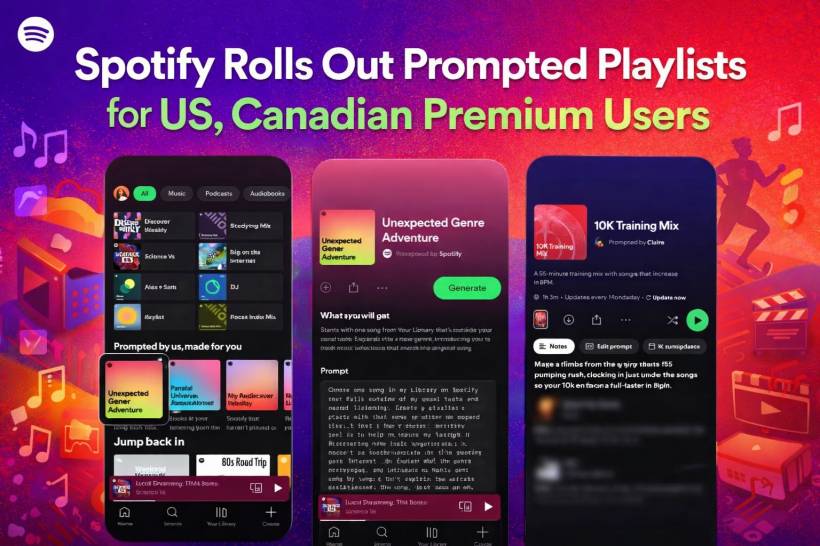
Spotify is widening the rollout of a feature it calls Prompted Playlists, moving it beyond its earlier limited trial in New Zealand and bringing it to Premium subscribers in the US and Canada. If you're on the free tier, this one isn't aimed at you (at least for now).
At a high level, the idea is simple: instead of passively accepting whatever Spotify's algorithm serves up, you get to steer it with a prompt and tell it what kind of playlist you actually want.
What "Prompted Playlists" Is Trying to Fix
If you've used Spotify long enough, you've probably seen both sides of the algorithm.
On good days, it feels like Spotify reads your mind. On bad days, it gets weirdly stuck, repeating the same handful of vibes and acting like you only have one personality. Prompted Playlists is Spotify's attempt to give listeners a more direct way to influence discovery without having to manually build playlists track-by-track.
The pitch, as reported by Engadget, is that you're not just requesting songs—you're guiding how Spotify goes about finding them for you, using a mix of your listening habits and what's happening in pop culture in real time.
How It Works in Real Life
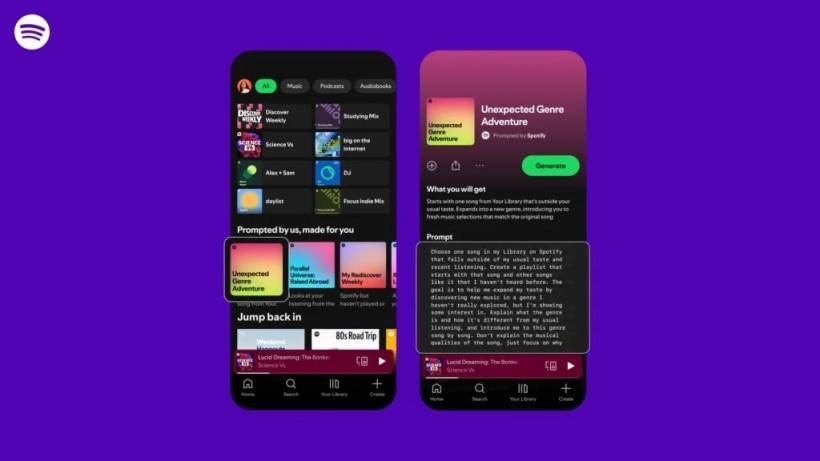
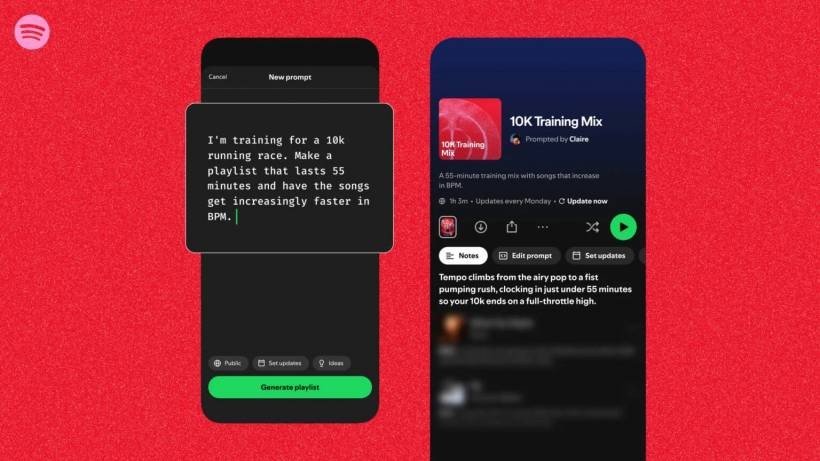
Instead of picking a genre or mood from a preset list, you type a prompt and let Spotify generate a playlist from it. The examples floating around make it clear this isn't just "make me a playlist for the gym." It's meant to handle more specific requests, like:
You can ask for a playlist made from songs you've already saved, but haven't actually gotten around to listening to yet. That's a surprisingly practical idea, because a lot of us treat the "like" button as a "maybe later" pile that never gets revisited.
You can ask Spotify to gather tracks connected to a TV show or movie, which is useful when you want to capture the mood of something you're watching without hunting down soundtracks, fan playlists, or scattered recommendations.
This isn't necessarily a one-and-done playlist. You can tell Spotify to refresh it, so it evolves rather than going stale after the first listen.
If the playlist comes back close-but-not-quite, you can change the prompt and nudge it again. That matters, because sometimes the difference between "perfect" and "nope" is one extra detail in the request.
The "Why This Song?" Notes Might Be the Best Part
One small detail in the report that stands out: each selected track can come with a short note explaining why it was chosen.
That's a big deal because algorithms are usually a black box. Even a brief explanation helps users learn how the system "thinks," and it makes it easier to adjust your prompt intelligently next time. It also turns the feature into something more interactive than a random playlist generator.
Availability: US and Canada First, Everyone Else Waiting
According to the report, Spotify's plan is for the feature to be available in the US and Canada by the end of the month. What's missing (and what always sparks side-eye) is any clear timeline for other regions.
And this is where a lot of listeners outside those markets start feeling familiar frustration. Spotify has made big rollout promises before—lossless audio is the obvious example—and in many places it still hasn't shown up in a meaningful way. So while US and Canadian Premium users get something new to play with, everyone else is left doing the usual "wait and see."
What This Says About Spotify's Direction
Prompted Playlists feels like Spotify leaning into a future where discovery becomes more "chat-like" and personalized, but still powered by the same recommendation engine underneath. In other words, it's not replacing the algorithm—it's giving you a steering wheel.
If it works well, it could make Spotify feel less repetitive and more responsive to what you actually want in the moment. If it works poorly, it risks becoming another feature that sounds cool in theory but produces playlists that miss the mark unless you babysit the prompt.
Either way, it's clearly positioned as a Premium perk right now—and for anyone outside the US and Canada, the real question isn't "is it good?" yet. It's "when do we get it?"











Comments 0