

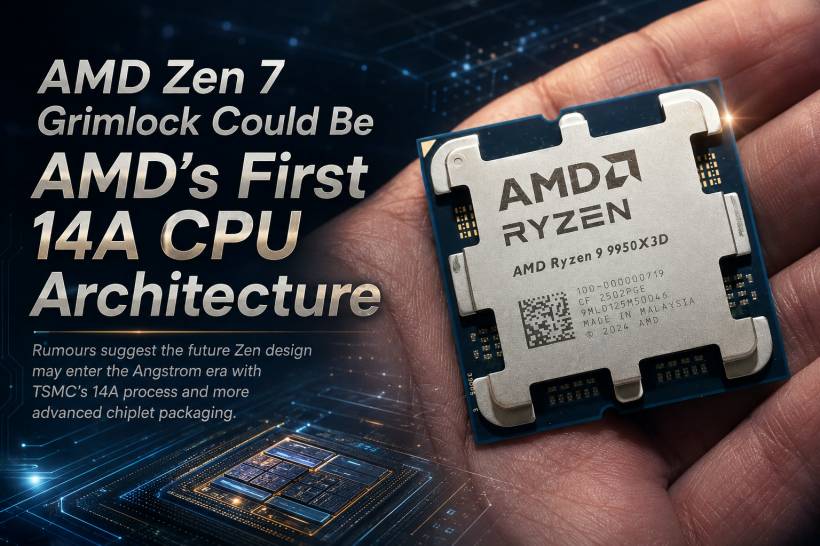
AMD may already be looking beyond Zen 6, with new rumours suggesting that its future Zen 7 architecture is beginning to take shape. The architecture is reportedly codenamed "Grimlock" and could become AMD's first Zen design to use TSMC's 14A process.
If accurate, this would be a major milestone for AMD. The 14A process would push the company into the Angstrom-class node era, moving beyond the nanometre branding that has defined chip manufacturing for years. For AMD, which has built much of its recent CPU success around TSMC's advanced process technology and chiplet design, this would represent another important step in its long-term roadmap.
AMD May Be Securing Future TSMC Capacity
The rumour comes from Taiwanese publication Commercial Times, which claims that AMD CEO Lisa Su has been making frequent visits to Taiwan. The assumption is that these visits may be related to securing future chip production with TSMC, particularly for the 14A node.
This would not be surprising. Advanced semiconductor capacity is highly competitive, especially as companies race to build faster CPUs, GPUs, AI accelerators, and data centre chips. AMD already relies heavily on TSMC, and locking in production capacity early could be critical for future Zen generations.
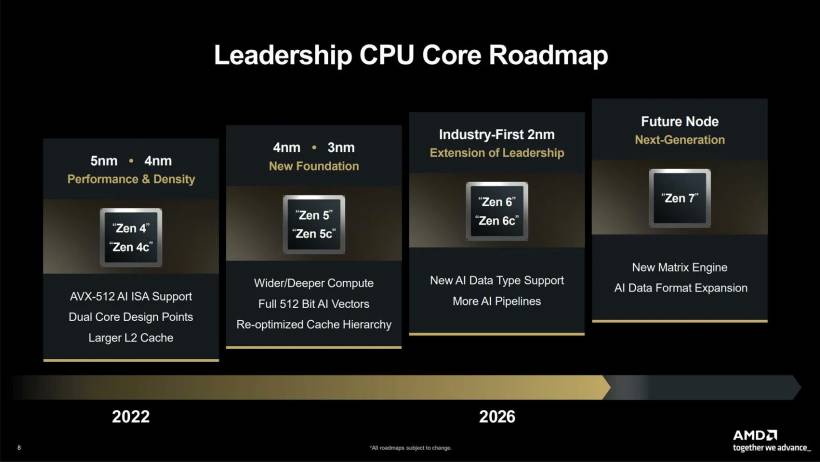
Reports also suggest that AMD has already secured 2nm supply for its Zen 6 architecture. If Zen 6 is expected to use TSMC's 2nm process, then Zen 7 moving to 14A would fit the idea of AMD continuing to advance aggressively with each generation.
More Advanced Chiplet Packaging Could Be Involved
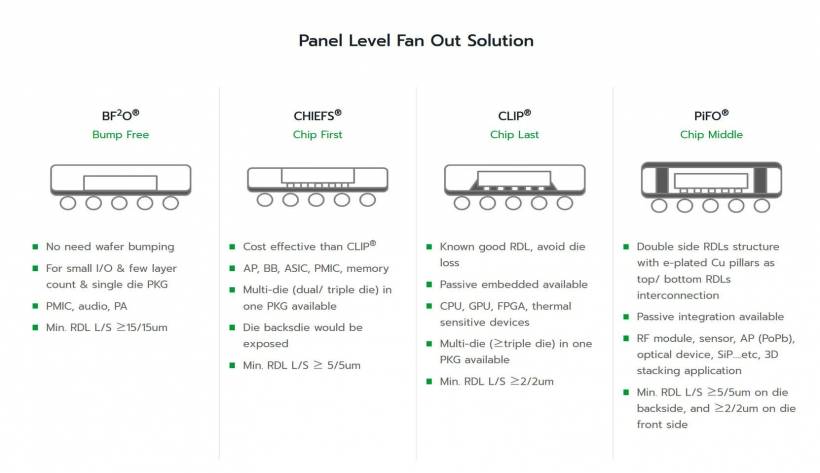
Beyond the manufacturing node, the same report claims AMD may be considering Powertech Technology's FOPLP packaging for Zen 7. FOPLP stands for fan-out panel-level packaging, and it is designed to support larger and more complex chiplet arrangements.
This is important because AMD's modern CPU strategy is heavily built around chiplets. Instead of designing one huge monolithic processor, AMD can combine smaller chiplets together to improve yields, scalability, and product flexibility.
As future CPUs become more complex, packaging becomes just as important as the process node itself. More advanced packaging could help AMD build denser, more powerful designs while managing power, heat, and communication between chiplets.
Zen 7 Could Push Core Counts And Cache Further
The rumours also mention next-generation 3D V-Cache for Zen 7, which makes sense given how important stacked cache has become for AMD. Since its debut with Ryzen 5000, 3D V-Cache has become one of AMD's strongest gaming and performance-focused technologies.
For Zen 7 "Grimlock", the rumoured CCD design could feature up to 16 cores. Meanwhile, 3D V-Cache versions are said to potentially reach up to 224MB of cache per CCD.
That would be a significant amount of cache and could make Zen 7 especially interesting for gaming, workstation workloads, and applications that benefit from large low-latency cache pools. However, these figures should still be treated carefully, as Zen 7 remains far away and none of these specifications have been officially confirmed.
Zen 6 Still Comes First
While Zen 7 rumours are exciting, AMD still has Zen 6 to launch first. Zen 7 is at least one full CPU generation away, so many details could change before the architecture becomes official.
For now, attention will likely shift toward Zen 6, with AMD expected to share more details during its Computex 2026 keynote. Current rumours suggest that Zen 6 could scale up to 32 cores and include 3D V-Cache variants with up to 288MB of L3 cache across two chiplets.
That would put AMD in a strong position against Intel's upcoming Nova Lake architecture, which is rumoured to scale up to 52 cores in its highest-end configuration. If both companies deliver on these expected designs, the next few CPU generations could become very competitive again, especially in the desktop, workstation, and enthusiast markets.
Final Thoughts
The rumoured AMD Zen 7 "Grimlock" architecture sounds ambitious, especially if it really becomes AMD's first Zen design built on TSMC's 14A process. Moving into the Angstrom-class era would be a major technical step, and the possible use of advanced packaging and larger 3D V-Cache designs suggests AMD is continuing to push its chiplet strategy forward.
Still, it is important to keep expectations grounded. Zen 7 is not around the corner, and AMD has not officially confirmed these details. Zen 6 still needs to arrive first, and only then will the bigger picture for Zen 7 become clearer.
For now, the rumours show that AMD is already planning several generations ahead. If the reports are accurate, Zen 7 could be a major evolution in process technology, packaging, core density, and cache design.











Comments 0