

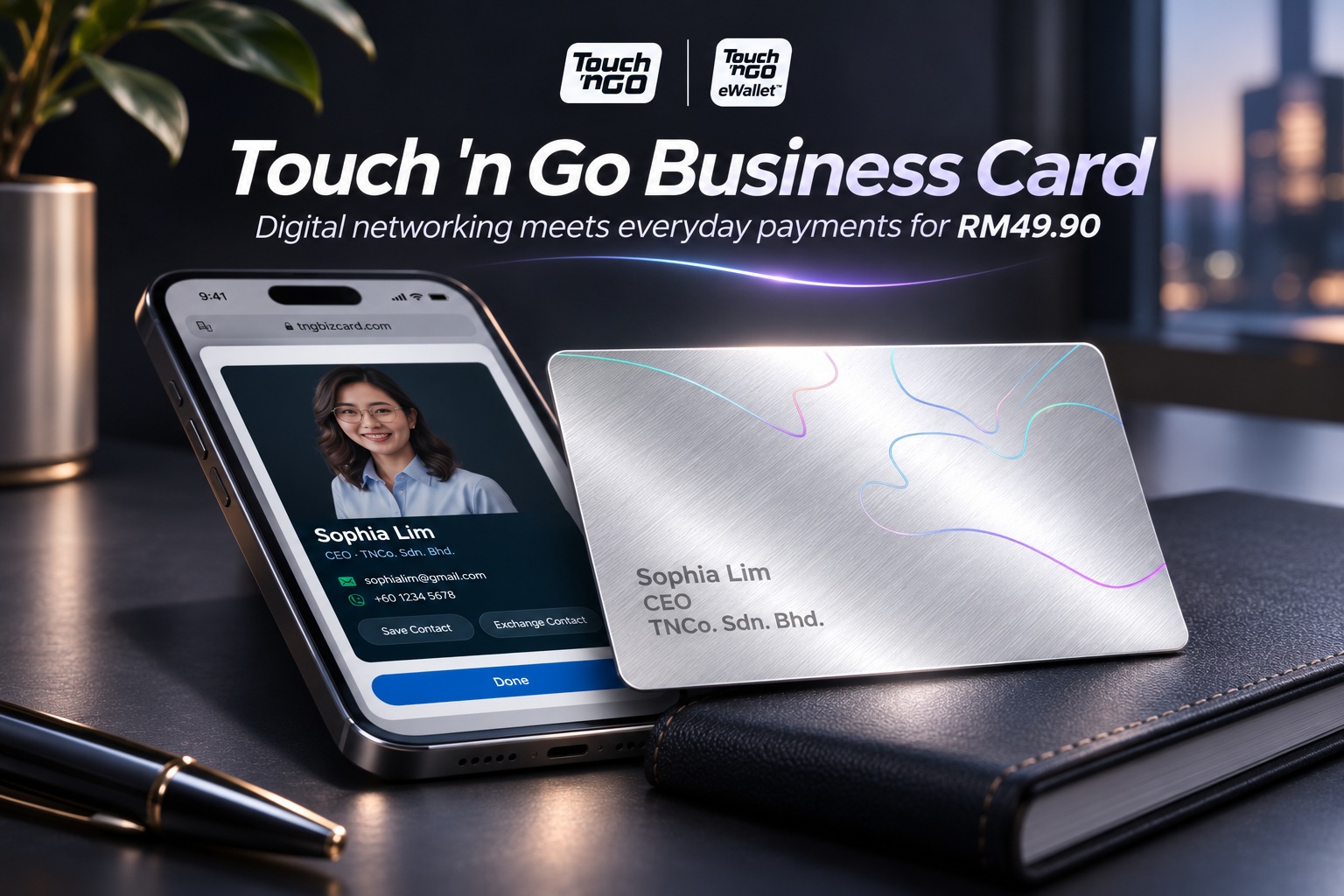
Touch 'n Go is expanding beyond its familiar payment products with the launch of a new Touch 'n Go Business Card, a reusable digital business card designed for professional networking. While it looks and works like a physical business card, its functionality goes much further by combining digital contact sharing with the payment capabilities already associated with Touch 'n Go cards.
The company is positioning the product as the first of its kind in Malaysia, offering users a way to carry one physical card while maintaining a digital profile that can be updated whenever necessary. Instead of printing a new batch of paper business cards every time someone changes jobs, phone numbers or company details, users can simply edit the information linked to the card.
A Business Card With A Digital Profile
The Touch 'n Go Business Card allows users to create a digital profile containing the information they would normally print on a conventional business card. This can include their name, phone number, email address, company details, profile photograph and links to social or professional platforms.
Because the information is stored digitally rather than printed permanently onto the card, users can change their profile whenever necessary. Someone moving to a new company, changing their job title or updating their contact number does not need to purchase another physical card simply to keep the information accurate.
That makes the card particularly useful for professionals whose contact information changes regularly.
Users Can Update Their Information At Any Time
Traditional business cards become outdated surprisingly quickly. A new phone number, email address, office location or job title can make an entire stack of printed cards unusable.
The digital nature of the Touch 'n Go Business Card removes that problem. Users can update the information associated with the card while continuing to use the same physical product.
This effectively separates the physical card from the information it represents, making the card reusable over a much longer period.
NFC Makes Contact Sharing Much Faster
One of the main ways to share the digital profile is through NFC. Users simply tap the Touch 'n Go Business Card against an NFC-enabled smartphone, allowing the recipient to open the linked profile without manually typing contact details.
This provides a much quicker networking experience during meetings, conferences or events where exchanging information needs to happen rapidly. Instead of handing someone a card and hoping they enter the details into their phone later, the contact profile can be accessed immediately.
For professionals attending networking events regularly, that small improvement could make the card considerably more practical than conventional paper alternatives.
A QR Code Provides Another Sharing Option
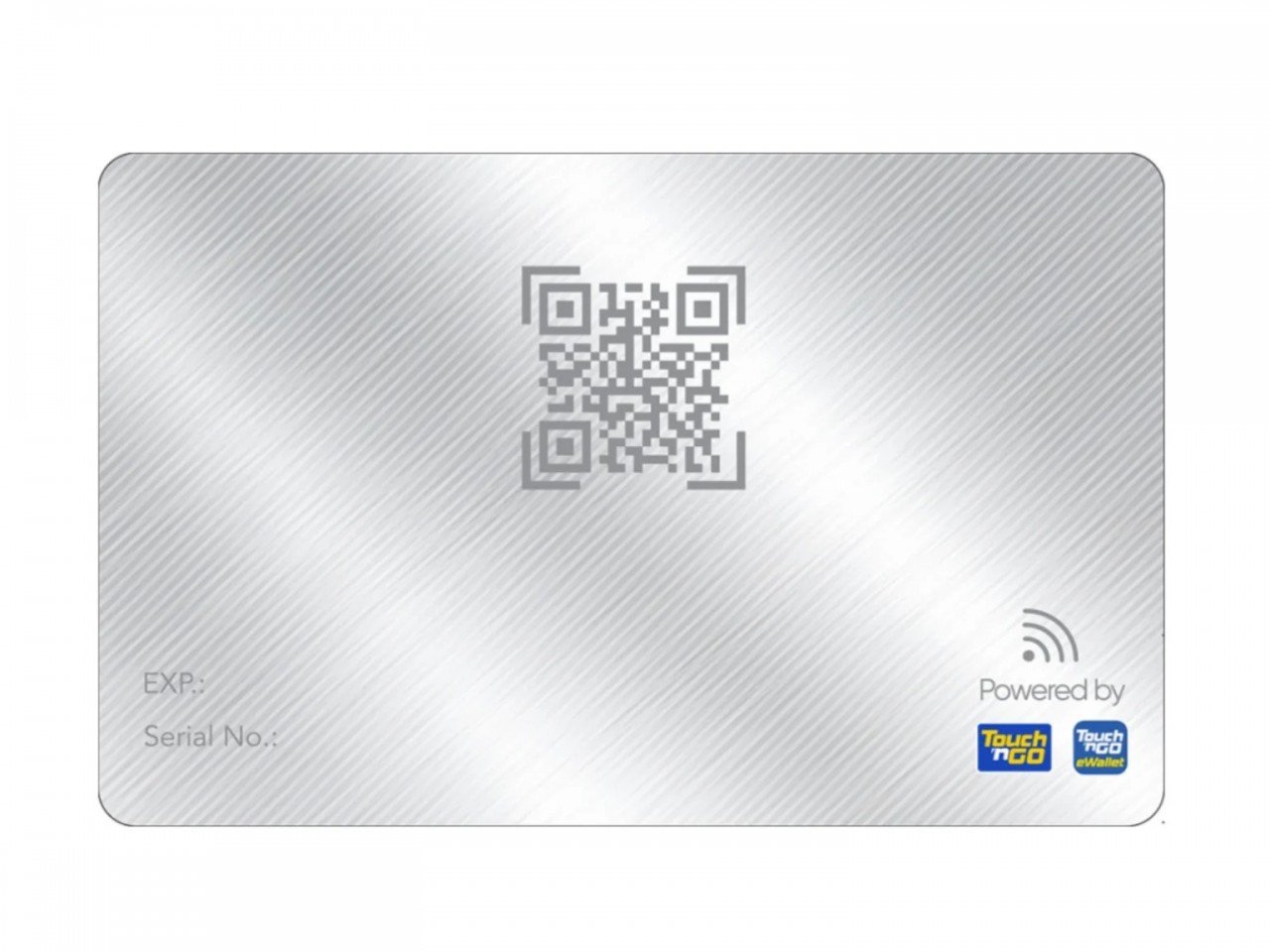
Not every situation is suitable for NFC, so Touch 'n Go has also included a QR code on the back of the card. Anyone can scan the code using a compatible smartphone camera to access the same digital profile.
This provides a fallback when NFC is unavailable, disabled or simply unfamiliar to the recipient. It also makes the card usable across a broader range of smartphones without requiring users to understand how NFC sharing works.
Having both NFC and QR options keeps the process flexible while still relying on one physical card.
Recipients Can Save Contact Details Directly
Once the profile is opened, recipients can view the information and save the relevant contact details directly onto their device. This eliminates the manual process of typing names, phone numbers and email addresses from a printed business card.
That can also reduce errors caused by mistyping information. Instead of entering a complicated email address manually, the recipient can simply save the digital version that the card owner has already provided.
For business networking, this makes the exchange of information much more immediate.
The Card Reduces Dependence On Printed Business Cards
Touch 'n Go also highlights the potential environmental benefit of moving away from disposable paper business cards. Professionals may distribute hundreds or even thousands of printed cards throughout their careers, many of which eventually end up discarded.
A reusable digital card can significantly reduce the need for repeated printing. Because the information can be updated without replacing the physical card, users do not need to throw away old cards every time their professional details change.
The environmental impact of one individual may be relatively small, but the savings become more meaningful when adopted across larger organisations.
Physical Business Cards Still Have Their Advantages
Digital business cards are convenient, but traditional printed cards are unlikely to disappear immediately. A paper card requires no smartphone, internet connection or technical knowledge, and some people still appreciate having something physical to keep after a meeting.
The Touch 'n Go Business Card instead provides another option for users who prefer a more modern approach. It combines the familiarity of physically handing over a card with the convenience of digital information sharing.
That hybrid approach may make the transition easier for professionals who are not ready to abandon physical cards entirely.
It Is Also A Normal Touch 'n Go NFC Card
The networking functionality is only one part of the product. The Touch 'n Go Business Card also works as a conventional Touch 'n Go NFC card, giving it practical everyday uses beyond professional introductions.
Users can use the card for supported toll payments, parking and selected public transport services. This means the same card carried for networking can also function as part of the user's daily travel routine.
The additional payment capability is what makes the product more than simply another NFC-enabled digital contact card.
One Card Can Serve Several Purposes
Combining networking and payment functionality could make the card particularly attractive to professionals who already carry a Touch 'n Go card. Instead of keeping separate cards for transport and professional networking, one product can potentially perform both roles.
This also increases the likelihood that users will actually carry the business card with them. Traditional business cards are easy to forget at home or leave inside a desk drawer, while a card used regularly for tolls or parking is more likely to remain in the wallet.
A digital business card is only useful if it is available when someone needs to exchange contact information.
The Card Is Priced At RM49.90
The Touch 'n Go Business Card is currently available at an introductory price of RM49.90. Buyers can purchase it through the Touch 'n Go Shop.
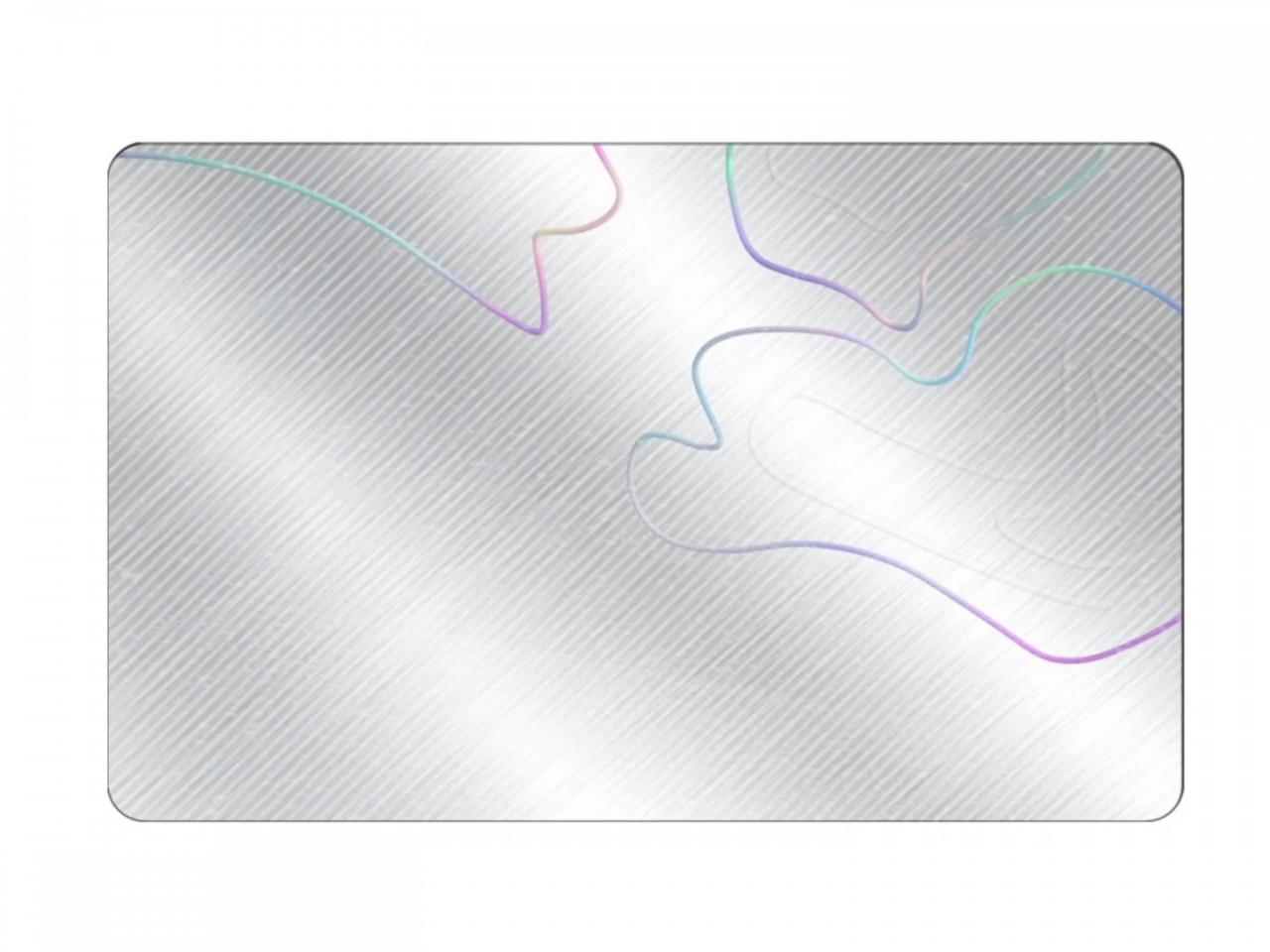
At launch, the card is available in a single Silver colour. The relatively simple design gives it a professional appearance while allowing the digital profile to contain the more personalised information.
Whether Touch 'n Go introduces additional colours or designs later remains to be seen.
The Price Is Higher Than A Standard Touch 'n Go Card
At RM49.90, the Business Card naturally costs more than a conventional Touch 'n Go card because it is being positioned as a professional networking product rather than simply a payment card.
The value therefore depends heavily on whether the digital profile functionality is something the buyer will actually use. Someone attending meetings, conferences and networking events regularly may find the convenience worthwhile, while a person who rarely exchanges professional details may have little reason to pay the premium.
The multi-purpose nature of the product helps make the pricing easier to justify for certain users.
The Digital Profile Could Be Particularly Useful For Freelancers
Freelancers and independent professionals could be among the people who benefit most from the card. Their contact details may remain relatively stable, but the services, portfolio links and social profiles they want to promote can change frequently.
Being able to update a digital profile without producing another batch of cards makes that process much easier. A photographer could change a portfolio link, while a consultant could update a professional profile or business website whenever necessary.
The physical card can remain unchanged while the information behind it evolves.
Sales Professionals Could Also Find It Practical
People working in sales often exchange contact details with large numbers of customers and business partners. A digital business card could make those interactions more efficient because the recipient can immediately save the salesperson's information.
There is also less chance of the card being placed in a wallet and forgotten. Once the contact is saved digitally, the recipient can find it alongside their other phone contacts.
For sales teams attending exhibitions or business events, this could streamline the follow-up process considerably.
Conference Networking Becomes More Convenient
Large conferences can involve dozens of introductions within a single day. Carrying enough printed cards and keeping track of who received them can become inconvenient.
With a reusable card, users can simply tap or show the QR code repeatedly without worrying about running out. The recipient receives the same up-to-date digital information every time.
This makes digital cards particularly suitable for events where networking is a central part of the experience.
Companies Can Use Teams Mode
Touch 'n Go is also offering a Teams Mode aimed at companies that want to provide digital business cards to employees.
Instead of every employee purchasing an individual generic card, organisations can order customised versions incorporating their corporate identity. This provides a more professional and consistent appearance across the workforce.
For companies with sales teams, consultants or customer-facing employees, issuing standardised digital business cards could simplify branding considerably.
Corporate Branding Can Be Added To The Cards
Teams Mode allows companies to incorporate elements such as their logo and other branding details into the card design. This enables organisations to keep the cards aligned with existing corporate visual standards.
Consistent branding can be particularly important when employees represent the organisation at conferences, customer meetings or industry events. Rather than everyone using different personal designs, the entire team can present a unified appearance.
The digital profiles can then contain each employee's individual contact information while the physical card maintains the same company identity.
Bulk Orders Could Appeal To Larger Organisations
Touch 'n Go is also supporting corporate and bulk purchases, making the product potentially useful for organisations that want to deploy the cards across larger teams.
A company could issue them to employees who frequently interact with customers or partners rather than providing the cards to every member of staff. This allows the organisation to focus the investment on roles where networking functionality is most valuable.
Further information on Teams Mode and corporate purchasing is available through Touch 'n Go's dedicated business card offering.
Digital Cards Can Make Employee Changes Easier To Manage
One practical advantage for businesses is that employee information can change without requiring the physical card to be reprinted. Promotions, new job titles, updated email addresses or changing departments can potentially be reflected in the digital profile instead.
This can reduce the amount of unused printed material generated whenever organisational changes occur. For companies with large customer-facing teams, the savings in printing and administrative effort could become meaningful over time.
The same physical card can remain in service for much longer.
The Product Fits Touch 'n Go's Wider Digital Direction
Touch 'n Go has gradually expanded far beyond its original role as a physical toll-payment card. Its ecosystem now includes digital payments, mobile services and increasingly diverse products connected to everyday transactions.
A digital business card may initially appear unrelated to transport payments, but the combination with existing Touch 'n Go functionality makes the product fit more naturally into that ecosystem.
The company is essentially adding another digital identity function to a physical card people can already use for payments.
NFC Makes The Combination Possible
NFC is what allows the same physical card to support different interactions. The technology enables compatible devices to communicate when brought close together, making it useful for both contactless payments and digital information sharing.
For networking, the interaction simply becomes a tap between the card and a smartphone. For payments, the card continues behaving as a Touch 'n Go NFC card at supported terminals.
This makes the technology well suited to combining several everyday functions into one compact product.
QR Codes Keep The Card Accessible To More Users
Relying exclusively on NFC could create compatibility issues because not every phone handles NFC interactions in exactly the same way. Including a QR code gives Touch 'n Go a simple and widely understood alternative.
Almost every modern smartphone can scan QR codes directly through its camera. This means recipients can still access the digital business profile even if NFC is unavailable.
The combination of both technologies makes the card significantly more practical in real-world networking situations.
The Information Is More Flexible Than Paper
The biggest fundamental advantage remains the ability to change information after the card has already been issued. A printed business card is permanently tied to whatever was correct on the day it went to the printer.
A digital profile is much more flexible. Users can keep the same physical card for years while updating their information whenever necessary.
That could eventually make reusable digital cards a more sensible choice for professionals whose work changes frequently.
The Recipient Does Not Need The Same Card
Another advantage is that the person receiving the contact information does not need to own a Touch 'n Go Business Card themselves. They simply need a compatible smartphone to open the digital profile using NFC or the QR code.
This removes the network-effect problem that affects some technologies where both people need to use the same platform before the feature becomes useful.
The card owner controls the profile, while everyone else can access the information using ordinary smartphone functionality.
It Could Replace Several Things In A Wallet
For some users, the Business Card could potentially replace both a conventional printed networking card and their ordinary Touch 'n Go payment card.
Reducing the number of cards carried may seem like a small benefit, but wallets can quickly become crowded with payment cards, access cards and membership cards.
Combining several functions into one physical product helps reduce that clutter.
The greater question is whether users are comfortable relying on one card for multiple purposes.
Losing The Card Could Be More Inconvenient
The multi-purpose design also introduces one obvious downside. Losing a card that serves only as a business card is relatively minor, while losing one also used for tolls, parking and public transport can be more disruptive.
Users therefore need to treat the Touch 'n Go Business Card more like an everyday payment card than disposable networking material.
The digital profile can presumably remain associated with the user's information, but replacing the physical payment component would still be necessary if the card is lost.
Digital Profiles Need To Stay Updated
The ability to edit contact information only provides value when users actually keep their profiles current. A digital card containing an outdated phone number or broken professional link is no more useful than an old printed card.
Users should therefore periodically review the information linked to their card, particularly before attending major events.
The flexibility of digital profiles makes updates easy, but it also means the responsibility for keeping information accurate remains with the user.
A More Modern Approach To Professional Networking
Business cards have remained largely unchanged for decades because the basic concept works extremely well. They are simple, cheap and easy to exchange.
The Touch 'n Go Business Card does not completely abandon that familiar behaviour. Users still have a physical card they can present during an introduction, but the actual information exchange happens digitally.
That combination preserves the social interaction of handing someone a card while removing many of the limitations associated with printing information permanently onto paper.
Final Thoughts
The Touch 'n Go Business Card is an interesting expansion of the company's card ecosystem because it combines three different functions into one product: professional networking, digital contact sharing and everyday Touch 'n Go payments.
Users can create a digital profile containing their name, phone number, email address, company details, photograph and professional or social links. That profile can be shared by tapping the card against an NFC-enabled smartphone or scanning the QR code printed on the back, while recipients can save the contact details directly to their devices.
Unlike conventional paper business cards, the information can be updated whenever necessary without replacing the physical card. At the same time, the card retains familiar Touch 'n Go functionality for tolls, parking and selected public transportation services.
The Business Card is currently available in Silver through the Touch 'n Go Shop at an introductory price of RM49.90. Companies can also use Teams Mode for customised corporate cards incorporating their own logos and branding.
For someone who rarely exchanges business cards, the product may be unnecessary. But for professionals constantly attending meetings, conferences and networking events, having one reusable card that can share updated contact information while still functioning as a normal Touch 'n Go card could make it a surprisingly practical addition to the wallet.











Comments 0