

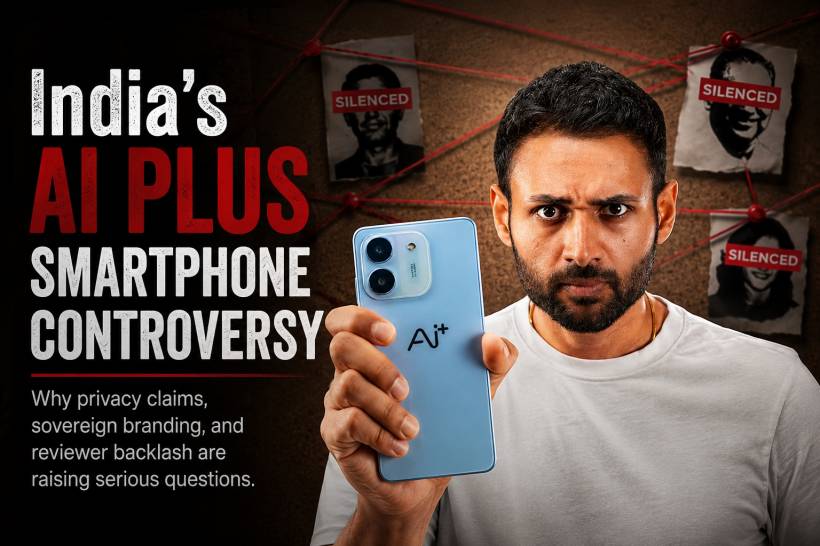
When a smartphone brand enters the market promising privacy, national pride, and technological independence, people naturally pay attention. That is especially true in India, one of the world's largest smartphone markets, where the conversation around locally made devices has become increasingly important. Many buyers want affordable phones, but they also want to know where the device comes from, who controls the software, and whether their data is genuinely protected.
The controversy around AI Plus became bigger than just another budget smartphone debate because the company appeared to position itself as something more meaningful. It was not simply selling hardware. It was selling trust. The message was that this was a phone built around Indian sovereignty, Indian data protection, and independence from foreign control. That kind of branding carries weight, but it also creates a higher level of responsibility. Once privacy and national identity become part of the marketing, every technical detail suddenly matters.
Why The AI Plus Story Became So Sensitive
At the centre of the issue is the gap between marketing language and technical reality. AI Plus reportedly promoted its devices as privacy-focused, with messaging that suggested user data would remain safe within India. For many consumers, that sounds reassuring, especially at a time when data privacy is no longer a niche concern. Phones are not just communication tools anymore. They store identity documents, financial apps, photos, messages, work accounts, and private habits.
That is why the controversy became serious when reviewers and tech investigators started questioning whether the phone's software and system apps matched the company's public claims. According to the video, concerns were raised about preinstalled apps, software similarities, and links that appeared to point outside the clean "India-first" image being promoted. Whether every allegation is eventually proven in court or not, the larger issue is clear: consumers cannot properly judge a privacy product if the company's explanations are vague or defensive.
The Problem With "Made In India" As A Marketing Shortcut
There is nothing wrong with celebrating local manufacturing. In fact, stronger local production can create jobs, develop technical skills, and reduce dependence on outside supply chains. But "Made in India" can mean many different things. A phone may be assembled in India while still being designed elsewhere. Its hardware may come from one country, its software from another, and its cloud services from yet another provider.
That does not automatically make the device bad. Modern electronics are global by nature. Even major brands rely on international suppliers, chipmakers, design partners, and manufacturing networks. The problem begins when a company uses patriotic branding to imply a level of independence that may not fully exist. If a brand suggests that its phone is fully sovereign, fully local, or free from certain foreign dependencies, then the public has every right to ask for proof.
Software Matters More Than The Box
Many buyers still think of smartphones mainly in terms of camera quality, battery life, display size, storage, and price. Those are important, but software is where trust really lives. A phone's operating system controls permissions, background services, data collection, app behaviour, updates, security patches, and communication with external servers.
This is why the allegations around preinstalled apps are so important. If a phone contains system apps that users cannot easily remove or disable, then those apps deserve extra scrutiny. Consumers should know what those apps do, who developed them, what data they access, and whether they communicate with third-party services. A privacy-focused phone should make these things clearer than a normal phone, not more confusing.
Why Legal Pressure Against Reviewers Raises Bigger Questions
One of the most worrying parts of the controversy is not only the technical claims, but the reported legal action against creators and reviewers. When reviewers raise concerns about a product, the healthiest response from a company is transparency. A company can publish technical documents, invite independent audits, answer questions clearly, or issue corrections if reviewers made mistakes.
Taking legal action may be a company's right, especially if it believes false claims have damaged its reputation. But from a public trust perspective, it can create the opposite effect. When legal pressure appears to silence criticism, people may start asking why the company is more interested in controlling the conversation than explaining the product. In the tech world, trust is not built by removing questions. It is built by answering them.
The Role Of Tech Reviewers In Consumer Protection
This controversy also shows why independent tech reviewers matter. A normal buyer does not have the tools, time, or technical knowledge to inspect a phone's hidden system apps, software packages, privacy policies, or background services. Reviewers, security researchers, and technical creators often act as an early warning system for the public.
Of course, reviewers also have a responsibility to be accurate. They should avoid exaggeration, clearly separate evidence from opinion, and correct mistakes when needed. But when reviewers ask reasonable questions about privacy, software origins, or security claims, that should not be treated as an attack. It should be treated as part of a healthy technology ecosystem.
Consumers Should Demand Proof, Not Just Slogans
The biggest lesson from the AI Plus situation is that consumers should be careful with big branding claims. Words like "secure," "sovereign," "privacy-first," and "local" sound impressive, but they should be backed by specific evidence. A company that truly wants to be trusted should be able to explain where its software comes from, how data is handled, what services are preinstalled, and how independent audits are performed.
This is especially important for newer brands. Established companies already face scrutiny because of their size, but newer companies asking for public trust should be even more transparent. If the product is genuinely strong, openness should help the brand, not hurt it.
Why This Matters Beyond One Smartphone Brand
This is not only about AI Plus. It is about the direction of the smartphone industry in markets like India, Malaysia, and many other countries where consumers are becoming more aware of data protection and digital sovereignty. Governments, businesses, and users are all paying more attention to where technology comes from and who controls it.
The danger is that serious ideas like local innovation and data protection can be weakened when companies use them mainly as marketing tools. If too many brands overpromise and under-explain, consumers may become cynical. That would be unfortunate because the goal itself is important. Countries should develop stronger local technology ecosystems, but that progress must be built on honesty, not slogans.
Final Thoughts
The AI Plus controversy is a reminder that trust in technology cannot be created through branding alone. A phone can look modern, sound patriotic, and promise privacy, but those claims must survive technical inspection. When a company makes bold promises about data safety and national independence, it should expect people to look closely.
In the end, this situation may actually be useful for consumers. It pushes people to ask better questions before buying a device. Who built the software? What apps are preinstalled? Can they be removed? Where is data processed? Has the device been independently audited? These questions may sound technical, but they are becoming part of everyday digital life.
For smartphone brands, the message is simple: if privacy is the selling point, transparency must be part of the product. Otherwise, the marketing becomes the easiest part to sell and the hardest part to defend.











Comments 0