

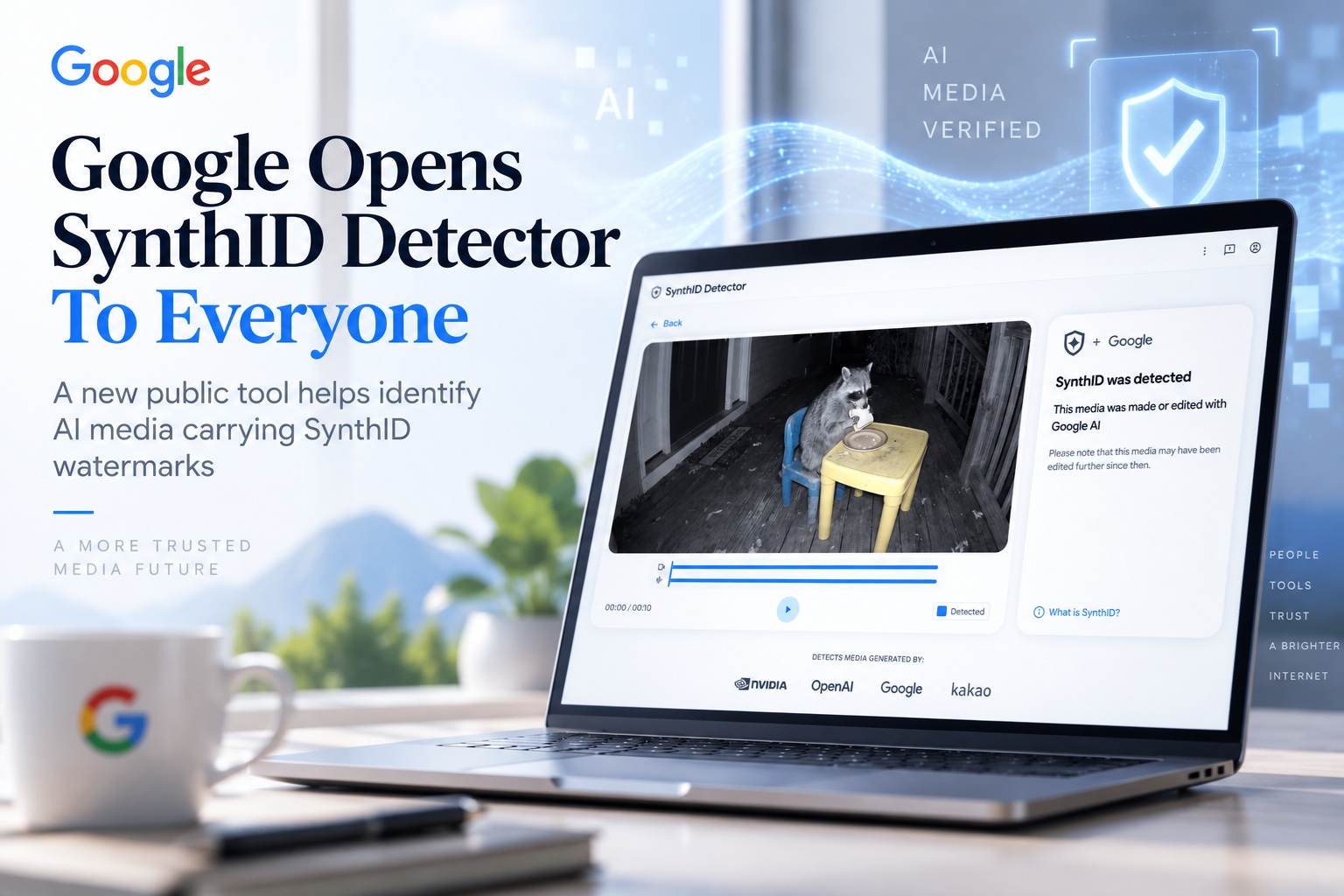
Google has opened access to its SynthID Detector, giving anyone a way to check whether an image, video or other supported media contains Google's invisible SynthID watermark. SynthID is designed to mark content that has been generated or edited using supported AI systems without visibly changing the media itself. The new public detector is intended to make it easier for users, journalists, researchers and organisations to identify content created with AI tools that support the technology.
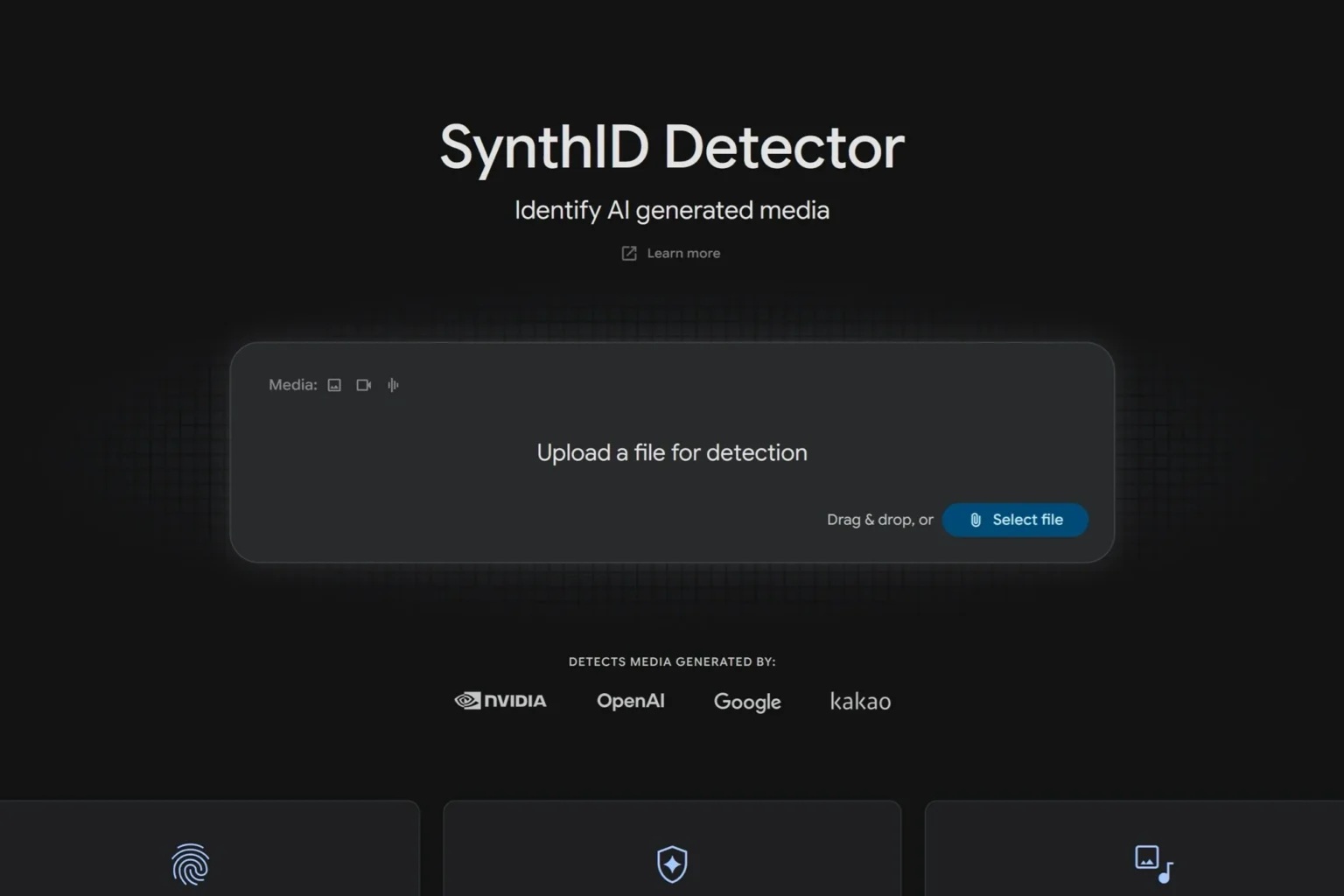
The concept is straightforward: users upload a piece of media to the SynthID Detector website, and the tool checks whether a SynthID watermark is present. However, there is an important limitation. SynthID Detector is not a universal AI-content detector and cannot determine whether every piece of uploaded media was created or modified using artificial intelligence.
What SynthID Actually Does
SynthID works by embedding an invisible watermark into AI-generated content. The watermark is designed to survive normal use without affecting how the image, video or other media appears to people. Instead of placing an obvious label or logo on the content, information is embedded in a way that compatible detection tools can later recognise.
This approach gives AI platforms a way of signalling that content has been produced or altered using their systems. The watermark can then be checked independently using the SynthID Detector. For users who want additional transparency around AI-generated media, that can provide stronger evidence than simply guessing based on visual appearance.
A Positive Detection Is Meaningful
If SynthID Detector reports that "SynthID was detected", users can be confident that the media contains a recognised SynthID watermark. This means the content was generated or edited using a system that supports the technology. Even if only part of the media was modified using AI, the detector may still identify the watermark.
This can be particularly useful when AI edits are subtle. Modern generative tools can alter photographs, replace objects or enhance video in ways that are difficult to identify visually. Having a machine-readable watermark provides another layer of verification that does not depend entirely on human judgement.
But A Negative Result Does Not Prove The Content Is Real
The biggest limitation appears when the detector returns "SynthID was not detected". That result does not prove the media is authentic or free from AI manipulation. It simply means the tool did not find a SynthID watermark.
Google itself makes this clear, describing the service as something other than a general AI detector. Media created by AI systems that do not use SynthID can still appear completely AI-generated while returning a negative result. This makes the tool useful for confirmation in supported cases, but much less useful for ruling AI involvement out entirely.
Only Supported AI Platforms Can Be Detected
The tool specifically checks for SynthID, so it can only recognise content produced by platforms that have adopted the technology. Google's own Gemini ecosystem naturally falls within that group. According to the announcement, other partners include OpenAI, NVIDIA and South Korea's Kakao, with Apple also expected to support the technology in the future.
This expands SynthID beyond Google's own AI products and gives the watermark a better chance of becoming a broader industry standard. The more AI companies that adopt the same or compatible provenance technology, the more useful tools such as SynthID Detector become. However, the system remains dependent on voluntary adoption.
Popular Platforms Still Sit Outside The System
Several widely used generative AI platforms are not currently listed among SynthID adopters. Tools such as Grok and Midjourney can generate convincing images and other content, but their output would not necessarily trigger a SynthID detection if they do not embed the watermark.
This illustrates why no single detector can currently provide a complete answer to whether content is AI-generated. Different platforms use different technologies, watermarking approaches and metadata systems, while some may use none at all. A negative SynthID result therefore needs to be interpreted cautiously rather than treated as proof that something is human-created.
Why Watermarking Matters More As AI Improves
AI-generated content is becoming increasingly difficult to distinguish from conventional photography, video and audio. Visual clues that once made synthetic content obvious are becoming less reliable as models improve. This makes provenance technologies more important because detection based solely on appearance may no longer be enough.
Invisible watermarking provides one possible solution by embedding evidence directly into the generated media. Instead of asking whether an image "looks AI-generated", users can check whether a recognised watermark is present. That does not solve every authenticity problem, but it creates a more structured way of verifying content from participating platforms.
Not A Replacement For Broader Verification
SynthID Detector should therefore be viewed as one tool within a wider verification process. A positive result can provide useful evidence that supported AI technology was involved, but a negative result should not end the investigation. Users may still need to examine metadata, source information, context and other signs of manipulation.
This is especially important for news organisations, educators and businesses dealing with potentially misleading media. AI detection remains a difficult technical problem, and no current system can reliably identify every synthetic image or video regardless of how it was created. SynthID helps narrow that gap, but it does not eliminate it.
Final Thoughts
Google making SynthID Detector available to the public is an important step towards greater transparency around AI-generated content. For media created or edited using participating platforms, the tool offers a straightforward way to confirm whether an invisible SynthID watermark is present. As more major AI companies adopt the technology, that could make provenance checks increasingly useful.
The limitation is equally important to understand: SynthID Detector is not a universal AI detector. If it finds a watermark, users have strong evidence that AI tools were involved, but if it finds nothing, the content could still have been created or modified by another platform. For now, AI authenticity remains something that requires several layers of verification rather than one definitive tool.











Comments 0