


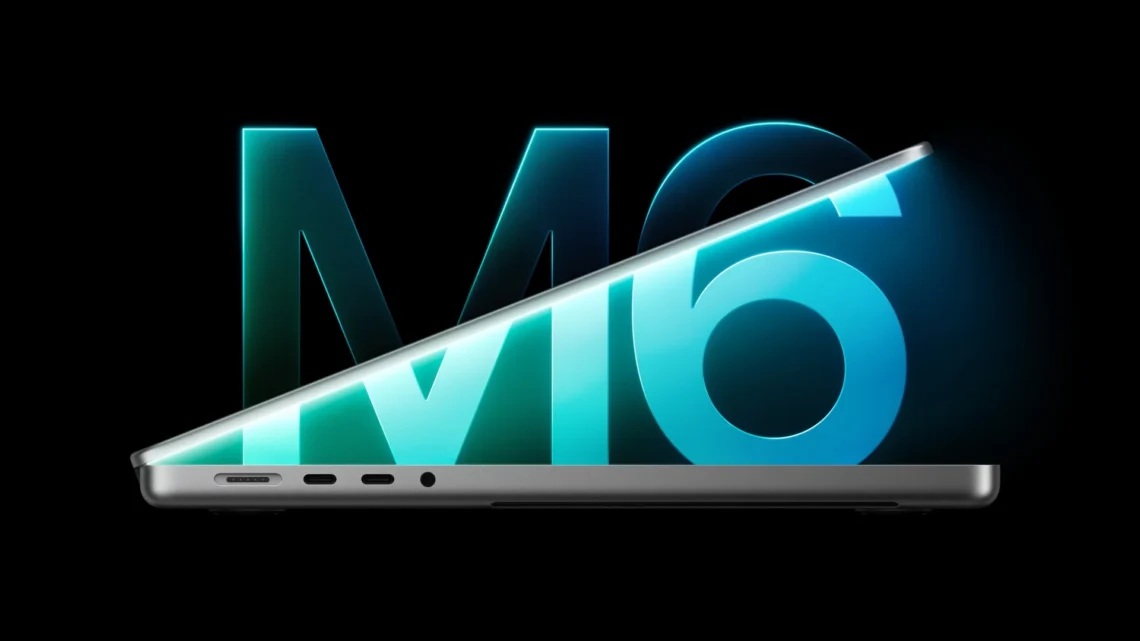
Apple is continuing its run of hardware announcements ahead of the upcoming "Pro and Tell" event, this time refreshing the 14-inch MacBook Pro with its latest M6 processor. The update follows the recently announced iPad mini 8 and arrives alongside a refreshed iMac, both of which also adopt Apple's newest-generation silicon.
While anyone hoping for the rumoured OLED touchscreen MacBook Pro will have to wait a little longer, the new model still brings meaningful improvements under the hood. Apple has upgraded CPU and graphics performance, introduced newer wireless connectivity and expanded the available ports, while largely retaining the familiar exterior design of the existing 14-inch MacBook Pro.
The M6 Chip Makes Its Way Into The MacBook Pro
Although this is the first MacBook Pro to feature the M6, the chip itself is not completely new. Apple previously introduced the processor when it refreshed the Mac mini, giving us a good idea of what to expect from the laptop implementation.
The base M6 features a 12-core CPU and 12-core GPU, matching the configuration available in the Mac mini. Apple has also equipped the chip with dual 16-core Neural Engines, strengthening its capabilities for AI and machine-learning workloads.
The overall architecture is designed to improve performance without dramatically increasing power consumption, an area where Apple's M-series processors have consistently performed well.
Graphics Performance Is Up To 30% Faster Than M5
Apple claims the M6 delivers up to 30% faster graphics performance compared with the M5-powered MacBook Pro. This should benefit workloads such as video editing, 3D rendering, creative applications and increasingly GPU-intensive AI tasks.
Users upgrading from considerably older Apple Silicon hardware will naturally see a much larger difference. Apple says someone moving from an original M1 MacBook Pro could see performance gains of as much as 11 times, although that comparison spans several generations of processor improvements.
For existing M5 users, the difference will obviously be less dramatic, making the M6 refresh more attractive to owners of older machines.
Dual Neural Engines Push AI Performance Further
One of the more interesting parts of the M6 design is the inclusion of dual 16-core Neural Engines. Apple's Neural Engine has traditionally handled machine-learning workloads separately from the CPU and GPU, allowing certain tasks to run more efficiently.
Doubling that capability reflects the growing importance of AI processing across macOS and professional applications. Local AI workloads are becoming increasingly common in photo editing, video production, coding tools and productivity software.
As Apple Intelligence continues expanding, having stronger dedicated AI hardware should also give the M6 MacBook Pro more headroom for future features.
WiFi 7 Finally Arrives Through Apple's N1 Chip
The new MacBook Pro also gains Apple's N1 wireless networking chip, bringing support for WiFi 7. This provides access to higher theoretical throughput, lower latency and better utilisation of newer wireless networks when paired with compatible routers.
Bluetooth has also been upgraded to Bluetooth 6, improving compatibility with the latest wireless accessories and peripherals. The upgrades should be especially useful to professionals regularly moving large files over fast local networks.
While WiFi 7 infrastructure is still gradually becoming mainstream, including it now helps future-proof the MacBook Pro for several years.
Unified Memory Starts At 16GB
The base configuration comes with 16GB of unified memory, which should be sufficient for mainstream professional workloads and general productivity. Buyers requiring more headroom can configure the machine with either 24GB or 32GB.
Apple's unified memory architecture allows the CPU, GPU and Neural Engine to access the same memory pool without constantly copying data between separate system and graphics memory. This can provide efficiency advantages, particularly in applications that depend heavily on GPU acceleration.
However, because the memory is integrated into the system architecture, it cannot be upgraded later. Buyers therefore need to choose carefully when ordering.
Storage Starts At 1TB
Apple is offering three internal storage configurations for the refreshed MacBook Pro: 1TB, 2TB and 4TB. The absence of a smaller base capacity should provide more breathing room for users working with large media files, development environments and professional applications.
Creative workloads can consume storage quickly, especially when working with 4K or higher-resolution video. Developers running multiple virtual machines or local AI models may face similar requirements.
As usual with modern MacBooks, the internal storage is not designed to be upgraded after purchase, making initial configuration particularly important.
Battery Life Is Rated At Up To 24 Hours
Apple has not provided a detailed battery capacity figure, continuing its usual approach of highlighting real-world endurance rather than watt-hours. The company claims the new 14-inch MacBook Pro can provide up to 24 hours of battery life on a single charge.
Actual results will naturally depend on workload, display brightness and connectivity. Heavy video rendering or sustained CPU and GPU usage will consume considerably more power than lightweight web browsing or document editing.
Even so, battery efficiency remains one of the strongest advantages of Apple's ARM-based Mac lineup, particularly for professionals frequently working away from a power outlet.
The Exterior Design Remains Familiar
Anyone expecting a completely redesigned MacBook Pro may be disappointed. Apple has made relatively few visible changes to the 14-inch chassis, keeping the general design introduced several generations ago.
That is not necessarily a bad thing. The current MacBook Pro remains well regarded for its build quality, keyboard, trackpad and practical selection of ports.
The refresh is therefore primarily an internal upgrade rather than a major change in Apple's laptop design language.
There Is Now An Additional Thunderbolt Port
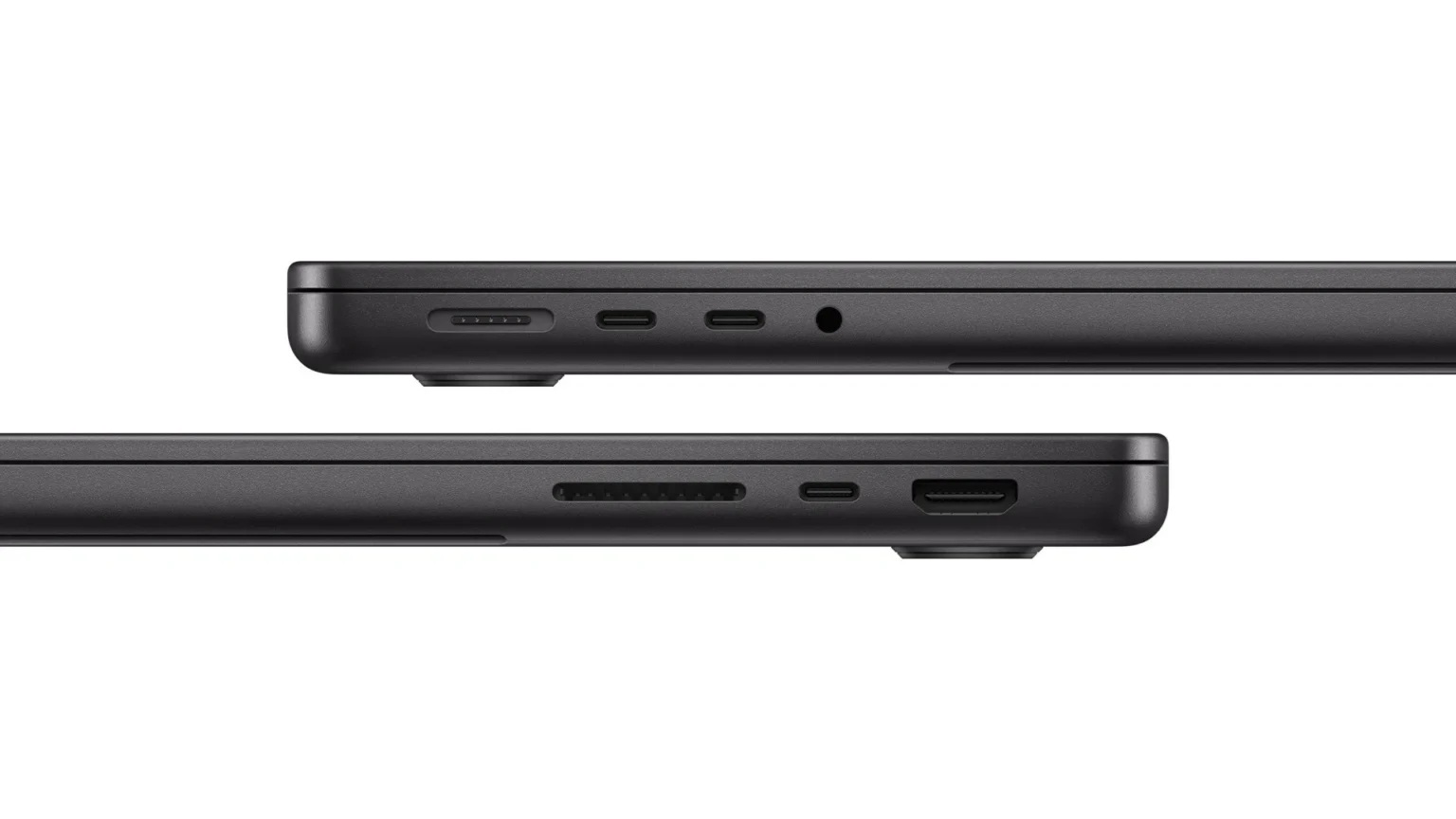
One useful hardware improvement is the addition of another Thunderbolt connection. The new model now includes three Thunderbolt 4 ports, providing more flexibility for external storage, displays, docks and professional accessories.
The rest of the connectivity remains familiar. Users still get HDMI, MagSafe 3 charging, an SDXC memory-card slot and a 3.5mm headphone jack.
Apple's decision to retain these ports continues the shift away from the extremely minimalist approach used on some older MacBook Pro generations.
The Liquid Retina XDR Display Returns
The refreshed MacBook Pro retains Apple's Liquid Retina XDR display, which remains one of the strongest features of the current chassis. The panel can achieve up to 1,600 nits of peak HDR brightness and offers a claimed contrast ratio of 1,000,000:1.
Those specifications make it particularly suitable for HDR video production, photo editing and other colour-sensitive creative workloads. The screen already delivers strong image quality, so Apple appears content to keep it for another generation.
Anyone waiting for the much-rumoured OLED MacBook Pro will therefore need to wait for a future model or another announcement.
No OLED Touchscreen — At Least Not Yet
The absence of an OLED touchscreen is notable because rumours have repeatedly suggested Apple is developing a more substantial MacBook Pro redesign. Such a device could combine OLED display technology with touch input, potentially representing one of the biggest changes to the MacBook Pro in years.
The current M6 refresh clearly is not that product. Apple may be saving a more ambitious redesign for the upcoming Pro and Tell event or a later generation entirely.
For now, the new MacBook Pro remains a conventional non-touch laptop despite the growing number of premium Windows notebooks offering touch-enabled OLED displays.
The 12MP Centre Stage Camera Remains
Above the display is a 12MP Centre Stage camera designed for video calls and conferencing. Centre Stage can automatically adjust framing to keep the user visible as they move around, while Desk View provides an additional perspective of the workspace.
These features have become increasingly useful as remote meetings and hybrid work remain common. The higher-resolution camera also produces considerably better results than the webcams found on older MacBook generations.
Apple has kept the familiar display cutout around the camera rather than introducing another redesign.
Three Microphones And Six Speakers Handle Audio
The MacBook Pro continues to feature a three-microphone array intended to capture clearer voice recordings during calls, meetings and content production. This is paired with Apple's six-speaker sound system.
Spatial Audio support is included, providing a wider and more immersive sound presentation with compatible content. Apple's laptop speakers have consistently been among the strongest in the category, and the M6 refresh does not dramatically change that formula.
For many users, the built-in system remains good enough that external speakers are unnecessary for everyday listening.
macOS 27 Golden Gate Comes Preinstalled
The new MacBook Pro ships with macOS 27 Golden Gate, giving buyers access to Apple's latest desktop operating system immediately.
The combination of new hardware and the latest macOS release should allow Apple to optimise system performance around the M6 from day one. Newer AI and productivity features are also likely to benefit from the improved Neural Engine.
Apple's tight integration between hardware and operating system remains one of the primary advantages of its Mac platform.
Pricing Starts At RM8,299
In Malaysia, the new 14-inch M6 MacBook Pro starts at RM8,299. Students and eligible education customers can purchase the base configuration for RM7,899 through Apple Education.
The price climbs considerably once memory and storage upgrades are added. A fully configured version with maximum memory and storage can reach approximately RM16,849.
That places the machine firmly in premium laptop territory, particularly once higher-capacity configurations are selected.
Configuration Choices Can Become Expensive Quickly
Apple's upgrade pricing means buyers should carefully consider what they actually need. Moving from 16GB to 32GB of memory while also increasing storage to 4TB can dramatically change the final cost.
For professional users who expect to keep the laptop for several years, paying for additional memory may make sense because it cannot be upgraded later. Storage can at least be supplemented using external Thunderbolt drives, giving buyers more flexibility in that area.
A balanced configuration may therefore offer better value than simply selecting every maximum option.
Pre-Orders Begin On 29 October
The refreshed 14-inch MacBook Pro will not be available immediately. Apple plans to open pre-orders at 1:10 AM on 29 October 2026, shortly after the company's Pro and Tell event begins.
That timing is unusual enough to suggest Apple may be coordinating availability with additional product announcements during the event. Customers interested in securing the new model early will need to wait until the pre-order window opens.
General retail availability begins on 6 November 2026.
The Timing Leaves Room For Something Bigger
Announcing the base M6 MacBook Pro before the Pro and Tell event naturally raises questions about what Apple intends to reveal during the event itself. If this refresh were the company's main professional laptop announcement, there would be little reason to release it immediately beforehand.
One possibility is that Apple could introduce higher-end M6 Pro and M6 Max models. Another is that the much-rumoured redesigned OLED MacBook Pro may still be waiting in the wings.
For now, however, those possibilities remain separate from the hardware Apple has officially announced.
An Incremental Upgrade Rather Than A Redesign
The M6 MacBook Pro is ultimately an evolutionary refresh rather than a completely new generation of laptop design. The chassis, display, speakers and much of the connectivity remain familiar.
The biggest improvements come from faster silicon, stronger AI processing and newer wireless technology. An extra Thunderbolt port is a welcome practical addition, but it does not fundamentally change the overall experience.
For someone already using an M5 MacBook Pro, the upgrade may therefore be difficult to justify unless the additional performance is specifically needed.
Older MacBook Owners Have A Stronger Reason To Upgrade
The picture changes significantly for users still running M1, M2 or older Intel-based MacBooks. Several generations of performance, efficiency and connectivity improvements have accumulated since those machines were introduced.
An M1 owner moving to the M6 receives substantially faster graphics, stronger AI processing, newer wireless connectivity, a much better display generation and a more versatile collection of ports.
For those users, the difference should be much more noticeable than the relatively modest year-to-year improvement experienced by recent M-series owners.
Final Thoughts
Apple's refreshed 14-inch MacBook Pro with M6 does not reinvent the company's professional laptop, but it strengthens an already mature platform with faster silicon and improved connectivity. The new 12-core CPU and 12-core GPU deliver up to 30% faster graphics performance than M5, while dual 16-core Neural Engines provide additional horsepower for increasingly important AI workloads.
WiFi 7 and Bluetooth 6 arrive through Apple's N1 chip, while three Thunderbolt 4 ports provide better connectivity for professional users. The familiar Liquid Retina XDR display, six-speaker audio system, 12MP Centre Stage camera and claimed 24-hour battery life remain strong parts of the package.
Starting at RM8,299, the laptop is clearly positioned as a premium machine, and upgrading memory and storage can push the price as high as RM16,849. That makes configuration choices especially important.
The bigger question may be what Apple has deliberately left out. There is still no OLED touchscreen or major chassis redesign, despite continuing rumours surrounding both. With the Pro and Tell event only days away, Apple may simply be keeping its more dramatic MacBook announcements for later.
For now, the M6 MacBook Pro looks like exactly what it sounds like: the familiar 14-inch MacBook Pro, made faster, better connected and more capable for the next generation of AI-heavy professional workloads.











Comments 0