

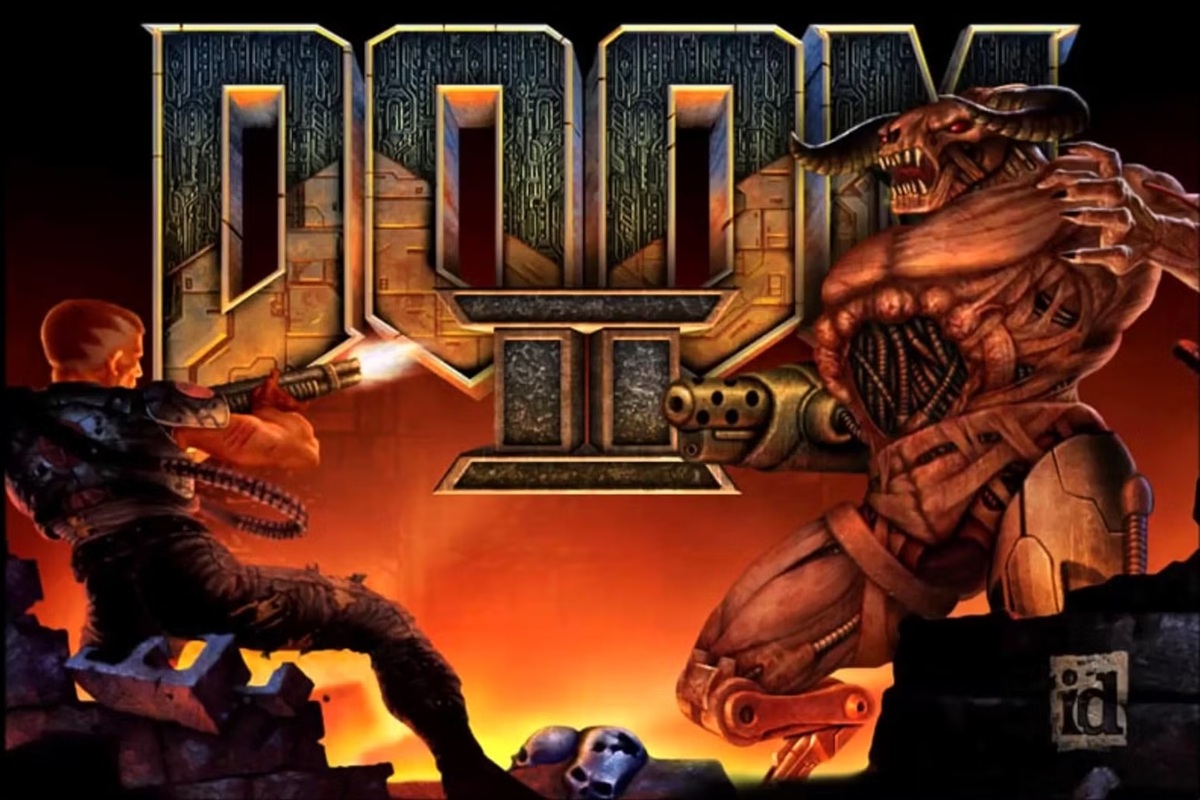
DOOM II: Hell on Earth takes everything that made the original DOOM so memorable and expands it into a larger, tougher, and more chaotic first-person shooter. Released in 1994, the sequel moves the battle away from the Martian moons and brings the demonic invasion directly to Earth, where cities, military installations, industrial complexes, underground facilities, and increasingly hellish environments have been overwhelmed. The familiar fast movement, secret hunting, keycard exploration, and aggressive gunplay remain at the center of the experience, but the scale of the levels and enemy encounters is noticeably greater. DOOM II feels immediately familiar while being far more demanding.
Rather than radically changing the original formula, DOOM II strengthens it through better variety and increased pressure. The weapon arsenal returns almost intact, but the addition of the Super Shotgun gives players one of the most satisfying close-range weapons ever associated with the series. New monsters including the Revenant, Mancubus, Arachnotron, Pain Elemental, Hell Knight, and Arch-vile force players to reconsider tactics that worked reliably in the first game. Larger maps also create more opportunities for ambushes, exploration, monster infighting, and secret areas.
Now playable online through Lemon Web Games, DOOM II can be experienced directly in your web browser as part of a growing collection of classic, retro, action, horror, first-person shooter, and browser-playable games. Its web-based format makes it easy to revisit one of the most important PC shooters of the 1990s without losing the speed, weapon balance, level exploration, resource management, and frantic combat that made it legendary. Whether you grew up playing DOOM II or are discovering Hell on Earth for the first time, the game remains one of the strongest examples of fast and focused FPS design.
Hell Has Reached Earth
The premise of DOOM II begins immediately after the events of the original game. The marine returns to Earth expecting safety, only to discover that the demonic invasion has already spread across the planet. Much of humanity has been killed or displaced, and the remaining survivors need a way to escape before the demons completely overwhelm the world. The player's mission becomes a desperate campaign through occupied Earth and eventually back into Hell itself.
The story remains simple because DOOM II never allows narrative to interrupt the action for long. Instead, the environments create much of the atmosphere as the player moves through military zones, ruined urban spaces, industrial structures, strange fortresses, and increasingly supernatural locations. Earth never feels like a realistic modern city simulation, but the theme gives the sequel a different identity from the lunar bases of the first game. The invasion feels broader and more catastrophic.
The Core DOOM Formula Remains Intact
Movement is still extremely fast, weapons respond instantly, and enemies constantly encourage the player to stay mobile. There is no regenerating health, no cover system, and very little downtime between encounters. Survival depends on movement, map awareness, ammunition management, and knowing which weapon is most appropriate for each situation. The result remains remarkably direct even decades after release.
That directness is one of DOOM II's greatest strengths. The game does not constantly introduce new systems or menus because the existing mechanics are already flexible enough to support increasingly complex levels. Difficulty comes from how enemies, spaces, traps, and resources are combined rather than from adding unnecessary complexity. This gives DOOM II an almost timeless quality.
The Super Shotgun Changes Everything
The single most important addition to the weapon arsenal is the Super Shotgun. It fires two shotgun shells simultaneously and delivers devastating damage at close range, making it ideal for dealing with many of the tougher monsters introduced in the sequel. The slower reload creates a natural rhythm where players need to choose their shots carefully rather than firing continuously. Few weapons in classic gaming feel as satisfying when used effectively.
The Super Shotgun also helps define the personality of DOOM II. The regular shotgun remains useful because it consumes less ammunition and has a faster firing cycle, but the double-barreled alternative provides enormous stopping power when the situation becomes dangerous. Players quickly learn when to use each one. That balance prevents the new weapon from making the original shotgun completely irrelevant.
The Original Arsenal Still Matters
The pistol, shotgun, chaingun, rocket launcher, plasma gun, chainsaw, and BFG 9000 all return from the original DOOM. This means experienced players already understand the basic strengths and weaknesses of the arsenal before encountering the sequel's new enemies. The familiarity allows DOOM II to increase difficulty quickly without forcing players to relearn combat from the beginning. Each weapon still has a clear role.
The chaingun is useful for rapid pressure and weaker enemies, rockets provide heavy area damage, and plasma works especially well against dangerous targets that need to be overwhelmed quickly. The BFG 9000 remains the ultimate emergency weapon when several powerful demons occupy the same area. Because ammunition remains limited, players constantly switch between weapons based on what they can afford to use.
The Revenant Introduces Homing Pressure
The Revenant is one of the most recognizable monsters introduced in DOOM II. Its tall skeletal appearance immediately makes it stand out, but its attacks are what make it especially dangerous. Revenants can launch powerful fireballs, and some of those projectiles can track the player as they move. This creates a different kind of pressure from the straightforward projectiles used by many earlier enemies.
Players need to use corners, pillars, or movement changes to avoid incoming homing attacks. Revenants are especially dangerous in groups because several tracking projectiles can quickly turn an open room into a chaotic obstacle course. Their relatively high damage also means underestimating one can be costly. They became a major part of DOOM combat design in later maps and community-created levels.
Mancubus Turns Open Areas Into Danger Zones
The Mancubus is a large, heavily built demon capable of firing powerful explosive projectiles in repeating patterns. Its size makes it easy to identify, but its wide attacks can control a surprising amount of space. Fighting one in an open room requires attention to the pattern of incoming fire while keeping enough distance to avoid being trapped. Multiple Mancubi can make even a large arena feel cramped.
Despite its strength, the Mancubus can also become useful during monster infighting. Its wide projectile attacks frequently strike nearby demons, causing them to retaliate and creating opportunities for the player to conserve ammunition. Experienced players often manipulate these situations intentionally. DOOM II rewards understanding enemy behavior just as much as raw shooting accuracy.
Arachnotrons Bring Rapid Plasma Fire
Arachnotrons resemble smaller mechanical relatives of the Spider Mastermind and attack using rapid streams of plasma. Their sustained fire can be dangerous because it covers space continuously rather than relying on a single projectile. Players who remain exposed for too long can quickly lose health. Moving between cover points or constantly changing position becomes essential.
These enemies also contribute to the more technological side of DOOM's monster design. Their mechanical lower bodies and energy weapons reinforce the strange combination of science fiction and demonic horror that defines the series. They fit naturally into industrial and hellish environments alike. When several appear together, their overlapping plasma can create extremely intense firefights.
Pain Elementals Fill the Air With Lost Souls
The Pain Elemental looks similar to a Cacodemon but behaves very differently. Instead of relying mainly on its own direct projectile attack, it continuously creates Lost Souls that rush toward the player. If left alive for too long, a single Pain Elemental can fill the surrounding area with additional flying enemies. This makes it a high-priority target in many encounters.
The challenge becomes especially significant in open spaces where Lost Souls have plenty of room to approach from multiple angles. Players often need to focus on the Pain Elemental before dealing with everything it has already spawned. This introduces an enemy that becomes more dangerous over time if ignored. That design adds another strategic layer to target selection.
The Hell Knight Creates a Middle Ground
The Hell Knight is essentially a less durable relative of the Baron of Hell. It uses similar projectile and melee attacks but requires fewer resources to defeat, making it easier for level designers to include several of them within ordinary combat encounters. This creates a useful middle ground between common enemies and the much tougher Barons. Groups of Hell Knights can still absorb significant amounts of ammunition.
Their introduction also allows later levels to use heavyweight demons more frequently without every encounter becoming excessively slow. Players learn to recognize them as dangerous but manageable opponents. The Super Shotgun becomes particularly useful against them because strong close-range hits can reduce their durability quickly. This interaction helps demonstrate how the sequel's new weapon and new monsters complement one another.
The Arch-vile Changes the Rules of Combat
Few enemies in DOOM II create as much immediate tension as the Arch-vile. It can attack the player with a powerful flame-based ability that requires breaking line of sight to avoid taking major damage. More importantly, it can resurrect many defeated monsters, turning previously cleared rooms into active battlefields again. This ability fundamentally changes how players approach encounters where an Arch-vile is present.
The Arch-vile usually becomes the highest-priority target because allowing it to survive can make the fight increasingly difficult. Players need to locate it quickly, use cover effectively, and often spend valuable ammunition eliminating it before dealing with other enemies. Its distinctive sound can create immediate panic even before the monster becomes visible. This is one of the strongest examples of enemy design altering the entire tactical situation.
Larger Maps Create More Complex Exploration
DOOM II generally uses larger and more elaborate maps than the original game. Some levels contain sprawling interconnected areas, multiple key objectives, hidden routes, large arenas, and complicated loops that require players to understand the environment rather than simply move forward. The increased scale allows for more ambitious combat encounters but can also make navigation more challenging. The automap becomes especially useful during these sections.
Larger maps also provide more opportunities for secrets and optional areas. A suspicious wall, unusual texture, hidden switch, or unexplored corridor can reveal ammunition, health, armor, weapons, or shortcuts. Experienced players are often rewarded for investigating unusual parts of the environment. This exploration helps balance the constant combat with periods of discovery.
Keycards and Skull Keys Still Structure Progress
Colored keys remain an important part of DOOM II's level design. Players may encounter locked red, blue, or yellow doors long before finding the key required to open them. This creates a natural structure where different portions of the level become accessible gradually. Remembering where locked doors were located becomes part of navigating effectively.
Keys also provide simple objectives without requiring modern mission markers. Players understand that finding the correct key will reveal additional progress, but they still need to explore and solve the route themselves. This approach keeps the player engaged with the actual environment. The game rarely needs to explain what to do because the level architecture communicates the objective clearly.
Monster Infighting Becomes Even More Useful
With a larger enemy roster, monster infighting becomes even more entertaining in DOOM II. Different demons can accidentally damage one another and become distracted by their own battles, giving the player an opportunity to reposition or conserve ammunition. Larger levels often provide enough space to deliberately manipulate these conflicts. A single well-positioned projectile can sometimes trigger chaos between several powerful monsters.
Learning which enemies can be encouraged to fight each other becomes part of advanced play. Instead of viewing every demon as a target that must immediately be killed, experienced players can sometimes use one group against another. This is especially useful on higher difficulty settings where ammunition and health become more valuable. The battlefield can occasionally be turned into its own weapon.
Resource Management Becomes More Important
DOOM II increases the number of powerful monsters without giving players unlimited ammunition. This means weapon choice matters even more than before. Using rockets or plasma against every small enemy can leave the player dangerously underprepared for the next major encounter. Conserving stronger ammunition while using shells or bullets efficiently becomes an important habit.
Health and armor require similar attention. Picking up a large medikit while only slightly injured may waste potential healing that could have been useful later. Experienced players often remember the locations of valuable pickups and return when needed. Secret areas become particularly important because they can contain resources that completely change the difficulty of a later fight.
The Super Shotgun Creates a New Combat Rhythm
Much of DOOM II's moment-to-moment gameplay can revolve around the rhythm of the Super Shotgun. Fire, reposition, reload, fire again, and use movement to avoid taking damage while the weapon prepares the next blast. This creates a deliberate cadence that feels very different from the continuous pressure of the chaingun or plasma gun. The weapon encourages confidence without rewarding carelessness.
Against medium-strength enemies, the Super Shotgun becomes one of the most efficient choices available. Its heavy damage can quickly remove threats before they consume too much health or ammunition. However, the long reload means missing at close range can be dangerous. The combination of enormous power and temporary vulnerability is what makes it so satisfying.
Urban Levels Give DOOM II a Different Identity
Because the invasion has reached Earth, several levels attempt to suggest cities, streets, buildings, and other human environments. The technology of 1994 obviously limits how realistically those places can be represented, but the idea creates a noticeable contrast with the Martian bases of the original game. Some maps feel more open, while others use large structures and unusual architecture to imply ruined urban spaces. This gives the campaign its own visual character.
The abstract nature of the engine also means these areas never behave like conventional realistic environments. A building may exist primarily because it creates an interesting combat space rather than because its architecture makes practical sense. That freedom gives DOOM II some memorable and strange maps. The environment is designed first and foremost around gameplay.
The Campaign Is One Continuous Journey
Unlike the episode structure of the original registered DOOM, DOOM II presents a longer continuous sequence of maps. Players move through the campaign without selecting separate episodes, making the journey feel more like one extended war across Earth and Hell. The progression allows enemy complexity and map scale to increase gradually across the entire game. It also gives the final levels a stronger sense of culmination.
This continuous structure suits the larger scope of the sequel. The story follows the marine's attempt to help humanity escape, confront the source of the invasion, and eventually enter Hell to stop it directly. Individual maps may still feel very different from one another, but the broader journey connects them. The campaign becomes a long escalation rather than several separate chapters.
The Icon of Sin Provides a Memorable Finale
The final encounter introduces the Icon of Sin, one of the most recognizable bosses in the classic DOOM series. Instead of functioning like a traditional enemy that simply moves around the arena, the encounter revolves around surviving waves of monsters while attacking a specific target hidden within a massive demonic structure. The fight requires movement, timing, and understanding how to reach the correct firing position. Its unusual mechanics make it dramatically different from earlier boss encounters.
The arena can quickly become chaotic because additional monsters continue appearing throughout the battle. Players need to manage those threats while still concentrating on the actual objective. The result is a finale that feels appropriately overwhelming for a game built around escalating combat. Defeating the Icon of Sin provides a fitting conclusion to the campaign's journey through Hell on Earth.
Difficulty Settings Dramatically Change Encounters
DOOM II includes several difficulty settings that alter how demanding the campaign becomes. Lower settings make the experience more forgiving, while higher options increase the number and placement of enemies. Because the maps were designed around different enemy populations, changing difficulty can significantly alter how familiar spaces feel. A room that seems manageable on one setting can become extremely dangerous on another.
Higher difficulty also increases the importance of efficient resource management and movement. Players need to take advantage of monster infighting, conserve ammunition, and avoid unnecessary damage whenever possible. Familiarity with secrets and level layouts becomes increasingly useful. This gives the campaign substantial replay value beyond simply completing it once.
Secrets Reward Careful Observation
Hidden areas remain an essential part of DOOM II. Some secrets contain ammunition or health, while others may reveal powerful weapons earlier than expected. Finding them often requires noticing unusual wall textures, suspicious architecture, hidden switches, or areas visible from another part of the map. The game encourages players to investigate rather than treating every corridor as simple scenery.
Secret hunting also creates another form of mastery. Players can complete a level normally and later return to search for everything they missed. Learning where important secrets are located can dramatically improve future runs, especially on harder difficulties. The hidden content helps individual maps remain interesting even after their main routes are familiar.
Sound Design Helps You Survive
Enemy sounds often reveal danger before anything appears on screen. The distinctive noises of Revenants, Arch-viles, Mancubi, and other monsters can immediately tell experienced players what kind of threat is nearby. This allows the player to prepare before entering a new area or opening a suspicious door. Audio becomes an important part of situational awareness.
Weapon sounds provide equally useful feedback. The Super Shotgun's heavy blast, rocket explosions, plasma fire, and BFG discharge all communicate their power immediately. These sounds contribute to the identity of each weapon while reinforcing the speed of combat. DOOM II demonstrates how strong sound design can make simple visual mechanics feel much more dramatic.
The MIDI Soundtrack Drives the Action
DOOM II features another memorable collection of MIDI tracks that range from energetic metal-inspired pieces to slower and more atmospheric compositions. The music helps individual levels develop their own personality and keeps long combat sequences feeling energetic. Some tracks encourage aggressive play, while others make quieter exploration feel unsettling. The soundtrack is closely connected with the overall identity of classic DOOM.
Because the music is delivered through MIDI, its exact sound can vary depending on the hardware or playback system being used. This became part of the nostalgic experience for many PC players, as different sound cards could produce noticeably different interpretations. Despite those variations, the compositions remain instantly recognizable to longtime fans. The soundtrack continues to be celebrated alongside the gameplay itself.
DOOM II Became a Foundation for Modding
DOOM II became particularly important to the modding community because its expanded monster roster and complete weapon set provided an excellent foundation for custom content. Thousands of maps, megawads, total conversions, gameplay modifications, and community projects have been created using DOOM II as their base. Many creators specifically target DOOM II rather than the first game because of the broader collection of enemies and resources available. This helped the sequel remain active for decades.
Some community-created maps are significantly larger and more complicated than anything in the original commercial campaign. Others deliberately recreate the compact style of early DOOM levels while using modern mapping techniques. Entire new worlds and gameplay systems have been built from the same basic technology. This enormous creative ecosystem is one of the strongest reasons DOOM II remains relevant.
Source Ports Expanded the Possibilities
Modern source ports allow DOOM II to run on current hardware while offering a wide range of optional improvements. Some focus on accurate recreation of the original DOS experience, while others support higher resolutions, advanced rendering, modern controls, scripting, custom gameplay systems, and extensive mod compatibility. Players can therefore choose how traditional or modern they want the experience to feel. The underlying combat remains recognizable across all of these approaches.
This flexibility has made DOOM II unusually durable. Few games from 1994 can be experienced through such a wide variety of interpretations while still maintaining an active community. Players can enjoy a nearly original presentation one day and a heavily modified conversion the next. The game has effectively become both a classic FPS and a long-term platform for experimentation.
Speedrunning Reveals Another Layer of DOOM II
DOOM II has a strong speedrunning tradition because its fast movement and interconnected maps allow players to discover highly optimized routes. Skilled runners use advanced movement, enemy manipulation, precise timing, and detailed map knowledge to complete levels dramatically faster than normal play would suggest. Some techniques exploit the physics and level geometry in ways that casual players may never encounter. Watching an expert run can make familiar maps look completely different.
Speedrunning also demonstrates how much depth exists beneath the simple controls. The same movement system used by beginners to dodge fireballs can be pushed to extraordinary extremes by experienced players. Route planning becomes almost mathematical as every second is optimized. This gives DOOM II another form of replayability completely separate from traditional campaign progression.
Why DOOM II Still Feels Fast Today
Many games from the early 1990s can feel slow or awkward when revisited, but DOOM II avoids much of that problem because movement and shooting remain extremely responsive. The marine accelerates quickly, weapons fire immediately, and enemies communicate their attacks clearly. There is very little delay between recognizing a threat and responding to it. This responsiveness keeps the game feeling energetic.
The absence of unnecessary animation also helps. There are no lengthy weapon inspections, complicated reload systems, or cinematic takedowns interrupting the flow. Combat remains focused entirely on movement, positioning, and shooting. That simplicity allows DOOM II to feel surprisingly modern in terms of pacing despite its unmistakably retro presentation.
The Sequel Is Harder Without Becoming Completely Different
DOOM II succeeds because it increases difficulty primarily through stronger combinations rather than replacing the original mechanics. New enemies introduce fresh problems, larger maps create more complex navigation, and encounters use greater numbers of monsters. However, players still rely on the same basic skills learned in the first game. This creates a natural sense of progression between the two titles.
The game assumes players already understand how DOOM works and therefore wastes little time repeating the original introduction. Powerful enemies appear earlier, complicated layouts arrive more quickly, and ammunition decisions become more important. Experienced players can immediately feel that the sequel expects more from them. Newcomers can still learn naturally, but the difficulty curve is noticeably more demanding.
Why DOOM II Still Feels Fun
DOOM II remains enjoyable because every major system supports fast and deliberate combat. Movement is responsive, weapons have clear strengths, enemies create different tactical problems, and levels reward both exploration and aggression. The Super Shotgun alone gives firefights a unique rhythm, while new monsters prevent players from relying on exactly the same strategies used in the original. These additions expand the experience without weakening its simplicity.
The game also rewards improvement extremely well. Better map knowledge makes navigation faster, stronger movement reduces damage, smarter ammunition management improves survival, and understanding enemy behavior creates opportunities for monster infighting. Experienced players can approach the same level very differently from beginners. That depth continues to make repeat play worthwhile.
Playing DOOM II Online Today
Through Lemon Web Games, DOOM II can now be played directly in your web browser with no downloads or setup required. Features of the web-based version include:
• Browser-based play for quick access
• No installation required
• Classic fast-paced first-person shooter gameplay
• The iconic Super Shotgun alongside the shotgun, chaingun, rocket launcher, plasma gun, chainsaw, and BFG 9000
• New enemies including Revenants, Mancubi, Arachnotrons, Pain Elementals, Hell Knights, and Arch-viles
• Large maps featuring secrets, keycards, skull keys, traps, environmental hazards, and interconnected exploration
• Accessible play through Lemon Web Games
Playing DOOM II online today makes it easy to revisit one of the most important sequels in first-person shooter history. The browser format allows players to jump directly into demon-infested Earth while retaining the speed, weapons, resource management, exploration, and combat rhythm that define the original experience. Whether you are completing the campaign for the first time or returning to familiar maps, DOOM II remains a highly playable and rewarding shooter.
Who Should Play DOOM II
• Players who enjoy classic first-person shooters
• Fans of DOOM 1993 looking for larger maps and tougher enemies
• Players who enjoy fast movement, aggressive combat, and resource management
• Fans of the Super Shotgun and traditional retro FPS weapon design
• Players who enjoy secret hunting, keycards, maze-like maps, and monster infighting
• Anyone looking for a browser-playable classic PC shooter with enormous replay value
DOOM II is particularly suitable for players who enjoy shooters where skill and map knowledge matter more than character upgrades or complicated progression systems. It is also essential for anyone interested in the history of PC gaming, because so many later FPS games and community modifications were influenced by its mechanics and design. Despite its age, the game remains immediately understandable and remarkably responsive.
Play DOOM II Online Now
DOOM II is now available to play online through Lemon Web Games, giving players an easy way to experience the classic Hell on Earth campaign directly in the browser. The familiar DOOM formula returns with larger maps, more dangerous enemy combinations, new demons, and the legendary Super Shotgun, creating a sequel that feels both recognizable and substantially more intense. Every level encourages players to move quickly, search carefully, and choose weapons intelligently while surviving increasingly chaotic encounters.
For players exploring the Lemon Web Games library, DOOM II represents one of the defining games of the classic PC FPS era. The expanded monster roster gives combat more variety, while the larger levels create more opportunities for secrets, ambushes, tactical movement, and exploration. Whether you are hunting Arch-viles through a crowded arena, clearing Revenants with the Super Shotgun, or discovering another hidden room behind an unusual wall, the game constantly rewards awareness and experience.
Final Thoughts
DOOM II remains one of the strongest examples of how to create a successful sequel without abandoning what made the original game work. It keeps the same fast movement, responsive weapons, resource management, secret hunting, and aggressive combat while introducing larger levels, tougher encounters, new enemies, and one of the most iconic shotguns in gaming history. These additions make the sequel feel more demanding without making it unnecessarily complicated. The core experience remains pure DOOM.
Its greatest strength is the way every new element expands tactical possibilities. Revenants introduce tracking projectiles, Mancubi control open spaces, Pain Elementals create additional enemies, and Arch-viles can completely transform encounters by resurrecting fallen demons. The Super Shotgun gives players the perfect answer to many of those threats, but ammunition and positioning still matter. This constant balance between power and danger keeps combat exciting throughout the campaign.
Through Lemon Web Games, DOOM II can be enjoyed directly in the browser as one of the defining first-person shooters of the 1990s. It remains essential for fans of retro games, classic PC gaming, fast FPS combat, and anyone interested in understanding why DOOM continues to influence game design decades later. For players looking for bigger levels, deadlier monsters, hidden secrets, relentless action, and the unmistakable sound of the Super Shotgun, DOOM II: Hell on Earth remains a classic that still deserves to be played.











Comments 0