

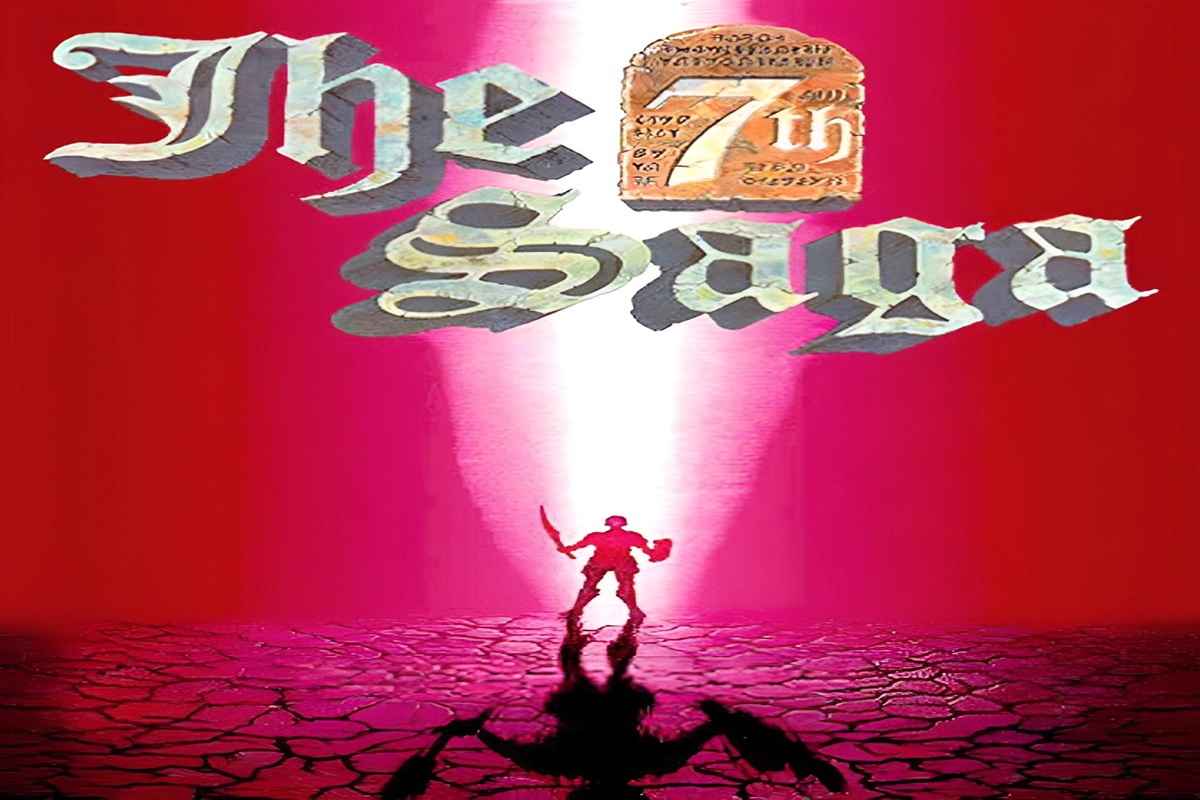
The 7th Saga is a classic role-playing adventure remembered as much for its unusual ideas as for its famously demanding difficulty. Released in 1993, the game places players in the fantasy world of Ticondera, where seven apprentices have spent years training under the powerful King Lemele. Their final task is to travel across the world and recover seven mystical Runes, each possessing extraordinary powers that could determine the future of the kingdom. Rather than assigning players a predetermined hero, the adventure begins by allowing them to choose one of seven very different characters, immediately giving the journey a personal identity.
What makes The 7th Saga especially interesting is how many of its systems depart from the expectations of other console RPGs from the same era. Enemies are visible through a radar-like crystal ball before battles begin, party size is limited to only two characters, and the remaining apprentices continue travelling through the world independently after the quest begins. These rival adventurers may become trusted companions, challenge the player for possession of a Rune, or interfere with progress depending on how events unfold. Combined with difficult enemies, limited resources, dangerous bosses, and careful character development, these mechanics create an adventure where planning and persistence matter just as much as raw experience levels.
Now playable online through Lemon Web Games, The 7th Saga brings its challenging fantasy journey directly into modern web browsers without requiring the original console. Players can choose their apprentice, explore Ticondera, search towns and dungeons for information, battle dangerous monsters, collect the seven Runes, and experience one of the more distinctive RPGs of the 16-bit era. The browser-based version also provides an accessible way to revisit a game whose reputation has grown considerably among players interested in difficult old-school RPG design. Whether you played it decades ago or are discovering it for the first time, The 7th Saga remains an unusual adventure that rewards patience, preparation, and a willingness to learn from defeat.
Seven Apprentices, Seven Very Different Adventures
The adventure begins at King Lemele's castle, where seven apprentices have completed years of training. Instead of automatically placing players in control of a single protagonist, The 7th Saga allows one of these seven characters to become the hero of the journey. Each apprentice has different statistics, equipment options, magical abilities, strengths, and weaknesses, meaning the opening character choice can dramatically affect how difficult certain parts of the game become. It is one of the most important decisions players make.
Kamil is a balanced human knight who combines respectable physical strength with useful magic. His versatility makes him relatively approachable because he can handle several roles without being completely dependent on a companion. Olvan is a powerful dwarf warrior with excellent durability and strong physical attacks, making him particularly effective when direct combat is required. However, his magical abilities are much more limited, requiring players to approach certain situations differently.
Esuna is an elven spellcaster who relies heavily on magic rather than physical power. She begins more vulnerable than the strongest warriors but gains access to useful offensive and support spells that become increasingly valuable as her magical capabilities develop. Valsu is an elderly priest whose strongest qualities lie in healing and defensive magic, making survival easier but requiring a more patient combat style. Lejes represents a much darker magical approach, specializing in destructive spells that can inflict heavy damage while offering a very different personality from the more heroic apprentices.
Lux is perhaps the most immediately unusual member of the group. As a powerful mechanical warrior, he possesses tremendous physical durability and offensive strength but has very different limitations from ordinary human characters. Wilme is another distinctive choice, relying on exceptional physical characteristics and an aggressive combat style rather than conventional equipment and magic. Because the seven heroes play so differently, beginning another adventure with a new apprentice can significantly change how players approach the same world.
Choosing a Companion Changes the Journey
The 7th Saga limits the active party to only two characters, which makes choosing a companion much more important than in RPGs where four or more heroes can cover every possible role. The six apprentices not selected at the beginning continue travelling independently and can be encountered in towns throughout the adventure. Some may offer to join the player, while others may refuse or become hostile. This creates a surprisingly dynamic relationship between characters who began their journey as fellow students.
A warrior-focused protagonist may benefit greatly from recruiting a healer or powerful spellcaster. Conversely, a magic-heavy hero can become much more survivable when paired with a durable physical fighter. Because only one companion can accompany the player, every partnership involves compromises. There is no perfect group capable of dominating every situation without preparation.
Changing companions is also possible under certain circumstances, allowing players to reconsider their strategy as the adventure progresses. However, switching characters can create additional challenges because companions may not always be developed exactly as the player expects. Their statistics, equipment, and abilities become part of the decision. A seemingly powerful ally can still require careful adjustment before becoming truly effective.
The two-character limit also makes individual defeat more dangerous. Losing one member effectively removes half of the party's combat capability, and some battles can quickly become impossible if the remaining hero lacks the appropriate abilities. Healing, defensive magic, equipment choices, and inventory management therefore carry greater importance. The small party system gives combat a more intimate and unforgiving quality.
The Search for the Seven Runes
The central objective of the adventure is to recover seven ancient Runes scattered across Ticondera. These artifacts are not merely story objects collected and forgotten inside an inventory. Each Rune possesses useful powers that can assist the player during exploration and battle. Acquiring them gradually expands the party's abilities while also pushing the story into increasingly dangerous regions.
The Runes are located in different parts of the world and are often protected by powerful enemies or connected to important events. Players must gather information from townspeople, explore dungeons, defeat bosses, and sometimes deal with rival apprentices before securing them. The search provides a clear structure while still allowing the world to feel mysterious. Progress often depends on understanding clues rather than simply following an obvious marker.
Some Runes provide restorative benefits, while others offer useful combat effects or abilities that influence exploration. Deciding when to use these powers becomes another strategic consideration. They can be particularly valuable during difficult boss battles where ordinary items and spells may not be enough. Their usefulness makes recovering each Rune feel meaningful rather than purely ceremonial.
Possessing a Rune can also make the player a target. Other apprentices are searching for the same artifacts and may decide that challenging the player is the easiest way to obtain one. This creates tension whenever a rival appears. Instead of being passive story characters, the other apprentices remain competitors participating in the same quest.
Rival Apprentices Can Become Dangerous Opponents
One of The 7th Saga's most unusual mechanics is the possibility of fighting the other apprentices. These characters are not ordinary monsters generated randomly inside a dungeon. They are the same heroes players could have chosen at the beginning, complete with powerful statistics, spells, equipment, and combat abilities. Encountering one as an enemy can therefore become considerably more dangerous than many traditional boss battles.
Rival fights frequently occur because both characters are pursuing the same Rune. An apprentice may confront the player and demand the artifact, forcing a battle if neither side is willing to surrender. These encounters can be especially stressful because losing may result in the rival taking the Rune. The player must then find the character again and attempt to recover it.
The Western release is particularly infamous for how difficult these rival encounters can become. Character progression was altered in a way that reduced the player's stat growth compared with the original Japanese version, while rival apprentices remained extremely powerful. As a result, opponents who appear to be ordinary characters can suddenly overwhelm an insufficiently prepared party. These battles contributed heavily to The 7th Saga's reputation as one of the tougher RPGs of its era.
The system nevertheless creates a type of tension rarely seen in contemporary console RPGs. Meeting another apprentice does not automatically mean gaining a new ally or receiving friendly dialogue. The player must consider the relationship, the current objective, and whether confrontation might occur. This makes the seven-character structure much more meaningful than a simple character-selection screen.
The Crystal Ball Radar Changes Exploration
The 7th Saga introduces a distinctive overworld radar displayed through the player's crystal ball. Nearby enemies appear as moving markers, allowing players to see potential encounters before they occur. Other important objects and locations can also become visible, making the system useful for both navigation and combat preparation. For a console RPG released in the early 1990s, this was a surprisingly unusual approach.
Because monsters are visible on the radar, battles do not feel entirely random. Players can sometimes adjust their path to avoid an approaching enemy or deliberately move toward one when additional experience is needed. This creates a small tactical layer during exploration. It also reduces the frustration of completely unpredictable encounters while preserving the danger of travelling through hostile areas.
Avoiding combat indefinitely is rarely a good strategy, however. Character progression is extremely important, and entering a new region while underleveled can lead to devastating defeats. The radar therefore gives players a choice without removing the need to fight. Skilled players learn when avoiding an encounter is sensible and when additional training is necessary.
The system also reinforces the feeling of travelling through dangerous territory. Watching enemy markers approach on the crystal ball can create genuine tension, particularly when the party is low on health or magic. Reaching a town while several monsters are closing in can feel surprisingly rewarding. It is a simple mechanic that gives overworld exploration a personality of its own.
Turn-Based Combat with a Distinctive Presentation
Battles use a traditional turn-based system, but The 7th Saga presents combat from a visually unusual perspective. The player's characters appear prominently in the foreground while enemies stand farther into the battlefield. Attack animations move characters toward their targets, giving fights more visual movement than a completely static command screen. The presentation helps distinguish the game from many other RPGs of the same period.
Players can attack physically, cast spells, defend, use items, or activate Rune abilities depending on what is available. The basic commands are straightforward, but enemy strength means careless decisions can quickly become expensive. Even ordinary monsters may inflict substantial damage when players enter a region without sufficient preparation. Boss battles naturally demand even greater attention.
Defending is especially useful because it can substantially reduce incoming damage while preparing the character for a stronger physical attack afterward. Understanding when to defend rather than attack continuously can greatly improve survival. This mechanic gives physical fighters another tactical option beyond repeatedly selecting the standard attack command. Patient players can use it to control the rhythm of difficult battles.
With only two party members, every turn becomes important. A healer spending a turn attacking may mean nobody is available to restore health after an unexpected critical hit. Similarly, using too much magic against ordinary enemies can leave the party dangerously depleted before reaching a dungeon boss. Resource management therefore becomes central to successful combat.
Magic Can Define an Entire Character Build
Magic plays a major role throughout The 7th Saga, particularly for characters such as Esuna, Valsu, and Lejes. Offensive spells allow magical characters to damage enemies that might otherwise withstand ordinary physical attacks. Healing magic becomes increasingly important as enemies grow stronger, while support spells can dramatically improve a party's chances during difficult encounters. Choosing a magically capable companion can completely change the rhythm of combat.
Spell effectiveness depends heavily on the character using it. A strong warrior cannot simply replace a dedicated caster by learning a few abilities, and physical fighters generally rely much more on equipment and raw statistics. This specialization makes party composition meaningful. Pairing two characters with overlapping weaknesses can create unnecessary difficulty.
Magic points are also limited, particularly during longer dungeon expeditions. A spell that makes an ordinary encounter easy may still be wasteful if several more battles must be completed before reaching safety. Players need to consider whether immediate convenience is worth consuming resources that could be essential later. This is especially important when healing opportunities are limited.
The strongest spells become increasingly impressive as the adventure progresses. Powerful offensive magic can damage groups or devastate major enemies, while advanced healing and defensive abilities can rescue a party that would otherwise be defeated. Developing a spellcaster therefore requires patience but can provide enormous benefits. The game rewards players who understand what each character is designed to do.
Equipment Is Essential for Survival
Weapons, armor, shields, and other equipment upgrades are fundamental to progression. Entering a new town usually means checking local shops immediately to determine whether stronger gear has become available. Even a modest improvement can have a noticeable effect because enemies regularly hit hard. Falling behind on equipment can make an already difficult region feel almost impossible.
Different characters have different equipment restrictions. Warriors can generally use heavier weapons and armor, while magical characters may have access to lighter gear. Lux and Wilme follow even more unusual equipment rules because of their unique physical forms. These differences further reinforce the identity of each apprentice.
Money therefore becomes extremely important. Players frequently need to decide whether to purchase a powerful weapon, stronger defensive equipment, healing supplies, or magical restoration items. Buying everything immediately may not be possible. Fighting additional enemies to earn gold can sometimes be just as necessary as gaining experience.
Equipment progression also provides a satisfying feeling of growth. An enemy that barely survives several attacks with an old weapon may become much easier after purchasing a stronger replacement. Better armor similarly reduces the danger of regions that previously felt overwhelming. The constant relationship between exploration, combat, money, and equipment forms an important part of the game's RPG loop.
Towns Provide Safety, Information, and Direction
Towns act as essential resting points during the journey across Ticondera. They provide inns where the party can recover, shops selling equipment and supplies, and residents who offer information about nearby dangers and objectives. Reaching a new settlement often feels like a major achievement after surviving a difficult region. Players can finally restore resources and prepare for whatever comes next.
Talking to townspeople is particularly important because the game does not constantly direct players toward a highlighted destination. Important clues may be hidden inside ordinary conversations. A resident might mention a nearby cave, unusual event, missing person, or dangerous creature. Paying attention to these details can prevent considerable confusion.
Towns are also where rival apprentices are frequently encountered. Seeing another member of Lemele's group can lead to conversation, recruitment, or confrontation depending on circumstances. This makes settlements more than simple shopping locations. They become places where the larger competition between apprentices continues to develop.
Returning to previously visited towns can sometimes reveal changed dialogue or new information after important events. The world reacts modestly to the player's progress, helping the adventure feel connected rather than completely static. While the storytelling is relatively simple by modern standards, these small changes contribute to the atmosphere of an ongoing journey.
Dungeons Reward Preparation and Patience
Dungeons are where The 7th Saga becomes particularly demanding. Caves, towers, ruins, castles, and other dangerous locations contain stronger enemies, branching routes, treasure chests, and important objectives. Unlike overworld travel, escaping from a dungeon can take considerable time once the party has ventured deeply inside. Entering without enough supplies can therefore become a serious mistake.
Exploration often involves searching multiple paths before finding the correct route. Treasure may appear along optional branches, rewarding players willing to take additional risks. However, every unnecessary encounter consumes health and magic. Deciding whether another chest is worth the danger becomes part of dungeon strategy.
The crystal ball remains useful because nearby enemies can still be tracked in many areas. This allows players to anticipate encounters and occasionally maneuver around unnecessary fights. Narrow corridors reduce the available space, though, making avoidance much more difficult than on the overworld. Some battles simply cannot be escaped through careful movement.
Boss encounters typically appear after substantial exploration, meaning players need to preserve enough resources to survive the final fight. Using every powerful spell against ordinary enemies may make the approach easier but leave the party helpless against the actual objective. This creates a classic RPG tension between surviving the present and preparing for what may be waiting ahead.
Difficulty Defines the North American Experience
The 7th Saga is famous for its difficulty, particularly in the North American release. The original Japanese game, known as Elnard, already required careful character development, but balance changes made the localized version significantly more demanding. Player-controlled characters gain fewer statistics from leveling than they did in the original release. This seemingly small adjustment has major consequences as the adventure progresses.
Enemies become increasingly powerful while the player's growth remains comparatively restrained. As a result, simply following the storyline without additional training can lead to situations where ordinary monsters suddenly become overwhelming. Grinding for experience and money becomes a regular part of progression. Players need to recognize when the game is signalling that their current level is insufficient.
Rival apprentices are particularly notorious because their strength can exceed what players expect from characters supposedly following the same rules. Fighting one without preparation can lead to an extremely quick defeat. Because these rivals may carry important Runes, losing can create additional work before progress continues. These encounters are among the game's most memorable challenges.
The difficulty can certainly feel unfair at times, especially for players accustomed to more forgiving modern RPGs. However, overcoming a region that initially appeared impossible can also be extremely rewarding. Learning which enemies are dangerous, upgrading equipment, adjusting strategy, and returning stronger creates a powerful sense of accomplishment. The game's reputation is intimidating, but persistence genuinely makes a difference.
Grinding Is Part of the Adventure
Players entering The 7th Saga should expect to spend time deliberately fighting enemies for experience and gold. Unlike RPGs where ordinary story progression naturally keeps the party at an appropriate level, this game frequently rewards additional training. Moving directly from one objective to the next can leave characters dangerously underpowered. Taking time to fight near a town is often the safer approach.
The radar system makes grinding somewhat more manageable because players can deliberately approach enemy markers rather than waiting for purely random encounters. A nearby town also provides somewhere to restore health and magic between training sessions. This creates a relatively straightforward loop of fighting, recovering, and returning stronger. Repeating that process can transform an impossible area into a manageable one.
Gold earned during these battles is equally valuable. Stronger equipment can sometimes improve survival more dramatically than another character level. Players therefore benefit from training even when their experience progress appears slow. Every battle contributes toward both statistical growth and future purchases.
Grinding naturally will not appeal to everyone. Players who prefer continuous story progression may find the slower pacing frustrating. However, those who enjoy old-school RPG development may appreciate the visible improvement that follows sustained preparation. The 7th Saga makes character growth feel earned rather than automatic.
Different Starting Characters Create Different Difficulty Curves
Because the seven protagonists possess such different strengths, the difficulty of the opening hours can vary substantially depending on the initial choice. A durable physical fighter can survive situations that might immediately threaten a fragile spellcaster. Conversely, a magical character may have access to abilities that simplify enemies a warrior struggles to damage efficiently. There is no single experience shared by every player.
Kamil's balanced nature can make him a reasonable introductory character because he is not completely dependent on any one combat style. Olvan's physical durability offers another comparatively straightforward approach, especially for players comfortable relying on equipment and direct attacks. More specialized characters can demand stronger understanding of the game's systems. Their weaknesses must be compensated through strategy and careful companion selection.
Starting as a healer such as Valsu produces a particularly unusual RPG experience. Survival magic becomes readily available, but battles may take longer because offensive capability is more limited. A destructive caster such as Lejes creates the opposite problem, delivering powerful magical damage while requiring greater care when enemies close the distance. These contrasting approaches dramatically change how the same locations feel.
The choice also influences potential companions because the selected character is removed from the pool of wandering apprentices. A pairing that works extremely well in one playthrough may not even be possible as an early option in another. This encourages experimentation across multiple adventures. For dedicated RPG players, testing different character combinations becomes part of the game's long-term appeal.
A World Built Around Exploration Rather Than Constant Guidance
The 7th Saga comes from an era before quest markers and constantly updated objective lists became standard features. Players are expected to talk to people, remember clues, explore suspicious locations, and determine the next step with limited assistance. This can make the journey feel mysterious, but it can also lead to moments of uncertainty. Paying attention is essential.
The world map connects settlements, caves, towers, and other important locations across several regions. Reaching a new area often requires solving a problem or finding a route described by someone encountered earlier. The game gradually expands the scope of the journey as new objectives become available. This creates a genuine feeling of travelling across a large fantasy world.
Exploration can occasionally lead to locations before players are ready for them. Enemy strength usually provides an immediate warning that the party has entered dangerous territory. Retreating is sometimes the smartest choice. The game rarely protects players from their own curiosity.
This design makes discovery more rewarding. Finding the correct dungeon after interpreting a clue feels different from simply following an icon on a map. Players become more involved in understanding the geography and relationships between towns. The experience demands attention but rewards those willing to engage with the world.
An Atmospheric Fantasy Presentation
Visually, The 7th Saga uses the colorful sprite artwork and detailed backgrounds associated with early 16-bit RPGs. Towns, forests, deserts, mountains, caverns, and castles each have recognizable visual identities. The game may not use the elaborate animation of later Super Nintendo RPGs, but its environments create a strong fantasy atmosphere. Character sprites also reflect the unusual diversity of the seven apprentices.
Battle graphics are particularly memorable because of the perspective. Characters appear large in the foreground while enemies occupy the battlefield ahead, creating a pseudo-three-dimensional presentation. Physical attacks briefly move combatants across the screen, and magical effects add flashes, projectiles, and elemental animations. The system gives combat more visual character than a purely menu-driven presentation.
The soundtrack complements the adventure with town themes, overworld music, dungeon tracks, and battle compositions. Some pieces carry a mysterious or slightly melancholy atmosphere that suits the dangerous journey. The music contributes significantly to the sense that Ticondera is an ancient world filled with hidden history. Even relatively simple environments gain personality through their accompanying themes.
The presentation may appear modest next to the most technically ambitious RPGs released later in the console's lifespan, but it remains effective. The focus is less on cinematic storytelling and more on atmosphere and gameplay systems. For players who appreciate traditional 16-bit fantasy aesthetics, the game retains considerable charm.
The Story Eventually Becomes Much Bigger Than a Rune Hunt
The opening objective appears straightforward: retrieve seven Runes and prove which apprentice is worthy of completing Lemele's mission. As the adventure continues, however, the story expands far beyond this initial competition. Ancient powers, forgotten history, changing kingdoms, and unexpected revelations gradually reshape the purpose of the journey. What originally seems like a simple treasure hunt becomes something much larger.
The game's later portions also move the adventure into increasingly unusual territory. Familiar assumptions about the world and the player's mission begin to change, giving the second half a different atmosphere from the opening chapters. Characters encountered earlier can take on greater importance as new information becomes available. The story remains relatively concise, but its scope grows significantly.
Avoiding unnecessary spoilers makes these developments more enjoyable for first-time players. Part of The 7th Saga's appeal is discovering that the initial quest does not explain everything happening in Ticondera. The seven apprentices are participating in events whose significance extends far beyond personal competition. Several late-game revelations help give the adventure its distinctive identity.
These shifts also justify the increasingly powerful enemies and environments encountered later. The journey gradually moves beyond ordinary towns and wilderness into situations involving forces far greater than those seen near Lemele's castle. Character progression mirrors this expansion. By the end, the apprentice who began as one of seven students has become involved in events that affect the entire world.
Why The 7th Saga Remains So Memorable
The 7th Saga is not remembered because it follows the conventional RPG formula perfectly. It is memorable precisely because of the things it does differently. Choosing from seven genuinely distinct protagonists, limiting the active party to two characters, turning fellow apprentices into possible rivals, and displaying enemies through a radar system all give the game an identity that remains unusual even decades later. These concepts make the adventure feel experimental in ways many contemporary RPGs did not attempt.
Its notorious difficulty has also become inseparable from its reputation. Players frequently remember regions where ordinary enemies suddenly became dangerous, rival apprentices who seemed impossibly strong, or bosses that required extensive preparation. These frustrations can be significant, but they also produce powerful memories when eventually overcome. The game demands more persistence than many of its contemporaries.
The small party system further reinforces this intensity. There are fewer characters available to compensate when something goes wrong, so every action matters. Healing, defending, equipment selection, and companion choice can determine whether a difficult encounter is survivable. This makes victories feel closely connected to the player's decisions.
For players who appreciate unusual RPG systems, these qualities remain fascinating. The game is rough around the edges and occasionally punishing, but it is rarely generic. It takes risks with familiar role-playing conventions and creates an experience that feels unmistakably its own. That distinctiveness is one of the biggest reasons retro RPG enthusiasts continue discussing it
Playing The 7th Saga Online Today
Through Lemon Web Games, The 7th Saga can now be played directly in your web browser with no downloads or setup required. Features of the web-based version include:
Playing The 7th Saga through a browser provides a convenient opportunity to experience one of the more demanding RPGs of the 16-bit era. The turn-based controls are easy to understand, but successfully progressing through Ticondera requires considerably more than simply selecting attacks. Players need to manage resources, upgrade equipment, develop characters, choose companions carefully, and recognize when additional training is necessary. The challenge can initially feel intimidating, but understanding the game's systems gradually makes the world much more manageable.
For returning players, the browser-based experience provides an opportunity to attempt the adventure with a different starting apprentice or companion combination. Choosing another protagonist can significantly alter the balance of physical strength, magic, healing, and survivability. Newcomers can meanwhile discover why the game developed such a reputation among classic RPG enthusiasts. It is demanding, occasionally unforgiving, and often unusual, but those qualities are precisely what make it stand apart.
Who Should Play The 7th Saga
The 7th Saga is particularly well suited to players who enjoy overcoming difficult RPG systems rather than simply progressing through a story with minimal resistance. Choosing the right equipment, conserving magic, understanding enemy strength, and deciding when to return for additional training are fundamental parts of the experience. The game expects players to learn through failure and adjust their strategy accordingly. Those willing to accept that challenge can find its progression extremely rewarding.
It is also an excellent choice for players interested in games that experiment with party structure. The seven-apprentice system makes every playthrough feel slightly different, while the possibility of recruiting or fighting former classmates creates unusual situations throughout the adventure. Limiting the party to two characters prevents players from covering every weakness simultaneously. This keeps companion selection meaningful from beginning to end.
Play The 7th Saga Online Now
The 7th Saga offers a style of RPG adventure that feels increasingly rare today. It does not constantly direct players toward the next objective, automatically balance every encounter, or guarantee that the heroes will always be prepared for whatever comes next. Instead, players must explore, gather information, train, purchase better equipment, understand their chosen characters, and sometimes retreat from battles they simply are not ready to win. This demanding approach gives the journey a deliberate pace where progress feels earned.
Through Lemon Web Games, players can experience the world of Ticondera directly through a modern web browser and discover how different the adventure can become depending on which apprentice begins the quest. One playthrough may focus heavily on physical strength, while another relies on offensive magic, healing, or an unusual partnership between contrasting characters. The search for the seven Runes remains the foundation, but the relationships between apprentices and the escalating story ensure that the journey develops into much more. For players seeking a challenging retro RPG rather than an effortless adventure, The 7th Saga remains a compelling choice.
Final Thoughts
The 7th Saga is a fascinating example of an RPG whose imperfections are closely connected to what makes it memorable. Its difficulty can be severe, character progression sometimes requires substantial grinding, and rival apprentices can feel brutally powerful compared with the player's party. Yet the same systems create tension and strategic decisions rarely found in more forgiving adventures. Choosing one of seven protagonists, recruiting a single companion, watching enemy markers approach through the crystal ball, and wondering whether another apprentice will offer friendship or demand a Rune gives the game a personality that remains difficult to confuse with anything else.
Its strongest ideas still feel surprisingly ambitious. The seven apprentices genuinely matter beyond the opening character-selection screen, the Rune hunt influences both story and gameplay, and the tiny party size makes individual strengths and weaknesses impossible to ignore. Combat may appear straightforward, but resource management, equipment, defending, magic selection, and character development can dramatically affect the outcome of difficult encounters. Success rarely comes from rushing forward; it comes from understanding the systems and preparing properly.
More than three decades after its original release, The 7th Saga remains one of the more distinctive fantasy RPGs from the 16-bit era. It may not be the easiest adventure to recommend to players seeking a relaxed experience, but those who enjoy demanding progression, unusual party mechanics, and worlds that expect careful exploration can find plenty to appreciate. Through Lemon Web Games, players can choose their apprentice, begin the search for the seven Runes, confront rival adventurers, and discover the deeper mysteries of Ticondera directly in their browser. For retro RPG enthusiasts willing to accept its formidable challenge, The 7th Saga remains an unforgettable journey.











Comments 0