

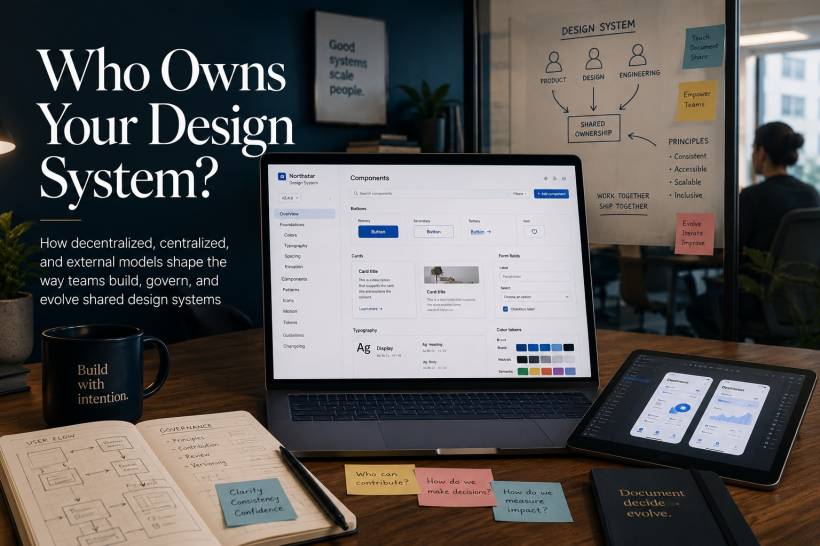
A design system is not a one-time project. It needs ongoing decisions around components, documentation, accessibility, contribution rules and how teams actually use it in real products. The difficult question is usually not whether a company needs a design system, but who should be responsible for keeping it useful as the organisation grows.
There is no single model that works for every business. Some teams distribute responsibility across product squads, others build a dedicated internal design-system team, and some bring in outside specialists when internal capacity is limited.
The right choice depends on your team size, product complexity, working culture and how much consistency you need across platforms.
A Decentralised Model: Shared Ownership Across Product Teams
In a decentralised setup, multiple product, design and development teams contribute to the same design system. Each team may assign representatives to improve components, patterns or documentation alongside their usual product work.
This approach can work well when teams are close to real user needs. A team building a booking platform may spot a missing date picker, while another managing an e-commerce experience may need a better checkout component. Contributions can happen quickly because the people facing the problem can help solve it directly.
The downside is that different teams may solve similar problems in different ways. One team creates a rounded button, another creates a square one, and soon the system has multiple versions of what should have been a shared component.
Over time, naming can become inconsistent too. One team may call a state "active", while another calls the same behaviour "selected". These small differences create confusion for designers, developers and future teams trying to decide which pattern to use.
A decentralised approach works best when there is already strong communication between teams, clear contribution standards and someone responsible for protecting consistency.
A Centralised Model: A Dedicated Design System Team
A centralised model gives ownership to a dedicated internal team. Their job is not only to design and build components, but also to maintain documentation, define design tokens, support accessibility standards, manage releases and help other teams adopt the system properly.
This creates stronger consistency across products. Instead of every product team making independent choices, the central team can identify duplication, improve reusability and maintain a common visual language.
It also allows product teams to focus on delivering their own features. They do not have to split their attention between customer-facing work and maintaining shared UI foundations.
However, a central team can become a bottleneck if it is too disconnected from product delivery. Product teams may need something quickly, but the design-system team may be prioritising a broader change or working through a long approval process. When that happens repeatedly, teams may stop waiting and begin creating their own custom alternatives.
That is when the system starts losing credibility.
A dedicated team should therefore not become isolated. It needs to regularly join product discussions, understand delivery pressures and receive feedback from the people using the components day to day.
External Support: Useful When Internal Capacity Is Limited
Sometimes a company understands that its design system needs work but simply does not have enough people or time to handle it internally. This is where an external partner can be valuable.
Outside specialists can help audit an existing system, build documentation, establish contribution processes, standardise design files or create a first version of a design system from scratch. They can also provide a fresh perspective, especially when internal teams have become used to workarounds or inconsistent patterns.
This can be particularly useful when the backlog is large. An external team may be able to tackle neglected component debt, outdated documentation or accessibility issues while internal staff continue focusing on business priorities.
The important part is planning for handover. External support is rarely permanent, so the organisation needs to understand how the system works after the engagement ends. That means documentation, training, repositories, contribution rules and clear ownership must be in place before the external team leaves.
Without that preparation, the system can quickly become difficult to maintain again.
The Best Model May Change Over Time
A small company might begin with a decentralised approach because it does not have enough people to form a dedicated design-system team. As the business grows, the number of products, brands and platforms may increase until a central team becomes necessary.
Later, that central team may need external help during a major redesign, accessibility programme or technology migration.
This is why design system governance should not be treated as permanent. The model that worked two years ago may no longer suit the organisation today.
Signs that your current approach may need attention include:
• Different products using inconsistent patterns
• Design-system updates taking too long to reach teams
• Poor documentation or unclear ownership
• Accessibility requirements being handled inconsistently
• Product teams creating workarounds instead of using the system
Final Thoughts
A design system succeeds when it helps teams move faster without sacrificing consistency, quality or accessibility. Whether responsibility sits across product teams, with a core internal group or alongside external specialists matters less than having a clear model that fits how the organisation actually works.
The best ownership structure is the one that gives teams enough freedom to solve real problems, while still protecting the shared standards that make a design system worth using.











Comments 0