

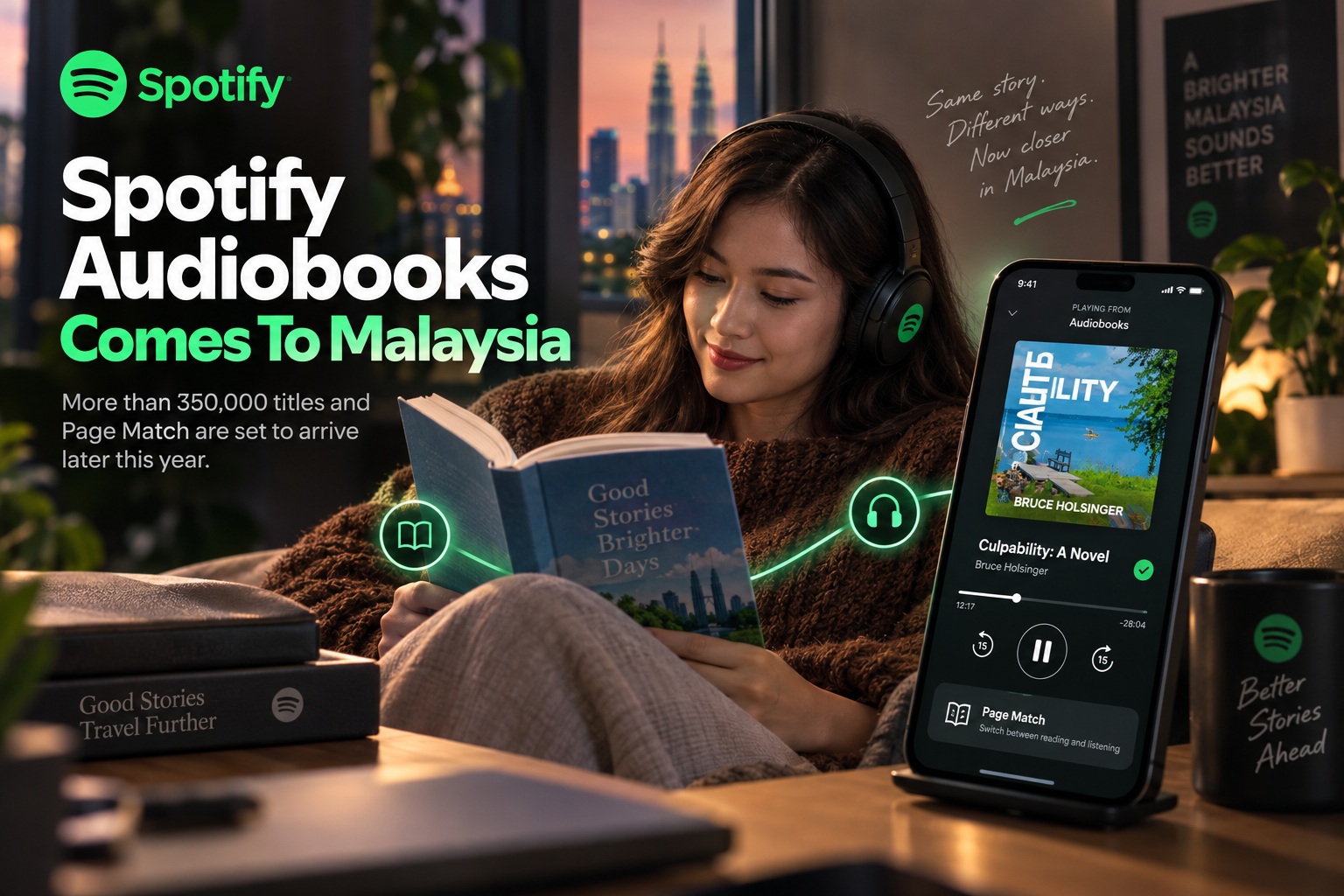
Spotify is preparing to bring its Audiobooks service to Malaysia later this year as part of a major international expansion that will make the feature available in more than 180 countries by the end of 2026. Malaysia will join several neighbouring markets including Singapore, Indonesia and the Philippines, significantly expanding access beyond the 22 markets where Spotify Audiobooks was previously available.
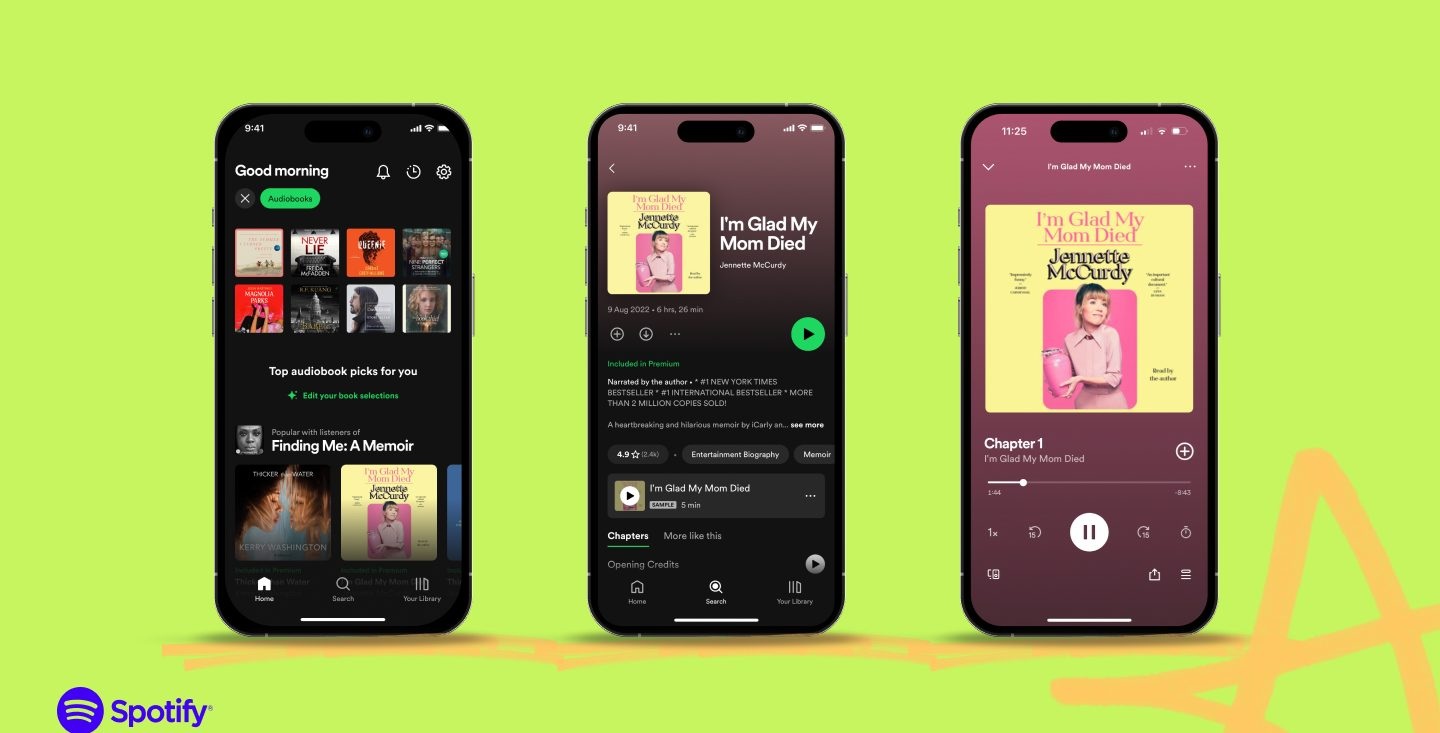
Once the service arrives locally, Malaysian users will be able to browse, stream or purchase from a catalogue containing more than 350,000 audiobooks across 120 languages directly within the existing Spotify app. However, unlike some markets where audiobook listening hours are bundled with Spotify Premium, Malaysian subscribers will need to purchase a separate Audiobooks+ add-on or buy individual titles.
Spotify Audiobooks Expands To More Than 180 Countries
Spotify's latest expansion represents a major increase in the availability of its audiobook business. Previously limited to just 22 markets, the company plans to make Audiobooks accessible across more than 180 countries before the end of 2026. The expansion potentially puts the service within reach of more than 750 million people worldwide.
For Spotify, audiobooks represent another step towards becoming a broader audio entertainment platform rather than remaining primarily focused on music and podcasts. Integrating books directly into the existing Spotify application also means users will not need to install a separate reading or audiobook app.
Malaysian listeners will therefore be able to move between music, podcasts and audiobooks using the same account and interface.
More Than 350,000 Audiobooks Will Be Available
Spotify says its audiobook catalogue includes more than 350,000 titles across 120 languages. The library spans numerous genres and publishers, giving listeners access to fiction, non-fiction, business, biographies, self-development and other categories.
Users will be able to search for books in much the same way they currently search for songs and podcasts. Audiobook listening progress will also be handled within Spotify, allowing listeners to stop and continue across compatible devices.
The catalogue is large enough to make Spotify a significant competitor in the audiobook market, especially given the enormous number of people who already use the platform for other forms of audio.
Malaysian Premium Plans Will Not Include Free Audiobook Hours
There is one important difference between Malaysia and some of Spotify's existing audiobook markets. In selected countries, Spotify Premium subscribers automatically receive up to 12 hours of audiobook listening each month as part of their normal subscription.
That arrangement will not apply to Malaysia when the service launches.
Instead, Malaysian users will primarily access audiobooks through a separate Audiobooks+ subscription add-on. This means an existing Spotify Premium subscription by itself will not provide the audiobook listening allowance available in certain other markets.
Audiobooks+ Will Include 15 Hours Per Month
The Audiobooks+ add-on will provide Premium subscribers with 15 hours of audiobook listening every month. This will be the main subscription-based method for accessing Spotify's audiobook catalogue in Malaysia and several other Asian markets.
Listening hours reset at the start of each billing cycle. Any unused hours will therefore not roll over into the following month.
For listeners who finish their monthly allowance before the next billing period, Spotify will offer additional 10-hour top-up packages. Unlike the monthly allowance, purchased top-up hours remain valid for 12 months from the date of purchase.
This provides some flexibility for users who occasionally listen more heavily than usual without requiring them to wait for the following month.
You Can Also Buy Audiobooks Individually
Users who do not want an Audiobooks+ subscription will have another option: purchasing individual audiobooks.
Books purchased individually remain available permanently and do not depend on an active Audiobooks+ subscription. This could be useful for listeners who only want a handful of specific titles rather than regularly consuming audiobooks.
The model gives Spotify two approaches similar to those already familiar within the digital book market: subscription-based access for regular listeners and direct purchases for users who prefer permanent ownership of particular titles.
Malaysian Pricing Has Not Been Announced Yet
Spotify has yet to reveal how much the Audiobooks+ add-on will cost in Malaysia. Ringgit pricing is expected to be announced closer to the local launch.
For comparison, Spotify's existing Malaysian Premium plans currently cost:
Audiobooks+ will be an additional charge on top of the applicable Premium subscription, although Spotify has not yet disclosed how the local pricing structure will work.
The eventual price could play an important role in determining how attractive the service becomes compared with dedicated audiobook platforms.
Student Subscribers Could Eventually Get Audiobooks+ Too
Spotify has also announced plans to extend Audiobooks+ to Premium Student subscribers beginning this November. However, the initial rollout will only cover selected European markets including Ireland, Belgium, Austria and Finland.
There is currently no confirmation that Malaysian Premium Student users will receive access when Audiobooks launches locally.
The expansion nevertheless suggests Spotify intends to make audiobooks available across more of its subscription categories over time. Malaysian student subscribers may therefore eventually receive the option, but they will need to wait for further announcements.
Page Match Bridges Physical Books And Audiobooks
One of Spotify's more interesting audiobook features is Page Match, which is designed for readers who regularly switch between reading a physical book and listening to its audiobook version.
The feature allows Spotify to determine where a reader currently is within a physical book and match that position to the corresponding timestamp in the audiobook. Instead of manually searching through chapters or audio timelines, users can use their smartphone camera to help Spotify identify the correct position.
This makes it possible to read a book at home, continue listening during a commute and then return to the printed edition later without spending time searching for the correct page.
ISBN Scanning Makes Page Match More Accurate
Spotify is now improving Page Match by adding support for ISBN scanning and manual page numbers. Previously, users could point their smartphone camera directly at the text on a page and allow Spotify to identify the passage through optical character recognition.
The updated system lets users first scan the ISBN barcode on their physical book. Spotify can then identify the exact print edition because different editions may have different pagination.
Once the edition is recognised, the reader can simply enter their current page number. Spotify then determines the corresponding position in the audiobook and jumps directly to it.
This should make Page Match faster and more reliable, particularly for books where different editions use significantly different page layouts.
How To Switch From Reading To Listening
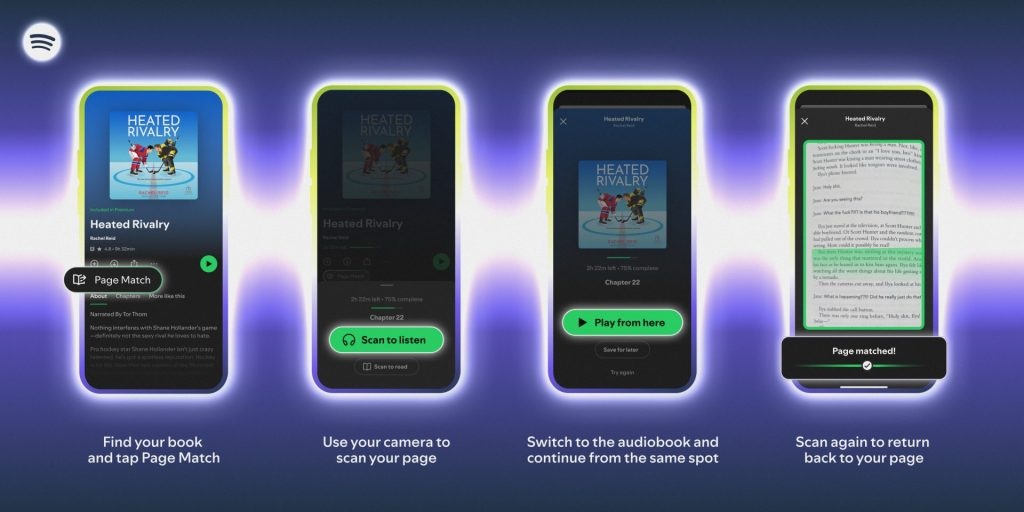
To continue a physical book as an audiobook, users first open the relevant audiobook inside the Spotify mobile app. They can then select Page Match followed by Scan to listen.
After granting camera permission, the user scans the page they are currently reading. Spotify analyses the text and searches for the corresponding section within the audiobook.
Once the correct location has been identified, the user can either start playback immediately or save the position for later.
If Spotify cannot recognise the page during the first attempt, the app will ask the user to scan it again.
Recaps Can Help When Returning To A Book
Some audiobooks also include Spotify's Recap feature. When available, Page Match can be combined with Recaps to help readers remember what happened before their saved position.
Instead of jumping directly back into a long book after several days or weeks away, listeners can receive a short audio summary of the story up to their current location.
This could be particularly useful for lengthy novels or non-fiction books where remembering previous details is important before continuing.
You Can Switch From Listening Back To A Physical Book
Page Match also works in the opposite direction. If someone has been listening to an audiobook but wants to continue reading a physical copy or e-reader version, Spotify can help identify where they stopped.
Users select Page Match and then choose Scan to read. They can scan a page from the physical book or an e-reader screen, allowing Spotify to establish where that page appears relative to the current audiobook position.
The app can then tell the reader whether to move forward or backwards and guide them towards the precise passage where they stopped listening.
This eliminates much of the manual searching normally involved when alternating between audio and printed books.
A More Seamless Reading Experience Across Formats
The broader objective behind Page Match is to remove the separation between physical books, e-books and audiobooks. Each format has different advantages: physical books provide a traditional reading experience, e-readers are convenient for travel, while audiobooks work particularly well when driving, exercising or commuting.
Readers often use several formats for the same book, but finding the correct position when moving between them can be frustrating. Spotify's approach attempts to make those transitions feel much more continuous.
Instead of treating listening and reading as separate activities, Page Match allows the same book to follow the user throughout different parts of the day.
Spotify Is Becoming Much More Than A Music App
The arrival of Audiobooks in Malaysia also shows how significantly Spotify has evolved. The company originally built its reputation around streaming music before aggressively expanding into podcasts. Audiobooks now form another major pillar of its broader audio strategy.
Having all three forms of content inside one application gives Spotify an advantage in convenience. Someone could listen to music while working, switch to a podcast during lunch and continue an audiobook during the drive home without changing platforms.
For Malaysian users who already spend significant time inside Spotify, that integration could make trying audiobooks considerably easier.
Final Thoughts
Spotify Audiobooks coming to Malaysia later in 2026 gives local users another major option for accessing digital books. With more than 350,000 titles across 120 languages, the catalogue is substantial, while integration with the main Spotify application means existing users will not need to adopt an entirely separate platform.
The main difference for Malaysians is that audiobook hours will not be bundled with the normal Spotify Premium subscription. Instead, users will need the Audiobooks+ add-on for 15 listening hours each month or purchase individual titles permanently. Local pricing remains the biggest unanswered question.
Features such as Page Match could also make Spotify's offering particularly interesting for people who regularly switch between printed books and audio. By allowing readers to scan their physical edition and jump directly to the corresponding audiobook position, Spotify is trying to make reading and listening feel like one continuous experience rather than two separate formats.











Comments 0