

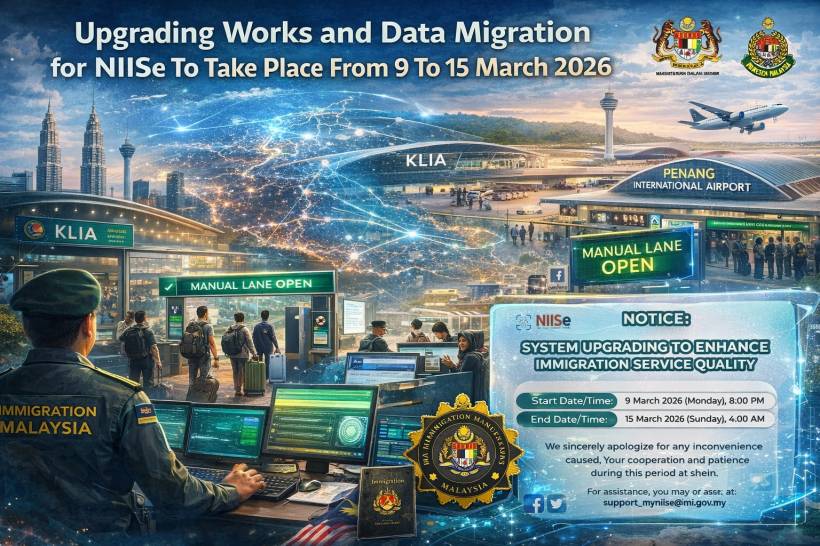
Travellers and members of the public who rely on Malaysia's immigration-related digital services may want to take note of an important update for the coming week. The Home Ministry has announced that the National Immigration Integrated System, better known as NIISe, will undergo upgrading works and data migration from 9 to 15 March 2026.
This means certain digital immigration services may experience temporary disruptions during that period, particularly at night when the scheduled work is taking place. While the maintenance may cause some inconvenience, the broader goal is to strengthen the system, improve efficiency, and support a more stable immigration service moving forward.
Maintenance and Data Migration to Run Daily at Night
According to the ministry, the work will not only involve technical upgrades to NIISe, but also the migration of data from the existing immigration system into the newer platform. The maintenance window is scheduled to take place ყოველდღaily from 8pm until 4am throughout the 9 to 15 March period.
Because of this overnight schedule, some online immigration services may be temporarily unavailable while the system work is being carried out. For users who need to complete immigration-related transactions, this is something worth planning around in advance.
The migration of data is a particularly important part of this exercise. Moving from an older platform to a newer integrated system is not simply about replacing software. It also involves ensuring that records, operational workflows, and service continuity are preserved carefully so that the new system can support future immigration operations more effectively.
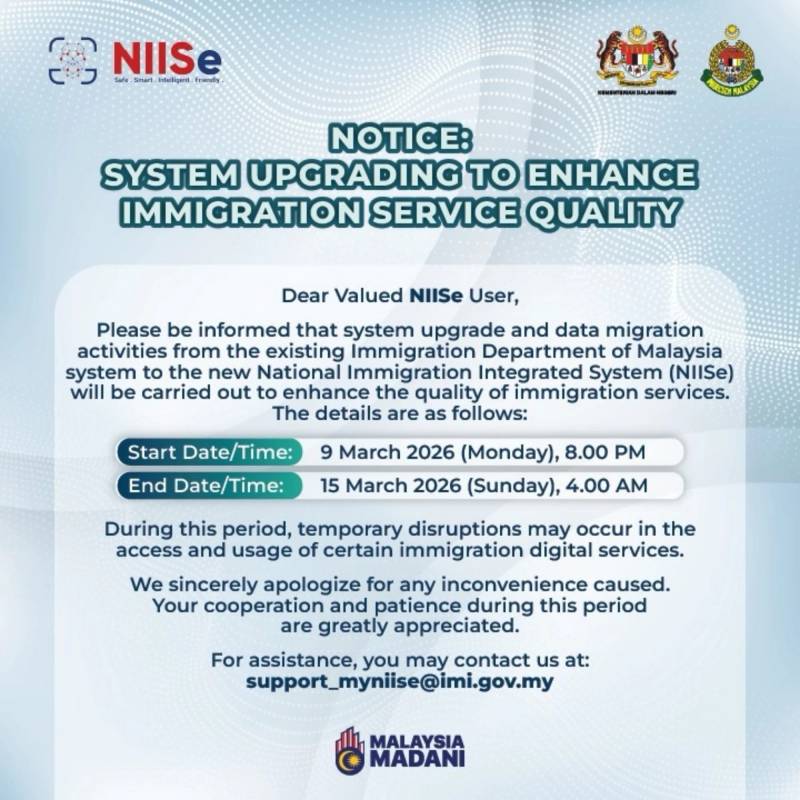
What the Public Can Expect During the Upgrade Period
The ministry acknowledged that temporary service interruptions may happen as a result of the maintenance and migration process. That is fairly common when a major government digital platform is being improved, especially one tied to border control and immigration management.
To reduce disruption, several precautionary steps will be introduced during the maintenance period. One of the key measures is the activation of manual lanes and contingency procedures at entry points nationwide. This is meant to ensure that traveller movement can continue as smoothly as possible without weakening border security.
That point is important because immigration systems are not like ordinary online services that can simply go offline without broader consequences. These systems support real-time checks and border operations, so fallback procedures are necessary to keep things moving while technical work is underway.
Real-Time Updates Will Be Provided
To help the public stay informed, the Home Ministry said it will provide real-time updates on the system's status through its official website and social media channels. Travellers can also refer to updates from the Immigration Department and the Malaysian Border Security and Protection Agency, or AKPS.
This should help reduce confusion, especially for people who are travelling during the affected period or need to deal with immigration matters online. Rather than guessing whether a service is available, users will be able to check official channels for the latest information before making their plans.
In situations like this, timely communication matters just as much as the technical work itself. When people know what to expect, they can better prepare and avoid unnecessary delays.
Public Advised to Plan Ahead
The ministry has also advised the public to settle immigration-related matters early and avoid relying on online services during the maintenance window if possible. That is practical advice, especially for travellers or users with urgent documentation needs.
Anyone planning to use immigration portals, digital applications, or related online services during the affected dates should ideally do so before the maintenance period begins, or outside the nightly maintenance hours where possible. A little advance planning could save a lot of frustration.
For travellers passing through entry points, the reassurance is that authorities will be closely monitoring the situation and working to ensure normal operations resume as quickly as possible once the upgrade work is completed.
Part of a Bigger Modernisation Effort
The maintenance and migration exercise is also part of a larger government push to modernise Malaysia's immigration infrastructure. The ministry said the work reflects its ongoing commitment to improving data security, service efficiency, and overall user experience.
That matters because immigration systems are expected to handle increasingly complex demands, from traveller processing and border control to digital service access and record management. A newer and more integrated system should, in theory, offer better reliability and stronger long-term performance.
NIISe was first introduced in September and is set to replace the long-running Malaysian Immigration System, MyIMMs, which had been in use for decades. So this upcoming maintenance window is not just a routine update. It is part of a much broader transition from an older legacy platform to a more modern system designed to better meet today's operational needs.
Why This Transition Matters
Replacing a decades-old immigration system is a major undertaking. Legacy systems often continue functioning for many years, but over time they can become harder to maintain, less flexible, and more vulnerable to performance or security limitations. A newer platform like NIISe is expected to address those challenges while providing a stronger foundation for future improvements.
That is why temporary maintenance periods like this, while inconvenient in the short term, are often necessary steps in a longer digital transformation process. For the public, the most immediate effect may simply be slower access or temporary downtime. But at the policy and infrastructure level, this kind of migration is about building a more secure and efficient service environment.
Final Thoughts
The scheduled NIISe upgrading works and data migration from 9 to 15 March 2026 are an important part of Malaysia's effort to modernise its immigration system. While some online services may be temporarily affected during the nightly maintenance period, the government has put contingency measures in place to reduce disruption and keep border operations running smoothly.
For travellers and the public, the best approach is to stay updated through official channels, plan important immigration matters early, and expect possible temporary interruptions during the upgrade window. In the bigger picture, this short-term inconvenience is aimed at supporting a more secure, efficient, and stable immigration system for the future.











Comments 0