

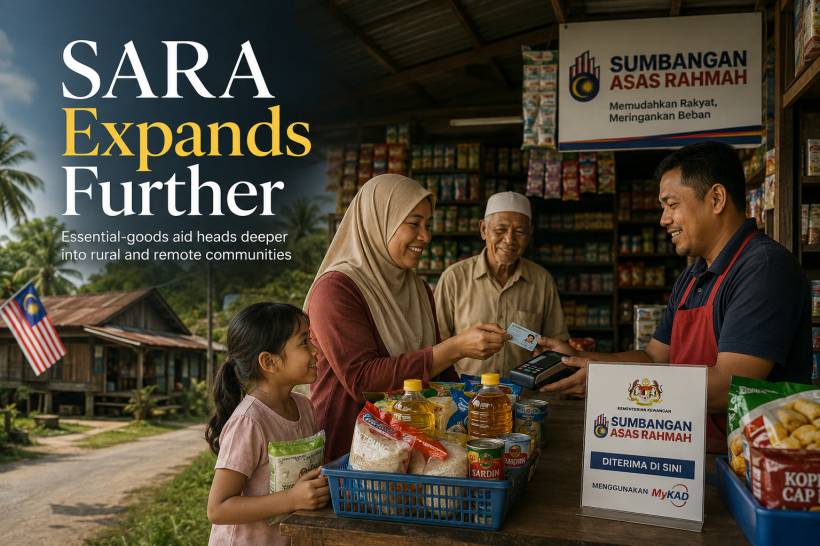
Malaysia's Sumbangan Asas Rahmah, better known as SARA, may soon become much easier to access for people living outside major towns. The government is planning to widen the programme's retail network, with particular attention on rural villages, smaller communities and remote areas. The aim is simple: eligible recipients should not have to travel far just to use assistance intended for everyday essentials.
For many households, access matters just as much as the aid itself. A programme can offer meaningful support on paper, but it becomes far more useful when nearby shops are able to accept it.
A Bigger Role for Neighbourhood Sundry Shops
At present, more than 13,500 retail outlets nationwide participate in SARA, including over 6,500 sundry shops. The government is now aiming to increase the number of participating sundry shops to 10,000 across Malaysia.
This matters because smaller neighbourhood stores are often the most convenient option for people living in kampungs, rural districts and interior areas. Not every recipient has easy access to a supermarket, a large convenience-store chain or reliable transport.
Adding more local sundry shops to the network could make redemptions less time-consuming and reduce the need for recipients to spend extra money travelling to a participating outlet.
The plan is especially relevant in Sabah, where 1,493 participating shops are already part of the programme. Expanding further could help bring the same convenience to more communities across the state, particularly those located far from larger commercial centres.
How the MyKad System Makes SARA Easier to Use
One of SARA's most practical features is its use of MyKad as the redemption method.
Instead of requiring recipients to manage physical vouchers or deal with complicated claim processes, eligible users can redeem approved essential items directly at participating retailers. The process is designed to be straightforward: shop for eligible goods, use the MyKad transaction system, and have the assistance applied at the point of payment.
This approach also gives the programme a clearer purpose. The aid is directed toward everyday necessities rather than being treated as unrestricted cash. For households managing a tight monthly budget, support for food, hygiene items and basic household goods can make a noticeable difference.
Supporting Recipients While Helping Local Businesses
The SARA expansion is not only about improving access for recipients. It could also create a meaningful opportunity for small business owners.
When a neighbourhood shop joins the programme, it may gain more regular customer traffic from nearby residents using their SARA allocation. Products listed under the programme can see stronger demand, especially when they are commonly purchased household essentials.
That creates a wider economic effect. Recipients gain easier access to necessities, while local retailers receive more customers and potentially higher sales. In smaller towns and villages, where independent sundry shops are often deeply connected to the community, this can help keep spending within the local area.
It is a more balanced approach than concentrating all redemptions at large retailers alone.
Helping Small Retailers Join the Network
Of course, getting small shops into a digital payment network is not always simple.
Many independent retailers may face costs related to point-of-sale systems, internet connectivity, technical setup and staff training. For a small business with limited resources, these requirements can become a barrier even when there is strong interest in joining the programme.
The government is reportedly exploring ways to reduce onboarding costs and make point-of-sale systems more accessible for smaller retailers. This could be an important part of the wider expansion, because the programme cannot truly reach rural and remote communities without making participation practical for the shops already serving them.
The easier it is for small businesses to join, the more realistic the 10,000-shop target becomes.
Could More Grocery Items Be Added?
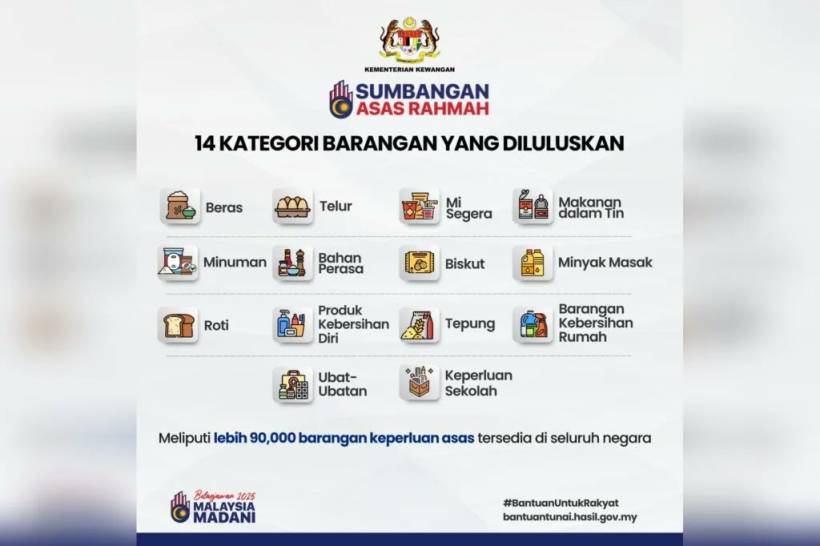
The retail network is not the only area being reviewed. The government is also considering whether the range of eligible products can be expanded further.
More than 150,000 product items are currently available through the SARA programme, but the list may continue to grow as officials assess additional categories. Fresh produce, including vegetables, has been mentioned as a possible future option.
Fresh items would make the programme more flexible for many families, especially those who rely on nearby markets or small grocery shops for daily cooking ingredients. However, including perishable goods introduces additional challenges, particularly around quality control, pricing consistency and product handling.
For now, the possibility remains under evaluation rather than being a confirmed addition.
What This Could Mean for Everyday Malaysians
For recipients in urban areas, SARA may already feel relatively accessible because participating outlets are easier to find. The bigger difference could be felt in communities where the nearest large retailer is some distance away.
A wider network of smaller shops could mean less travelling, more familiar places to shop and a greater choice of where assistance can be used. It could also make the programme feel less like a centralised aid system and more like something integrated into everyday community life.
For local shop owners, participation may offer a new reason for customers to visit regularly. For rural households, it could make essential-goods support more practical when it is needed most.
Final Thoughts
Expanding SARA to more rural, remote and neighbourhood retailers is about more than increasing a number on a participation list.
It is about making assistance easier to use, helping smaller businesses take part in the digital economy and ensuring that support reaches people wherever they live. The target of 10,000 participating sundry shops is ambitious, but it could make a real difference if the necessary systems, training and retailer support are put in place.
As the programme grows, the most important measure will not only be how many shops join. It will be whether recipients can genuinely access essential goods more easily, more consistently and closer to home.











Comments 0