

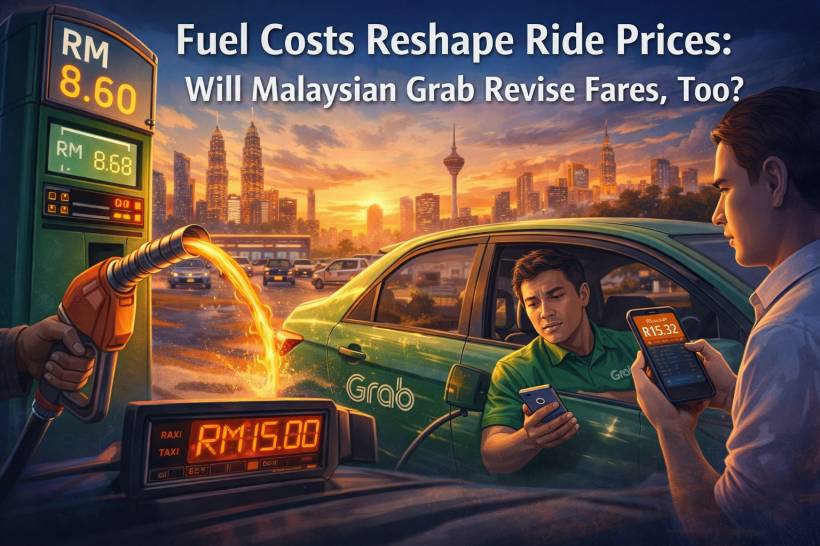
Rising fuel prices are once again putting pressure on transport operators, and Grab's latest move in Singapore shows just how quickly that pressure can flow down to drivers and passengers. GrabCab has announced a temporary increase in metered taxi fares from March 30 until May 31, saying the adjustment is meant to help drivers cope with higher fuel costs during a period of price volatility.
At first glance, the increase may look small. But the bigger story is not really about a few extra cents on a single ride. It is about how transport platforms are trying to balance three things at once: keeping drivers on the road, keeping fares acceptable for passengers, and staying commercially sustainable when operating costs suddenly rise.
Why Grab Is Making This Move
According to the announcement, the temporary adjustment applies only to metered taxi fares. That includes traditional street-hailed rides as well as metered taxi bookings made through the Grab app. The change affects the distance and waiting-time portions of the taxi meter, while the flag-down fare stays the same.
In practical terms, the unit fare for GrabCab rides will move up slightly, from S$0.26 to S$0.27. That means shorter trips may only see a very small increase, while longer journeys will naturally feel the effect a little more. Grab says this approach is intended to offer drivers direct relief with every kilometre they drive, rather than relying on a one-off support measure alone.
This is actually a fairly telling decision. Instead of making a dramatic pricing overhaul, Grab appears to be taking a more measured approach by introducing a temporary and targeted adjustment. That allows the company to respond to immediate cost pressures without completely reshaping the fare system.
A Small Fare Increase, but a Bigger Economic Signal
For passengers, the added cost on a single trip may not look too alarming. A short ride may only increase by a few cents, while a longer one might go up by less than a dollar. On paper, that still feels manageable.
But what makes this important is the signal it sends. When a major transport platform starts adjusting fares because of fuel volatility, it reflects how sensitive the transport sector remains to global energy prices. Drivers feel it first because fuel is one of the most immediate operating costs they deal with every day. When prices at the pump rise, their margins shrink almost immediately.
That is where platform operators come under pressure to step in. If they do nothing, drivers may feel that each trip is no longer worth the effort, especially after accounting for fuel, wear and tear, maintenance, and time stuck in traffic. If that continues long enough, driver supply can fall, waiting times can increase, and service reliability can worsen. So while passengers may focus on the fare increase, companies are also thinking about whether drivers will continue showing up consistently.
Not Just Grab: The Industry Is Feeling the Strain
Grab is not the only operator responding to the situation. ComfortDelGro has also introduced a temporary fee for bookings made through its app, with the same broad aim of reducing the financial strain on drivers facing higher fuel costs.
That matters because it suggests this is not simply one company making an isolated pricing decision. It points to a broader industry concern. When multiple operators begin adjusting fees around the same time, it usually means the cost pressure is real enough that the market can no longer comfortably absorb it in silence.
This also shows that transport pricing is no longer just about competition and promotions. Increasingly, it is about resilience. Operators now have to think about how quickly they can adapt to sudden cost shocks while still keeping their platforms attractive to both drivers and riders.
What This Could Mean for Malaysia
From a Malaysian perspective, this development is worth paying close attention to. While the pricing structure, subsidy environment, and market dynamics differ between Singapore and Malaysia, the underlying issue is very familiar. Fuel prices do not move in isolation, and any prolonged global increase in energy costs eventually creates ripple effects across the region.
Malaysia may not always feel the same impact in exactly the same way or at the same speed, but the pressure still exists. Drivers here also face rising day-to-day expenses, whether directly through fuel-related costs or indirectly through maintenance, spare parts, servicing, tyres, and overall cost of living. Even if fares remain unchanged on the surface, the economics for drivers can quietly become more difficult over time.
That is why this move by GrabCab in Singapore can be seen as more than just a local fare adjustment. It may also serve as an early regional indicator of how ride and taxi platforms could start rethinking driver support if global fuel prices remain elevated.
A Question Malaysian Grab May Eventually Need to Address
There is also a reasonable hope that Malaysian Grab will review its own pricing structure carefully and fairly if fuel-related cost pressures continue. This does not necessarily mean passengers should immediately expect a blanket fare hike. But it does mean there should be an honest conversation about whether the current structure still reflects real operating conditions for drivers.
Any revision, if it ever comes, would need to be handled carefully. Malaysian consumers are highly sensitive to transport costs, especially for daily commuting, short urban trips, and airport runs. At the same time, drivers cannot be expected to absorb every external shock indefinitely. If the gap becomes too wide, service quality could suffer in less visible ways, such as fewer available cars, longer wait times, lower driver morale, or reduced willingness to accept certain trips.
Ideally, the solution would not just be about charging passengers more. It could involve a broader mix of support measures, such as temporary incentives, targeted fuel assistance, better driver earnings transparency, or smarter pricing adjustments that are calibrated by trip type, distance, or demand patterns. The best outcome is one where drivers feel supported without making ride-hailing unaffordable for ordinary Malaysians.
The Balance Between Affordability and Sustainability
This is where transport platforms face their biggest challenge. Passengers want fares to stay low and predictable. Drivers want earnings that still make sense after costs. Companies want to maintain service levels without driving users away. All three are understandable, but they do not always align neatly when fuel prices become unstable.
Grab's temporary fare increase in Singapore is one example of how a company is trying to manage that balancing act in real time. It is not a dramatic move, but it is a realistic one. And sometimes those modest pricing changes say more about market stress than bigger headlines do.
For Malaysia, the lesson is not that the exact same model must be copied. Rather, it is that transport operators need to stay responsive to changing realities. If global fuel prices continue climbing, it would be wise for Malaysian Grab and other mobility players to examine whether their pricing and driver support systems are still fit for purpose.
Final Thoughts
GrabCab's temporary fare adjustment in Singapore may be small in dollar terms, but it reflects a much bigger issue: the growing difficulty of keeping transport services affordable while operating costs keep shifting upward. It is a reminder that drivers are often the first to feel the pressure when fuel prices rise, and sooner or later, companies have to respond.
For those of us watching from Malaysia, this development feels especially relevant. The local market may have its own structure and constraints, but the broader challenge is shared. There is every reason to hope that Malaysian Grab will continue reviewing its pricing approach carefully and responsibly, especially if global fuel prices remain volatile. Any future revision should aim to protect both riders and drivers, because in the long run, a transport platform only works well when both sides feel the system is still fair.











Comments 0