

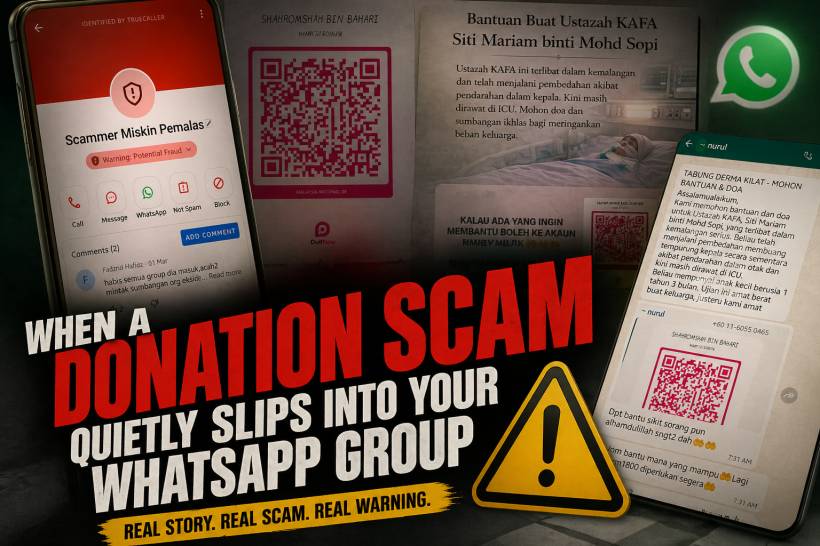
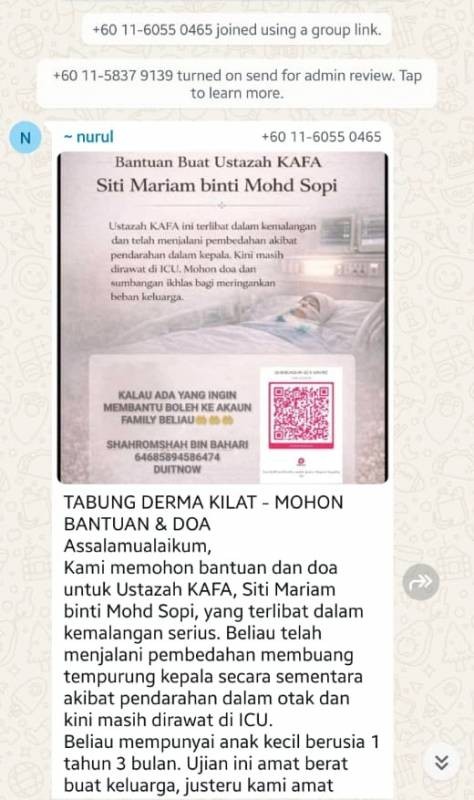
It was just another normal day, checking messages in my children's school WhatsApp group. Nothing unusual — just the usual updates, reminders, and occasional chatter between parents. Then suddenly, a new number appeared in the group. No introduction, no explanation. Just a random Malaysian number, +6011-6055 0465, joining via a group link.
At first, I didn't think much of it. These things happen sometimes — maybe a new parent, maybe someone invited by mistake. But within minutes, the situation took a very different turn.
The number immediately started posting messages asking for donations.
The Story That Pulled at the Heart
The message was emotional. It talked about a woman named Siti Mariam binti Mohd Sopi, who was supposedly involved in a serious accident. According to the message, she had undergone brain surgery due to internal bleeding and was currently in ICU. There was also mention of her young child, barely over a year old, adding another layer of sympathy to the situation.
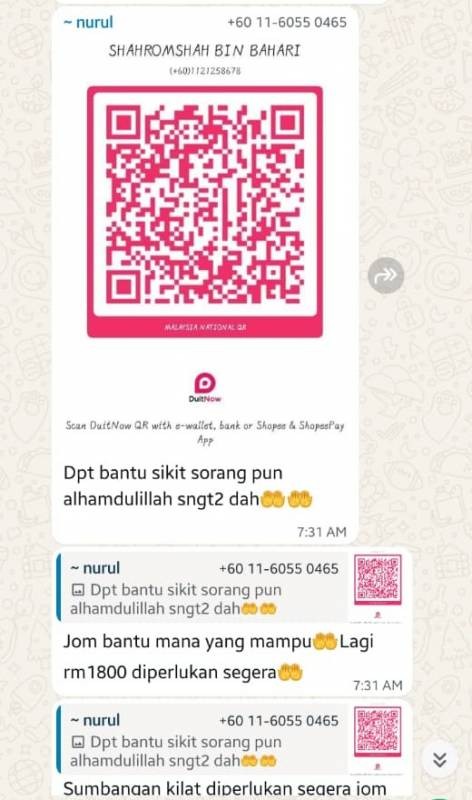
Alongside the message was a hospital-style image and, more importantly, a DuitNow QR code with bank details. The tone was urgent — asking for help, even small amounts, to ease the family's burden.
Then came the follow-up messages.
"Still need RM1800 urgently…"
"Please help…"
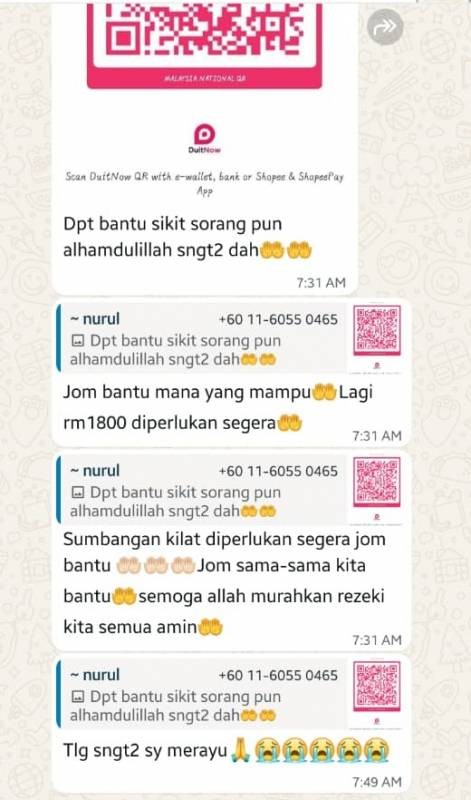
That's when it started to feel uncomfortable.
Something Didn't Feel Right
If you've been online long enough, you start to recognise patterns. And this had all the signs.
There was no verification. No official source. No hospital reference. No way to confirm the identity of the person involved. Just a story, a QR code, and repeated pressure to send money quickly.
And the biggest red flag? The number had just joined the group and immediately started asking for money.
That's not how genuine cases usually work.
A Quick Check Changed Everything
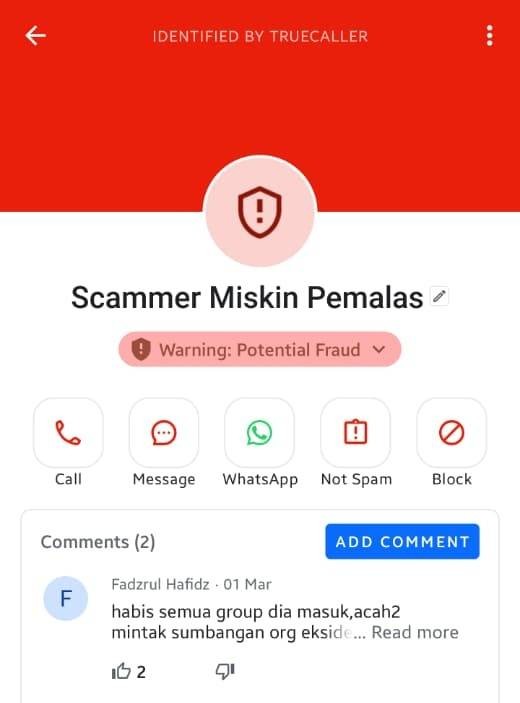
Out of curiosity, I decided to run the number through TrueCaller and Samsung's scam detection feature.
The result was immediate and quite blunt.
The number was flagged as "Scammer Miskin Pemalas", with a warning indicating potential fraud. Even more concerning, there were comments from other users saying that this same number had been entering multiple WhatsApp groups and posting similar donation requests.
At that point, everything became clear.
This wasn't a one-off case. It was a broadcast scam.
How This Scam Actually Works
What makes this type of scam dangerous is how simple and effective it is. There's no hacking, no complex trick — just social engineering at its most basic level.
The scammer joins random or publicly accessible WhatsApp groups, often using invite links that are shared without much control. Once inside, they don't waste time building trust. Instead, they go straight for an emotional appeal — usually involving accidents, medical emergencies, or family hardship.
The story is designed to feel urgent and relatable. It often includes elements like ICU treatment, surgery, or young children, because these trigger immediate empathy. Before anyone has time to question it, the scammer provides a payment method — usually a DuitNow QR code or bank account — making it incredibly easy to send money instantly.
Then comes the pressure. Repeated messages. Updates on how much is still needed. Subtle emotional nudges to push people into acting quickly.
The goal is simple: get at least a few people to send money before anyone starts asking questions.
Why People Still Fall For It
The uncomfortable truth is that scams like this work because they take advantage of something good — our willingness to help.
In Malaysia especially, people are naturally generous when it comes to helping others, especially in situations involving illness or hardship. We're taught to give, to support, and to show compassion.
Scammers know this.
And they rely on that instinct to override logic, even if just for a moment.
What We Should Do Instead
Situations like this remind us that being kind doesn't mean being careless. It's completely okay to want to help, but it's just as important to make sure the help is going to the right place.
If you ever see something like this in your WhatsApp group, the first step is simple — don't rush. Take a moment to verify. Check the number. Look for any official sources. See if the case is mentioned anywhere credible.
At the same time, it's important to inform the group admin. Removing the number quickly can prevent others from being misled. Reporting the number through WhatsApp or relevant channels also helps reduce the chances of it being used again elsewhere.
Most importantly, don't let urgency pressure you into acting blindly. Real cases can withstand verification. Scams cannot.
Final Thoughts
This experience was a good reminder that scams today aren't always obvious. They don't come in the form of suspicious emails or fake websites anymore. Sometimes, they show up quietly in places we trust — like a school WhatsApp group.
And that's what makes them dangerous.
All it takes is one believable story and one moment of hesitation from someone who genuinely wants to help.
So the next time you see a donation request from an unfamiliar number, especially one that appears out of nowhere, take a step back.
Because in today's digital world, being helpful is good — but being careful is even better.











Comments 0