

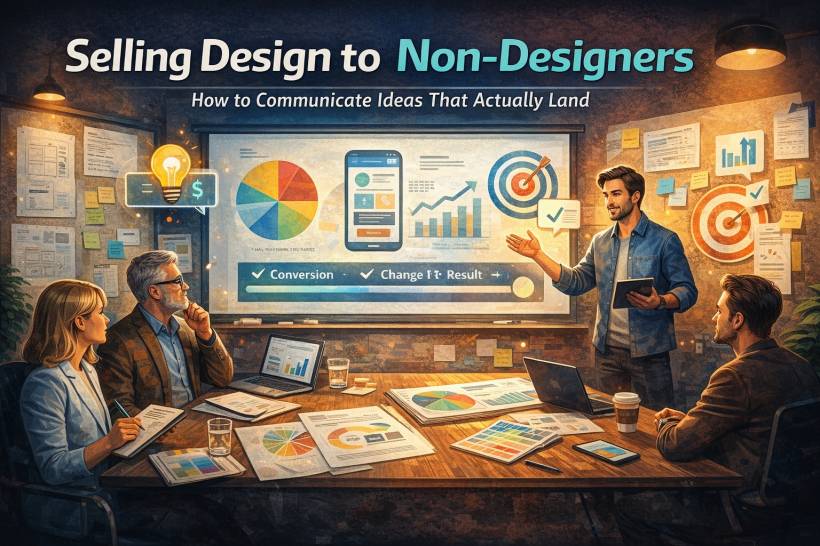
You can create the most thoughtful, well-crafted design in the world, but if your client doesn't understand it, the work won't survive. It gets diluted, endlessly revised, or quietly replaced with something safer and less effective. That's the reality many designers face. The problem usually isn't the design itself. It's the communication around it.
Selling design isn't about convincing or pushing ideas through. It's about translating your thinking into something meaningful for people who don't speak the language of design.
Stop Explaining Design Like a Designer
Here's the hard truth. Most clients don't care about typography theory, spacing systems, or why a certain font has the perfect x-height.
What they care about is simple:
• Will my customers understand it?
• Will it improve results?
That's the shift that changes everything.
Instead of saying, "We chose this font because it's a clean geometric sans-serif," you reframe it:
"This font stays readable on smaller screens, which matters because most of your users are browsing on mobile."
Same decision. Completely different impact.
When you speak in business terms, clients feel included. When you use design jargon, they feel like outsiders, and that's when resistance starts.
Structuring a Design Presentation That Works
A good presentation isn't about showing beautiful screens. It's about guiding the client's thinking step by step.
Start with the problem
Bring the conversation back to the original goal. Remind them what they asked for. Whether it's increasing bookings, improving conversions, or simplifying navigation, anchor everything to that shared objective.
Present a clear direction, not a buffet
Showing too many polished options often backfires. Clients naturally start mixing and matching ideas, creating a compromise that weakens the overall solution. A single, well-thought-out direction builds confidence.
Explain your thinking before showing the design
Walk them through your priorities first. For example, improving mobile usability, simplifying checkout, or highlighting key services. When the design appears, they already know how to evaluate it.
Show the design in real-world context
A logo on a blank screen feels abstract. Place it on a website, social media post, or storefront mockup, and suddenly it becomes tangible. Context helps clients visualise how it will actually work.
End with a clear ask
Be direct about what you need next. Frame feedback around whether the solution meets the goal, not whether someone "likes" it. This keeps the discussion productive.
Turning Vague Feedback Into Useful Direction
Client feedback can sometimes feel frustrating, but most of the time, it's just unclear, not wrong.
When someone says, "I don't like it," they're expressing discomfort, not giving a solution. The best move is to ask follow-up questions. What feels off? What were they expecting instead?
When you hear, "Make the logo bigger," it's rarely about size. It's usually about visibility or importance. Dig into the concern behind the request.
And then there's the classic, "Make it pop." That's usually a signal that something isn't standing out enough. Instead of guessing, ask what kind of feeling or reference they have in mind.
When feedback starts to conflict with the design direction, explain the trade-offs clearly. If a change affects usability or hierarchy, show what that impact looks like. Let the client make an informed decision instead of just accepting or rejecting changes blindly.
The Power of a Strong Rationale
A solid explanation can completely change how a design is received.
The difference comes down to clarity and relevance.
Instead of saying a colour feels energetic, explain why it matters in context. Maybe it differentiates the brand from competitors or improves visibility.
Instead of saying a layout flows better, show how it helps users find important information faster.
The strongest explanations always connect back to something concrete, user behaviour, research insights, or the client's goals. When decisions are backed by logic, not taste, they carry much more weight.
Managing Revisions Without Losing Control
Revisions are part of the job. Unlimited revisions are where things go wrong.
The key is setting expectations early.
Define what's included in the project. How many revision rounds? What counts as a revision versus a new direction? Being clear upfront avoids awkward conversations later.
It also helps to document feedback properly. Summarising requested changes and sharing them back ensures everyone is aligned before moving forward.
And when requests go beyond scope, handle it professionally. Agree to the work, but clarify that it requires additional effort. This isn't about being difficult. It's about protecting the integrity of the project and your time.
Anticipating Problems Before They Happen
Before presenting your work, take a step back and imagine it failing.
Would they think it's too bold or not bold enough?
Would they struggle to see how it solves their problem?
This kind of "pre-mortem" thinking helps you address concerns before they even come up. It shows preparedness and builds confidence.
When You Know the Client Is Wrong
This is where things get delicate.
Sometimes a requested change genuinely harms the design, whether it affects readability, usability, or accessibility.
The goal isn't to argue. It's to educate.
Instead of saying something won't work, show why. Demonstrate the impact. Maybe the text becomes harder to read, or the layout breaks on mobile.
Whenever possible, refer to standards or best practices rather than personal opinion. That shifts the conversation from subjective to objective.
And if the client still insists, document the decision. It keeps everything transparent and protects you if issues arise later.
Confidence Makes a Difference
Clients can sense uncertainty immediately.
If you present your work as if you're unsure, they'll treat it as something open for negotiation. But if you present it as a considered solution, backed by reasoning and insight, it carries authority.
Confidence doesn't mean being stubborn. It means being prepared.
When you can say, "We explored that option, and here's why we chose this direction," it shows thoughtfulness, not ego.
Final Thoughts
Selling design isn't about persuading someone to like your work. It's about helping them understand why it works.
When you connect your decisions to business goals, explain your thinking clearly, and approach feedback with curiosity instead of defensiveness, everything changes. You move from being someone who delivers visuals to someone who solves problems.
And that's where the real value lies.
Because once clients trust your thinking, not just your output, you're no longer just a designer. You become a partner they rely on.











Comments 0