

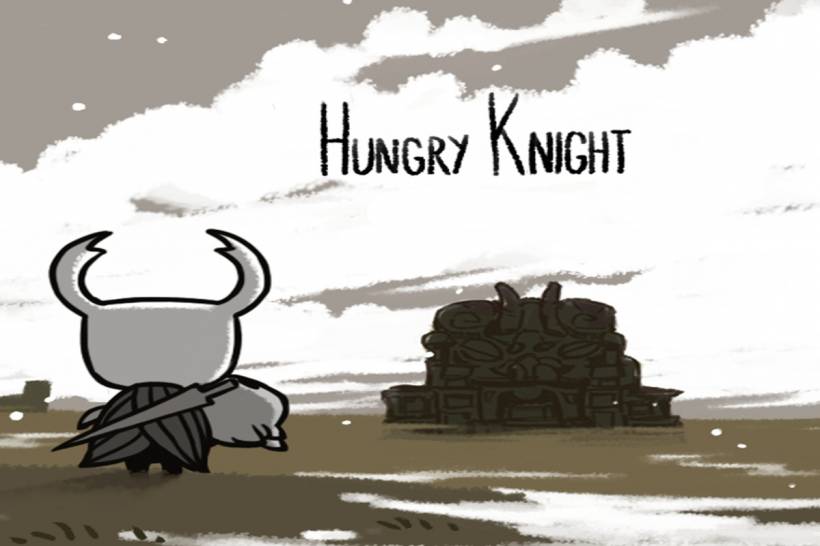
Hungry Knight is a small but memorable action adventure that stands out because of its simplicity, atmosphere, and unusual place in indie game history. It is not a large or complicated game, but it carries a distinct mood through its dark fantasy setting, minimalist presentation, survival-focused structure, and straightforward combat. The experience feels compact, but it also feels strangely memorable because it creates a world that is quiet, dangerous, and slightly mysterious.
The appeal of Hungry Knight comes from how much character it gives to a very simple concept. Players move through a hostile area, collect food, avoid danger, and fight enemies while trying to survive. There is no heavy story presentation or elaborate system design, but the game does not need those elements to create interest. Its charm comes from direct play, old-school difficulty, and the feeling of exploring a small but unsettling fantasy space.
Now playable online through Lemon Web Games, Hungry Knight can be experienced directly in the browser as part of a growing collection of classic and cult games preserved for modern players. Its web-based availability makes it easier to revisit an early indie-style action game that remains interesting because of its atmosphere, historical curiosity, and stripped-down approach to adventure design.
A Small Game with a Strong Mood
Hungry Knight is built on a simple foundation, but its mood gives it a stronger identity than its size might suggest. The game places the player in a dark fantasy environment where survival feels immediate and resources matter. Instead of using long dialogue or complex worldbuilding, it communicates its tone through movement, enemies, items, and the lonely feeling of being placed into a dangerous space.
This kind of atmosphere is important because it shows how a game does not need to be large to feel memorable. Hungry Knight creates tension through scarcity and simplicity. The player is not overwhelmed with options, but must stay focused on what is directly in front of them. This gives the experience a raw and old-school feeling, where each action matters because the world is small, hostile, and unforgiving.
The mood also gives Hungry Knight a sense of mystery. The game does not explain everything directly, which allows players to fill in the gaps with their own imagination. That quiet uncertainty makes the adventure feel more unusual, especially for players who enjoy retro-style games that rely on atmosphere rather than heavy exposition.
Simple Combat and Survival-Based Design
At its core, Hungry Knight is built around simple action mechanics. The player moves, attacks, avoids enemies, and collects food in order to keep going. The controls and objectives are easy to understand, which gives the game an accessible structure. However, the challenge comes from staying alive and managing danger within that simple framework.
The survival element gives the game its main tension. Food is not just a decorative item; it becomes part of the player's continued progress. This creates a small but effective loop where exploration and survival are connected. The player must keep moving, but movement itself can lead to danger. That balance makes the experience feel more focused than a basic action game.
The combat is direct and old-school in spirit. It does not rely on complicated combos or layered systems. Instead, the player must judge timing, spacing, and risk. This simplicity works well because the game is compact. Hungry Knight uses only a few core ideas, but those ideas fit together clearly and create a short, tense adventure.
Minimalist Presentation and Indie Identity
Hungry Knight has a minimalist presentation that helps define its identity. The visuals are simple, the world is not overly detailed, and the game does not try to impress through spectacle. Instead, it uses limited presentation to create a direct and slightly eerie atmosphere. This gives the game a handmade quality that fits its early indie character.
That minimalist style matters because it allows the player to focus on the core experience. There are no unnecessary distractions from movement, survival, and combat. The game feels stripped down to its essential parts, which makes every item, enemy, and moment of danger more noticeable. The simplicity becomes part of the design rather than a weakness.
This also gives Hungry Knight historical interest. Many early indie games were built with limited resources but strong personal identity. They often felt experimental, rough, and intimate in a way that larger commercial games did not. Hungry Knight belongs to that kind of tradition, where a small project can still feel meaningful because of its mood, concept, and creative context.
A Curious Link to Cult Game History
Hungry Knight is especially interesting because of its connection to early indie creativity and the roots behind later cult game design. For players familiar with the development history surrounding surreal and atmospheric indie games, Hungry Knight feels like a small but important piece of a larger creative path. It may be brief, but it offers a glimpse into ideas and moods that would later become more fully developed elsewhere.
This connection gives the game value beyond its mechanics alone. Some games are remembered because they are large, polished, or technically impressive. Others are remembered because they show the early shape of a creative voice. Hungry Knight fits more closely into the second category. It feels like an early experiment, but one that already carries a sense of atmosphere and unusual identity.
That historical curiosity makes the game worth preserving and revisiting. It allows players to experience a small part of indie game development history directly, rather than only reading about it. Hungry Knight may not be expansive, but it helps show how distinctive game ideas can begin in compact and simple forms.
Old-School Challenge in a Compact Form
Hungry Knight carries an old-school challenge that comes from limited resources, enemy danger, and the need to keep moving carefully. The game does not rely on lengthy tutorials or forgiving systems. Instead, it expects players to understand the basic rules quickly and learn through direct play. This gives the experience a strict but straightforward rhythm.
The compact size of the game makes its challenge feel concentrated. There is not a long campaign separating the player from the core idea. The danger appears quickly, and the player must adapt. This makes Hungry Knight feel immediate, as though every session is focused on survival and improvement rather than slow progression.
For modern players, this design can feel simple but refreshing. It does not ask for a long time commitment, but it still demands attention. Hungry Knight is best appreciated as a short, atmospheric challenge where the player's focus, timing, and ability to manage risk define the experience.
Why Hungry Knight Still Feels Interesting
Hungry Knight still feels interesting because it has a clear identity despite its small scale. It combines dark fantasy atmosphere, survival pressure, simple combat, and minimalist presentation into an experience that feels unusual and memorable. It is not trying to compete with larger action adventures. Instead, it succeeds as a compact and curious game with its own mood.
Its appeal also comes from the way it reflects early indie design. The game feels personal and experimental, as if it was created from a simple idea but shaped by a distinct atmosphere. That makes it valuable for players who enjoy seeing how game design can express mood even with limited tools and simple mechanics.
For modern players, Hungry Knight offers both a playable challenge and a small piece of creative history. It may be brief, but it leaves an impression because it feels different from more polished or conventional action games. Its strange atmosphere and minimalist style help it remain worth revisiting.
Playing Hungry Knight Online Today
Through Lemon Web Games, Hungry Knight can now be played directly in your web browser with no downloads or setup required. Features of the web-based version include:
• Browser-based play for quick access
• No installation required
• Classic dark fantasy action preserved for modern players
• Simple combat, item collection, and survival-focused gameplay
• Minimalist atmosphere with early indie-game charm
• Accessible play through Lemon Web Games
Playing Hungry Knight online today makes the game easier to experience without the setup barriers that can sometimes come with older or lesser-known titles. The browser format allows players to enter its small dark fantasy world quickly and focus on the survival challenge, atmosphere, and unusual historical appeal.
This accessibility is especially valuable for a game like Hungry Knight because its strength lies in direct experience. It is a short and focused game, but playing it gives players a better understanding of its tone and purpose. Through Lemon Web Games, both returning fans and curious new players can discover why this compact adventure remains interesting.
Who Should Play Hungry Knight
• Players who enjoy short classic action games
• Fans of dark fantasy and minimalist atmosphere
• Retro game fans interested in early indie-style titles
• Players who like simple combat and survival mechanics
• Fans of unusual cult game history
• Anyone looking for a compact browser-playable adventure
Hungry Knight is especially suitable for players who appreciate small games with strong mood. It is not a long or complex adventure, but it offers a focused experience built around survival, simplicity, and atmosphere. Players who enjoy games that feel strange, direct, and quietly memorable will likely find it worthwhile.
It is also a strong choice for those interested in the roots of indie game creativity. Hungry Knight shows how a small project can still carry personality and historical value. For players who enjoy exploring lesser-known titles, it offers a curious and meaningful stop within the Lemon Web Games library.
Play Hungry Knight Online Now
Hungry Knight is now available to play online through Lemon Web Games, giving players a simple way to experience this compact dark fantasy action game directly in the browser. Its web-based format makes it easy to start playing without downloads or setup, while preserving the minimalist charm and survival-based challenge that define the experience.
For players browsing the Lemon Web Games library, Hungry Knight offers a different kind of retro-style adventure. It is smaller and simpler than many classic action games, but its atmosphere and historical curiosity give it a distinct place in the collection. It is the kind of game that rewards players who are open to short, unusual, and mood-driven experiences.
Playing Hungry Knight today is a chance to experience a small but memorable game that reflects early indie creativity. Its direct mechanics, dark fantasy setting, and strange atmosphere make it a worthwhile title for players interested in compact adventures with personality.
Final Thoughts
Hungry Knight remains interesting because it proves that a game does not need to be large to leave an impression. Its dark fantasy mood, simple survival loop, direct combat, and minimalist presentation create a compact experience that feels memorable in its own quiet way. The game is small, but it has atmosphere, and that atmosphere gives it value beyond its basic mechanics.
Its appeal also comes from its place in indie game history. Hungry Knight feels like an early creative experiment, the kind of project that allows players to see how simple ideas can carry mood, identity, and future significance. It may not offer the depth of a long adventure, but it offers a focused glimpse into a style of game design built around personal expression and unusual atmosphere.
Through Lemon Web Games, Hungry Knight becomes easier to revisit and preserve for modern players. It remains a worthwhile experience for anyone who enjoys dark fantasy action, minimalist games, and curious cult titles with historical value. For players willing to appreciate a short adventure with a strange mood and early indie charm, Hungry Knight still offers a distinctive and memorable classic experience.











Comments 0