

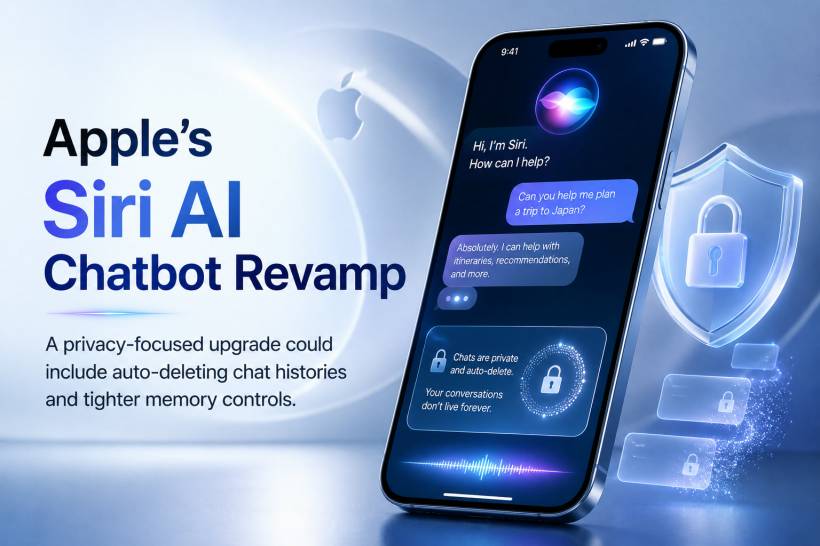
Apple is reportedly preparing a major AI-focused overhaul of Siri, and privacy may become one of the biggest selling points of the new experience. The refreshed assistant is expected to be introduced during WWDC 2026 in June, where Apple is likely to show how Siri will evolve from a traditional voice assistant into something closer to a modern AI chatbot.
According to Bloomberg's Mark Gurman, Apple wants the new Siri to stand apart from rivals such as ChatGPT and Google Gemini by focusing heavily on user privacy, data control, and limited memory retention. That approach is very Apple-like. While other AI platforms often compete on raw intelligence, integrations, and long-term personalisation, Apple appears to be leaning into a different message: a smarter assistant that does not keep more of your data than necessary.
A More Conversational Siri Experience
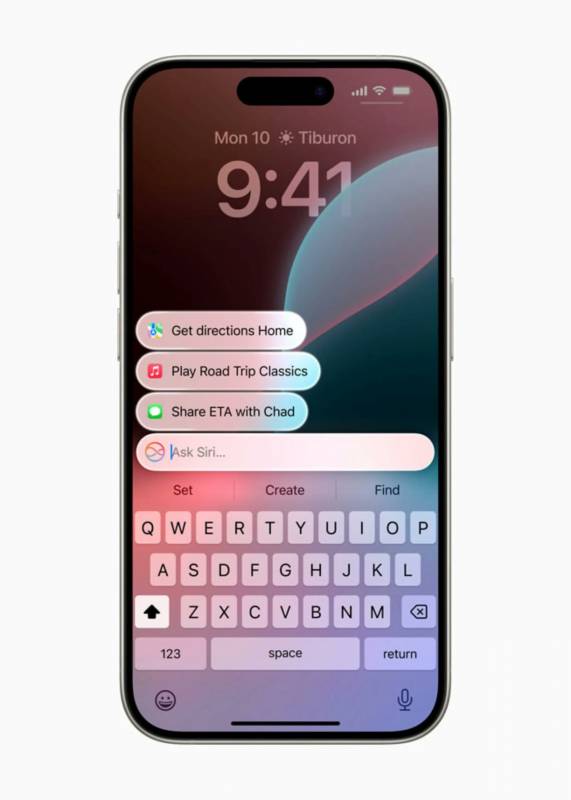
The new Siri is reportedly being developed as a standalone app with a more conversational chatbot-style interface. This would be a significant change from the Siri many users know today, which is still mostly associated with short voice commands, quick questions, timers, reminders, and basic device control.
A standalone chatbot-style Siri could make the assistant feel more like a proper AI companion for writing, searching, summarising, planning, and asking follow-up questions. Instead of issuing one command at a time, users may be able to hold longer, more natural conversations.
This is the direction most AI assistants are moving toward. People now expect assistants to understand context, respond naturally, and help with more complex tasks. For Apple, the challenge is not only making Siri smarter, but also making it feel useful enough to compete with existing AI chatbots.
Google Gemini May Power Part Of The New Siri
Interestingly, Apple is reportedly relying partly on Google Gemini technology under the hood. This may sound unusual, especially since Apple is trying to present Siri as a privacy-conscious alternative to other AI platforms, but it reflects the reality of the current AI race.
Building a highly capable large language model ecosystem takes time, computing power, and continuous improvement. By working with Google, Apple may be able to deliver a stronger AI experience faster while still controlling how the experience is presented and how user data is handled within Apple's own ecosystem.
Apple and Google had already confirmed collaboration earlier this year, so the idea of Gemini supporting parts of Siri is not entirely surprising. What matters now is how Apple manages that partnership while maintaining its privacy-first branding.
Auto-Deleting Chat Histories Could Be A Key Feature
One of the most notable reported features is automatic deletion of Siri chat histories. Apple may allow users to choose whether conversations are deleted after 30 days, after one year, or kept indefinitely.
This would be similar in spirit to message retention settings already available in Apple's Messages app. Instead of making users manually delete old conversations or rely only on temporary chat modes, Apple could give users a clear retention setting from the beginning.
That is a meaningful difference. Many AI platforms offer temporary or incognito-style chats, but normal chat histories are often kept unless users delete them manually. Apple's approach may make data retention feel more predictable and easier to understand.
For users who are worried about AI chatbots storing too much personal information, this kind of setting could be reassuring. It gives them more control over how long their AI conversations remain available.
Apple May Limit Siri's Memory Compared With Rivals
Bloomberg also claims Apple plans to place tighter limits on how Siri stores and remembers user information. This is important because many modern AI assistants rely on memory systems to become more personalised over time.
For example, an AI chatbot may remember preferences, writing style, frequent tasks, personal details, or past conversations in order to provide better responses later. That can be useful, but it also raises privacy concerns. Some users may not want an AI assistant keeping long-term records of what they ask, discuss, or reveal.
Apple's reported approach appears more cautious. The company may allow Siri to be useful without building the same kind of deep, long-term memory profile that some competing platforms are developing.
The trade-off is obvious. Less memory may mean less personalisation. Siri may not always feel as context-aware or adaptive as rivals. But for privacy-conscious users, that limitation could actually become a strength.
Turning Privacy Into A Competitive Advantage
Apple has often used privacy as one of its key brand messages, and this Siri revamp may continue that strategy. As AI tools become more common, people are becoming more aware of how much information they share with chatbots. Conversations can include work details, financial questions, health concerns, personal problems, and other sensitive topics.
Because of that, privacy is no longer just a nice extra feature. It may become one of the main factors people consider when choosing an AI assistant.
Apple may be betting that some users would rather have a slightly more controlled AI assistant with stronger privacy settings than a more aggressive AI platform that remembers everything by default. This could be especially useful for users already invested in Apple devices and services.
Privacy May Also Help Apple Manage Expectations
There is another side to this strategy. Siri has often been criticised for falling behind other assistants and modern AI chatbots. If the revamped Siri still does not match the most advanced AI tools in raw capability, Apple may use privacy as a way to explain its more careful approach.
In other words, Apple may argue that it is not trying to build the most invasive or memory-heavy chatbot. Instead, it is trying to build one that fits Apple's values around user control and data protection.
That does not completely remove the pressure on Apple. Users will still expect Siri to be smarter, faster, and more useful than before. But a privacy-first positioning could help Apple frame the product differently from ChatGPT, Gemini, and other AI assistants.
A Beta Launch May Be Possible
Gurman also reported that Apple may launch the revamped Siri under a beta label. That would suggest the company still sees the assistant as a work in progress, even if it is ready to be shown publicly.
A beta label would not be surprising. AI assistants are complex, and Apple has already faced pressure over delays and expectations surrounding Apple Intelligence. Releasing the new Siri as a beta would give Apple room to improve the system over time while managing user expectations more carefully.
It may also allow Apple to gather real-world feedback before treating the new Siri as a fully mature product.
Final Thoughts
Apple's reported Siri AI revamp sounds like an important reset for one of the company's most recognisable features. A standalone chatbot-style Siri could finally move the assistant closer to the kind of conversational AI experience users now expect.
However, the most interesting part may not be the chatbot interface itself, but Apple's privacy-focused strategy. Auto-deleting chat histories, tighter memory limits, and clearer retention controls could help Siri stand apart in a crowded AI market where many users are starting to question how much personal data these tools should keep.
The big question is whether Apple can balance privacy with capability. If the new Siri feels genuinely useful while giving users more control over their data, Apple may have a strong angle. But if it feels too limited compared with competitors, privacy alone may not be enough. WWDC 2026 could be the moment where Apple shows whether Siri is finally ready to become a serious AI assistant again.











Comments 0