

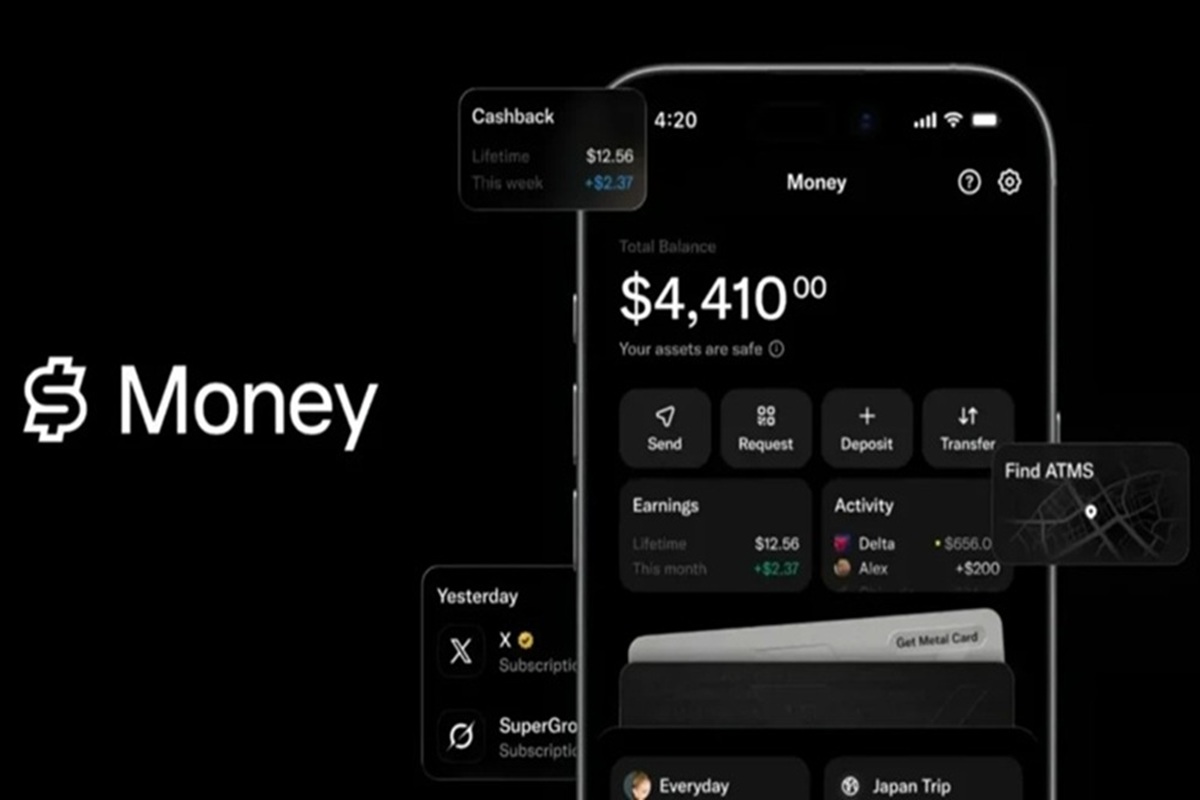
Elon Musk's long-running plan to turn X into more than a social-media platform is beginning to look considerably more concrete. X Money, the company's built-in financial service, is now expanding beyond its earlier invitation-only testing and rolling out to eligible Premium and Premium+ subscribers in the United States.
The service brings a deposit account, peer-to-peer transfers and a Visa debit card directly into X. In practical terms, the company wants users to move from reading posts and sending messages to storing, transferring and spending money without leaving the same application. X says access is currently limited to selected U.S. users aged 18 and above, although it plans to widen availability over time.
From Social Network to Financial Platform
Musk has repeatedly described X as the foundation of an "everything app"—a platform combining communication, content, payments and other digital services within one ecosystem.
The idea is often compared with Asian super apps that allow users to message friends, purchase products, book services and make payments from a single account. X Money represents one of the most important pieces of that ambition because financial services can connect many other activities on the platform.
Instead of asking users to leave X and open a separate banking or payment application, X Money is designed to place financial transactions alongside posts, profiles and direct messages.
For the moment, however, the rollout is not open to every X user. It is being made available to U.S. Premium and Premium+ subscribers, with access still described by X as a rollout to selected users.
What X Money Actually Provides
X Money is not simply a button for sending tips to another account. It is being positioned as a broader financial platform with many of the functions normally associated with a digital bank account or financial-technology application.
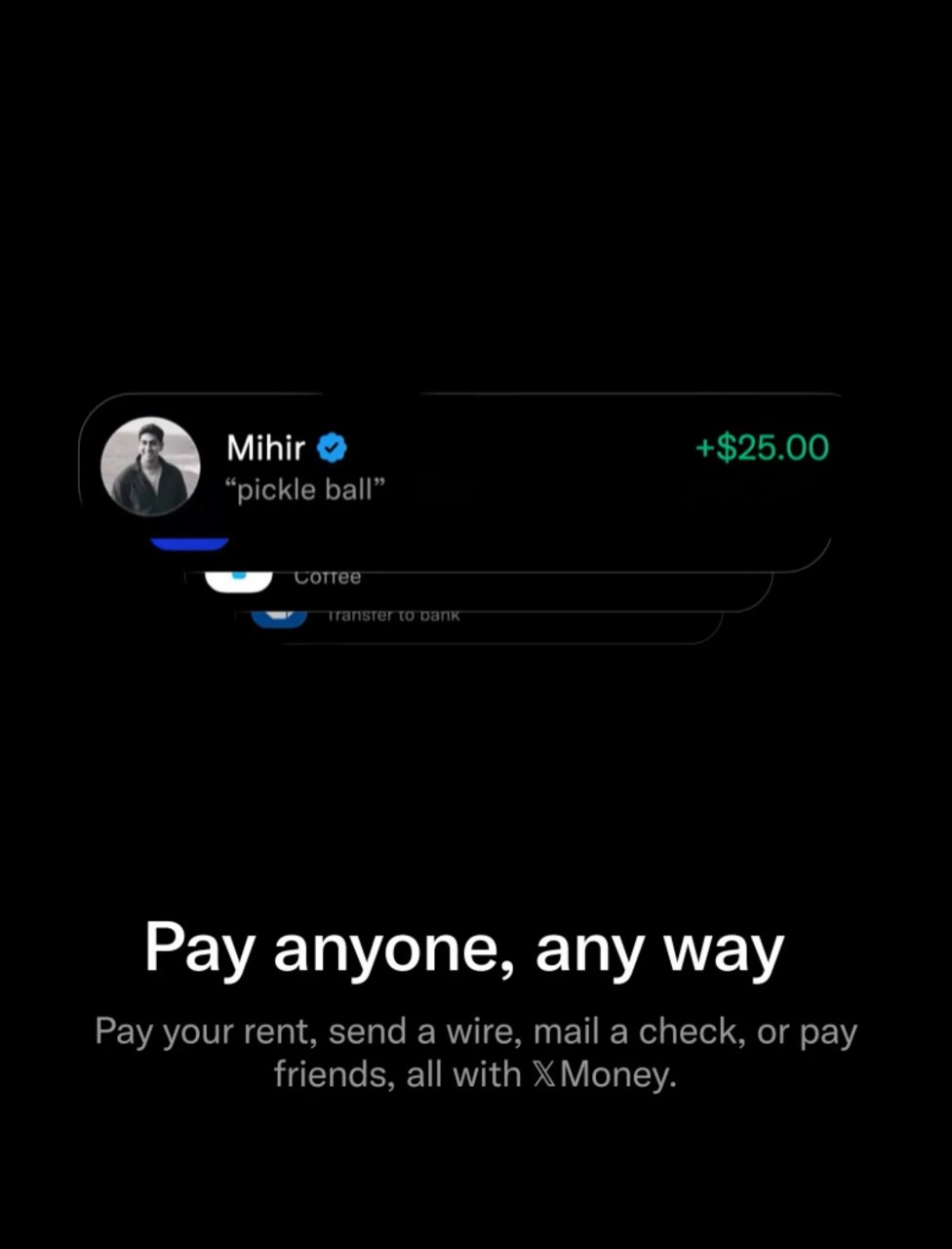
Users receive a deposit account and can send, receive or request money from other people on X. The platform advertises these peer-to-peer transfers as instant, free and without transfer limits.
The service also supports direct deposits, including the possibility of receiving a salary up to two days earlier than the normal payment date. Users can reportedly pay bills, send wire transfers and request physical cheques from inside the platform.
This broader feature set indicates that X is not only trying to compete with casual payment applications. It is also attempting to become a place where users manage a larger portion of their everyday financial activity.
The X Card Extends the Service Beyond the App
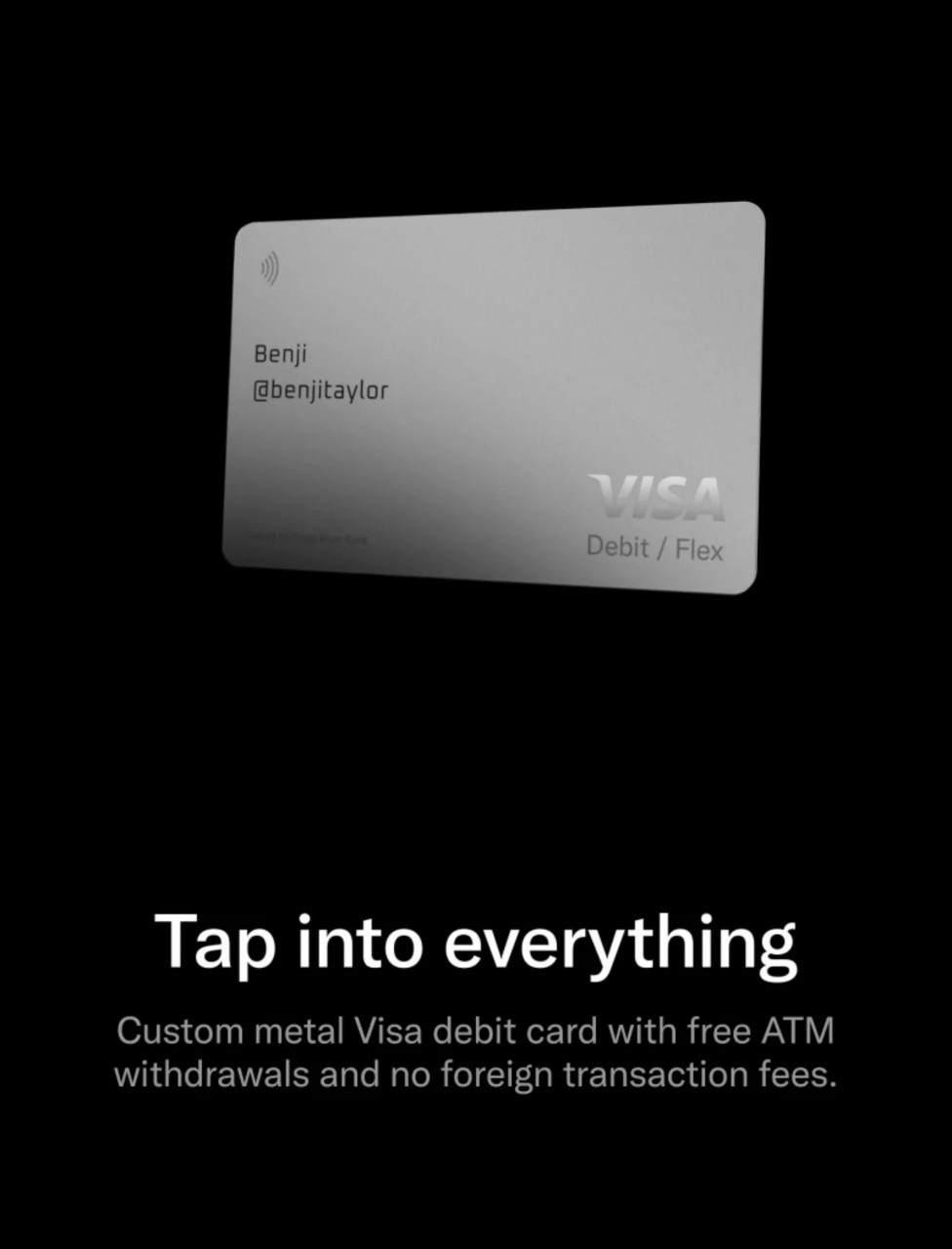
Every eligible customer can receive a virtual Visa debit card known simply as the X Card.
The digital card can be added to Apple Pay through Apple Wallet, allowing users to make contactless payments using an iPhone or Apple Watch. A physical metal version can also be ordered, with options to personalise the card and include the customer's X username.
According to X, the card can be used anywhere Visa is accepted. It also advertises no foreign transaction fees and reimbursement of ATM charges within three calendar days, although the precise benefits remain subject to the programme's terms and conditions.
The personalised metal card is clearly designed to give X Money a premium identity. It turns the customer's social-media username into part of a physical financial product, strengthening the connection between a person's X identity and their payment account.
That may appeal to highly active users and creators who already treat their X profile as a personal brand. For more cautious customers, however, connecting a public-facing online identity so closely with financial activity may require some adjustment.
The Headline 6% Interest Rate Comes with Conditions
One of X Money's biggest attractions is an advertised interest rate of up to 6% annual percentage yield, or APY.
Premium+ subscribers are eligible for the 6% rate, while regular Premium subscribers may qualify after meeting specified direct-deposit requirements. X states that the rate was accurate as of 27 July 2026, but it is variable and may change. Fees may also reduce the customer's total earnings.
This distinction matters because the headline rate is not automatically available to every customer.
The phrase "up to 6%" should therefore be read carefully. Eligibility depends on the subscription tier and, for some users, whether they meet the required direct-deposit conditions.
The structure shows how X is combining a subscription business with financial incentives. Premium+ users pay more for their X membership but receive immediate access to the highest advertised interest rate. Regular Premium users may need to make X Money a more active part of their financial routine before receiving the same rate.
In effect, X is using financial benefits to make its paid subscriptions more attractive while also encouraging customers to move their salary deposits and cash balances into the platform.
Cashback Is Limited to Eligible Purchases
The X Card also advertises 3% cashback, but this does not apply universally.
X specifies that the reward is available only for eligible purchases, meaning certain transaction categories may be excluded. Customers would need to review the cashback terms rather than assume that every card payment will earn the full reward.
Cashback can be a powerful incentive because it gives users an immediate reason to choose one debit card over another. However, the long-term value depends on the exclusions, spending categories and whether the reward programme remains unchanged after the initial launch period.
The same caution applies to the 6% APY. Promotional financial products often begin with generous benefits to attract new customers, but rates and reward structures can be revised as the service matures.
X Is Not the Bank Holding the Deposits
Although X Money appears inside the social-media application, X Payments itself is not an insured bank.
The underlying banking services are provided by Cross River Bank, which supplies the regulated infrastructure, deposit accounts and access to payment networks. Cross River describes X Money as the first peer-to-peer payment experience embedded directly within a U.S. social-media platform that includes interest-bearing accounts and a Visa debit card.
Deposits held at Cross River Bank are insured by the Federal Deposit Insurance Corporation up to the standard US$250,000 limit, subject to the applicable requirements.
X Money also automatically enrols deposits into a cash-sweep programme. This can distribute funds across several participating FDIC-insured banks, potentially providing up to US$10 million in aggregate pass-through deposit insurance coverage.
That larger figure should not be interpreted as X personally guaranteeing every account for US$10 million. The protection is created by spreading qualifying funds among multiple insured banks, and certain conditions must be satisfied for pass-through coverage to apply.
X also clearly states that deposit insurance covers the failure of an insured bank. It does not protect users against every possible loss, such as fraud caused by sharing credentials or transferring money to the wrong person.
Security Becomes More Important When Social Media Handles Money
X says its financial accounts include passkeys, custom transaction limits and privacy controls. These are sensible protections, particularly for a service operating inside a platform where users regularly interact with strangers and encounter impersonation attempts.
Nevertheless, adding financial services to a social network changes the level of risk.
A compromised social-media account can already expose private messages, contacts and personal information. Once the same account is connected to a deposit balance, debit card and payment history, account security becomes significantly more important.
X will need to demonstrate that its fraud monitoring, identity verification, account-recovery process and customer support can operate reliably at financial-services scale. Customers will also need to protect themselves through strong authentication and careful verification of payment requests.
The convenience of sending money through a familiar profile may make payments easier, but it could also create new opportunities for impersonation scams. A message appearing to come from a recognised account should not automatically be treated as a legitimate request for money.
A Subscription-Gated Banking Model
One of the more unusual aspects of X Money is that access is connected to a paid social-media subscription.
Most banks and payment applications make their basic services available without requiring customers to subscribe to unrelated platform features. X is taking a different approach by treating financial services as another benefit within its Premium ecosystem.
This creates a circular strategy.
Financial perks may encourage users to subscribe to X Premium, while the subscription relationship may encourage those users to keep more of their activity inside X. Once someone receives their salary, earns interest, sends money and uses an X Card, leaving the platform becomes more inconvenient.
For X, that deeper relationship could generate more predictable subscription income and potentially open additional revenue opportunities from payments and financial products.
For users, the important question is whether the combined value of the social-media and financial benefits justifies the subscription cost.
Malaysia Will Not Automatically Receive the Same Service
There is currently no confirmed timetable for X Money to launch outside the United States.
Expanding into another country is not as simple as enabling the feature through an application update. Financial products must comply with local requirements involving licensing, customer verification, safeguarding of funds, cybersecurity, consumer protection and financial-crime monitoring.
In Malaysia, Bank Negara Malaysia maintains regulatory requirements for electronic-money issuers and operates approval and registration processes for payment-system operators and designated payment instruments. BNM's electronic-money framework focuses on the safety and reliability of services as well as maintaining confidence among customers and merchants.
BNM also introduced updated technology-risk requirements for regulated payment-service providers in March 2026. These requirements reflect the level of operational resilience and cybersecurity expected when a platform handles financial information and transactions.
This means a Malaysian version of X Money would likely require a suitable regulatory structure, approved local partnerships and compliance with BNM's payment and technology-risk requirements.
The U.S. partnership with Cross River Bank could not simply be copied into Malaysia without adapting the service to the local financial system.
Convenience Alone Will Not Guarantee Success
X already has an advantage that many financial startups lack: a large existing audience.
It does not need to persuade people to download an entirely unfamiliar application before introducing its financial services. X Money can appear inside an app that millions of people already use for news, discussions and communication.
However, social engagement does not automatically translate into financial trust.
People may tolerate occasional bugs, moderation controversies or service interruptions on a social network. Their expectations are much higher when the same platform is holding their salary or processing an important payment.
X Money's success will therefore depend on more than its interest rate, cashback and metal debit card. It will need reliable customer service, transparent terms, strong fraud protection and consistent access to funds.
Final Thoughts
X Money represents one of the clearest signs yet that Musk's "everything app" concept is moving beyond ambition and into an actual product.
The service combines peer-to-peer transfers, an interest-bearing deposit account, direct deposits and a Visa debit card inside X. Its advertised 6% APY, 3% cashback and personalised metal card are designed to attract paying subscribers and encourage them to make X part of their daily financial lives.
Yet financial services demand a different level of responsibility from social media. Users will want confidence that their funds, personal information and access to support are protected when something goes wrong.
For now, X Money remains a U.S.-focused service available to selected adult Premium and Premium+ users. Whether it becomes a serious competitor to established banks and payment applications—or remains a premium feature for X's most committed subscribers—will depend on how reliably it performs once the rollout reaches a much larger audience.











Comments 0