

Redecorating an older home can be incredibly rewarding. A fresh coat of paint, updated finishes and a new interior theme can completely transform a tired space without requiring a full renovation. However, older properties often hide risks that are not immediately visible, especially beneath paint, flooring, ceilings and wall coverings.
It is easy to become focused on colours, furniture and decorative details while overlooking the safety of the people carrying out the work. Before sanding, drilling, scraping or removing anything, homeowners should understand what materials they may be disturbing and whether the property has electrical, structural, ventilation or moisture-related problems.
A careful safety plan can prevent a simple decorating project from becoming an expensive or dangerous situation.
Inspect the Home Before Starting Work
Before buying paint or moving furniture, walk through the areas you plan to redecorate and look for signs of deterioration.
Cracked ceilings, loose plaster, damp patches, damaged wiring, uneven flooring and unstable fixtures should be assessed before cosmetic work begins. Painting over water damage or covering a cracked wall may improve the appearance temporarily, but it does not address the underlying problem.
Older homes may also have undergone several previous renovations. Different layers of wallpaper, paint, tiles and flooring can hide materials that were commonly used decades ago but would not meet modern safety standards.
A pre-work inspection helps identify which areas are safe to handle and which ones require professional assessment.
Check for Asbestos-Containing Materials
Asbestos is one of the most serious concerns when working on an older property. It may be present in textured ceiling coatings, wall panels, insulation, roofing materials, cement products, vinyl floor tiles, pipe coverings and certain adhesives.
The danger usually arises when asbestos-containing materials are damaged, drilled, sanded, cut or removed. These activities can release microscopic fibres into the air, where they may be inhaled.
Do not assume that a material is safe simply because it looks solid or has been painted over. Asbestos cannot reliably be identified through appearance alone.
Before disturbing suspicious materials, arrange for an assessment by a qualified asbestos professional. When asbestos is confirmed, removal or containment should be handled according to the relevant safety requirements rather than attempted as a normal do-it-yourself task.
Be Careful with Old Paint and Surface Coatings
Lead-based paint is another potential risk in older homes. It may exist beneath newer layers of paint, particularly around windows, doors, railings and other frequently painted surfaces.
Scraping, sanding or using heat on old paint can create contaminated dust or fumes. This is particularly dangerous for young children, pregnant individuals and anyone with prolonged exposure.
Avoid aggressive dry sanding until the surface has been properly assessed. Safer methods may involve controlled removal, suitable containment and equipment designed to limit the spread of dust.
Peeling paint should not simply be brushed onto the floor and cleaned later. The surrounding area should be protected before work starts, and all debris should be collected and disposed of carefully.
Look for Dampness and Mould
Older properties commonly experience leaks, condensation and poor ventilation. These conditions can allow mould to grow behind cupboards, wallpaper, ceilings and wall panels.
Simply painting over mould will not solve the problem. The discolouration may return because the underlying moisture source remains active.
Before redecorating, check for leaking pipes, damaged roofs, blocked gutters, poor bathroom ventilation and water entering through exterior walls. The source of the moisture should be repaired before the surface is cleaned and refinished.
Large mould problems, recurring growth or contamination linked to sewage and extensive water damage may require professional remediation. People with asthma, allergies or weakened immune systems should avoid unnecessary exposure to mould spores.
Wear Protective Equipment Suitable for the Job
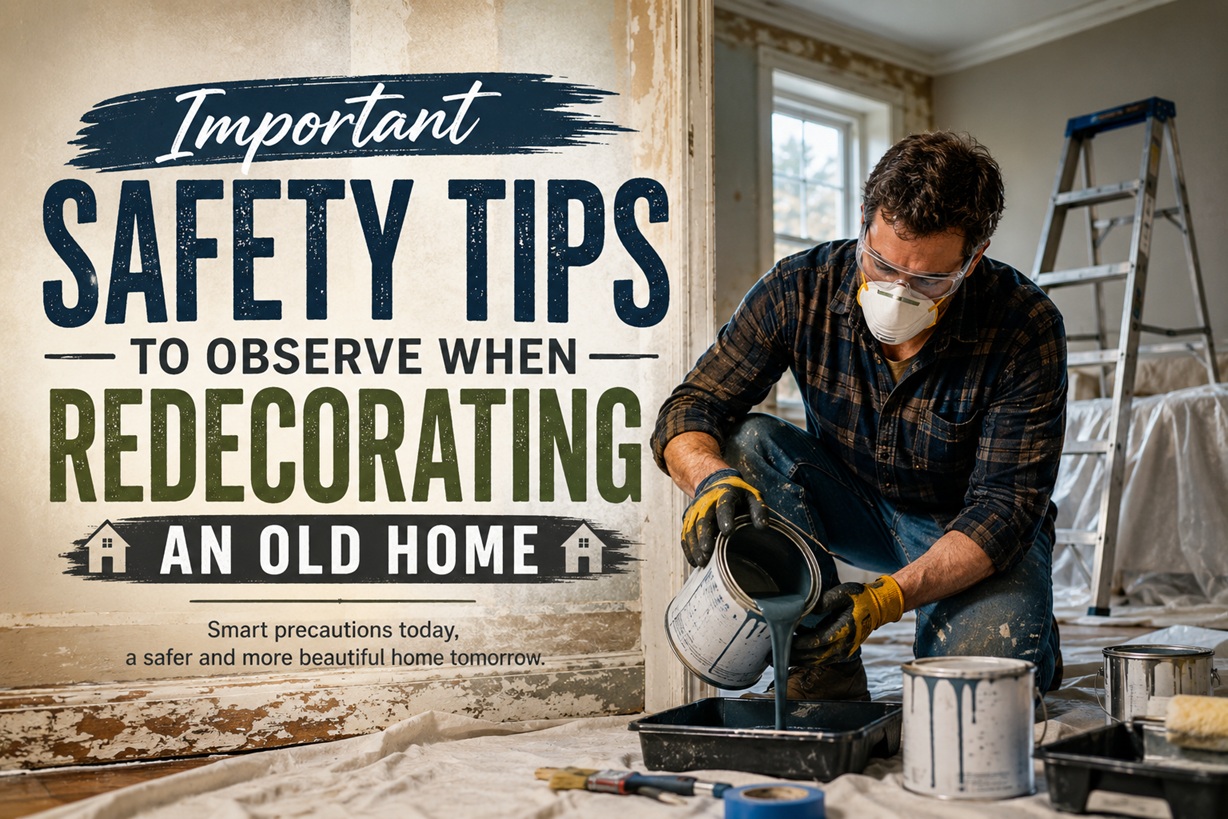
Protective equipment should match the task being performed. A basic dust mask may be useful for light household cleaning, but it may not provide adequate protection during heavy sanding, demolition or work involving hazardous materials.
Safety glasses or goggles can protect the eyes from dust, paint splashes and falling fragments. Gloves help prevent cuts, splinters and skin contact with chemicals. Closed shoes with good grip reduce the likelihood of injury from dropped tools or slippery surfaces.
Hearing protection may also be needed when using loud equipment such as drills, sanders and cutting tools.
Protective equipment should fit properly and remain in good condition. Loose goggles, damaged gloves or an unsuitable respirator can create a false sense of security without providing meaningful protection.
Ventilate the Room Properly
Paints, adhesives, cleaning chemicals and solvents can release fumes, particularly in enclosed rooms. Good ventilation helps reduce the concentration of these substances while also allowing surfaces to dry more effectively.
Open windows and doors where practical, and use suitable fans to move air out of the work area. Avoid positioning a fan in a way that spreads dust into other rooms.
Products labelled as low-odour or low-VOC may be more comfortable to use, but they should still be handled according to the manufacturer's instructions. Low odour does not automatically mean that a product is harmless.
Never mix cleaning chemicals unless the instructions specifically confirm that it is safe. Certain combinations can create dangerous gases.
Check the Electrical System Before Drilling
Older homes may have outdated wiring, poorly documented cable routes or previous electrical modifications that were not completed properly.
Before drilling into walls or ceilings, check for concealed electrical cables and pipes. A suitable detector can help identify hidden services, although it should not replace professional advice when the wiring layout is uncertain.
Damaged sockets, exposed wiring, flickering lights, burn marks and frequently tripped circuits should be investigated by a qualified electrician.
Avoid overloading extension leads with power tools, lighting and ventilation equipment. Cables should be kept away from water, paint containers and busy walkways.
Electrical work should not be treated as a decorating task. New sockets, lighting circuits and wiring repairs should be completed by someone with the appropriate skills and qualifications.
Use Ladders and Platforms Safely
Many decorating injuries happen because someone tries to reach a ceiling or high wall from an unsuitable chair, table or unstable ladder.
Use a ladder of the correct height and place it on a firm, level surface. Do not balance it on boxes or furniture to gain extra reach. Keep your body centred between the sides of the ladder and climb down before moving it.
For longer ceiling or wall work, a stable platform may be safer and more comfortable than repeatedly stretching from a ladder.
Someone should be nearby when high-level work is being carried out, particularly when handling large items such as curtain rails, lighting fixtures or wall panels.
Temporarily Relocate Vulnerable Occupants
Young children, older adults, people with respiratory conditions and anyone who is unwell may be more affected by dust, fumes, noise and temporary disruption.
Where possible, arrange for vulnerable household members to stay somewhere else during the messiest stages of the work. Pets should also be kept away from paint, exposed wiring, tools and construction debris.
Do not bring everyone back as soon as the painting is finished. The rooms should first be ventilated, cleaned and checked to ensure that tools, chemicals and loose materials have been removed.
Paint and adhesive smells should be allowed to reduce before the room is occupied normally again.
Keep the Work Area Organised
A cluttered workspace increases the risk of trips, falls and damaged equipment.
Move unnecessary furniture out of the room before starting. Items that cannot be removed should be covered and positioned away from the work zone. Tools should be returned to a toolbox or designated area when they are not being used.
Cables, paint trays and ladders should not block doorways or escape routes. Spills should be cleaned promptly rather than left until the end of the day.
Good organisation also prevents sharp tools, screws and chemicals from being left where children or pets could reach them.
Control Dust Instead of Spreading It
Dust from plaster, timber, old coatings and construction materials can travel far beyond the room being redecorated.
Close internal doors and use protective sheeting where appropriate. Ventilation systems may need to be switched off or isolated temporarily to prevent dust from circulating throughout the home.
Use tools with dust-extraction features when available, and clean with a suitable vacuum rather than dry sweeping fine particles into the air.
Work clothes should be changed before entering clean areas, especially when there is any possibility that hazardous dust has been disturbed.
Store Paints and Chemicals Safely
Paint, thinner, adhesive, filler and cleaning products should remain in their original labelled containers. Transferring chemicals into drink bottles or unmarked containers creates a serious poisoning risk.
Keep containers tightly closed when they are not being used and store them away from heat, sparks and direct sunlight.
Read the product instructions before use, including information about ventilation, drying times, protective equipment and safe disposal. Leftover products should not automatically be poured into sinks, drains or outdoor areas.
Follow local disposal requirements for paint, chemicals and contaminated materials.
Know When to Stop and Call a Professional
DIY redecorating can save money, but it should not involve taking unnecessary risks.
Professional assistance may be needed when the project involves suspected asbestos, extensive mould, unstable plaster, structural cracks, damaged wiring, gas appliances or significant water damage.
Stop work when an unexpected material, strong chemical smell, exposed cable or damaged structure is discovered. Continuing without understanding the risk can make the problem more dangerous and more expensive to correct.
A professional inspection may seem like an additional cost, but it can prevent exposure, injuries and accidental damage to the property.
Final Thoughts
Redecorating an older home should improve both its appearance and its comfort. That improvement should never come at the expense of health and safety.
The most important step is to understand what lies beneath the visible surfaces before sanding, drilling or removing them. Potential asbestos, lead paint, mould, ageing electrical systems and damaged building materials should be addressed before decorative work begins.
With proper preparation, protective equipment, good ventilation and an organised work area, homeowners can refresh an older property while protecting everyone who lives there. A beautiful result is far more satisfying when the project has also been completed safely.











Comments 0