

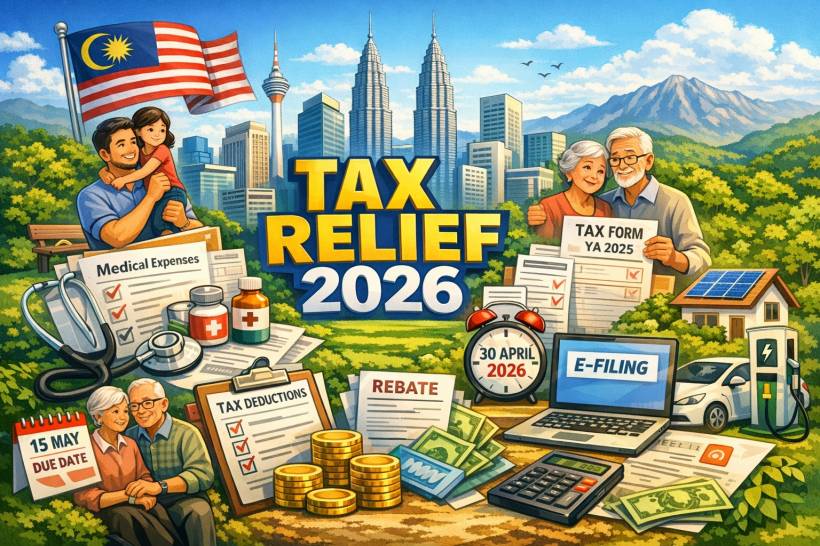
If you're filing taxes in 2026, you're basically doing a "tidy up" of everything you earned and spent in Year of Assessment (YA) 2025. And yes, it always feels a bit like digging through drawers for receipts you swore you kept nicely in a folder.
Before we go into the details, this is where your Tax Relief Summary Table fits nicely in the article (right here in the second paragraph), because it gives readers the quick "menu" before the deeper explanations.
Your 2026 Filing Timeline (So You Don't Get Caught Off Guard)
Let's ground this in dates, because that's where people usually get surprised. For Form BE (YA 2025), the due date is 30 April 2026, and LHDN gives an e-Filing grace period until 15 May 2026. If you submit on 16 May 2026, it's considered late and penalties can apply.
So yes, you can file early, and honestly, it's usually less stressful if you do.
What's New for "Tax Relief 2026"
This is the part that needs a bit of careful wording, because "Tax Relief 2026" can mean two things:
Here are some notable "what's new / updated" items that have been highlighted for YA 2026 under Budget 2026 tax measures, especially around medical-related reliefs and how certain limits are structured.
• There are also Budget 2026 reviews involving insurance-related relief categories (life, education, medical insurance), which signals adjustments and clearer structuring for YA 2026 onward.
The practical takeaway: file your YA 2025 return using the current relief list, but start tracking "new-style" categories if you want to be ready for YA 2026 claims.
The Core Reliefs You'll Still Be Claiming in 2026 (YA 2025)
Even with "what's new" headlines, most people reduce their taxable income using the familiar big buckets. The official LHDN relief list for YA 2025 is the reference point here.
Individual and Dependent Relief
This is the automatic one most people get: RM9,000 for individual and dependent relatives.
You don't need receipts for this part, but it sets the baseline for almost every taxpayer.
Parents and Grandparents Medical-Related Expenses
This one is often missed because people assume it's "too complicated", but it can be meaningful if you've been helping your parents with medical needs. LHDN groups this under a capped amount (with certain conditions like certified medical needs, and a separate limit for full medical check-ups).
If you're supporting parents, the real habit that helps is simple: keep invoices in one place and label them clearly (date, clinic/hospital, who it was for).
Disabled Individual Relief
For YA 2025, the LHDN list shows Disabled individual relief at RM7,000.
If this applies, make sure the supporting certification/status is properly documented because this is not a "guess and hope" category.
Rebates (Not Reliefs), but Still Important
Reliefs reduce your chargeable income. Rebates reduce your tax payable. People mix these up all the time.
And for Muslims, zakat/fitrah paid can be claimed as a rebate (actual amount expended).
How to Maximise Tax Relief Without Doing Anything "Fancy"
This isn't about gaming the system. It's about not leaving money on the table because your documents are scattered across WhatsApp screenshots, email receipts, and that one crumpled paper in your car.
Build a "Relief Folder" Habit (It's Boring, but It Works)
Create one folder (cloud or local) called:
Then drop everything in as you go. When March/April arrives, you won't need a detective badge.
Watch Out for "Restricted" Limits
Some relief categories are capped ("restricted"). That means even if you spent more, your claim is limited. LHDN lists these restrictions clearly in the YA 2025 relief schedule.
The best approach is to treat restricted reliefs like a ceiling: once you hit it, don't assume "more receipts = more relief".
Common Mistakes That Make People Lose Reliefs
Here are the patterns that show up every year:
• Missing the deadline because you thought the e-Filing grace period meant "no consequences after that" (it doesn't).
• Mixing up relief vs rebate (this one quietly changes expectations when people estimate their refund).
Final Thoughts
Tax relief in 2026 isn't about memorising every line item. It's about understanding the few categories that actually apply to your real life, keeping clean records, and filing on time so you don't turn a normal tax return into a penalty story.











Comments 0