

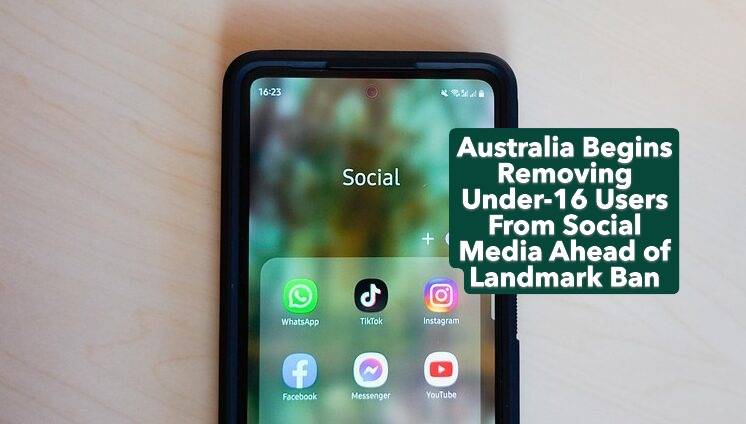
Australia is gearing up for one of the world's toughest child-safety policies on social media, and the effects are already being felt. With a nationwide ban on users under 16 set to take effect on 10 December 2025, Meta has kicked off a sweeping cleanup across Facebook, Instagram, and Threads—removing accounts belonging to younger teens before the law officially lands.
The move signals a major shift in how governments are beginning to regulate Big Tech, especially where children's online safety is concerned. And interestingly, other countries—including Malaysia—are watching closely.
What the Ban Actually Requires
The new legislation is blunt and uncompromising:
If a social media platform allows an under-16 user to remain on its service, it risks a penalty of AUD49.5 million (around RM134 million).
For tech giants, that's not a slap on the wrist—it's a full-blown threat to the bottom line. Unsurprisingly, companies that initially resisted the proposal have now come to terms with reality: comply, or pay the price.
Meta and other platforms have since started notifying affected young users. They're being encouraged to:
• Choose whether to delete their accounts entirely or freeze them until they turn 16.
It's essentially a digital eviction—but one softened by giving teens the chance to preserve their memories before the door closes.
Why Australia Is Taking Such a Hard Line
Australia's eSafety Commissioner, Julie Inman Grant, has been at the centre of this push. She describes the under-16 ban as "the first domino to fall" in what she expects to be a broader global recalibration of tech regulation.
In her view, incremental measures haven't worked. Platforms continue to deploy design features—recommendation loops, persuasive notifications, addictive content feeds—that she argues even adults struggle to resist. For children, she says, these systems are nearly impossible to navigate safely.
And the scale of the issue is staggering. Despite age restrictions already in place, 96% of Australians under 16 are active on social media—over a million minors in a nation of 27 million.
To regulators, that's proof that self-policing by tech companies simply doesn't work.
A Global Ripple Effect, With Malaysia Next in Line
Australia's law isn't being viewed in isolation. Other governments have been eyeing the model with growing interest, especially as public pressure mounts around children's online safety.
Malaysia, in particular, has already been studying Australia's approach as it develops its own framework. A similar age-based ban—also targeting users below 16—is expected to roll out next year. What distinguishes the Malaysian plan is the inclusion of mandatory eKYC (electronic Know Your Customer) identity verification to enforce age checks more reliably.
If implemented as intended, this could reshape how Malaysian teens access social platforms and redefine the responsibilities placed on tech companies operating locally.
What This Means Moving Forward
Australia's bold experiment marks a turning point. By proactively removing underage users ahead of the deadline, Meta is signalling that major platforms may be ready—even if reluctantly—to operate under stricter, government-led safety rules.
As more countries evaluate similar measures, the global social media landscape could look very different within just a few years. For now, Australia has set the pace, and the world—including Malaysia—is taking notes.











Comments 0