

Samsung's latest Galaxy launch is not only about new foldable phones and smartwatches. It also reflects a much broader strategy in which smartphones, wearables and intelligent eyewear are expected to work together as part of one connected AI ecosystem.
Qualcomm remains central to that vision.
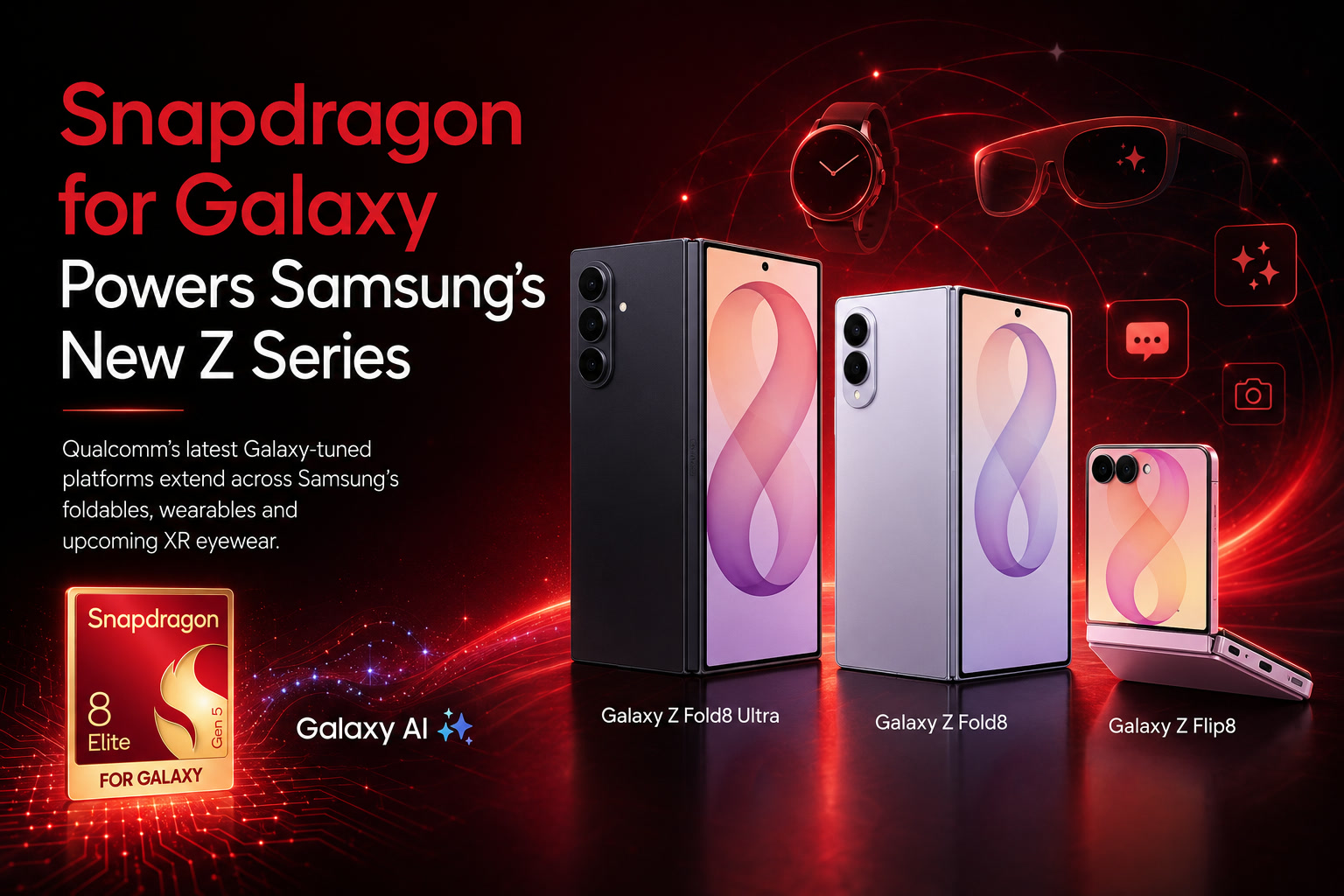
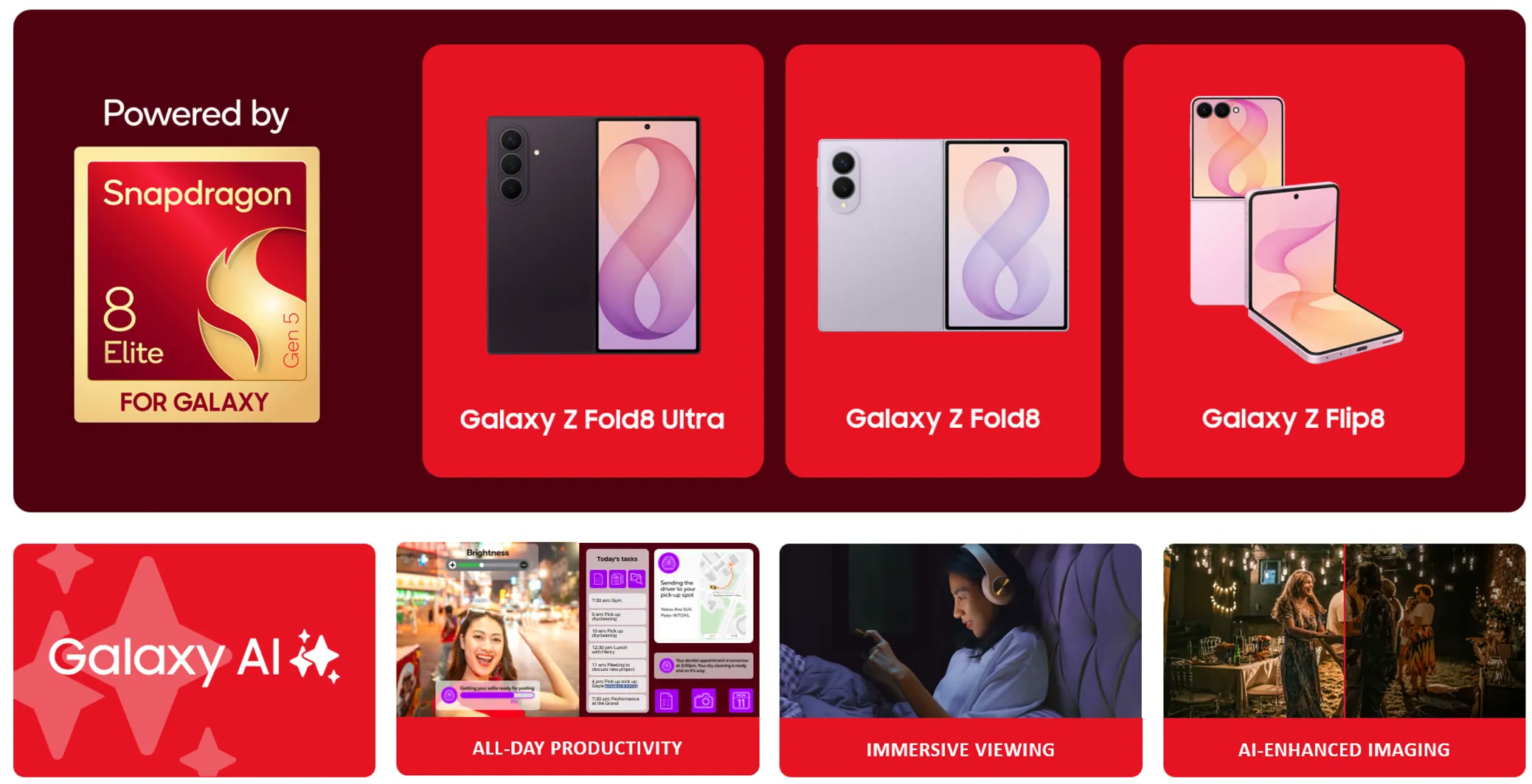
At Galaxy Unpacked, the chipmaker confirmed that several of its newest Snapdragon platforms will power Samsung's latest devices, including the Galaxy Z Fold8 Ultra, Galaxy Z Fold8, selected Galaxy Z Flip8 models, Galaxy Watch9, Galaxy Watch Ultra2 and Samsung's upcoming Android XR-powered intelligent eyewear.
The announcement extends a long-running relationship between Samsung and Qualcomm, but the scope of the partnership is becoming much wider. Snapdragon is no longer supporting only flagship smartphones. Its technology is now spreading across multiple categories of personal devices that may continuously share information, understand context and deliver AI assistance throughout the day.
Snapdragon for Galaxy Returns to Samsung's Foldables
At the centre of the smartphone lineup is the Snapdragon 8 Elite Gen 5 for Galaxy.
The customised platform will power the Galaxy Z Fold8 Ultra, Galaxy Z Fold8 and selected versions of the Galaxy Z Flip8.
The "for Galaxy" branding generally refers to a Snapdragon platform tuned specifically for Samsung devices. This may involve adjustments to processing performance, graphics capability, AI acceleration, camera processing and power management.
For foldable phones, these improvements are especially important.
A foldable device may need to manage several applications at once, support large internal displays, run advanced camera features and maintain acceptable battery life despite the physical space required by the hinge and flexible screen.
The processor must therefore deliver high performance without producing excessive heat or draining the battery too quickly.
Qualcomm's Oryon CPU Architecture Moves Further Into Mobile
The Snapdragon 8 Elite Gen 5 for Galaxy is built around Qualcomm's Oryon CPU architecture.
Oryon first gained attention as part of Qualcomm's effort to improve performance across its broader computing portfolio. Bringing the architecture into flagship mobile platforms allows Qualcomm to exercise greater control over CPU design and optimise the relationship between performance, efficiency and AI workloads.
For Galaxy users, the practical benefits are expected to include faster application loading, improved multitasking and better sustained performance during demanding activities.
This may be particularly noticeable when using multiple applications on the Galaxy Z Fold8's larger display, editing high-resolution media or running games that place heavy demands on both the processor and graphics hardware.
However, benchmark improvements alone are becoming less important than how consistently the device performs in everyday situations.
A powerful processor must also manage temperature, background activity and battery consumption effectively. Otherwise, short bursts of speed may not translate into a better long-term user experience.
On-Device AI Becomes a Core Smartphone Function
Samsung and Qualcomm are also positioning the new platform around on-device artificial intelligence.
Instead of sending every AI request to a remote cloud service, supported tasks can be processed directly on the phone.
This may improve response time, reduce dependence on a constant internet connection and keep more sensitive information on the device.
On-device processing could support features involving live translation, image enhancement, content summarisation, camera assistance and personalised recommendations.
The technology may also allow the phone to react more quickly because it does not need to wait for information to travel to a data centre and back.
Cloud-based AI will still remain important for larger and more complex models. The most realistic approach is likely to combine local and cloud processing, with the device deciding where each task can be handled most effectively.
Qualcomm's role is to provide the CPU, GPU and neural-processing capabilities needed to support that mixture.
Foldables Could Benefit Most From Context-Aware AI
Foldable phones provide a particularly interesting environment for AI because their interfaces change depending on how they are used.
A Galaxy Z Fold8 may operate as a conventional phone when closed and as a larger tablet-like workspace when opened. Applications can appear side by side, move between displays and adapt to different orientations.
AI could potentially help manage those transitions more intelligently.
The device may learn which applications users commonly open together, adjust layouts based on activity or surface relevant information depending on whether the phone is being used for work, entertainment or communication.
For example, opening a document on the larger display might automatically suggest related notes, messages or translation tools.
The value will depend on how naturally these features fit into the user experience. AI that constantly interrupts or produces unnecessary suggestions may feel more distracting than useful.
The strongest implementations will work quietly in the background and appear only when they provide clear assistance.
The Galaxy Z Flip8 Will Not Use Snapdragon Everywhere
Qualcomm confirmed that Snapdragon will power the Galaxy Z Flip8 only in selected markets.
This means Samsung is continuing its familiar multi-chip strategy for at least part of the lineup.
Depending on the region, some Galaxy Z Flip8 models may use a different processor platform.
Regional processor variations are not unusual for Samsung, but they often attract attention from buyers who compare performance, battery life, camera processing and long-term software behaviour between versions.
Even when two models carry the same product name, differences in chipset architecture can affect how the device performs under demanding workloads.
For most users, daily tasks may feel broadly similar. However, enthusiasts and power users are likely to examine whether regional versions differ in gaming performance, thermal management or efficiency.
Samsung will need to ensure that the overall experience remains consistent regardless of the processor used.
Snapdragon Wear Elite Powers Samsung's New Watches
Qualcomm's role extends beyond smartphones through the Snapdragon Wear Elite platform.
The chipset will power the Galaxy Watch9 and Galaxy Watch Ultra2.
Smartwatch processors face a different challenge from smartphone chips. They must operate within a much smaller body and rely on a far more limited battery while supporting an increasing number of sensors and always-on functions.
A modern smartwatch may continuously monitor movement, heart rate, sleep patterns, location and other contextual signals.
Processing that information efficiently is essential because sending every sensor reading to a paired phone or cloud platform could consume more power and introduce delays.
Snapdragon Wear Elite is designed to support more continuous processing directly on the watch.
This may allow Samsung's wearables to provide more responsive health insights and context-aware features without requiring constant communication with a smartphone.
Continuous Sensor Processing Could Improve Personalisation
The new wearable platform places particular emphasis on continuous sensor activity.
Rather than capturing isolated readings, the watch may analyse patterns throughout the day.
This could help distinguish between exercise, rest, sleep, travel and other forms of activity. The watch may then adjust notifications, health suggestions or system behaviour based on the user's current context.
For example, a device could recognise that the wearer is exercising and prioritise workout information while reducing unnecessary interruptions.
During sleep, it may place greater emphasis on overnight monitoring and minimise background functions that are not immediately required.
The goal is to make the smartwatch feel more aware of the user's situation rather than simply functioning as a small notification screen.
However, stronger personalisation also raises questions about privacy and data handling.
Users should be able to understand which information is being collected, how long it is stored and whether it is processed locally or shared with external services.
Battery Life Remains the Real Wearable Test
Improved processing performance is valuable, but battery life remains one of the most important factors for smartwatch users.
Advanced health tracking and continuous AI processing can increase energy consumption if they are not managed efficiently.
The challenge for Qualcomm and Samsung is therefore to support more intelligent features without forcing users to charge their watches more frequently.
This is especially important for sleep tracking.
A smartwatch that requires charging every evening may not be available to monitor sleep overnight. Longer battery life gives users greater freedom to wear the device continuously and allows the system to collect more complete health and activity patterns.
The success of Snapdragon Wear Elite will be judged not only by speed but also by how effectively it balances sensor processing, connectivity and power consumption.
Samsung's Intelligent Eyewear Strategy Begins to Take Shape
Samsung's partnership with Qualcomm is also moving into intelligent eyewear.
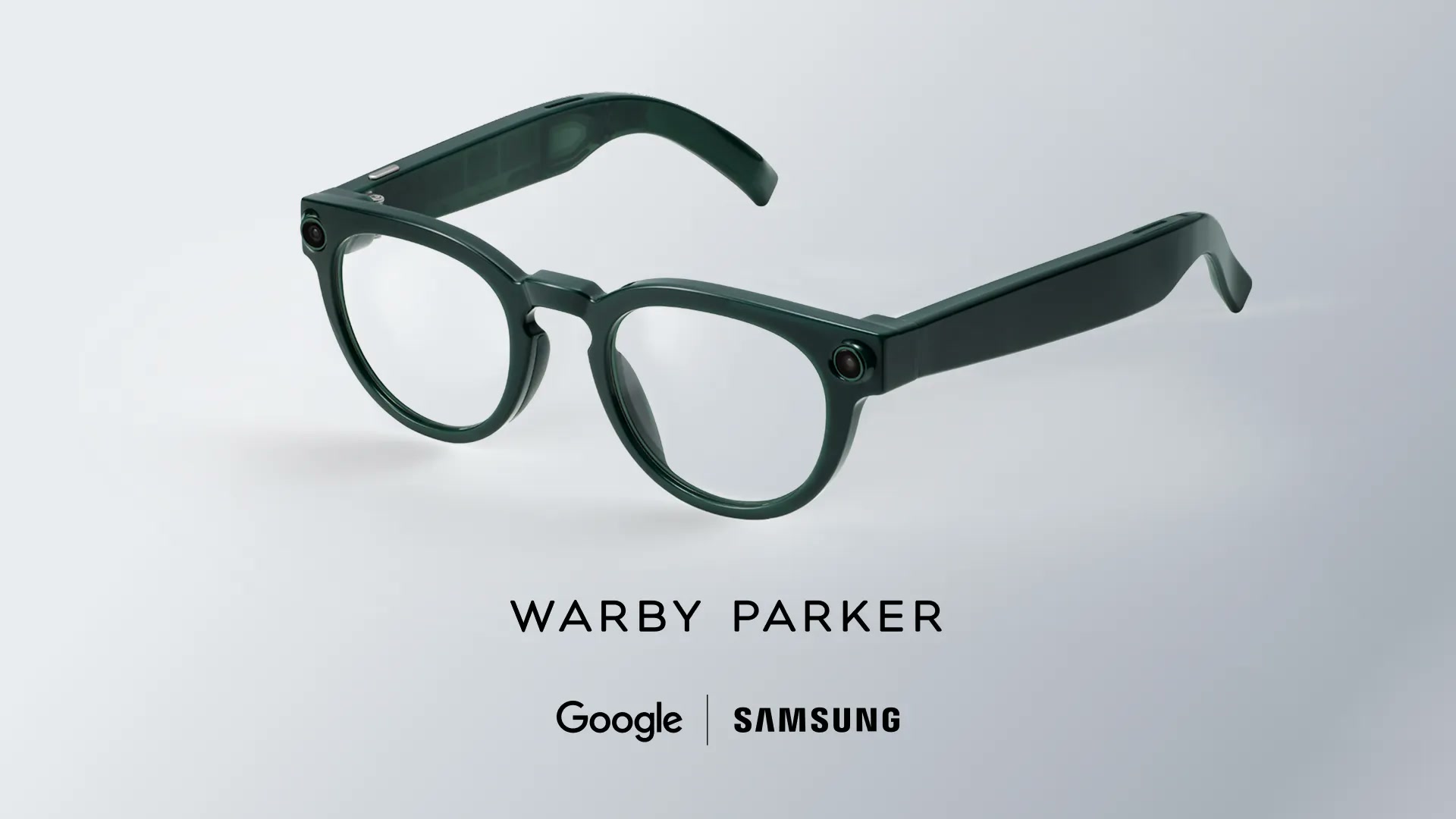
The companies, together with Google, are preparing a new generation of smart glasses powered by Snapdragon AR1 Gen 1 and connected to the Android XR ecosystem.
The eyewear is expected to focus on lightweight, everyday designs rather than the larger form factor associated with mixed-reality headsets.
Gentle Monster and Warby Parker have already revealed additional designs expected to arrive later in the year.
Their involvement suggests that style and comfort will be treated as central requirements rather than secondary considerations.
Smart glasses will need to look and feel like normal eyewear if companies expect people to wear them throughout the day.
A device may offer impressive AI capabilities, but adoption will remain limited if it is heavy, uncomfortable or visually awkward.

Contextual AI Could Become the Main Smart-Glasses Feature
The most important function of intelligent eyewear may not be displaying complex virtual environments.
Instead, smart glasses could provide discreet, contextual assistance while the user interacts with the physical world.
Depending on the final hardware and software, this could include recognising objects, providing directions, translating visible text or delivering information through audio.
A user might look at a sign in another language and receive a translation, ask for information about a landmark or receive navigation instructions without repeatedly checking a phone.
This form of AI assistance could feel more immediate because the device shares the user's visual and physical context.
However, intelligent eyewear also creates serious privacy considerations.
People nearby may not always know when cameras, microphones or AI systems are active. Manufacturers will need clear indicators, responsible recording controls and understandable privacy settings.
Without strong social and technical safeguards, smart glasses could face resistance even if the underlying technology works well.
One AI Ecosystem Across Several Devices
Samsung's broader objective appears to be a connected environment in which each device contributes different capabilities.
The smartphone may provide the greatest processing power and connectivity. The smartwatch can gather continuous health and activity information. Intelligent eyewear may deliver hands-free access to contextual assistance.
Together, these devices could create a more complete picture of what the user is doing and what support may be useful.
For example, the watch may recognise physical activity, the phone may understand the user's schedule and the glasses may provide navigation or real-time information.
The challenge is making those interactions feel coordinated rather than fragmented.
Users should not need to configure the same preferences repeatedly across several devices or decide manually which device should handle each task.
A successful ecosystem should allow information to move smoothly while still giving users control over privacy, permissions and data sharing.
Qualcomm Provides the Common Technology Foundation
Using Snapdragon platforms across smartphones, watches and eyewear gives Samsung a more consistent technical foundation.
Qualcomm can optimise connectivity, AI processing and device communication across the different product categories.
This may simplify the development of features that operate across several devices.
A task could begin on the watch, move to the phone for heavier processing and deliver the result through the glasses.
That type of interaction depends on low-latency connectivity, compatible software frameworks and efficient workload distribution.
The hardware alone cannot create a unified ecosystem, but common platforms can make integration easier.
Samsung and Google will still need to ensure that Android, Wear OS and Android XR exchange information reliably and present a consistent experience.
The Partnership Is Becoming More Strategic
Samsung has historically used a mixture of Qualcomm Snapdragon and its own Exynos processors across different product lines and markets.
The latest announcement shows that Qualcomm remains particularly important to Samsung's premium mobile and wearable ambitions.
The partnership now extends into areas where AI, health tracking and spatial computing are becoming central.
For Qualcomm, Samsung provides access to one of the largest global consumer-device ecosystems.
For Samsung, Qualcomm offers mature processing, connectivity and AI platforms that can support rapid expansion into new product categories.
The relationship is therefore no longer limited to supplying smartphone processors. It is becoming part of Samsung's broader strategy for connected personal computing.
Final Thoughts
Qualcomm's continued presence across Samsung's latest Galaxy devices shows how the Snapdragon partnership is expanding beyond conventional smartphones.
The Snapdragon 8 Elite Gen 5 for Galaxy will support Samsung's newest foldables, while Snapdragon Wear Elite brings continuous processing and improved connectivity to the Galaxy Watch9 and Galaxy Watch Ultra2.
Snapdragon AR1 Gen 1 then extends the partnership into intelligent eyewear, where Samsung, Qualcomm and Google are preparing more discreet forms of contextual AI assistance.
The real story is not simply that several new products use Qualcomm processors. It is that Samsung is attempting to create an ecosystem in which phones, watches and glasses understand more about the user and work together in real time.
Whether that vision succeeds will depend on more than performance. Battery life, privacy, regional chipset consistency, software integration and everyday usefulness will be just as important.
If Samsung can make the devices feel connected without making the experience complicated, its Snapdragon-powered ecosystem could become one of the clearest examples of how personal AI moves beyond the smartphone and into the rest of daily life.











Comments 0