

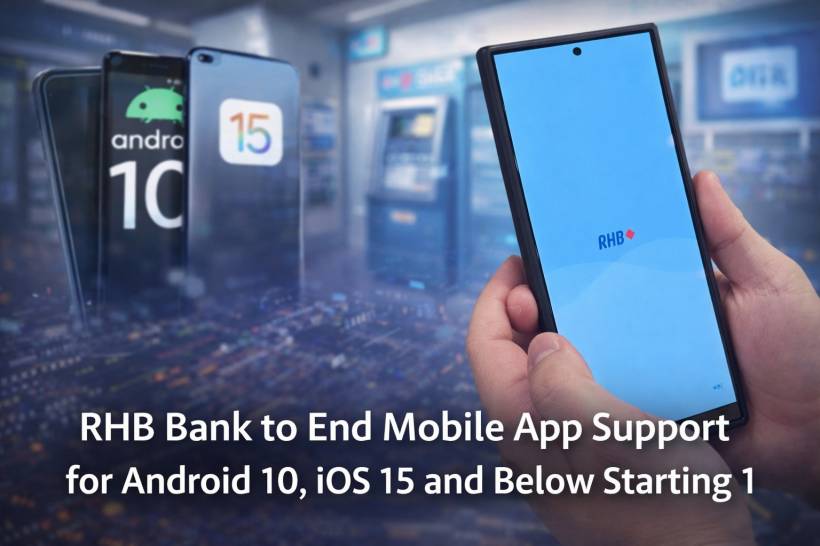
RHB Bank customers using older smartphones may want to check their device software version sooner rather than later. The bank has confirmed that its mobile banking app will stop working on older operating systems starting 1 June, which means some users could lose access to important banking functions if they do not update or switch devices in time.
For many people, delaying software updates is not a big deal. A phone still turns on, apps still open, and daily use feels mostly normal. But when it comes to banking apps, older software eventually becomes a much bigger problem. Security requirements change, app protections improve, and banks increasingly need newer operating systems to keep digital transactions safe.
That is exactly what is happening here.
Which Devices Will Be Affected
RHB says it will end support for its mobile banking app on devices running Android 10 or older, as well as iPhones and iPads using iOS 15 or older. Once the cutoff date arrives on 1 June, the app will no longer function properly on those versions.
This is not just a case of losing access to minor features. For affected users, the app will become unusable, which also means banking transactions that depend on in-app approval will no longer go through. Since Secure Plus authorisation relies on the mobile app, users on unsupported devices may find themselves unable to approve transfers, payments, or other important banking actions.
In other words, this is more than a technical update. It directly affects how customers access their money and manage their accounts.
What Users Need to Continue Using the App
To keep using the RHB Mobile Banking App, customers will need a device running at least Android 11 or iOS 16. That is now the minimum requirement moving forward.
Even so, RHB is not stopping at the bare minimum. The bank is also encouraging users to be on Android 13 or iOS 17 and above where possible. That recommendation makes sense, especially since newer operating systems usually come with stronger built-in protections and continue receiving security patches for a longer period.
This part is important because app compatibility is only one side of the story. The other side is security. A phone may technically still run an app, but if the operating system is too old and no longer receiving proper updates, it becomes a weaker link in the overall banking security chain.
Why Banks Keep Making These Changes
Whenever a bank drops support for older devices, some users naturally get frustrated. On the surface, it can feel like customers are being forced to upgrade even though their phones still seem usable. But from the bank's perspective, the decision is usually tied to security, fraud prevention, and long-term reliability.
Banking apps deal with highly sensitive information. They are not just checking balances anymore. They now handle transfers, account approvals, digital verification, login protection, and device-based authentication. Supporting outdated operating systems for too long increases the risk of security gaps, especially when manufacturers themselves are no longer actively patching vulnerabilities.
So while this kind of change may be inconvenient, it is also part of a broader shift in digital banking. Financial institutions are becoming stricter about the software environment they are willing to support.
RHB Is Not the Only Bank Doing This
This move is not unique to RHB. Other major banks in Malaysia have already taken similar steps over the past year or two.
CIMB previously announced support changes for its Octo app, with older versions of Android and iOS eventually being cut off. Maybank also made similar changes for its MAE app, particularly for older Apple devices. So in many ways, RHB is following a wider industry pattern rather than doing something unusual on its own.
That is worth highlighting because it shows this is not just about one bank tightening its rules. It reflects a broader banking and cybersecurity trend in Malaysia, where digital banking services are gradually leaving older platforms behind.
What RHB Customers Should Do Now
Anyone using the RHB banking app should check their device software version before 1 June. If the phone is still capable of updating to Android 11 or later, or iOS 16 or later, that may solve the issue immediately. But for users with much older phones that no longer receive major updates, a newer device may be the only practical solution.
It is also a good idea not to wait until the last minute. Banking issues always feel more stressful when they happen unexpectedly, especially if they affect approvals, payments, or urgent account access. Sorting it out early is much better than discovering the problem after the app stops working.
A Small Reminder About Older Smartphones
This situation is also a reminder that holding on to a phone for too many years can eventually create problems beyond performance or battery life. Even if the hardware still works, outdated software can quietly limit access to apps that matter most, especially banking, government, and security-sensitive services.
That is becoming more common as companies push toward stronger app-level security and expect users to stay on reasonably modern software.
Final Thoughts
RHB Bank's decision to stop supporting Android 10, iOS 15, and older versions from 1 June may be inconvenient for some users, but it is very much in line with how digital banking is evolving. Older phones are not just slower or less flashy. They can also become compatibility and security risks, especially for apps that handle financial transactions.
For RHB customers, the message is simple. Check your device, update if possible, and make sure you are not caught off guard when the support cutoff takes effect. In today's banking environment, staying current with your phone's software is no longer just a nice extra. It is becoming part of basic account access.











Comments 0