

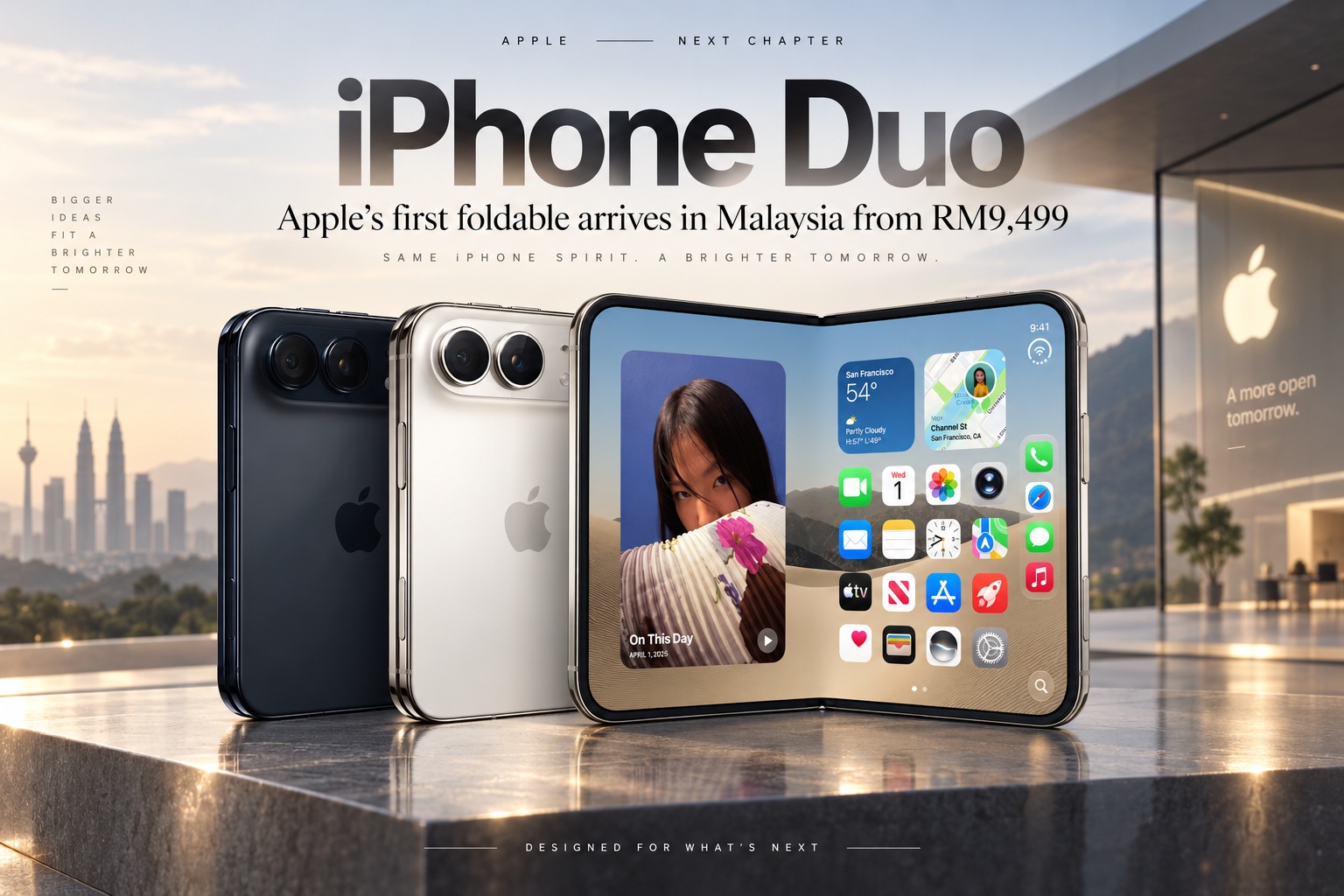
After years of rumours surrounding a foldable iPhone, Apple has finally entered the foldable smartphone market. During its "Surprise and shine" event, the company officially introduced the iPhone Duo, confirming that its first foldable will not carry the widely speculated Fold or Ultra branding.
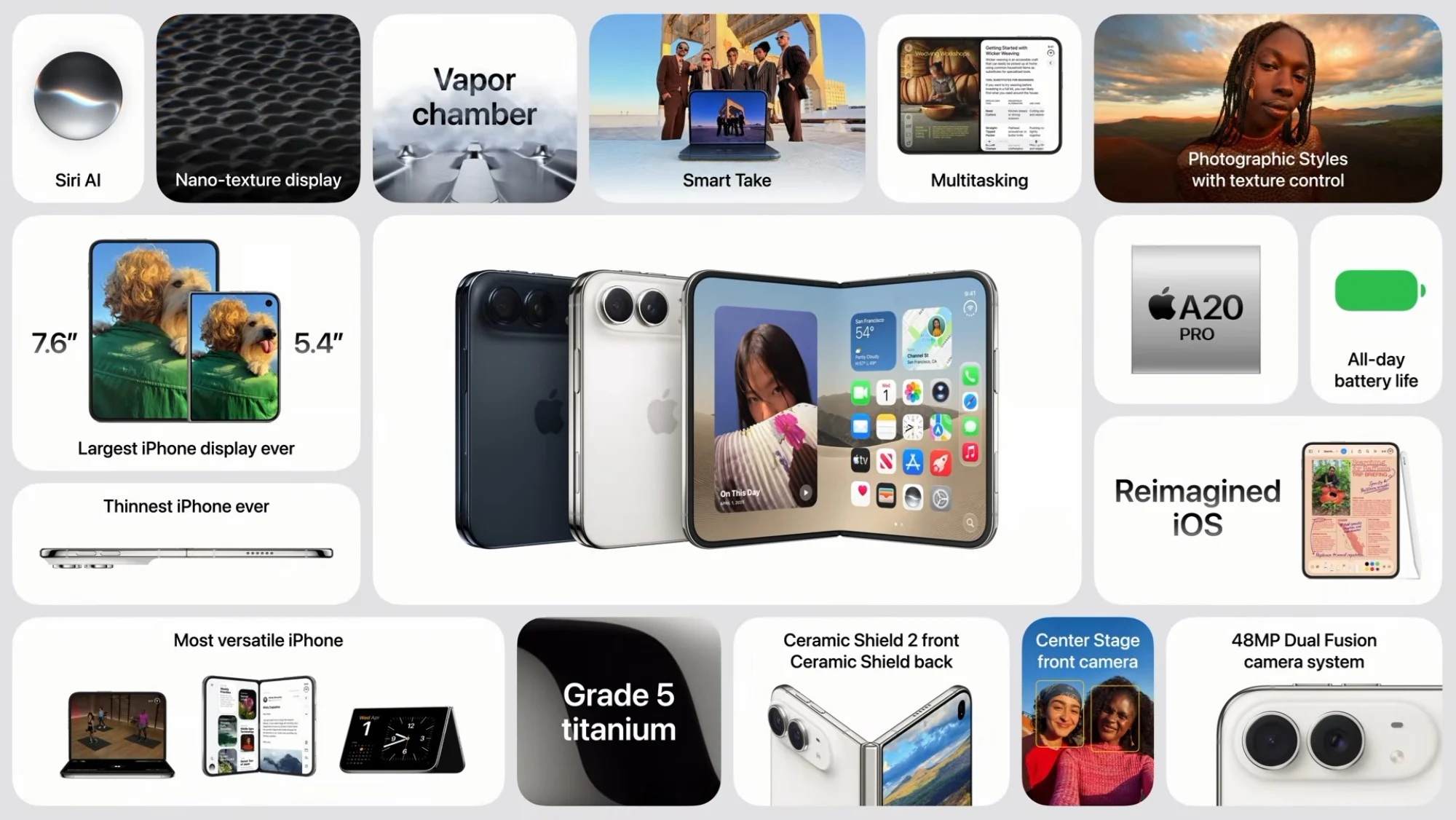
The iPhone Duo takes a book-style approach similar to other large foldables already on the market. Apple is calling the design a "passport" form factor, combining a compact 5.4-inch outer display with a considerably larger 7.6-inch inner screen. The company has focused heavily on making the transition between those two displays feel natural rather than treating them as completely separate interfaces.
A Familiar Foldable Shape With an Apple Approach
When closed, the iPhone Duo behaves like a relatively compact smartphone using its external display. Opening the device reveals the much larger internal panel, giving users more room for apps, multitasking, media and productivity.
Apple says applications and interface controls transition smoothly between the two displays. Controls remain in consistent positions where possible, reducing the need for users to mentally readjust every time they switch between the outer and inner screens.
The 7.6-inch display has also been designed to work comfortably in either portrait or landscape orientation. This gives users considerably more flexibility depending on whether they are reading, watching video, working with documents or running multiple applications.
The Duo will be available in Star White and Night Sky.
Titanium Keeps the Foldable Strong Without Adding Too Much Weight
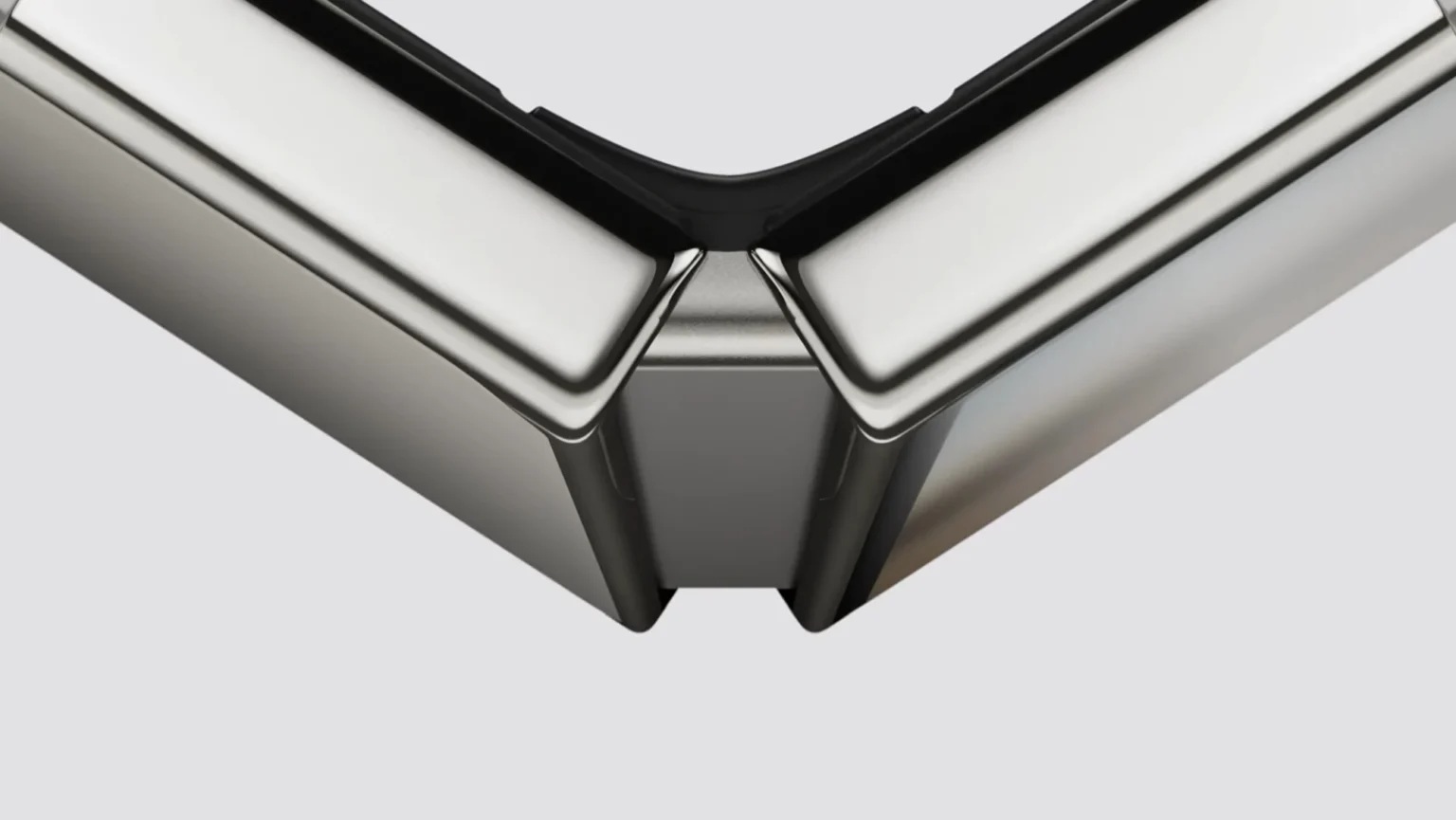
Apple has chosen a titanium frame for the iPhone Duo, giving the foldable additional structural strength while attempting to keep weight under control.
That becomes especially important on a folding device because the chassis needs to support two halves, a large flexible display and a complicated hinge mechanism. Foldable phones naturally contain more moving components than conventional smartphones, so durability becomes one of the biggest engineering challenges.
The hinge itself contains more than 100 individual components and uses what Apple describes as a carefully tuned torque profile. It is designed to keep the phone securely closed while also allowing it to sit flat when fully opened.
Apple has also made the outer display capable of remaining in a standby state even when the device is not connected to a charger, allowing information such as the clock to remain visible.
Touch ID Returns on the Side Button
Instead of relying entirely on Face ID, Apple has integrated Touch ID into the side button of the iPhone Duo.
This arrangement makes practical sense on a foldable because the fingerprint sensor remains accessible whether the device is opened or closed. Users can simply touch the side button to authenticate without worrying about which display is currently active.
Apple Watch owners also have another option, as the watch can be used to help unlock the device.
The return of Touch ID may be particularly appealing to users who have missed fingerprint authentication on Apple's flagship smartphones.
Apple Pencil Works on Both Displays
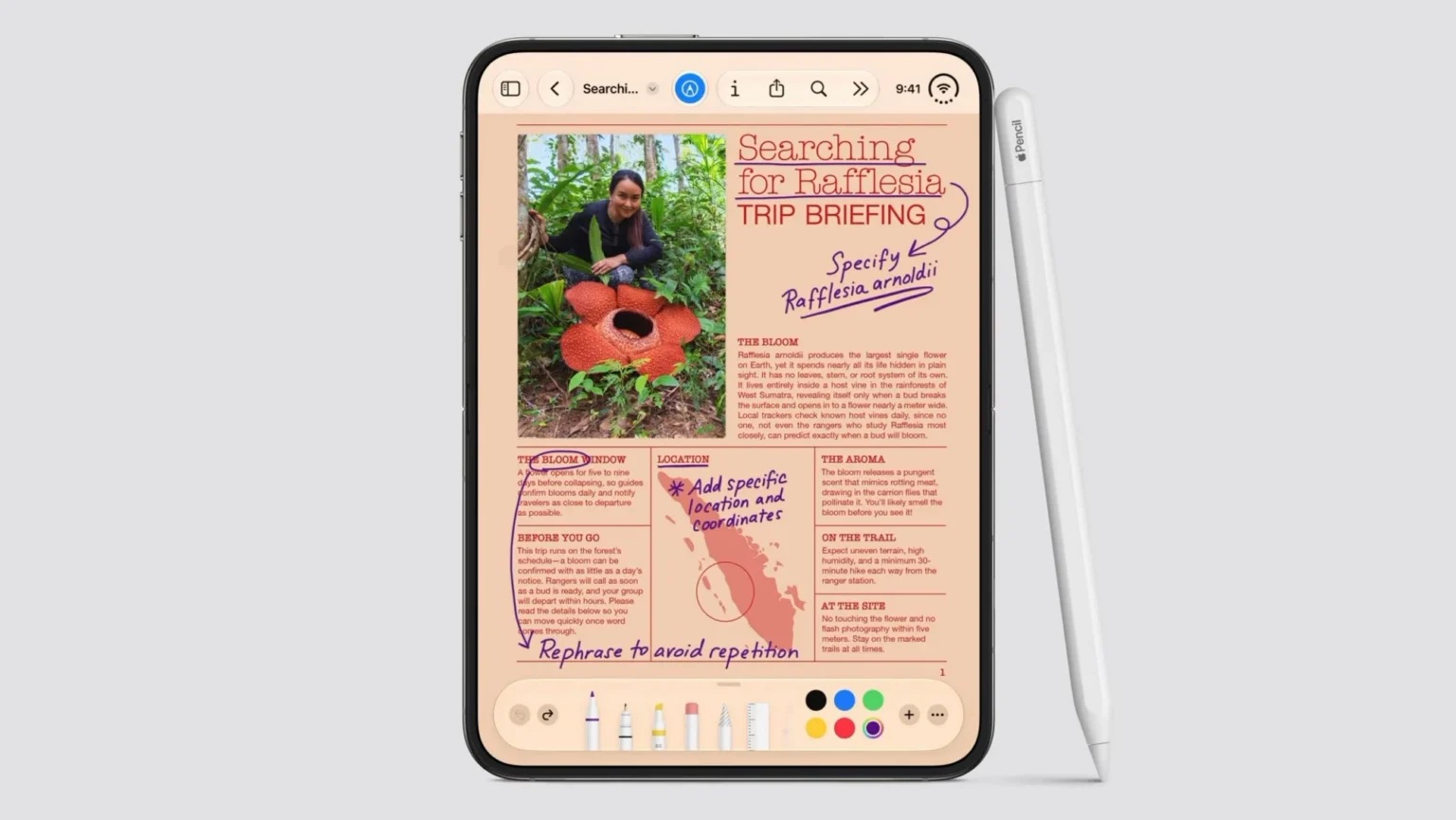
Another significant addition is Apple Pencil support, available on both the inner and outer displays.
The larger 7.6-inch panel is naturally the more interesting canvas. Users could potentially take handwritten notes, annotate documents, sketch or make precise edits without needing to move to an iPad.
Supporting the Pencil on the outer display provides additional flexibility for quick interactions when users do not want to unfold the entire device.
This gives the iPhone Duo a stronger productivity angle and helps distinguish it from conventional iPhones, especially for users who already work within Apple's Pencil-based ecosystem.
The Bigger Screen Makes Multitasking Much More Practical
The inner display enables split-view multitasking, allowing two applications to run side by side.
Apple is even allowing multiple instances of the same application in certain situations. For example, users could potentially have two Safari windows open simultaneously rather than constantly switching between tabs or applications.
That is one of the biggest advantages of a large foldable display. Traditional smartphones may technically support multitasking, but limited screen space often makes it uncomfortable. At 7.6 inches, the Duo begins moving closer to the kind of workspace normally associated with a small tablet.
Apple appears to be using that additional screen area as more than simply a larger version of the standard iPhone interface.
A20 Pro Powers Apple's First Foldable
Under the hood, the iPhone Duo uses Apple's new A20 Pro processor, the same generation of silicon introduced alongside the iPhone 18 Pro family.
It is paired with Apple's new C2 modem, handling the device's cellular connectivity.
Using the Pro-class processor makes sense because a foldable naturally places heavier demands on the hardware. The system may need to run multiple apps simultaneously, continuously transition content between displays and handle increasingly complex Apple Intelligence features.
The A20 Pro therefore gives the Duo enough processing headroom to behave more like a productivity device rather than simply an unusually shaped smartphone.
Two Batteries Power the Two Halves
Apple has placed a battery in each half of the foldable rather than attempting to fit one large cell entirely on one side.
The company claims the iPhone Duo can provide up to 31 hours of video playback when primarily using the inner display. Using the outer display alone increases that figure to as much as 44 hours.
When usage is divided evenly between the two screens, Apple estimates approximately 24 hours of endurance.
As always, actual battery life will vary considerably depending on brightness, connectivity and workload, but the outer-screen figure is particularly interesting. It suggests users who keep the Duo closed for ordinary tasks could potentially achieve substantially longer endurance than when constantly using the large internal panel.
Two 48MP Rear Cameras Handle Photography
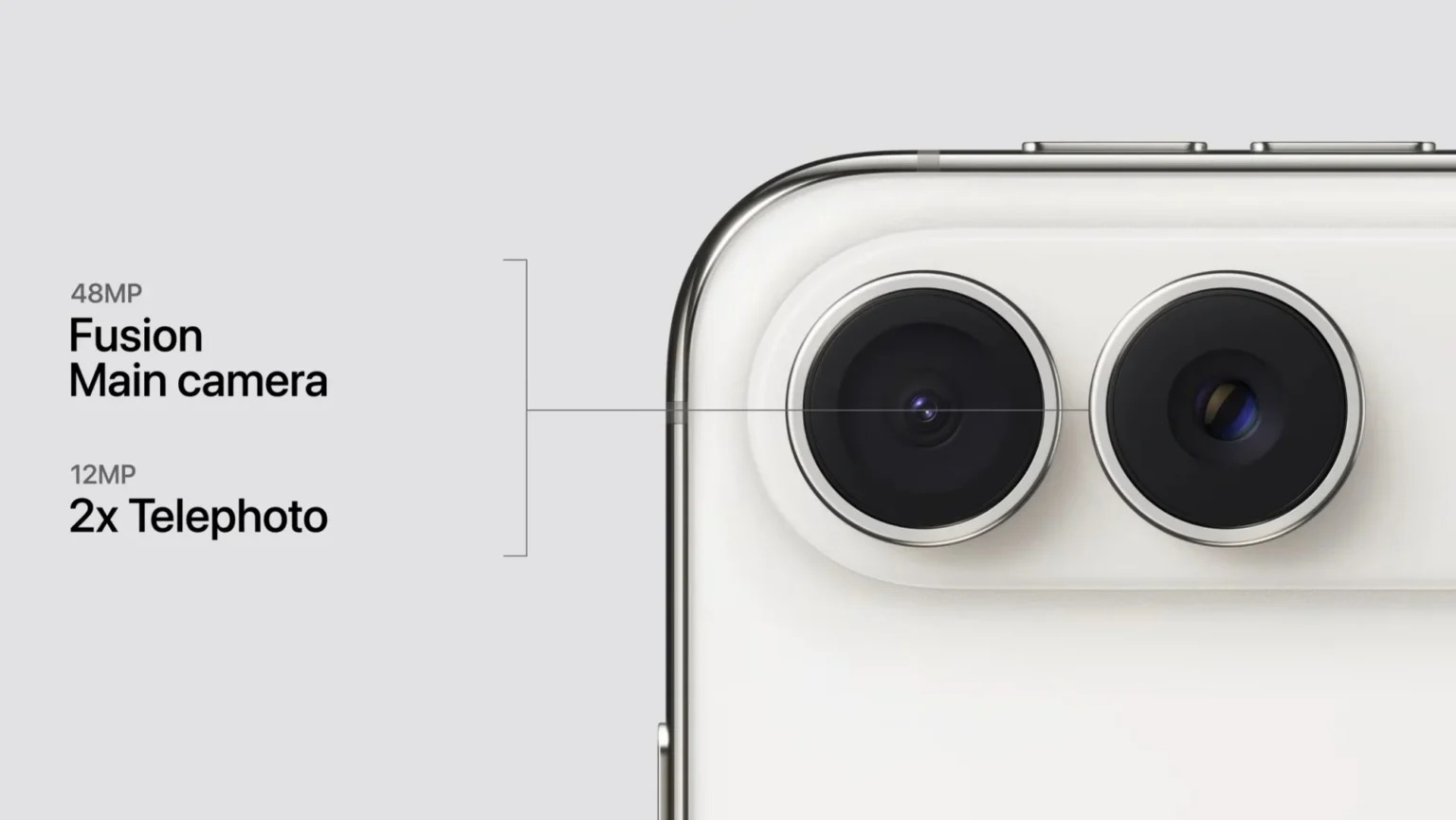
The iPhone Duo carries two rear cameras rather than the three-camera arrangement found on Apple's Pro Max models.
The system consists of a 48MP Fusion Main camera and a 48MP Fusion Ultrawide, with the ultrawide also supporting macro photography.
The main sensor can provide what Apple describes as 2X optical quality by cropping into the high-resolution sensor. This gives users some additional reach without requiring another camera module.
However, there is no dedicated telephoto lens.
That omission represents one of the clearer compromises Apple has made to accommodate the folding design.
No Dedicated Telephoto Means Limited Long-Range Photography
For everyday photography, the main and ultrawide cameras should cover most situations comfortably. Users who regularly photograph distant subjects may find the Duo less capable than the iPhone 18 Pro models.
Digital cropping from a 48MP sensor can produce respectable results at moderate magnifications, but it cannot completely replace a dedicated optical telephoto system as the distance increases.
Concert photography, wildlife and other situations requiring substantial zoom will therefore remain better suited to Apple's conventional Pro flagships.
The Duo appears to prioritise the benefits of its folding design over providing every possible camera focal length.
The Folding Design Creates New Camera Tricks
Apple is making more creative use of the foldable form factor elsewhere.
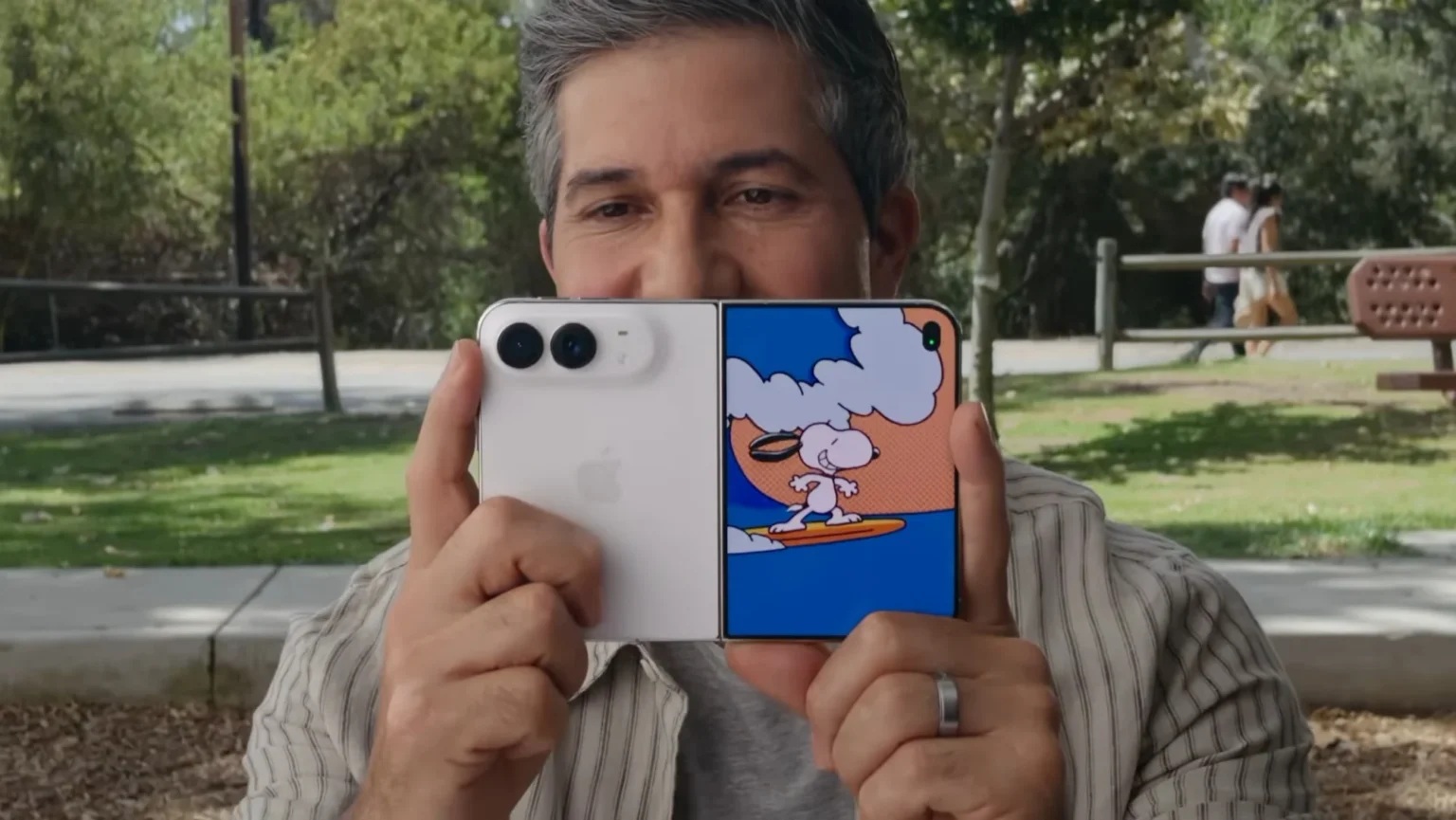
Because the phone can remain partially folded, users can position it on a surface for hands-free photography and video recording without requiring a tripod. The rear cameras support 4K recording at up to 120fps along with 4K Dolby Vision HDR time-lapses.
The external display can also act as a preview screen when taking photographs with the higher-quality rear cameras.
This allows someone taking a portrait to see their own framing while the photographer uses the main camera system rather than the lower-resolution front camera.
Duo Preview Helps Subjects Frame Themselves
Apple calls this feature Duo Preview.
When enabled, the person being photographed can see themselves on the external screen while the photographer views the normal camera interface on the internal display.
That can be particularly useful for group photographs, portraits or video recording because the subject can immediately see whether they are properly positioned.
Apple has also added Smart Take, which attempts to make sure everyone is ready before capturing the image.
For photographing children, Kid Cue displays animations intended to encourage them to look toward the camera at the right moment.
These features demonstrate how Apple is trying to turn the presence of two displays into practical advantages rather than simply duplicating the same screen.
FaceTime Can Also Use Both Displays
The foldable design also changes how video calls work.
With Duo FaceTime, people standing around the device can follow the conversation through the outer display rather than crowding around the larger internal screen.
The phone also includes a Center Stage front camera capable of adjusting framing during calls.
Meanwhile, the camera associated with the internal display sits beneath the screen and only becomes visible when required. That helps maintain a cleaner uninterrupted appearance across the large folding panel when the camera is not being used.
The iPhone Duo Introduces Apple's Next-Generation Siri Experience
The Duo will also arrive with the next generation of Apple Intelligence and Siri, rolling out in beta as part of iOS 27.
Apple says Siri has become more conversational, personal and capable of understanding context. The large internal display gives the assistant more room to present information and interact with applications.
Siri can use personal context from sources such as messages, emails and photos when responding to requests. Onscreen awareness also allows it to understand what the user is currently viewing and perform actions based on that information.
That could make the larger Duo display particularly useful for more complicated assistant interactions where several pieces of information need to remain visible simultaneously.
Siri Is Becoming More Like a Dedicated AI Application
Apple is also introducing a dedicated Siri app, giving users access to previous conversations and allowing new AI chats to be started directly.
Conversation history can sync privately between Apple devices using iCloud.
Users will also be able to ask Siri broader questions or describe something they want to write and have the assistant help generate or refine the content.
This pushes Siri closer toward the conversational AI model popularised by modern generative assistants rather than its traditional command-based interface.
Apple Intelligence Adds More Generative Features
Apple Intelligence on the Duo introduces several additional image-focused features.
These include Spatial Reframing, Extend and an upgraded Clean Up tool, alongside a more photorealistic version of Image Playground.
The larger internal display should make these editing tools more comfortable to use than on a conventional phone. Manipulating photographs, comparing results or generating content naturally benefits from additional screen space.
This is another area where Apple appears to be positioning the Duo somewhere between an iPhone and a small iPad rather than simply treating it as another smartphone.
Safari Can Now Watch Websites for You
One particularly interesting Apple Intelligence feature is Notify Me in Safari.
The tool can monitor webpages for changes and alert users when something important happens. Apple gives examples such as a product returning to stock or a price dropping.
This moves Safari slightly beyond being a passive browser. Instead of repeatedly checking the same page manually, users can potentially ask the system to watch it and notify them when the relevant condition changes.
For shopping, travel bookings and other frequently changing online information, that could become a genuinely useful everyday feature.
Apple Continues to Emphasise Privacy
As its AI features become increasingly capable, Apple continues to emphasise the combination of on-device processing and Private Cloud Compute.
Where possible, Apple Intelligence tasks are processed directly on the device. More computationally demanding requests can be sent to Apple's private cloud infrastructure.
The company says this approach is designed to prevent personal information from becoming unnecessarily exposed when cloud processing is required.
That privacy positioning remains an important part of Apple's attempt to differentiate its AI ecosystem from services built primarily around centralised cloud processing.
The Price Makes It Apple's Most Premium iPhone
All of this technology comes at a considerable cost.
In Malaysia, the iPhone Duo begins at RM9,499 for 256GB of storage. Moving up to 512GB increases the price to RM10,499, while the 1TB model costs RM12,499.
The new 2TB configuration sits at the very top of the range at an eye-watering RM15,499.
That firmly positions the Duo as an ultra-premium device rather than a mainstream replacement for Apple's conventional iPhone lineup.
Even the entry model costs considerably more than a typical flagship smartphone, meaning buyers will need to place substantial value on the foldable form factor and larger display.
Malaysia Gets the Duo in October
Apple will open Malaysian pre-orders for the iPhone Duo at 8PM MYT on 16 October.
General availability follows one week later on 23 October.
The later launch compared with the conventional iPhone 18 family also reinforces the idea that Apple is treating the Duo as a distinct product category rather than simply another model within the standard annual iPhone lineup.
With only Star White and Night Sky available initially, the colour selection is considerably more restrained than Apple's conventional phones.
Apple Is Entering a Foldable Market That Others Have Already Built
Apple is arriving relatively late to foldables compared with companies such as Samsung and several Chinese smartphone manufacturers.
That delay means the company enters a market where many of the basic challenges have already been explored: hinge durability, screen creasing, app adaptation, multitasking and battery management.
Rather than attempting an unusual folding mechanism, Apple appears to have chosen a relatively established book-style format and concentrated on integrating it tightly with iOS.
That is a familiar Apple strategy. The company does not always enter a product category first, but when it does arrive, it typically focuses heavily on making the hardware and software behave as one coherent product.
Final Thoughts
The iPhone Duo represents one of Apple's biggest changes to the iPhone since the device originally launched. Instead of simply improving the processor, cameras and battery again, Apple is introducing an entirely different way of using an iPhone.
The 5.4-inch outer display keeps ordinary smartphone interactions manageable, while opening the device reveals a 7.6-inch workspace with split-view multitasking, Apple Pencil support and features specifically designed around having two screens. The titanium frame, complex hinge, dual batteries and A20 Pro chip underline how much engineering has gone into Apple's first attempt at a foldable.
There are compromises. The absence of a dedicated telephoto camera will disappoint some photography enthusiasts, and a starting price of RM9,499 places the Duo well outside the reach of many buyers.
But Apple is also using the folding design intelligently. Duo Preview, hands-free camera positioning, dual-screen FaceTime and expanded multitasking all provide reasons for the device to fold beyond simply creating a larger display.
The iPhone Duo therefore feels less like Apple following the foldable trend and more like the company finally deciding how a foldable should fit into its own ecosystem. Whether that is worth nearly RM10,000 at the starting line will be the question Malaysian buyers have to answer when it arrives on 23 October.











Comments 0