


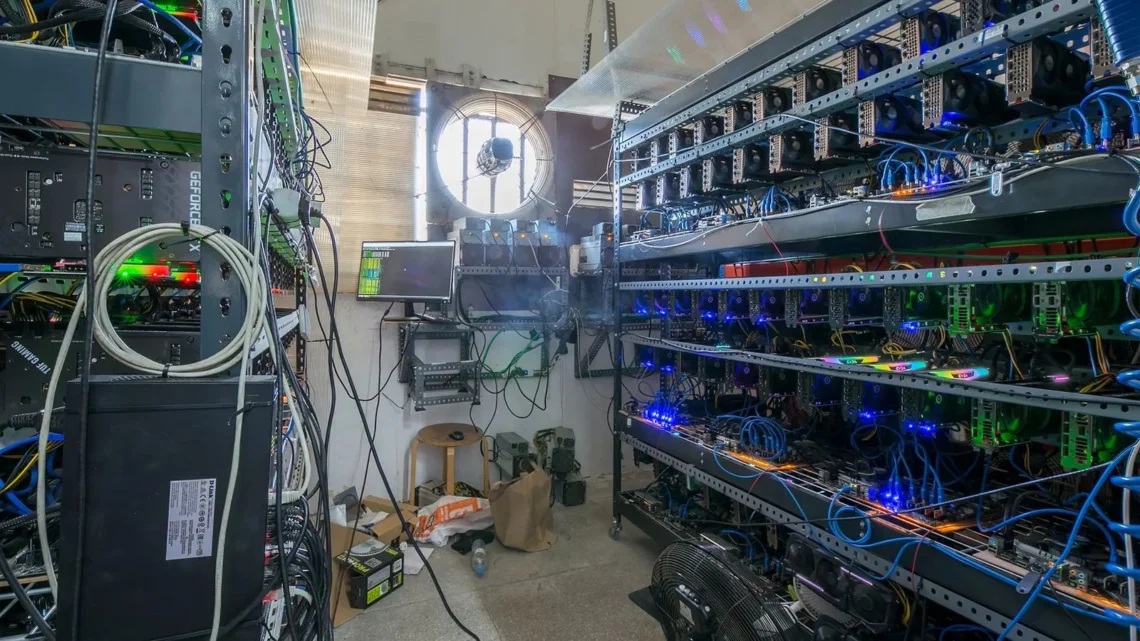
Mexican authorities have uncovered a cryptocurrency mining operation allegedly linked to organised crime, offering another glimpse into how drug cartels are expanding beyond traditional sources of income. The cryptomining farm was found in the Sierra Norte mountain range in the state of Puebla, where investigators discovered hundreds of graphics processors, specialised electrical infrastructure, and satellite communications equipment operating inside the facility.
While the site was nowhere near the scale of the massive industrial mining farms seen in some parts of the world, it was still substantial enough to require a significant investment in hardware, connectivity, and electricity. More importantly, authorities believe the operation illustrates how criminal groups are increasingly adopting technology-intensive businesses to generate revenue and potentially move illicit funds through less conventional channels.
The operation reportedly contained around 300 GPUs, alongside 80 medium-voltage electrical terminals and eight satellite antennas. What ultimately appears to have exposed the site, however, was not the computing equipment itself but the enormous amount of electricity required to keep it running. Investigators discovered that those operating the farm had allegedly tapped into the power infrastructure of a nearby hydroelectric dam without authorisation. That unusual electricity consumption eventually attracted attention and helped authorities locate the operation.
Cryptomining Gives Cartels Another Way to Diversify Their Income
Drug trafficking remains one of the most visible sources of revenue associated with major criminal organisations in Mexico, but cartels have steadily diversified into other activities. These can include extortion, fuel theft, illegal logging, human trafficking, counterfeit goods, and other forms of organised crime. Cryptocurrency mining adds another potential revenue stream, particularly because digital assets can be moved internationally without relying entirely on traditional banking systems.
Mining cryptocurrency is not inherently illegal. Individuals and companies around the world operate legitimate mining businesses using their own hardware and legally purchased electricity. The problem in this case is the alleged involvement of organised crime and the unauthorised use of electricity infrastructure, which fundamentally changes the nature of the operation.
Security analyst David Saucedo told Reuters that the discovery suggested Mexican cartels may have reached a new level of technological sophistication. Creating a functioning mining operation of this size would require people who understand high-performance computing, networking, electrical distribution, thermal management, satellite connectivity, and cryptocurrency infrastructure. It would also require considerable financial backing, particularly given the price of modern graphics hardware and the expense of running hundreds of GPUs continuously.
The Electricity Theft May Have Been the Farm's Biggest Advantage
Cryptocurrency mining is heavily dependent on electricity, which is why legitimate mining operators often locate facilities in regions where energy is relatively inexpensive. Hundreds of GPUs running around the clock can consume enormous amounts of power, while additional electricity is required for cooling systems and supporting infrastructure. Even if cryptocurrency prices remain high, electricity costs can determine whether a mining operation is profitable or financially unsustainable.
That may explain why the operators allegedly targeted the nearby hydroelectric facility. If electricity could be obtained without paying normal commercial rates, one of the largest operating expenses associated with mining would effectively disappear. The financial incentive is obvious, but the practice also creates serious safety and infrastructure risks because unauthorised connections can overload electrical equipment and introduce unstable loads into systems that were never designed for them.
Illegal mining operations in other countries have previously been linked to damaged transformers, overloaded wiring, blackouts, and electrical fires. Mining hardware is designed to run continuously under heavy computational load, meaning even relatively small operations can draw far more electricity than an ordinary home or commercial building. When that power is obtained through improvised or illegal connections, the risk to surrounding infrastructure can increase considerably.
Why 300 GPUs Still Represents a Significant Operation
Three hundred graphics processors may sound modest compared with industrial cryptocurrency facilities containing thousands of specialised machines, but the number is still significant. A farm containing that many GPUs requires substantial capital before a single coin is mined, particularly if the hardware consists of modern high-performance cards. The operation also needs racks or frames, power supplies, networking equipment, cooling systems, cabling, and someone capable of maintaining the hardware when failures occur.
The discovery of 80 medium-voltage terminals suggests the operation was built with serious electrical capacity in mind rather than simply being a collection of computers plugged into standard sockets. Meanwhile, the eight satellite antennas indicate that the operators had invested in dedicated communications infrastructure, potentially allowing the site to maintain connectivity even from a relatively remote mountain location. Taken together, those components point to an operation that had been planned rather than assembled casually.
Its location in the Sierra Norte may also have offered advantages beyond access to electricity. Remote terrain can make an illegal facility less visible to ordinary residents and law enforcement, while still allowing operators to position themselves close enough to energy infrastructure to tap into it. Satellite communications would further reduce dependence on local fixed-line internet services that might otherwise make the operation easier to trace.
Cryptocurrency Mining Is Less Fashionable, but Still Potentially Profitable
The cryptocurrency mining boom may no longer dominate the technology industry the way it did several years ago, particularly after Ethereum moved away from GPU-based proof-of-work mining. During the peak of the mining craze, demand from miners contributed to severe graphics card shortages and sent prices soaring across consumer markets. Many mining farms subsequently shut down or shifted to other cryptocurrencies as profitability declined.
Mining has not disappeared, however. Bitcoin and other proof-of-work cryptocurrencies continue to support large mining industries, although Bitcoin itself is normally mined using specialised ASIC hardware rather than conventional GPUs. GPUs can still be used for other mineable cryptocurrencies, and operators can switch between different coins depending on profitability.
The attraction remains obvious when cryptocurrency prices are high. A sufficiently large portfolio of digital assets can represent substantial value, and mining provides a way of acquiring cryptocurrency directly through computational work rather than purchasing it through an exchange. For criminal organisations with access to stolen electricity, the economics could become even more attractive because one of the most expensive components of the operation is effectively removed.
Mining Can Also Fit Into Broader Money-Laundering Strategies
The potential value of cryptomining for criminal organisations extends beyond simply producing new digital coins. Cryptocurrency can also form part of more complicated financial structures used to move, convert, or disguise illicit proceeds. Mining operations can create an apparently technical explanation for the origin of cryptocurrency holdings, although investigators can still trace blockchain transactions and examine the infrastructure surrounding an operation.
Criminal groups have increasingly experimented with digital assets because they can move across borders rapidly and can be transferred without using conventional banking channels. That does not make cryptocurrency anonymous by default, as most major blockchains preserve transaction histories permanently, but criminals may attempt to obscure transactions through complex wallet movements, exchanges, intermediaries, or privacy-enhancing services.
A mining operation could theoretically provide another source of cryptocurrency that exists alongside funds obtained through more traditional illegal businesses. Exactly how the Puebla facility was being used financially has not been fully detailed, so it would be premature to conclude that every coin mined there was specifically being used for money laundering. The broader pattern nevertheless demonstrates why organised crime groups may find digital assets attractive.
Cryptomining Now Competes With AI for Expensive GPUs
There is another interesting technology angle to the discovery. The cryptocurrency mining industry once played a major role in global GPU demand, but that position has increasingly been overtaken by artificial intelligence.
AI companies, cloud providers, research organisations, and data-centre operators are buying enormous quantities of GPUs for training and running AI models. NVIDIA in particular has become central to the AI infrastructure boom, with demand extending from specialised data-centre accelerators to powerful consumer products based on architectures such as Blackwell.
That has pushed the economics of acquiring GPUs in a very different direction. High-performance graphics processors are now valuable not only to gamers and miners but also to companies building generative AI services and machine-learning infrastructure. A criminal group attempting to assemble hundreds of capable GPUs today therefore enters a hardware market shaped far more by AI demand than by cryptocurrency mining.
This can make building a mining farm more expensive, but it also raises another question: whether sophisticated criminal groups might eventually repurpose similar computing infrastructure for activities beyond mining. Powerful GPU clusters can be useful for AI workloads, password cracking, data processing, and other computational tasks, although there is no public indication that the seized Puebla equipment was being used for those purposes.
Technical Sophistication Is Becoming Part of Organised Crime
The larger concern raised by the operation is how technically capable organised crime groups are becoming. Criminal organisations do not necessarily need to develop every piece of expertise internally. With sufficient money, they can hire specialists, purchase commercial hardware, recruit engineers, or work with individuals who already understand the technologies they want to exploit.
That makes the traditional image of cartel activity increasingly outdated. Modern organised crime can involve encrypted communications, drones, cryptocurrency, cyberattacks, surveillance technologies, sophisticated logistics systems, and now potentially large-scale computing operations. Technology becomes another tool for making criminal businesses more efficient, profitable, and difficult to detect.
At the same time, technically complex operations leave their own footprints. A hidden drug shipment may be difficult to detect physically, but a building consuming unusually large amounts of electricity is much harder to conceal indefinitely. Network traffic, equipment purchases, satellite connectivity, heat generation, and electrical demand can all create indicators that investigators can follow.
Electricity Consumption Remains a Major Weakness for Illegal Mining
The Puebla raid demonstrates one of the unavoidable realities of cryptocurrency mining: computational power needs physical energy. Even when the digital assets themselves exist entirely online, the machines producing them must operate somewhere, draw electricity, generate heat, and communicate with the wider network.
That creates opportunities for authorities and utility companies to identify suspicious activity. Unexpected spikes in consumption, unusual loads on transformers, unexplained power losses, or unauthorised grid connections can all point toward illegal high-energy operations.
This is one reason electricity theft has repeatedly been associated with underground mining farms around the world. Operators may successfully hide their computers inside warehouses, homes, factories, or remote buildings, but hiding the power requirements is considerably harder.
In the Mexican case, the alleged connection to hydroelectric infrastructure appears to have become the very thing that helped expose the farm. The attempt to eliminate electricity costs may therefore have increased the operation's profitability while simultaneously creating one of its biggest vulnerabilities.
Final Thoughts
The seizure of the Puebla cryptomining farm is notable not because it was one of the world's largest mining operations, but because of what it says about the changing nature of organised crime. A facility containing hundreds of GPUs, medium-voltage electrical equipment, satellite antennas, and an alleged illegal connection to hydroelectric infrastructure requires investment, planning, and specialised knowledge. It is a long way from the traditional idea of cartel activity being limited almost entirely to drugs and physical smuggling.
Cryptocurrency provides criminal groups with another possible source of revenue and another financial tool, while advances in computing make technically sophisticated operations increasingly accessible to anyone with enough money and expertise. At the same time, those operations still depend on very physical infrastructure, particularly enormous quantities of electricity, which can make them vulnerable to detection.
The raid also arrives at an interesting moment for the GPU industry. Cryptocurrency miners are no longer the dominant force driving demand for high-performance graphics hardware, with the AI boom now absorbing huge quantities of computing resources around the world. Even so, the discovery in Mexico shows that cryptomining remains attractive enough for well-funded criminal organisations to invest heavily in it—especially when they believe they can avoid paying one of the industry's largest costs.
For authorities, the case is another reminder that combating organised crime increasingly requires more than traditional policing. Financial investigators, cybersecurity teams, energy providers, telecommunications specialists, and technology experts are all becoming part of the same fight as criminal groups continue expanding into increasingly sophisticated digital territory.











Comments 0