

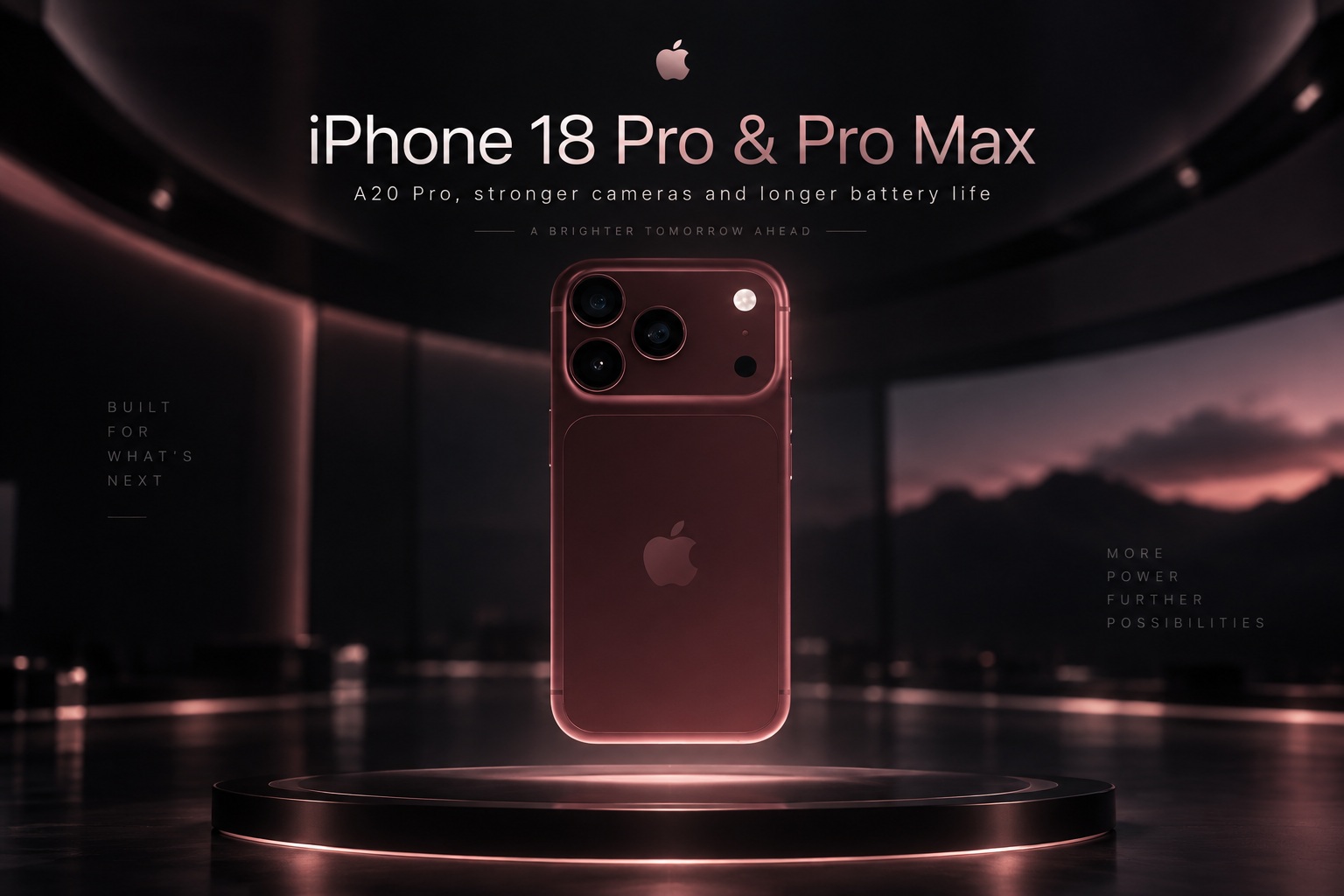
Apple has officially introduced the iPhone 18 Pro and iPhone 18 Pro Max following its "Surprise and shine" launch event. At first glance, the new flagships look very familiar, with Apple largely preserving the exterior design introduced with last year's iPhone 17 Pro generation. The bigger changes are happening underneath, where the company has upgraded the processor, cooling system, battery endurance and, most noticeably, the camera experience.
Rather than dramatically redesigning its flagship phones, Apple appears to be concentrating on refining the parts people interact with every day. The new A20 Pro promises more processing power and stronger on-device AI capabilities, while expanded manual camera controls push the Pro models further toward enthusiast photography and professional video work.
A Familiar Design With a Smaller Dynamic Island
Anyone expecting a major visual redesign may be disappointed. The iPhone 18 Pro continues the overall design language of the iPhone 17 Pro, making this generation more evolutionary than revolutionary from the outside.
One visible adjustment can be found around the Dynamic Island, which is now smaller when it is not expanded. Apple has also increased what the interface can display, allowing as many as three Live Activities to appear simultaneously.
That could make the Dynamic Island considerably more useful when several things are happening at once, such as tracking a delivery, following a sports result and monitoring a ride or timer. Instead of simply shrinking the feature, Apple appears to be trying to make better use of the remaining screen area.
A20 Pro Moves the iPhone to 2nm
Inside the phones is Apple's new A20 Pro processor, manufactured using a new 2nm architecture. The CPU continues with six cores, divided into two high-performance "desktop-class" cores and four efficiency cores.
Graphics are handled by a seven-core GPU, while Apple has included a dual 16-core NPU intended to provide stronger on-device artificial intelligence processing. One of the expected beneficiaries is Siri, particularly as Apple continues moving more intelligent functions onto the device rather than relying entirely on cloud processing.
Moving to 2nm should also provide opportunities for improved efficiency alongside higher performance. As always, however, the real experience will depend on how Apple balances clock speeds, power consumption and sustained performance rather than simply how fast the processor can run for short periods.
Apple Has Significantly Expanded the Cooling System
Powerful mobile processors increasingly need serious thermal management, and Apple is giving the iPhone 18 Pro a substantially larger vapour chamber.
The company says the new cooling solution has three times the surface area of the previous generation. That should give the device more room to move heat away from the A20 Pro during intensive tasks such as gaming, video processing, AI workloads and extended camera use.
Better cooling can be just as important as a faster chip. A processor may deliver impressive peak performance, but if temperatures rise too quickly, the system eventually needs to reduce performance. A larger vapour chamber should help the iPhone maintain its speed for longer under demanding workloads.
Apple Finally Gives Us Actual Battery-Life Numbers
Apple has traditionally preferred carefully worded comparisons rather than straightforward battery figures, but this year the company has provided some unusually specific numbers.
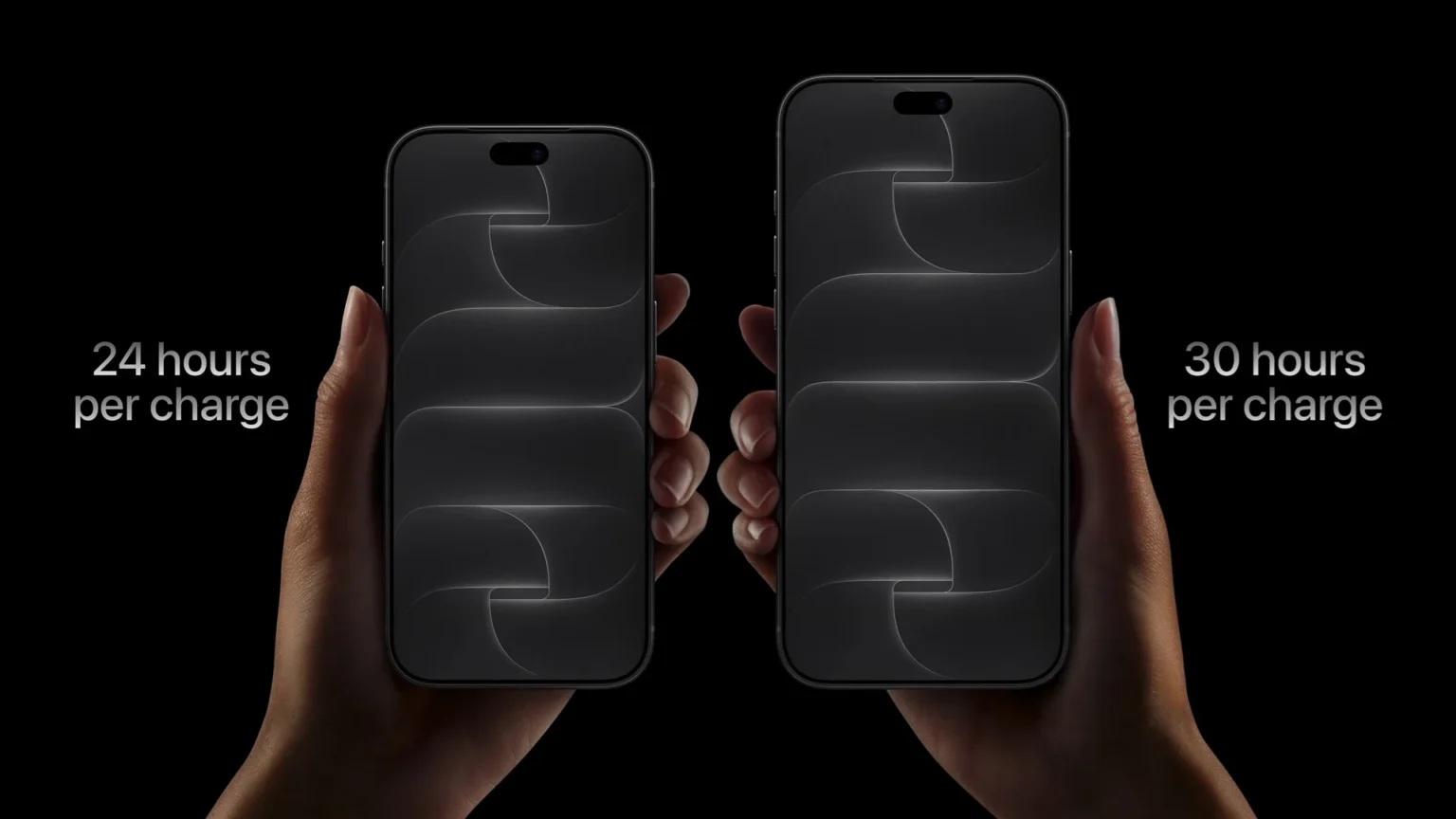
The iPhone 18 Pro is rated for up to 24 hours per charge, while the larger iPhone 18 Pro Max stretches that figure to 30 hours. For video playback, Apple claims up to 36 hours on the Pro and as much as 45 hours on the Pro Max, at least when looking at the eSIM configurations.
Those figures reinforce one of the traditional advantages of choosing the Pro Max. Beyond the larger display, its bigger body gives Apple more room for battery capacity, making it particularly attractive to heavy users who spend a lot of time away from a charger.
Whether those endurance figures translate directly into everyday use will obviously depend on workload, connectivity and screen brightness, but the improvements appear substantial on paper.
Charging Specifications Are Still Typical Apple
Charging information remains less straightforward. Rather than simply providing one maximum wired charging wattage, Apple has once again described performance through charging-time examples.
For the iPhone 18 Pro, Apple says 15 minutes of wired charging can restore approximately 50% of the battery. For the Pro Max, the company says five minutes of charging can provide enough power for around seven hours of video playback.
These figures can be useful for understanding quick top-ups, although users who like comparing charging hardware directly may still prefer a simple maximum-wattage specification.
Either way, Apple appears to be concentrating on how quickly users can regain useful battery life rather than competing solely on the increasingly large charging numbers advertised by some Android manufacturers.
The Biggest Changes Are Happening With the Cameras
The camera system is where the iPhone 18 Pro generation becomes considerably more interesting. Apple retains its familiar 48MP Fusion main camera, but has introduced a new aperture system controlled through six laser-cut blades.
More importantly, Apple is finally giving users much deeper manual camera control through what it calls Pro controls.
That brings the iPhone closer to the experience already familiar to users of many high-end Android phones and dedicated cameras. Instead of allowing Apple's computational photography system to determine almost everything automatically, users can now directly adjust several important shooting parameters.
The available controls include:
Manual ISO adjustment is notably absent from the described controls, but the available options still represent a substantial expansion over the traditional iPhone camera experience.
Pro Controls Work for Both Photos and Video
Importantly, Apple's new manual settings are not restricted to still photography. The controls will also be available when recording video.
That makes them much more relevant to professional creators. Controlling shutter speed and white balance manually can be especially useful when trying to maintain a consistent cinematic appearance between different shots rather than allowing automatic settings to change throughout a recording.
The iPhone has increasingly become part of professional mobile-production workflows, particularly with support for formats such as ProRes. Adding deeper manual controls makes the "Pro" branding feel more appropriate for users who actually want to take control of the camera rather than leaving everything to automatic processing.
Apple Reference Image Adds a New Layer of Image Verification
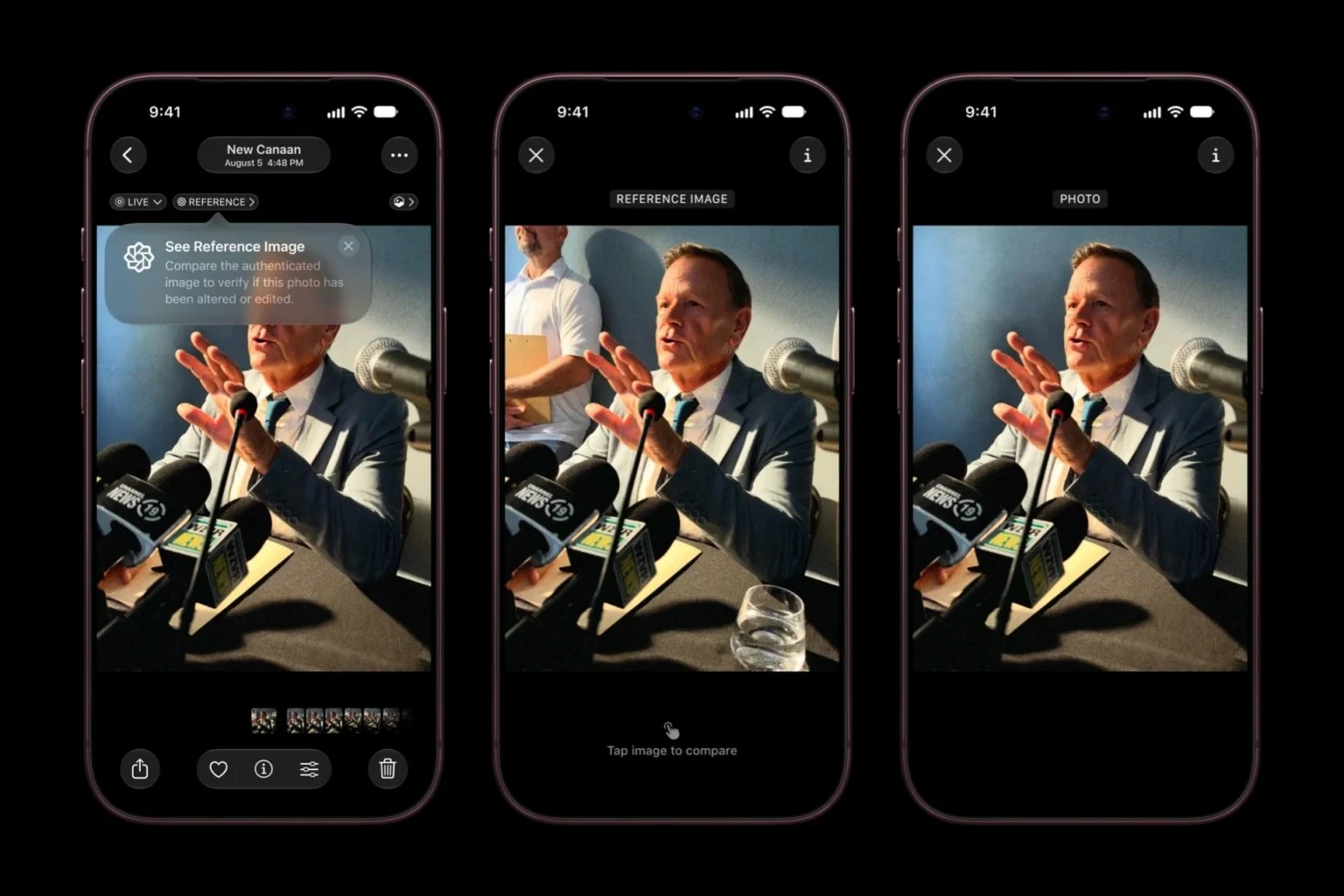
Apple is also introducing an interesting feature called Apple Reference Image, which can create a digital watermark associated with photographs captured by the iPhone.
The system provides an unalterable reference version that can be viewed separately from the primary image. The idea appears to be providing a trustworthy record of what the camera originally captured before subsequent editing or manipulation.
This becomes increasingly relevant as generative AI makes realistic image modification easier. Determining whether a photograph has been altered—or generated entirely by AI—is becoming a much bigger challenge for journalists, creators and ordinary users.
Apple says upcoming support for Google's SynthID protocol will further help identify images that have been generated or modified using artificial intelligence.
Authenticity Could Become an Important Smartphone Camera Feature
For years, smartphone camera competition focused almost entirely on image quality: better sensors, more megapixels, larger zoom ranges and stronger low-light performance. Generative AI is beginning to create another requirement—proving where an image came from.
As AI-generated photography becomes increasingly realistic, maintaining some form of original reference could become useful for everything from journalism and insurance claims to professional photography and everyday evidence.
Apple Reference Image therefore represents a different kind of camera feature. It does not necessarily make a photograph look better, but it may help establish whether the image still represents what the camera originally captured.
That could become increasingly valuable as the distinction between photography and AI-generated imagery becomes harder to see with the naked eye.
Four Colours Replace Last Year's Orange
Apple is offering the iPhone 18 Pro and Pro Max in Black, Silver, Glacier and Burgundy. Burgundy effectively replaces the Orange option introduced with the previous generation.
Storage starts at 256GB and extends all the way to 2TB, reflecting how much storage modern smartphone photography, high-resolution video and increasingly large applications can consume.
The 2TB option will naturally appeal mostly to professional creators and extremely heavy users, but having that capacity available makes sense when Apple is simultaneously positioning these devices for advanced photo and video production.
Malaysia Pricing Starts at RM5,499
In Malaysia, the iPhone 18 Pro starts at RM5,499, with configurations ranging all the way to RM11,499 depending on storage.
The larger iPhone 18 Pro Max starts at RM5,999 and reaches as high as RM11,999 for the top configuration.
Pre-orders are scheduled to begin on 12 September, followed by general availability from 18 September.
That continues Apple's familiar premium pricing strategy, particularly once buyers move into the highest storage configurations.
An Incremental Upgrade Until You Look at the Camera
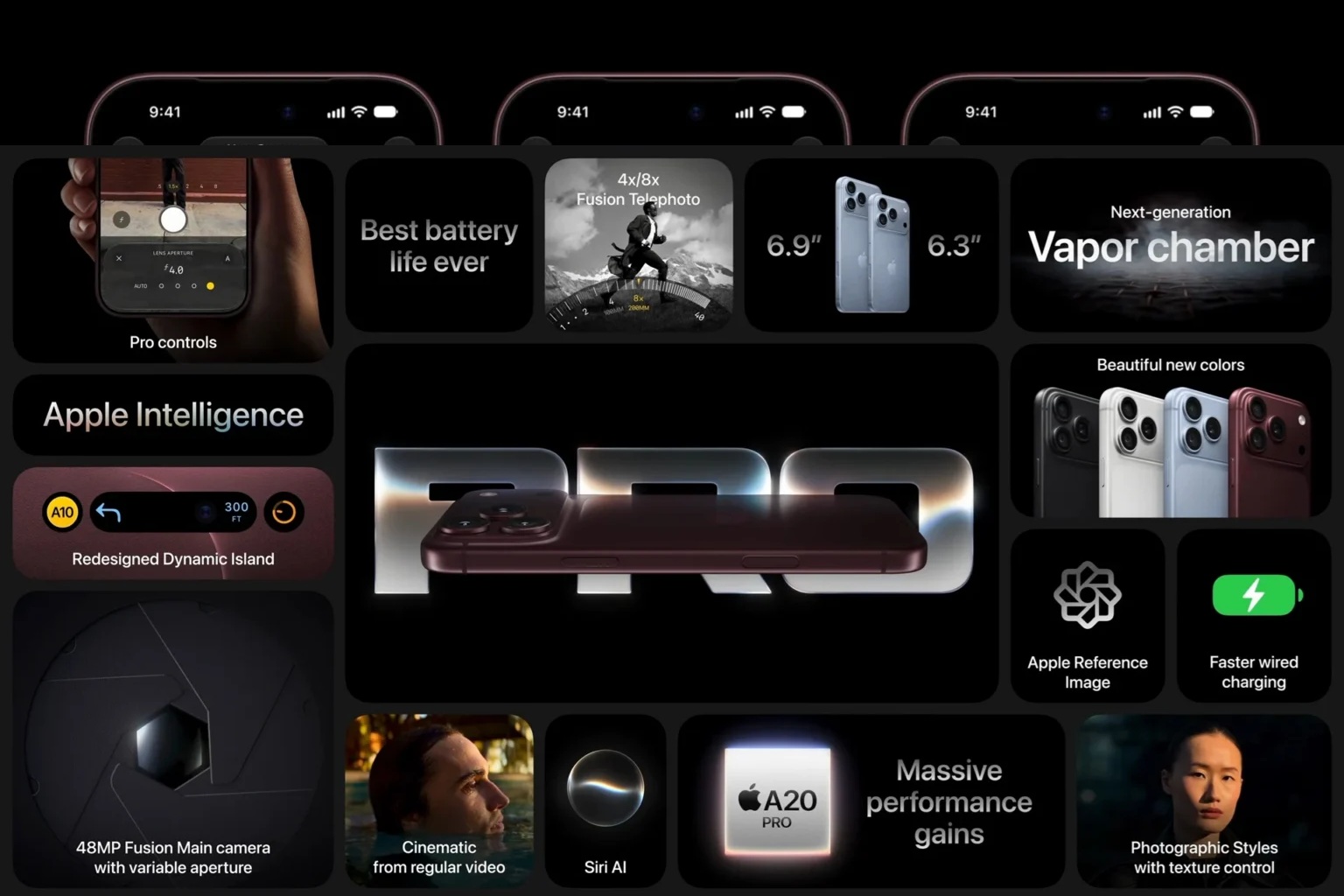
From the outside, the iPhone 18 Pro family may initially look like another conservative annual update. The chassis is familiar, the overall visual identity remains largely unchanged, and many of the upgrades follow Apple's usual pattern of increasing performance and efficiency.
The camera changes make the generation more significant. Proper manual controls fundamentally change how advanced users can interact with the camera, while Apple Reference Image addresses the increasingly important question of image authenticity in an AI-heavy world.
The A20 Pro, larger vapour chamber and stronger battery endurance then provide the hardware foundation needed to support those increasingly demanding workloads.
Final Thoughts
The iPhone 18 Pro and Pro Max are not about reinventing what an iPhone looks like. Apple has instead concentrated on strengthening what happens once you start using it.
The 2nm A20 Pro, upgraded cooling system and longer battery life provide the expected generational improvements, while the smaller and more capable Dynamic Island adds a modest refinement to the interface. But the most meaningful development is clearly the camera system.
Manual aperture, shutter speed, white balance and exposure controls finally give photographers and videographers more direct authority over the image, while Apple Reference Image introduces an intriguing response to the growing problem of AI-manipulated content.
For someone already using an iPhone 17 Pro, the familiar design may not immediately create an obvious reason to upgrade. For creators, photographers and users increasingly interested in on-device AI and image authenticity, however, the iPhone 18 Pro generation offers considerably more beneath the surface than its familiar appearance initially suggests.











Comments 0