

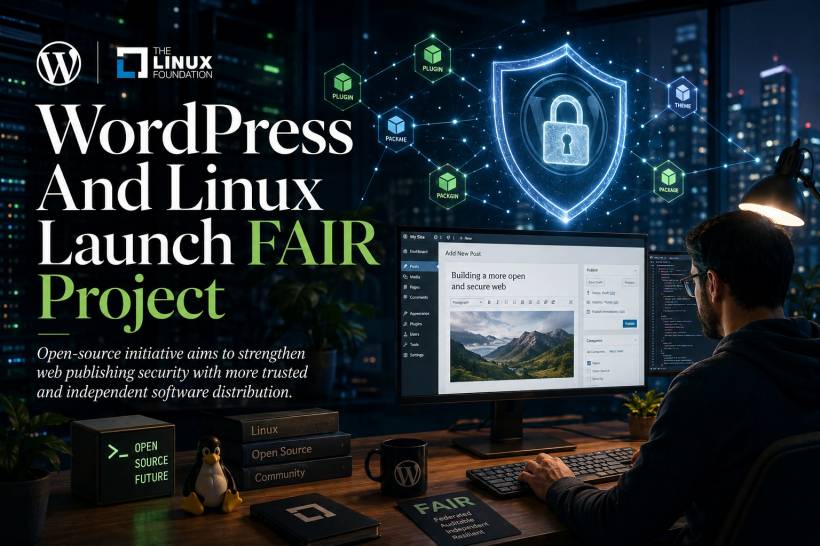
The WordPress ecosystem is taking a step towards a more independent and secure software distribution model with the launch of the FAIR Package Manager project. Announced by the Linux Foundation, the initiative is designed to reduce supply-chain risks and give website owners, hosting providers, agencies and plugin developers more flexibility in how WordPress software is distributed and managed.
For years, WordPress has relied heavily on centralised systems for core updates, plugins, themes and translations. That approach has helped make the platform easy to use, but it also creates a dependency on a small number of key distribution channels. When one part of that chain is disrupted, restricted or compromised, the impact can be felt across a very large number of websites.
The FAIR project aims to create a more open and resilient alternative.
Why Software Distribution Matters for WordPress Security
A modern WordPress website is rarely made up of WordPress core alone. Most sites depend on a mixture of third-party plugins, themes, translation files, commercial tools and hosting-level integrations.
Every additional component can introduce risk.
A vulnerable plugin, compromised update server or unverified package source can become an entry point for attackers. This is what makes software supply-chain security increasingly important. The risk is not only whether a website's own code is secure, but whether the software it downloads, updates and trusts is genuine.
The FAIR Package Manager project is intended to address this concern by creating a shared and independent collection of trusted WordPress plugins and themes. Rather than relying entirely on a single source, organisations would have more options for accessing and distributing software through a framework governed by a neutral open-source community.
That could make the wider WordPress ecosystem less vulnerable to bottlenecks, outages and centralised control.
A More Independent Foundation for WordPress
The Linux Foundation describes FAIR as an open-source initiative focused on improving the long-term stability of web publishing.
Its goal is not to replace WordPress itself. Instead, it aims to improve the infrastructure around how WordPress-related software is discovered, verified, delivered and maintained.
This matters because WordPress is used far beyond personal blogs. It powers business websites, online stores, government portals, educational platforms, media outlets and critical digital services. For many organisations, WordPress has become part of their core operational infrastructure.
A more distributed package-management model could help hosting providers, plugin businesses and agencies build services without being tied too closely to a single technical bottleneck.
It may also encourage more innovation by allowing developers to create new tools and distribution methods that work across the ecosystem.
What the FAIR Package Manager Is Expected to Improve
The project is expected to focus on several practical areas that affect WordPress users and developers.
These include:
• Strengthening supply-chain protection through improved cryptographic verification
• Improving compatibility checks between browser environments and WordPress software
• Supporting a more connected ecosystem for hosts, agencies, developers and commercial vendors
• Moving closer to privacy expectations and requirements associated with GDPR
• Making software distribution more resilient and less dependent on centralised infrastructure
The security component is particularly important. Cryptographic verification can help confirm that a plugin or theme package has not been modified or tampered with before it reaches a website owner.
For a platform as widely used as WordPress, even small improvements in package integrity and verification can have a meaningful impact across millions of websites.
Leadership from Familiar WordPress Names
The project's Technical Steering Committee will be led by three well-known figures from the WordPress community: Carrie Dils, Mika Epstein and Ryan McCue.
Dils is an educator and longtime WordPress community contributor. Epstein has extensive experience with the WordPress plugin ecosystem, including past work managing the official plugin repository. McCue is widely recognised for his work on the WordPress REST API, which has played a major role in helping WordPress connect with external apps, services and modern web tools.
Their involvement gives the project a strong blend of experience across education, plugin governance, infrastructure and software development.
The Linux Foundation's role is also notable. As a neutral home for major open-source projects, it provides a governance structure that is not directly controlled by a single commercial platform, company or individual.
That neutrality is central to the FAIR project's message.
A Response to Fragmentation and Dependency
The WordPress ecosystem is huge, but it is also fragmented.
There are thousands of plugin developers, theme creators, managed hosting companies, agencies and service providers. Many have their own update mechanisms, marketplaces, licensing models and support structures. While that diversity creates choice, it can also make software management more difficult.
For developers and agencies, keeping track of trusted sources, compatibility issues and update paths can become increasingly complex. For website owners, it may be hard to know whether a plugin is well maintained, securely delivered or properly verified.
FAIR aims to bring more structure to this environment without removing the openness that made WordPress successful in the first place.
Instead of creating another closed marketplace, the project is intended to support a more collaborative model where distribution infrastructure is shared, transparent and independently governed.
What It Could Mean for Website Owners and Agencies
For ordinary WordPress users, the FAIR project may not immediately change the way they install plugins or update themes.
Its impact is likely to be more visible over time through stronger package verification, more distribution choices and improved resilience across the WordPress supply chain.
For agencies and hosting providers, the potential is more direct. A trusted, decentralised package-management system could make it easier to manage large numbers of websites while improving confidence in where software updates come from.
For plugin developers, it could create additional routes to reach users without being limited to a single repository or ecosystem gatekeeper.
The biggest benefit may be flexibility. Organisations could retain access to the tools they need while reducing the risk that one point of failure affects their ability to operate or maintain their websites.
Final Thoughts
The FAIR Package Manager project reflects a broader shift in open-source software: security, independence and governance are becoming just as important as features.
WordPress has always been built around openness and community participation. FAIR appears to be an effort to extend those values into the software supply chain itself, giving the ecosystem more resilience while reducing overdependence on centralised distribution channels.
Its success will depend on adoption from hosting providers, plugin developers, agencies and the wider WordPress community. But if the project can build trust and attract meaningful participation, it could become an important part of how WordPress software is distributed, verified and secured in the years ahead.











Comments 0