

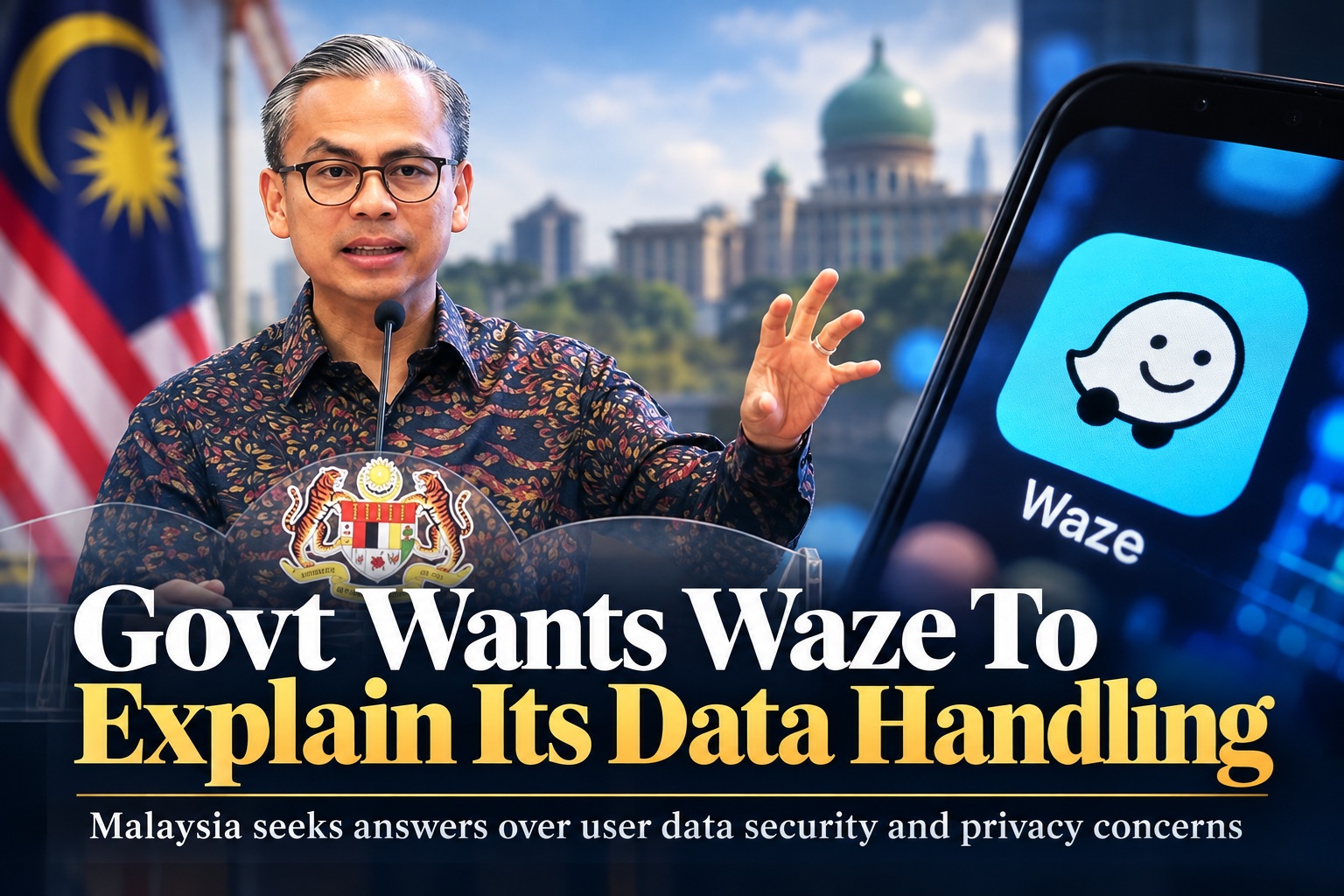
The Malaysian government is seeking clarification from Waze over how the navigation platform collects, processes and protects personal information belonging to Malaysian users. The move follows growing concerns surrounding data security and comes shortly after civil servants were prohibited from using Waze for official duties.
Prime Minister Datuk Seri Anwar Ibrahim has also indicated that the government is not ruling out stronger action in the future, including the possibility of a wider ban if suitable navigation alternatives become available. For now, however, the government appears to be focusing on obtaining clearer answers about where Malaysian user data is processed, which laws apply to that information and what protections are in place.
Waze Asked To Explain How Malaysian User Data Is Managed
Communications Minister Datuk Seri Fahmi Fadzil said Waze needs to explain how it handles personal information collected from users in Malaysia. Navigation applications naturally process significant amounts of information because features such as real-time routing, congestion detection and destination recommendations depend heavily on location data.
The government wants greater clarity over how that information is collected, stored and processed, particularly when sensitive movement patterns could potentially be involved. Fahmi also raised broader concerns surrounding data leaks and cases where stolen personal information eventually appears for sale through underground marketplaces.
If additional investigation becomes necessary, the Personal Data Protection Department under the Digital Ministry could potentially become involved. Fahmi stressed, however, that any formal action would still need to follow the appropriate legal processes rather than being taken arbitrarily.
NACSA Raised Two Major Concerns
According to Fahmi, the National Cyber Security Agency identified two main issues surrounding Waze that were subsequently brought to the National Security Council and National Cyber Security Committee. The first involves the collection and processing of user information in Israel, while the second concerns the legal jurisdiction governing the service.
The jurisdiction question is particularly sensitive from the government's perspective. If a dispute involving data or the platform's operations were to arise, the applicable legal framework could potentially fall under Israeli law.
Malaysia does not maintain diplomatic relations with Israel, creating additional complications if government agencies or Malaysian users ever needed to pursue legal or regulatory action there. This has become one of the main arguments behind the government's caution towards Waze.
Government Waiting For Official Committee Records
The government is currently waiting for an official extract from the National Cyber Security Committee meeting before determining its next steps. This should provide the formal record of the cybersecurity concerns discussed and the recommendations made during the meeting.
Once that documentation is available, relevant agencies can determine whether further technical, regulatory or legal examination is required. This suggests that the current restrictions and requests for clarification may only represent the first stage of a wider review.
For ordinary users, Waze remains available at this stage. The immediate prohibition continues to apply primarily to civil servants using the application for official duties.
A Complete Waze Ban Has Not Been Ruled Out
Anwar has separately said that a wider prohibition on Waze remains possible if the government determines that national security concerns justify stronger action. His position is that protecting sensitive information should take priority over the convenience provided by a particular navigation platform.
At the same time, the Prime Minister acknowledged that Malaysia's locally developed alternatives are not yet as mature as established international navigation applications. He urged Malaysians to be patient while those services continue improving.
This creates an obvious challenge for the government. Restricting a mature application is relatively straightforward, but convincing millions of users to switch permanently requires alternatives that offer comparable reliability, mapping accuracy and real-time traffic information.
Government Says It Reviewed Waze's Terms And Conditions
Anwar said the government had examined Waze's terms and conditions while assessing the security concerns surrounding the platform. Particular attention was reportedly given to its Israeli connections and the legal framework under which the service operates.
The government says its decision regarding official use was not made simply because Waze originated in Israel. Officials have instead framed the issue around information security, legal jurisdiction and the possibility of sensitive movement data being exposed outside Malaysian control.
Anwar also acknowledged that the government's stance has attracted criticism. Nevertheless, he maintained that convenience should not outweigh concerns involving confidential government information or personal data.
Local Alternatives Still Need Considerable Improvement
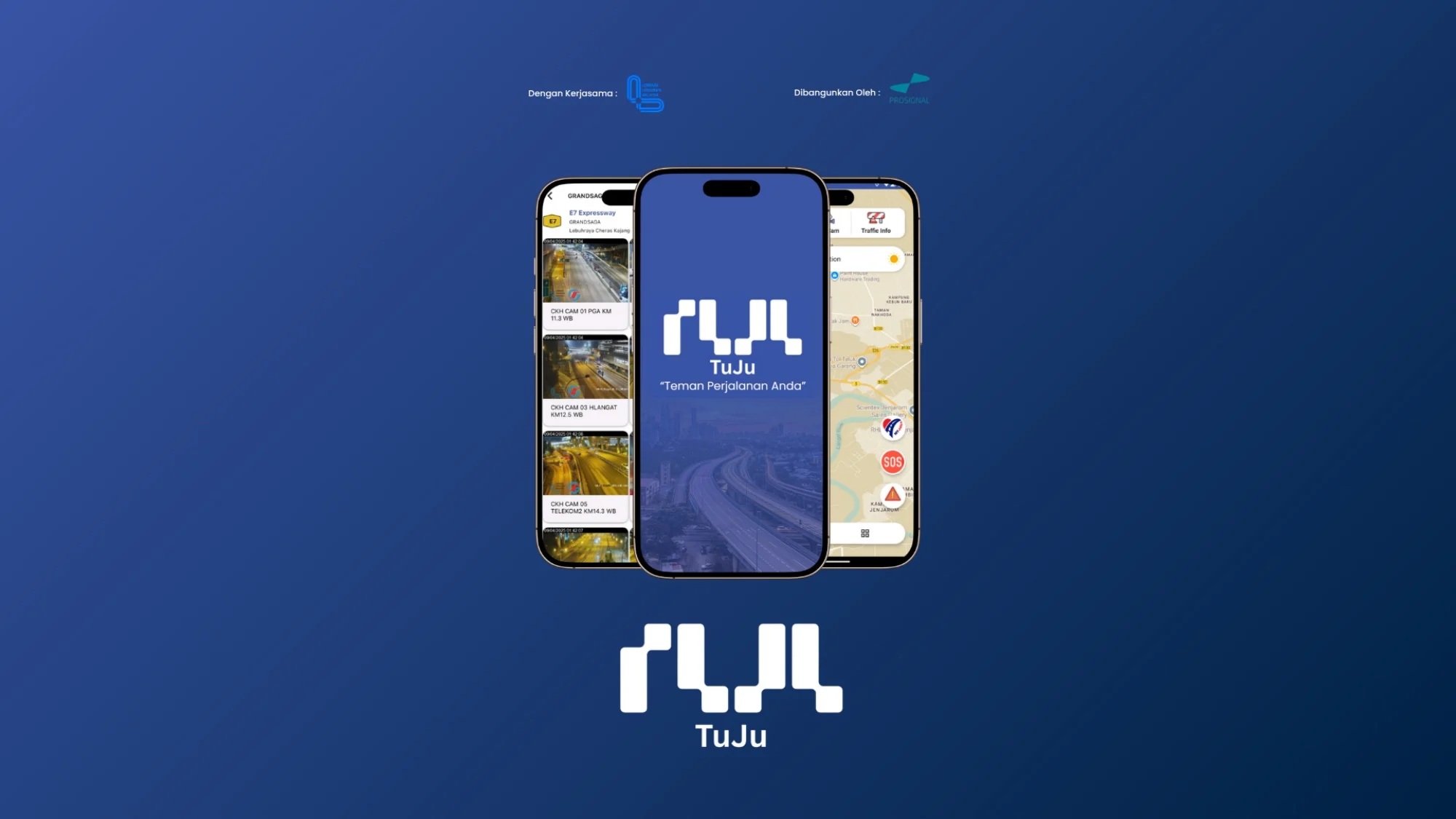
The push away from Waze has placed considerably more attention on Malaysia's own navigation applications, particularly TuJu. However, the sudden increase in users following government promotion has already exposed limitations in the local platform.
TuJu experienced technical disruptions after a sharp increase in downloads and usage, forcing the Malaysian Highway Authority and developer Prosignal Consortium Sdn Bhd to investigate stability and capacity problems.
The incident demonstrated one of the biggest challenges facing homegrown alternatives. Government support can bring users to an application very quickly, but the technology needs to be capable of handling that demand once they arrive.
Government Demands A TuJu Improvement Timeline
The government has now asked LLM and Prosignal Consortium to provide a clear explanation of TuJu's technical problems and how they intend to address them. Fahmi said the response should cover the causes of recent disruptions, the platform's current performance and the measures being taken to prevent similar problems.
Authorities also want an actual timeline rather than general assurances that improvements are underway. This includes plans for stronger system reliability, increased infrastructure capacity and improvements to the overall user experience.
The request places additional pressure on TuJu's developers to demonstrate measurable progress. If the government intends to promote the application as a serious alternative to Waze, it needs to perform reliably under national-scale usage.
TuJu's Sudden Popularity Exposed Capacity Limits
TuJu had been operating with a comparatively smaller user base before receiving widespread national attention. Once Malaysians were encouraged to try the platform, demand increased dramatically and placed additional pressure on its backend infrastructure.
Navigation services require continuous processing of routing requests, location information, traffic conditions and map data. Infrastructure that works perfectly well for a smaller audience can struggle quickly when usage multiplies over a short period.
The positive side is that the sudden demand provides developers with much more information about where the platform needs improvement. If the problems are addressed properly, the current disruption could ultimately help TuJu mature more quickly.
TuJu Still Needs Better Coverage Beyond Highways
Another limitation is TuJu's original focus on expressways. The platform was developed primarily around Malaysian highway navigation and therefore offers useful features such as toll information, R&R locations and highway CCTV snapshots.
Those features are valuable for interstate travel, but users still need accurate navigation on ordinary roads before entering the expressway and after leaving it. A platform that performs well only on highways cannot fully replace something like Waze for everyday driving.
The government has already said TuJu's coverage is being expanded beyond expressways. Improving ordinary road navigation and traffic information will therefore be critical if it is expected to attract users permanently.
Malaysians Are Not Limited To TuJu
Fahmi has clarified that the government is not asking the public to use TuJu as their only navigation option. Other navigation platforms remain available, including international services.
This is important because there are several established alternatives capable of providing general navigation without relying on Waze. Malaysians can still choose whichever platform best suits their needs, subject to any future government decisions.
The current emphasis is therefore on avoiding Waze because of the security concerns raised by the National Security Council rather than forcing everyone onto one specific application.
Competition Could Help Local Apps Improve
Allowing several local navigation platforms to develop simultaneously could ultimately be healthier than concentrating everything around one government-promoted application. TuJu and Pintaz, for example, could pursue different strengths and compete to deliver better routing, traffic information and locally relevant features.
Competition gives developers an incentive to improve quickly because users can simply choose another service when one platform performs poorly. It also reduces the risk of replacing dependence on one foreign navigation provider with dependence on one domestic provider.
For Malaysian users, the ideal outcome would be several capable choices rather than fewer choices.
The Bigger Issue Is Data Sovereignty
The Waze controversy is increasingly becoming part of a broader Malaysian discussion about data sovereignty. Government agencies are paying much closer attention to where information is stored, which companies process it and which country's laws apply.
Similar concerns have already appeared around government cloud services, artificial intelligence platforms and digital identity infrastructure. Classified public-sector information, for example, faces restrictions on overseas storage, while government-controlled encryption keys are being used to maintain stronger control over sensitive information.
Movement data naturally fits into this wider discussion because large-scale location datasets can reveal patterns that become strategically important when aggregated over time.
Location Data Can Reveal More Than Individual Journeys
A single journey from one location to another may appear relatively harmless. When millions of journeys are collected over long periods, however, the resulting dataset can reveal much broader patterns.
Aggregated location information can potentially show which routes are heavily used, when specific areas experience unusual movement and where large groups of users regularly travel. For ordinary commercial purposes, that information can help improve traffic predictions and route recommendations.
From a national-security perspective, however, movement information involving government personnel or sensitive locations may require stronger controls. This helps explain why the first mandatory restriction was applied to civil servants rather than the entire Malaysian population.
Government Needs Clear Evidence And Transparent Rules
The debate also highlights the importance of transparency when restrictions are introduced on widely used technology. Waze has been used by Malaysians for years, and many users naturally want to understand the specific risks behind the government's position.
Clear explanations about how data is processed, where it is stored and which legal obligations apply would help the public evaluate the issue more objectively. The same standard should also apply to local navigation platforms.
A Malaysian-developed application should not automatically be considered secure simply because it is local. TuJu and other alternatives still need strong cybersecurity, clear privacy policies and transparent data-handling practices of their own.
Local Apps Will Ultimately Need To Win On Performance
Government encouragement may persuade Malaysians to try a local navigation application, but long-term adoption will depend heavily on the quality of the product. Drivers expect reliable routing, accurate maps and up-to-date traffic information every time they open the app.
If a local platform regularly sends users towards congestion, fails to recognise roads or becomes unavailable during periods of heavy demand, people will naturally look for alternatives. Security can be an important competitive advantage, but it cannot compensate indefinitely for poor functionality.
The strongest outcome would be a Malaysian navigation platform that offers both stronger domestic data control and a genuinely competitive user experience.
Final Thoughts
The Malaysian government's request for Waze to explain how it collects and handles local users' information represents another escalation in the debate surrounding navigation data and national cybersecurity. Authorities are particularly concerned about where information is processed and which legal jurisdiction applies when a foreign technology service handles Malaysian movement data.
For now, civil servants are prohibited from using Waze for official duties, while ordinary Malaysians remain free to use the platform. However, Prime Minister Anwar Ibrahim has made clear that a broader ban has not been ruled out if suitable alternatives become available.
At the same time, the government is putting pressure on its preferred local alternatives to improve. LLM and Prosignal Consortium have been asked to explain TuJu's recent disruptions and provide a clear timeline for addressing reliability, capacity and user-experience problems.
That balance is important. If Malaysia wants greater control over strategically sensitive digital information, developing strong local alternatives makes sense. But those alternatives will ultimately need to earn public confidence through both better data governance and dependable everyday performance.











Comments 0